

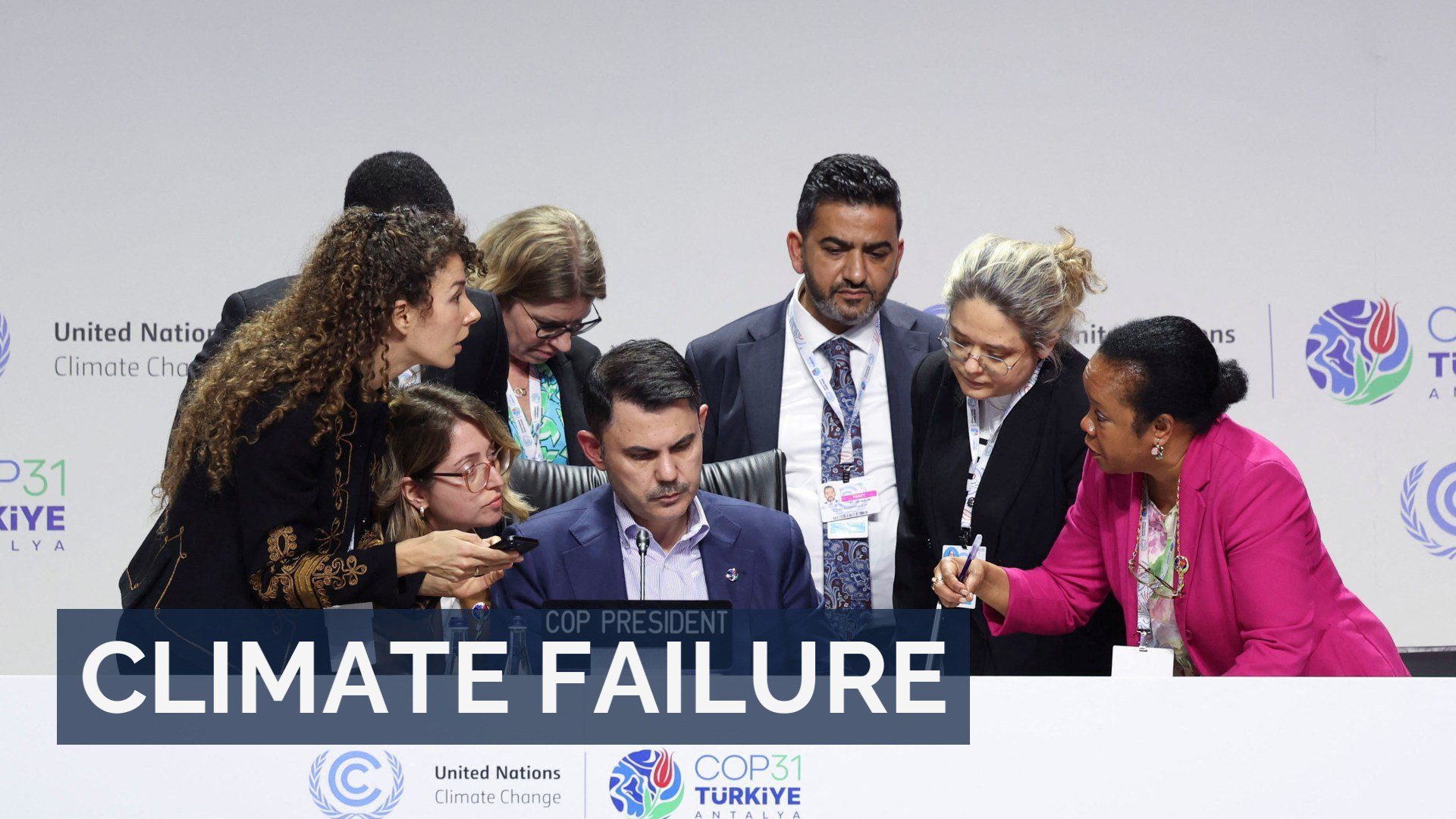
The COP31 climate summit ended in failure after extended talks ran more than two days overtime in Turkey. After marathon negotiations, the final agreement was rejected in a chaotic conclusion to the UN climate conference—the longest in the process’s history.
COP31 negotiators could not reach consensus, with deep divisions over fossil fuels emerging as the key sticking point. UN Secretary-General Antonio Guterres said he was deeply dismayed by the collapse, attributing it to the inability of governments to meet the demands of the climate crisis.
“I share the very profound frustration of all those who expected governments to rise to the moment the climate crisis demands,” Guterres said in a statement.
Chris Bowen, the Australian climate minister and COP31 negotiations chair, admitted he was unable to broker the required consensus among almost 200 nations.
Bowen called the result “very disappointing” and described negotiations as hampered by “the most complicated and fraught geopolitical environment in living memory”, with rising energy prices and tensions from the Middle East war adding difficulty to the process.
Major disagreement was sparked by disputes between oil-producing states and climate-vulnerable nations. The European Union and Saudi Arabia were among those clashing over the pace of a global shift away from coal, oil, and gas.
The EU, joined by Ireland, Panama, Vanuatu and the Marshall Islands, refused to support any agreement that failed to mention fossil fuels. Ireland’s climate minister Darragh O’Brien said, “We will not endorse a cover decision… that does not even mention fossil fuels, which is the key driver of climate change.”
The proposed deal also attracted criticism for supporting carbon capture—a technology promoted by the fossil fuel industry—but lacking commitments to phase out fossil fuels. As a result, COP31’s final attempts, led by hosts Turkey and Australia, to reach compromise with a veiled reference to fossil fuels were ultimately unsuccessful. Their proposal to set a global electrification goal was also rejected.
Summit shortcomings raise concerns
The collapse has prompted comparisons to the failed 2009 Copenhagen summit and renewed doubts about the effectiveness of the climate diplomacy process. UN climate chief Simon Stiell said that the negotiation outcomes “certainly fell short today,” describing progress over two weeks of talks as “limited.”
Many countries lamented the loss of an opportunity to reinforce the Paris Agreement’s 1.5C temperature target—a goal scientists believe will soon be breached as current national commitments lag behind emissions reductions needed.
Divisions between richer, high-emitting countries and vulnerable developing nations were laid bare. A proposal from developing countries for a new $120 billion annual finance goal was ultimately dropped from the agreement. UK climate negotiator Kate Hughes said the outcome “moves us backwards on the science” rather than supporting science-based action.
With the UN process stalling, some nations are moving ahead independently. Around 60 countries had already met for a separate conference on phasing out fossil fuels, while others at COP31 used the platform to announce individual exit plans for coal, oil or gas.

























Comments
No comments yet. Start the conversation.