We’re educating students for a future that may no longer exist
France’s student unrest is about more than crumbling classrooms. As AI reshapes the workforce and traditional career paths become less certain, are we preparing young people for the world they will actually inherit?
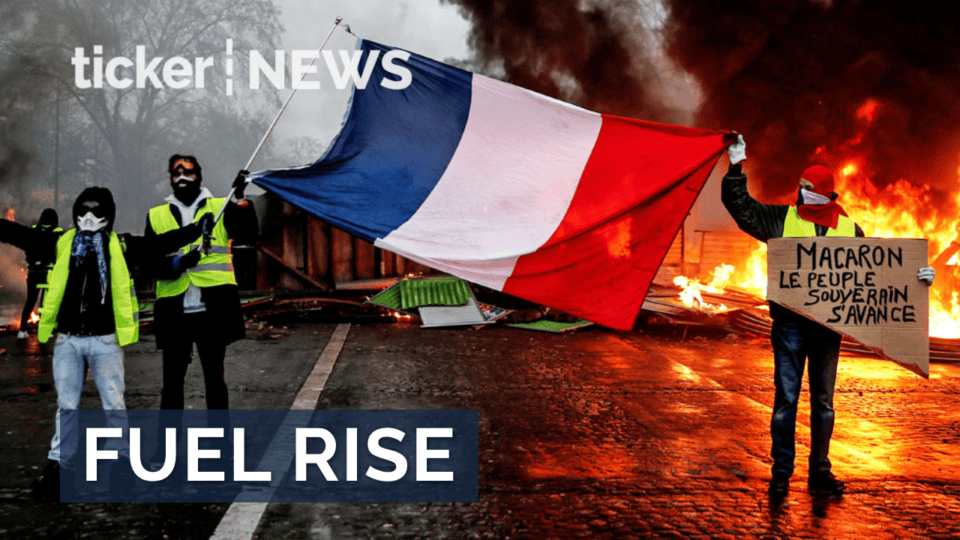
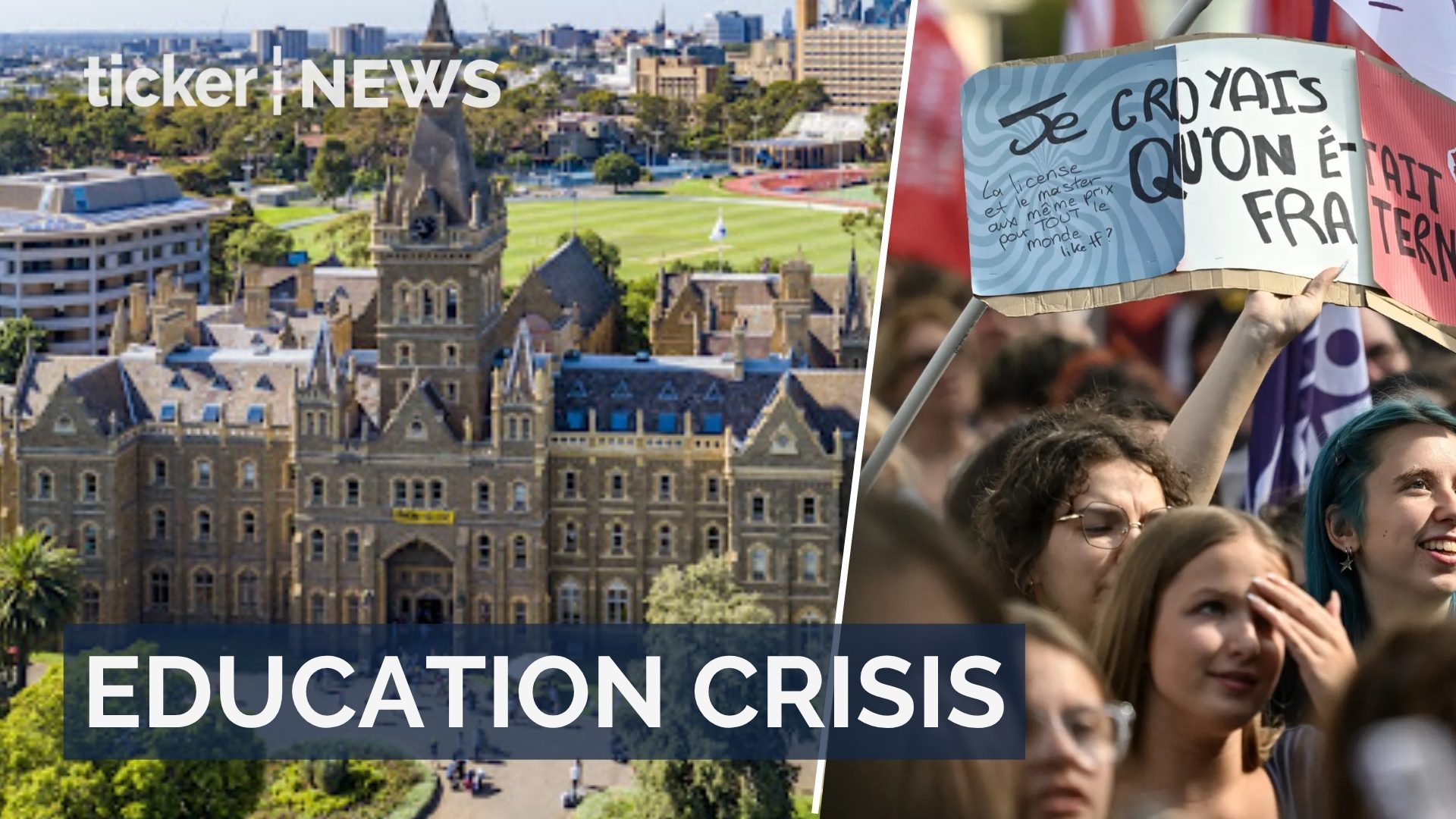
More than 1,000 high schools throughout France. Hundreds of blockades. Students confronting police and taking to the streets.
France’s student protests have become a national and indeed international flashpoint, with young people demanding better school conditions, more teachers and a government willing to invest in their futures. All of this stemming from broader concerns about President Emmanuel Macron’s government. On 1 October, more than 1,020 high schools were affected by strikes or protests, according to France’s Education Ministry, as reported by Le Monde
The immediate causes are clear. Students have described overcrowded classrooms, ageing facilities and frustration with the pathways determining their access to further education. Many have also taken aim at tertiary education institutions, describing them opaque and austere.
The unrest raises a bigger question that extends well beyond France, and could soon find it’s way into the national dialogue here in Australia: what happens when young people lose faith in the system that is supposed to prepare them for the future?
For generations, education has been sold as the foundation of economic security. The idea was to study hard, get qualified, find a job, and build a real future that you could be proud of.
That promise is becoming increasingly difficult to make with confidence, and as a student myself, it’s one I’m losing faith in.
As AI transforms workplaces, employers rethink staffing and the cost of living puts greater pressure on young people, the relationship between education and employment is changing. Yet schools and universities are still expected to prepare students for a labour market whose future remains deeply uncertain.
The problem is not that education no longer matters. It will always matter. It is that we may still be preparing students for a version of the economy and job market that is rapidly disappearing.
The promise of a qualification is under pressure
The numbers offer an unsettling picture of the transition from education into employment.
According to the OECD’s Education at a Glance 2026 report, 18 per cent of French people aged 18 to 24 were neither employed nor in education or training in 2025. Across OECD countries with comparable data, the figure was 13 per cent.
Meanwhile, unemployment among French 25-to-34-year-olds with tertiary qualifications stood at 7 per cent, compared with an OECD average of 5 per cent.
With these numbers, it’s easy to see why so many young people in France are discontent.
This is not to say that degrees are worthless. Higher qualifications continue to offer important employment as well as the opportunity for earning maximisation.
But these numbers certainly challenge the assumption that education alone can deliver economic security.
A student can spend years studying, accumulate the cost of a qualification that goes along with it, and graduate with the skills they were told employers wanted, only to discover that opportunities are limited or that the industry they hoped to enter has fundamentally changed. This is something I’ve personally experienced and seen all around me, especially in the media industry.
That disconnect matters. Young people are being asked to make increasingly consequential decisions about their futures, often before they have any realistic way of knowing what the job market will look like when they graduate.
Therefore, it’s no longer enough to assume that a qualification will remain valuable in the same way throughout a person’s career.
AI is changing the question
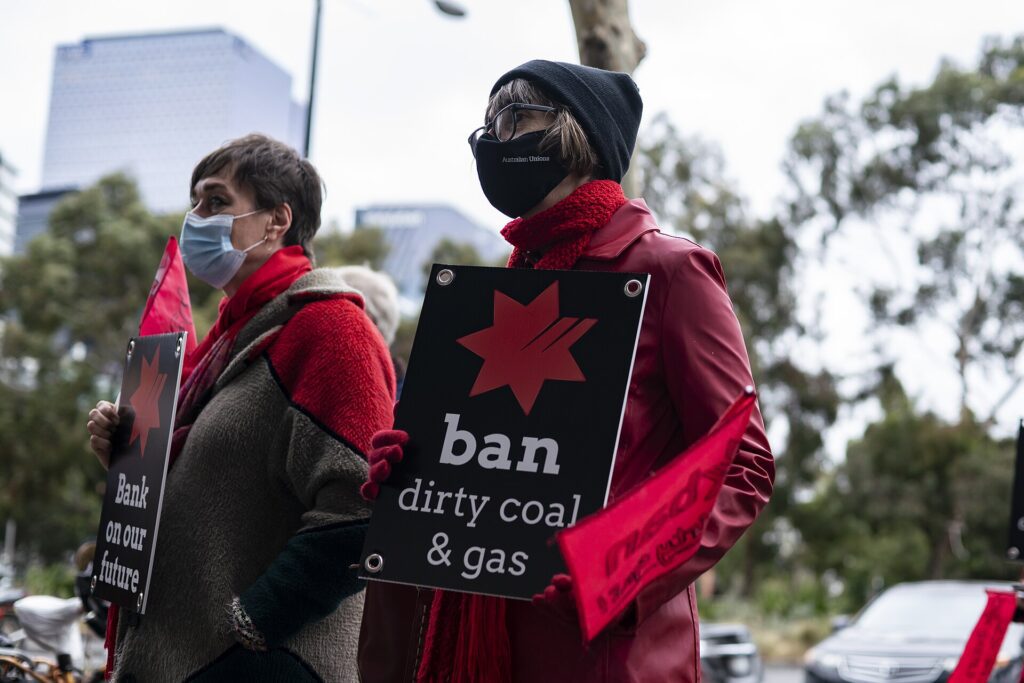
Here at Ticker, we’ve already examined the pressures facing major employers such as the National Australia Bank (NAB). The company has announced 2,500 job cuts amidst wider competition driving businesses to rethink their workforces.
The significance of those cuts extends beyond the immediate impact on affected employees. They reflect a broader question about how companies will organise work as technology changes what people can do, how quickly they can do it and how many workers are needed to get the job done.
AI is only accelerating that debate.
Administrative work, customer service, research and data analysis are among the areas where employers are already exploring automation. Some roles will be reduced, others will be redesigned, and new jobs will emerge. The precise balance remains uncertain.
For students choosing a degree and a career path, that uncertainty is difficult to ignore.
The traditional approach to education often assumes that students can identify a profession, acquire the necessary qualifications and then build experience within a relatively stable industry.
But what’s going to happen when the entry-level jobs that once provided that experience become automated or disappear? What happens when the skills taught in a course are no longer sufficient by the time its graduates enter the workforce?
These are not arguments against education. They are arguments for changing what we expect education to achieve.
The objective cannot simply be to prepare students for their first job. This is outdated. It must be to give them the ability to adapt when that job, or the industry surrounding it, changes.
Are we teaching students to adapt, or just to pass?
Education systems are still heavily judged by examination results, graduation rates and qualifications obtained. These measures are valuable, but they cannot tell us everything about how prepared a student is for the real world.
Can graduates evaluate information critically when AI can generate convincing but potentially inaccurate answers? Can they solve unfamiliar problems, communicate effectively and make decisions when the instructions are unclear? Can they learn new skills when the knowledge they acquired at school or university becomes outdated?
These capabilities matter in a labour market where technical knowledge alone may not be enough.
That does not mean traditional subjects should be abandoned or every student should be funnelled into technology or IT. Literacy, numeracy, scientific understanding and academic rigour remain essential, and in many cases are the fundamentals behind technological advancement.
But knowledge has to be accompanied by the ability to apply it.
Students need more opportunities to engage with workplaces, understand different career pathways and develop practical skills alongside their academic education. Furthermore, vocational training deserves to be treated as a credible pathway in its own right, rather than just a fallback for those who do not attend university.
And schools need the funding, staffing and flexibility to make these changes possible. This is one area where the French rioters may be in right.
It is easy for governments and employers to demand that students become more adaptable. It is harder to build an education system that gives them the resources and the time to do so.
That is where the French protests are particularly relevant. Students cannot be expected to prepare for a rapidly changing future if they are struggling to access the basic conditions required to learn and adapt to the present.
Australia has its own skills mismatch
This is not just a European problem.
Australia is confronting its own questions about how education, training and employment fit together as technology and economic demand change. The skills we learn at school, while important, must be up to the standard that the job market currently expects.
Jobs and Skills Australia’s Jobs and Skills Report 2026 found that the share of occupations experiencing skills shortages fell from 36 per cent in 2023 to 29 per cent in 2025. Despite that improvement, almost three in 10 occupations remained in shortage. The report also found that 33 per cent of women and 27 per cent of men were working in occupations below their skill potential.
The figures reveal a more complicated picture than a simple shortage of qualified workers.
Australia can have employers struggling to find people with particular skills while workers are not making full use of their existing capabilities. That suggests the challenge is not just producing more graduates or training more people. It is ensuring that skills, education and employment opportunities all come together more effectively.
For students, that means clearer information about career pathways, stronger links between education providers and employers, and opportunities to develop skills that will remain useful across different industries.
For governments, it means investing in schools, universities and vocational education while ensuring that training responds is aligned with changing needs.
For employers, it means taking greater responsibility for developing workers rather than expecting education providers to produce graduates who are ready to take on the challenges of the workplace right from day one.
But there is also a danger in treating education purely as a pipeline for supplying labour.
Schools and universities have a responsibility to develop independent thinkers and informed citizens, not simply employees who can perform the tasks businesses currently need. This has always been the biggest priority for education institutions, and must remain one. An education system designed entirely around today’s labour market could be just as poorly prepared for tomorrow as one that ignores employment altogether.
The goal should be to give people the knowledge, judgement and adaptability to navigate change — not to guess which job title will remain profitable for the next 30 years.
The cost of getting it wrong
When education fails to keep pace with economic change, young people are often the ones left to absorb the consequences, and in many cases the judgement.
They are told to choose a career, obtain qualifications and take responsibility for their future. If the promised opportunities fail to come to fruition, the blame can quickly shift to their decisions, their degrees or their unwillingness to retrain and become better.
But individuals cannot control the pace of technological change, the availability of entry-level positions or the decisions employers make about staffing.
Nor does every student begin with the same advantages. Access to well-resourced schools, financial support, professional networks and workplace experience can shape a person’s opportunities long before they graduate. This is something I’ve recognised in my time as a student.
A system that promises social mobility but leaves these structural barriers unaddressed risks reinforcing the very inequalities education is supposed to reduce.
The answer is not to guarantee every graduate a job. No education system can make this promise, especially nowadays.
It is to ensure students receive a quality education, have access to meaningful pathways and are supported in adapting when the economy changes, as it always does. That includes making retraining accessible throughout working life, rather than treating learning as something that ends with a degree or certificate.
If businesses benefit from technological advances, they should also play a role in helping workers navigate the disruption those advances create.
Education cannot promise certainty, but it must offer a future
France’s student unrest is rooted in specific grievances about school conditions and public investment. Those issues should not be reduced to a debate about artificial intelligence or the future of employment. France’s education system issues are perhaps uniquely it’s own.
But the protests also expose a wider tension between what young people are told education will deliver and the uncertainty they see beyond the classroom.
They are expected to work hard, make the right choices and prepare for a future that governments, educators and employers cannot fully predict.
That makes the responsibility to prepare them properly even greater.
The solution is not simply to put more technology into classrooms or redesign every course around the latest employer demand. It is to invest in teachers and facilities, strengthen academic and vocational pathways, teach practical and critical-thinking skills, and make lifelong learning a realistic option for ordinary workers. I can confidently say I hope to be a lifelong learner myself, and I think its a goal every young person should have as well.
Most importantly, it requires a change in how we think about education itself.
A qualification should open doors, not be sold as a guarantee that those doors will remain open. Students should leave school with more than exam results: they should have the tools to question, adapt, learn and contribute to a changing society.
The future of work will continue to evolve, and education will never be able to anticipate every disruption. But that is precisely why preparing young people to navigate uncertainty must become a central goal of the system.
France’s students are demanding better from the institutions responsible for their futures. Down here, Australia should pay attention before the same questions become harder to ignore.
Because if we continue educating young people for the economy we used to have, we should not be surprised when they arrive in the workforce and discover that the future they were promised no longer exists at all.