Jonathan Byrt shares nine steps for a successful Kickstarter campaign on The Founders Method episode
Crowdfunding can give entrepreneurs a way to bring new products to market without relying entirely on upfront capital.
But turning an idea into a successful Kickstarter campaign requires more than an innovative product.
From building an audience before launch to maintaining momentum throughout the campaign, founders need a clear strategy to convert interest into sales.
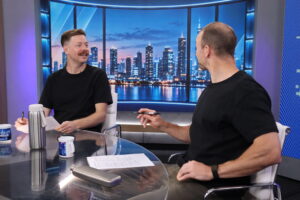
On The Founders Method, presented by memobottle co-founders Jonathan Byrt and Jesse Leeworthy, the pair outline nine steps businesses can follow to improve their chances of crowdfunding success.
Kickstarter allows founders to secure pre-orders, test market demand and build a community around a product before committing to larger-scale production.
Used strategically, it can help businesses validate an idea while generating the funds needed to move towards manufacturing.
1. Start with the story, not the product
A successful campaign begins with a compelling reason for customers to care. Rather than focusing solely on product features and specifications, founders should explain the problem they are solving, why it matters and what makes their solution different.
Building an emotional connection with potential backers can help transform a product pitch into a story people want to support.
2. Give customers something different
Kickstarter attracts an audience looking for fresh ideas, creative solutions and products that stand out from what is already available.
Founders need to demonstrate what makes their offering distinctive, whether through innovation, design or a new approach to an existing problem.
A clear point of difference gives customers a stronger reason to back a project rather than wait for a similar product to appear elsewhere.
3. Invest in high-quality creative content
Campaign content plays a critical role in communicating a product’s value.
High-quality videos, clear photography and well-written descriptions help potential backers understand what is being offered and why it is worth supporting.
Founders should cater to different viewing preferences by combining visual storytelling with practical information, ensuring customers can quickly grasp the product’s benefits, functionality and intended use.
4. Keep the campaign simple and clear
An effective campaign page should make it easy for visitors to find the information they need. A cluttered layout or an unclear message can make it harder to convert interest into pledges.
Founders should prioritise the problem and solution, product specifications, reward tiers and the story behind the business.
A straightforward structure helps potential backers make informed decisions without having to work through unnecessary information.
5. Make rewards compelling
Reward tiers give customers an incentive to support a campaign, but founders need to ensure their offers are attractive and commercially viable.
Retail discounts, exclusive product variants and limited-time bonuses can help create a sense of value and encourage early commitments.
These incentives should also account for the waiting period between backing a project and receiving the finished product, giving customers a clear reason to commit before the product becomes widely available.
6. Build an audience before launch
Campaign preparation should begin well before the Kickstarter page goes live. Founders can build anticipation by collecting email addresses, securing media coverage and developing a community of potential backers.
The objective is to generate interest before launch so that supporters are ready to act when the campaign opens.
Strong first-day performance can help establish credibility, attract additional attention and create momentum for the weeks ahead.
Waiting until launch day to begin marketing risks leaving a promising product without the initial audience needed to gain traction.
7. Set a realistic funding target
Setting the right funding goal requires a careful assessment of the costs involved in delivering the product.
Founders need to account for expenses such as tooling, manufacturing, shipping, freight and potential returns, rather than focusing solely on the amount required to begin production.
An achievable target can help a campaign demonstrate early progress and build confidence among potential backers.
Reaching the goal quickly may also strengthen its appeal to media outlets and other audiences.
However, the target must remain financially realistic. A campaign that attracts strong demand but fails to account for the full cost of fulfilment can create problems long after the fundraising period ends.
8. Make launch day count
The first day of a campaign is an opportunity to turn pre-launch interest into tangible results. Founders should coordinate their promotional activity, including sending email announcements, contacting media outlets and activating their existing networks.
Time-sensitive incentives, such as a complimentary gift for backers who pledge within the first 24 hours, can provide an additional reason to act early.
A coordinated launch helps concentrate attention when the campaign is new, giving the project a stronger foundation for the remainder of its funding period.

9. Keep momentum through the mid-campaign slowdown
A strong launch does not guarantee sustained success. Campaigns can experience a plateau once the initial excitement fades, making ongoing communication and promotional activity essential.
Founders can maintain interest through regular updates, new offers and mid-campaign promotions that give potential backers a fresh reason to engage.
Keeping supporters informed also reinforces the relationship between the business and its growing community.
The challenge is to maintain visibility without relying entirely on discounts or creating expectations that undermine the product’s value.
Turning crowdfunding into a business strategy
Kickstarter success depends on more than raising money. It requires founders to understand their audience, communicate a compelling proposition and build demand before production begins.
The nine-step approach outlined by Byrt and Leeworthy highlights the importance of treating crowdfunding as a coordinated business strategy, rather than simply a fundraising exercise.
From the initial product story to the final days of a campaign, each stage contributes to the overall outcome.
For entrepreneurs, the opportunity extends beyond securing pre-orders.
A well-executed campaign can also provide valuable feedback, test market demand and establish a community of early
For more information, visit MemoBottle.