The alleged attack against independent MP Helen Haines, which has left her in critical condition in a Melbourne hospital, has raised questions about political violence in Australia and the general nature of public debate.
We do not yet know the motivation behind the alleged attack on Haines. But there is no question the temperature of political debate has risen enormously in the past decade, and the rise of violent rhetoric online has spilled over into threats of violence or actual violence against people in positions of authority.
Why has political violence escalated?
Since the emergence of social media as a mainstream political force, and particularly in the past 10 years, we’ve seen a correspondent increase in extremist rhetoric online.
This was greatly accelerated by the COVID pandemic, when people were were locked down, angry, resentful and looking for someone to blame. Politicians bore the brunt of that.
Inevitably, that rage spilled over from online to real life. Particularly in Victoria, which suffered the longest lockdowns, there was a rise in violent threats towards then-premier Daniel Andrews and other officials.
The temperature online has risen again in response to the war in Gaza and again, we have seen this violence acted on in real life.
It is a transnational phenomenon. Around the world, there has been a rise in targeted assassinations and violence, particularly in the United States, Europe and other Western countries, where there has been a growing distrust of politicians and a decline in democracy.
In recent years, this has been exacerbated by a cost of living crisis and increasing societal division. Many people feel left behind and, frankly, screwed over by governments.
In the online world, they have found succour in online echo chambers, sharing their animosity and grievances with others who listen, and agree. All of this has a snowballing effect on people’s anger and desire for retribution.
Rage in all facets of life
It’s not only politicians bearing the brunt. It’s now commonplace to see signs in doctor’s clinics, supermarkets or any service providers, asking people to be patient and respectful, and that aggressive behaviour will not be tolerated.
In a sense, the online world acts like an oven. It dries out the root conditions for democracy – civility, respect, a sense of belonging to something larger than yourself – and replaces it with conspiracy, rage and aggression.
Many of the podcasters that are finding success operate on this model, fanning that polarisation to gain politically and financially.
The fact is there are many people feeling marginalised and increasingly desperate. They have a sense that no matter how hard they work, they are going backwards. This is not a justification for violence, but a reason why they are drawn to a conspiratorial, violent world that seeks retribution.
This trend is particularly strong in regional Australia. These are proud towns, but generations of under-investing has left inhabitants feeling ripped off and left behind. They perceive politics as city-dwellers bringing in policies that shape their lives and land, but not listening to their concerns.
Men are disproportionately represented in violent extremism and terrorism. At the same time, we are seeing a spike in mental health issues and family violence – there is crossover between all these things.
We are also now seeing the “horseshoe” effect of the extreme right and the extreme left feeding off each other and painting the other as “the enemy”. Conspiracy theorists believe violence is an acceptable way to get their lives back.
In their echo chambers, they find only agreement and justification.
What can we do?
For a start, police and intelligence agencies are dramatically under-resourced for the size of this problem. They just don’t have the capacity to monitor all the people who are known to pose a threat, much less the people who hold extremist beliefs but have not yet become violent. That needs immediate attention.
We also need to acknowledge the crisis that is gripping rural and regional Australia.
We can see this in the rise of the “sovereign citizen” movement, which has risen from a few hundred followers to tens of thousands online.
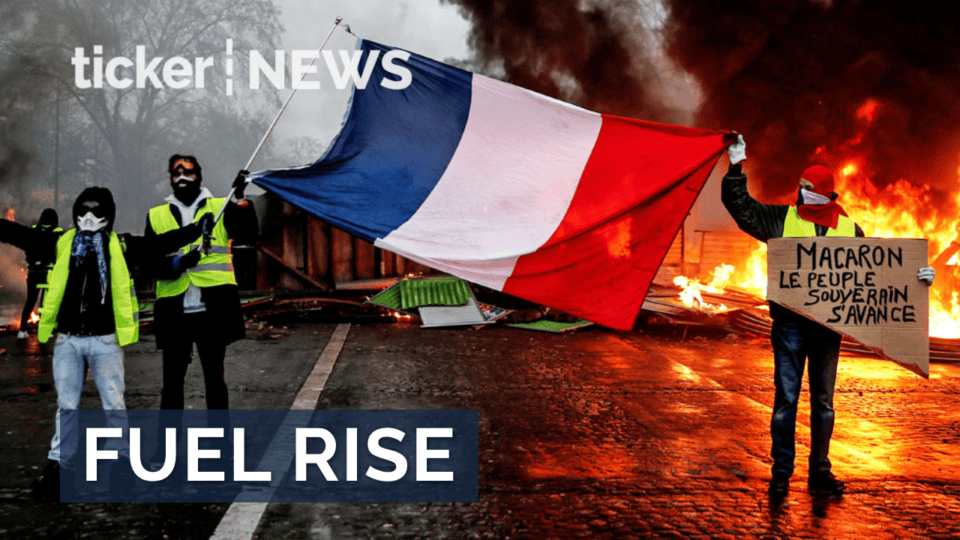
People in regional areas are doing it tough. They are affected more by the rising price of diesel, by the cost of living, by lack of infrastructure and inadequate access to healthcare.
We have to take this seriously. This is why One Nation is proliferating in regional Australia – the party may not have any detailed policies, but voters feel someone is finally listening to them and expressing the anger they feel.
We are seeing the same pattern in the outer suburbs, with the same results and risks. Many people in positions of power are living in an urban bubble, but they simply must listen to people outside of that who are expressing real hardship.
And of course there is the online environment, about which we need to hold some uncomfortable conversations. It’s one thing to allow people to speak their mind, but they should never have the freedom to threaten and harass others. People have to be held to account for it — and importantly, so should the social media platforms.
Josh Roose, Director of Research and Policy at The Dor Foundation and Associate Professor of Politics at Deakin University, Deakin University
This article is republished from The Conversation under a Creative Commons license. Read the original article.