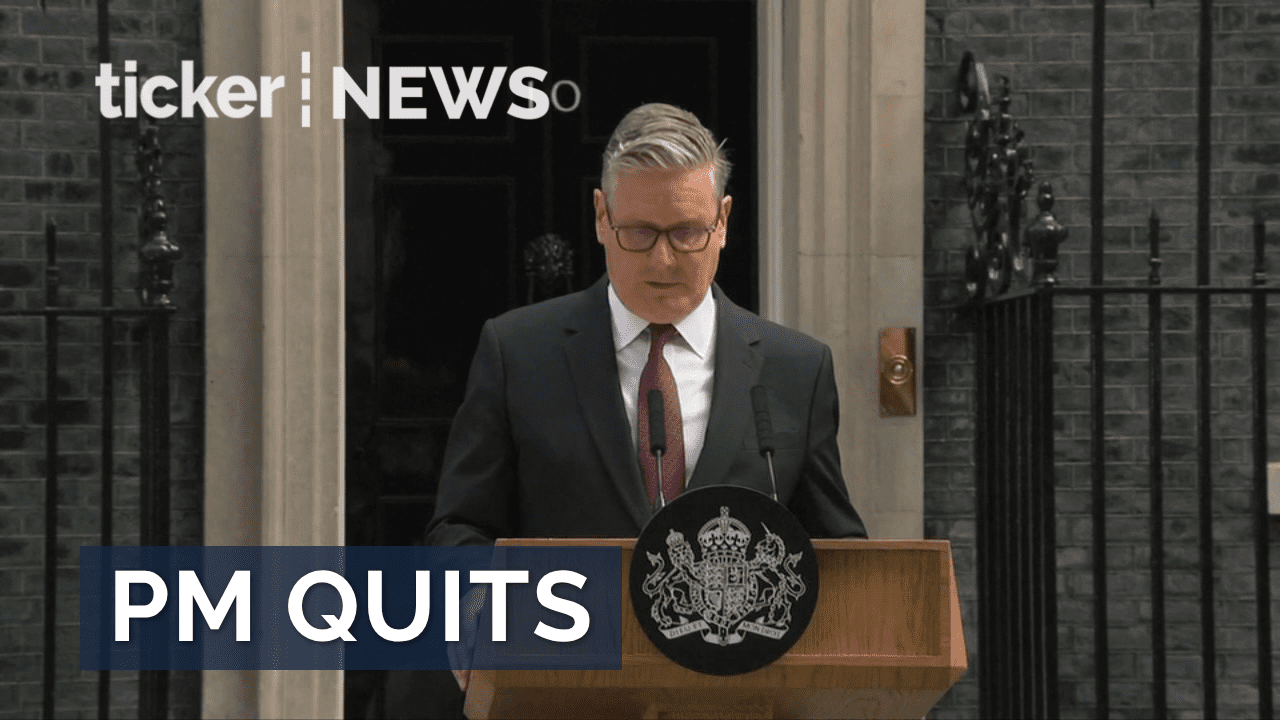
Keir Starmer resigns as UK prime minister after two years amid internal Labour Party pressure
British Prime Minister Keir Starmer announced his resignation, facing pressure from within his Labour Party less than two years after a significant election victory. His exit marks Britain’s seventh prime minister in a decade.
Starmer will act as caretaker until a successor is appointed, with nominations to open on July 9.
The new leader is expected before Parliament reconvenes in September.
Once viewed as a stabilising force, Starmer’s resignation stemmed from a lack of ideological clarity.
The resignation follows disappointing local election results, where the Reform UK party gained ground at Labour’s expense.
Nigel Farage of Reform UK has called for a general election despite Labour maintaining a parliamentary majority.
The frontrunner to succeed Starmer is Andy Burnham, who recently secured a parliamentary seat with 55% of the vote.
Burnham enjoys strong support from Labour members, with polling showing roughly 61% backing him as leader.
His image as a relatable northern figure sets him apart in British politics.
Starmer’s departure adds to the ongoing instability since the 2016 Brexit referendum.
If Burnham runs unopposed, a leadership transition could occur by July.
🚨 WATCH: Keir Starmer announces he’s resigning Prime Minister
“Every decision I have taken is about putting the country I love first. That is why I will resign” pic.twitter.com/x8p6B6WVWj
— Politics UK (@PolitlcsUK) June 22, 2026
Leadership transition
Labour will continue in government without a general election despite the upcoming leadership change.
The E5 leaders are set to meet in Berlin amid the political turmoil in the UK.
European military coordination will be discussed during this summit as tensions rise.
The summit’s fate may depend on the speed of Labour’s leadership transition.