
Apple has unveiled its first foldable iPhone, marking one of the biggest changes to the company’s flagship device since the original iPhone launched nearly two decades ago.
The new iPhone Duo headlined Apple’s “Surprise and Shine” event, alongside the iPhone 18 Pro and Pro Max, AirPods 5, Apple Watch Series 12 and Apple Watch Ultra 4.
The 77-minute presentation also placed artificial intelligence firmly at the centre of Apple’s strategy, with the company positioning the iPhone as what it calls an “intelligent personal hub”.
Apple enters the foldable phone market
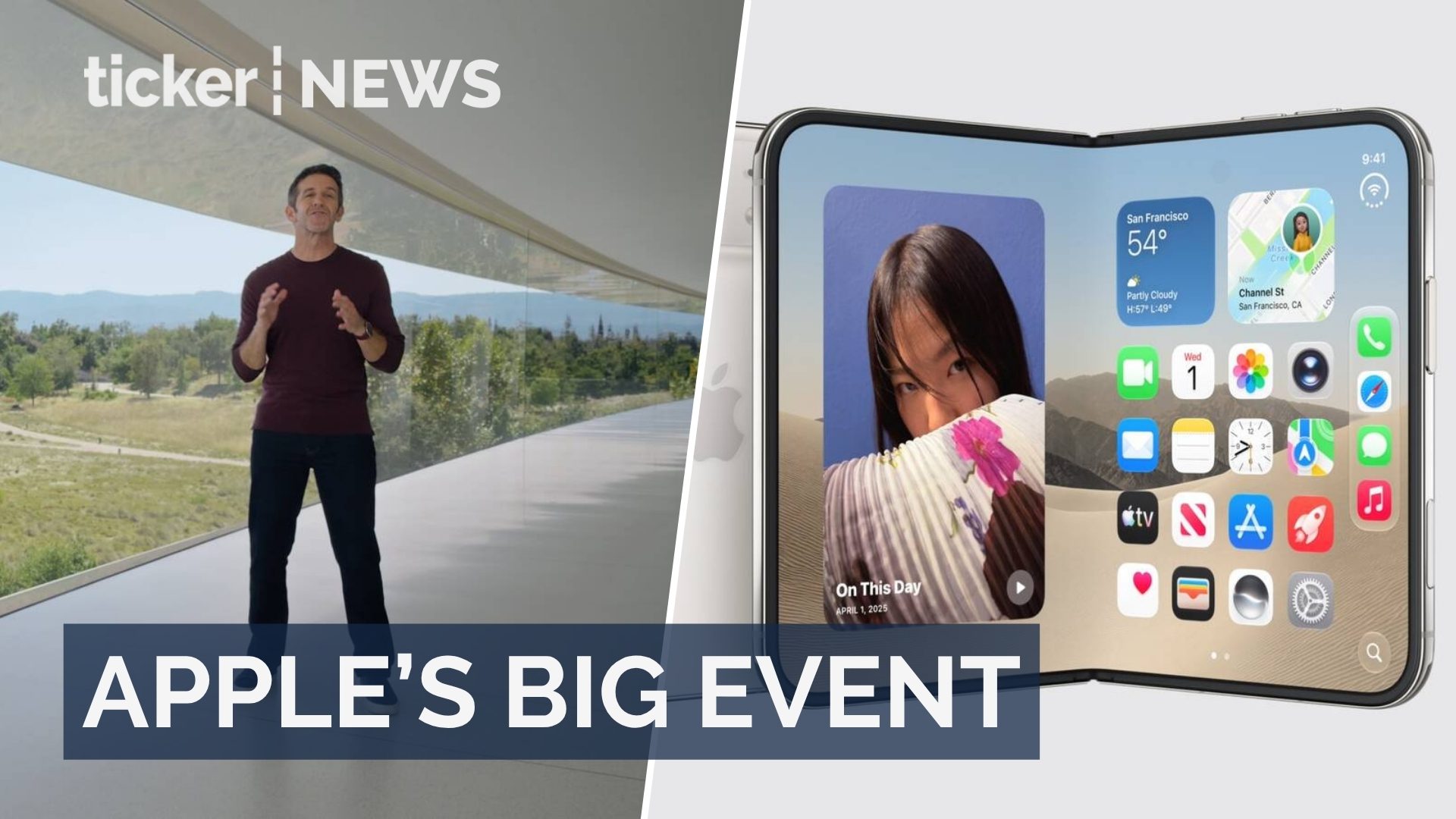
The biggest announcement came towards the end of the event when Apple revealed the iPhone Duo, its long-awaited entry into the foldable smartphone market.
Apple acknowledged it was entering a category already established by rivals, arguing that existing foldables could feel like “two phones awkwardly stuck together”.
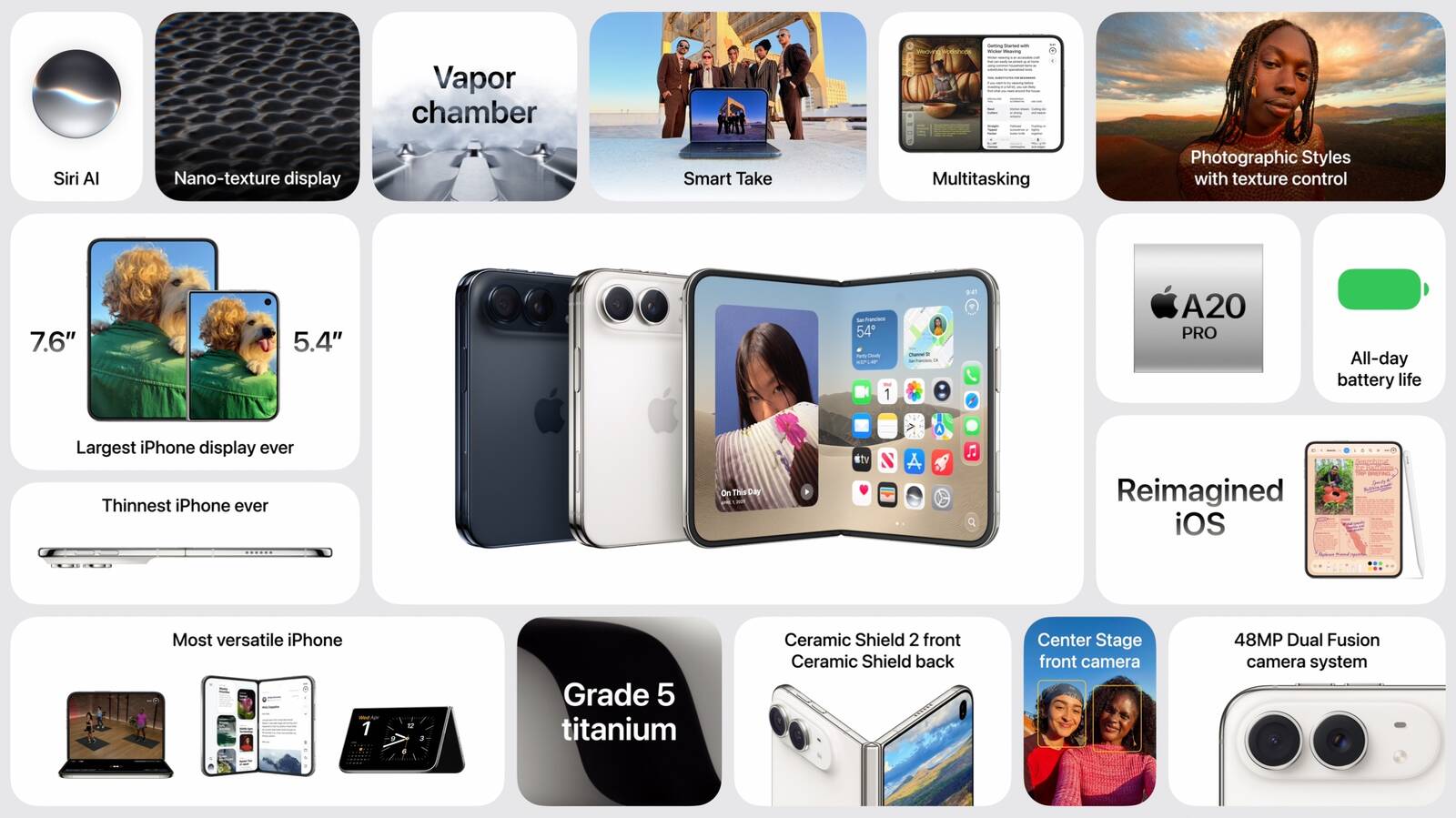
The Duo instead combines a 5.4-inch outer display with a 7.6-inch Super Retina XDR inner display. When unfolded, the internal screen is 50 per cent larger than the iPhone 18 Pro Max display, effectively giving users a small tablet that still folds into a pocket-sized device.
Apple has redesigned parts of iOS specifically for the new form factor. Users can run two apps simultaneously, launch two instances of the same app and position the phone partially folded on a table for video, photography and other applications.
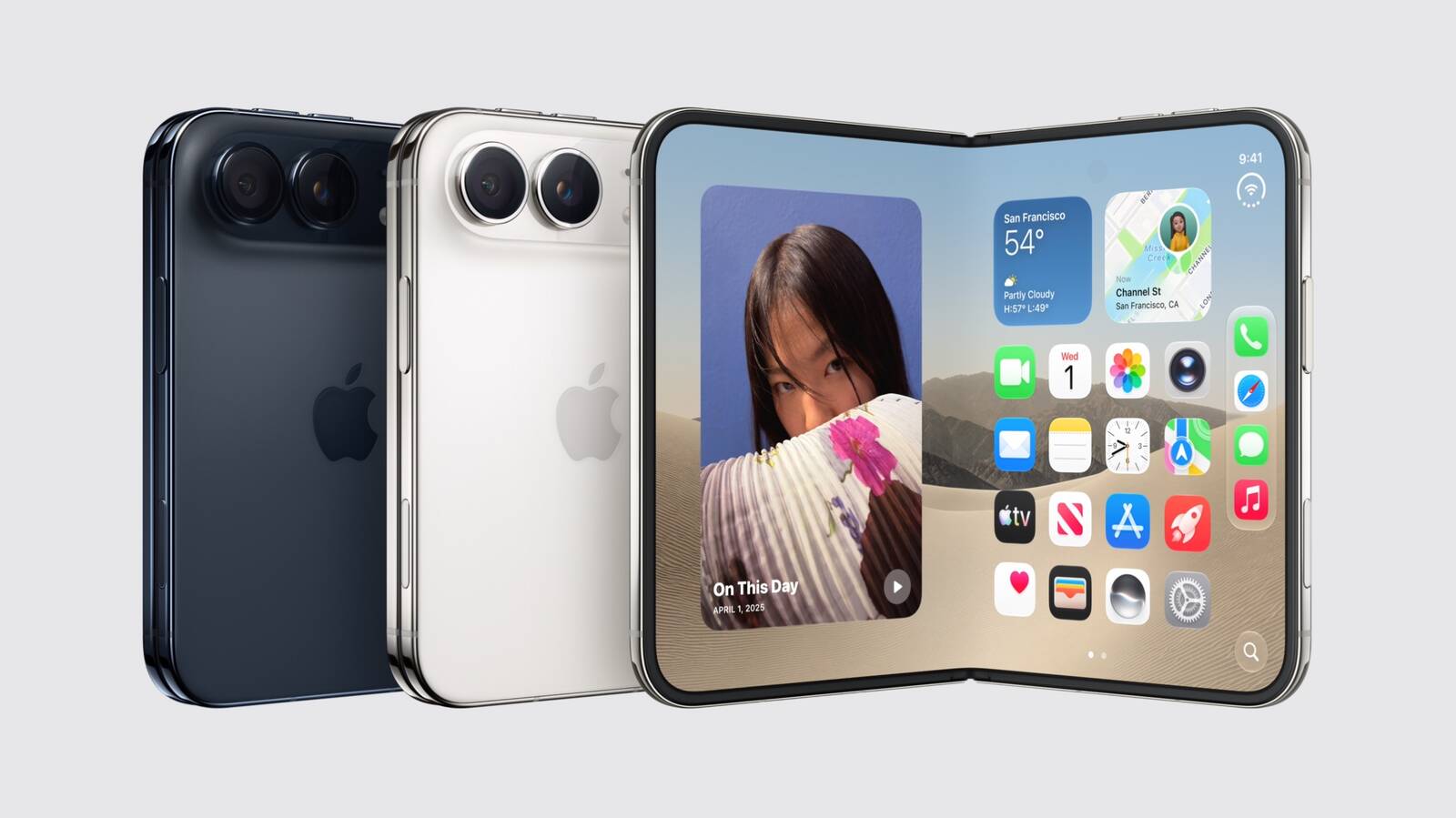
The titanium device uses a complex hinge system and multi-layer display construction designed to keep the screen flat while improving durability. Touch ID is integrated into the side button, while Apple Pencil support is expected later this year.
There are also two batteries — one in each half — which operate together as a single system. Apple says the Duo can deliver up to 31 hours of video playback using its inner screen and 44 hours on the outer display.
The iPhone Duo starts at US$1,999, with storage ranging from 256GB to 2TB. Pre-orders begin October 16 ahead of availability from October 23.
iPhone 18 Pro gets a major camera upgrade
Before revealing the Duo, Apple introduced the iPhone 18 Pro and iPhone 18 Pro Max, powered by its new A20 Pro processor.
Built using a 2-nanometre architecture, the A20 Pro features a six-core CPU, upgraded GPU and expanded neural processing capabilities aimed particularly at running AI models directly on the device.
Apple also redesigned the phone’s thermal architecture, using a larger vapour chamber to improve sustained performance.
But photography remains one of the biggest selling points.
The iPhone 18 Pro introduces a new 48-megapixel Fusion main camera with variable aperture, allowing the camera to physically adjust how much light reaches the sensor.
Apple is also bringing more professional controls to the Camera app, including manual aperture, shutter speed and white balance settings.
Another significant addition is Apple Reference Image, designed to verify that a photograph was actually captured on an iPhone and has not subsequently been altered. Apple described the system as effectively creating a “digital negative”.
Battery life has also improved, with Apple claiming up to 36 hours of video playback on the iPhone 18 Pro and 45 hours on the Pro Max. The Pro can reach 50 per cent charge in around 15 minutes using wired charging.
The iPhone 18 Pro starts at US$1,199, while the Pro Max begins at US$1,299, with storage options now extending to 2TB. Pre-orders open September 12 before availability on September 18.

Apple Intelligence moves deeper into Siri
Artificial intelligence ran through almost every part of the event.
Apple showed a significantly expanded Siri capable of understanding personal context across apps including Mail and Messages and taking actions within both Apple and third-party applications.
Siri can also operate from within the Camera app, while Apple says its latest on-device AI models improve voice quality and dictation.
The broader message was privacy.
New Apple chief executive John Ternus used the opening of the event to contrast Apple’s approach with AI services that send large amounts of personal information to external servers, arguing that Apple can combine on-device processing with its Private Cloud Compute infrastructure.
It was a clear attempt to turn privacy into a competitive advantage as AI becomes increasingly embedded into smartphones.
AirPods 5 arrive with better noise cancellation
Apple also unveiled AirPods 5, retaining the company’s open-ear design while introducing significantly stronger active noise cancellation.
Apple says noise reduction is 50 per cent better than AirPods 4, while the earphones also support Live Translation and hands-free Siri access.
The standard AirPods 5 cost US$129, while a US$149 version adds features including on-stem volume controls, longer battery life and a wireless charging case.
Both become available on September 18.
Apple Watch puts AI and health centre stage
The Apple Watch Series 12 and Ultra 4 received some of the event’s most significant health upgrades.
Apple introduced a redesigned health sensing system capable of collecting heart-rate information far more frequently. The company says heart-rate readings can now be taken every five seconds, while heart-rate variability can be sampled as frequently as every five minutes.
A new readiness feature combines activity, sleep and vital signs to provide users with a daily assessment of whether their body is ready to exercise or should recover.
Apple is also expanding its Health app with a new Health Age feature, designed to compare metrics including VO2 Max and sleep with a user’s actual age. A longevity section will bring together information about sleep, movement, heart health and other measurements.
But one of the more unusual developments is Audio Intelligence on Apple Watch.
The watch will be able to recognise sounds including alarms, doorbells and babies crying, while a Live Rewind function can transcribe something said during the previous 15 seconds.
A new Siri Recap feature can also listen to conversations when enabled and produce AI-generated summaries and key points — potentially turning Apple Watch into a meeting and conversation note-taking device. Apple says the feature does not create or store audio recordings.
Series 12 starts at US$399, while the Ultra 4 starts at US$799, with both available from September 18.
A changing of the guard at Apple
Beyond the hardware, the event was notable for another reason: it represented a changing of the guard at Apple.
Tim Cook appeared at the beginning of the presentation before handing proceedings to new CEO John Ternus, who used his first major product event to lay out a vision centred heavily on artificial intelligence, privacy and tighter integration between Apple hardware and software.
The message was that Apple sees the iPhone evolving beyond simply being a smartphone.
Instead, the company wants it to become the central AI device through which users communicate, create, work and interact with the rest of their digital lives.
And while the iPhone 18 Pro, new Apple Watches and AirPods represent substantial upgrades, the iPhone Duo was clearly designed to provide the event’s defining moment.
After years of watching rivals develop the foldable market, Apple has finally entered it — but in typical Apple fashion, it is arguing that being first matters less than getting the experience right.
At US$1,999, the Duo will initially be a premium proposition.
But its significance goes beyond how many Apple sells in its first year.
For the first time since the iPhone became the dominant template for the modern smartphone, Apple is fundamentally changing what an iPhone looks like — and how it is meant to be used.