Cash flow-focused property investment strategy outlined by Jake Pipakis for building long-term portfolio capacity without high costs
Property investors should prioritise cash flow, affordability and long term portfolio growth when building a sustainable investment strategy, according to Real Deal Property’s Jake Pipakis.
Speaking on The Property Playbook with host Terry Ryder, Pipakis outlined an approach centred on acquiring properties that can cover their ongoing expenses through rental income, helping investors manage holding costs while preserving their capacity to expand their portfolios.
Pipakis challenges the long held assumption that high yielding properties are unlikely to deliver capital growth.
Drawing on his own investment experience, he argues that investors do not necessarily have to choose between rental returns and long term appreciation.
Instead, he recommends building a portfolio around individual financial goals, with careful attention to cash flow, borrowing capacity and the ability to use equity to fund future acquisitions.
Why affordable properties are attracting investors
Pipakis said his agency focuses on what it describes as “class one” properties, including townhouses and units, which can offer a more accessible entry point than standalone houses while generally involving lower purchase prices and operating costs.
As housing affordability continues to challenge Australian buyers, these property types are attracting interest from a broad range of purchasers, including first home buyers and downsizers.
However, Pipakis cautioned investors against chasing rental yields without examining the underlying fundamentals of a market.
He warned against high rise developments with limited land ownership exposure and highlighted the risks associated with regional towns heavily dependent on a single industry.
Markets such as Gladstone and Moranbah illustrate how economic downturns in a dominant industry can affect local employment, housing demand and property values.
For investors, the message is to look beyond headline rental returns and assess the diversity of local employment, population trends, infrastructure and the sustainability of tenant demand.
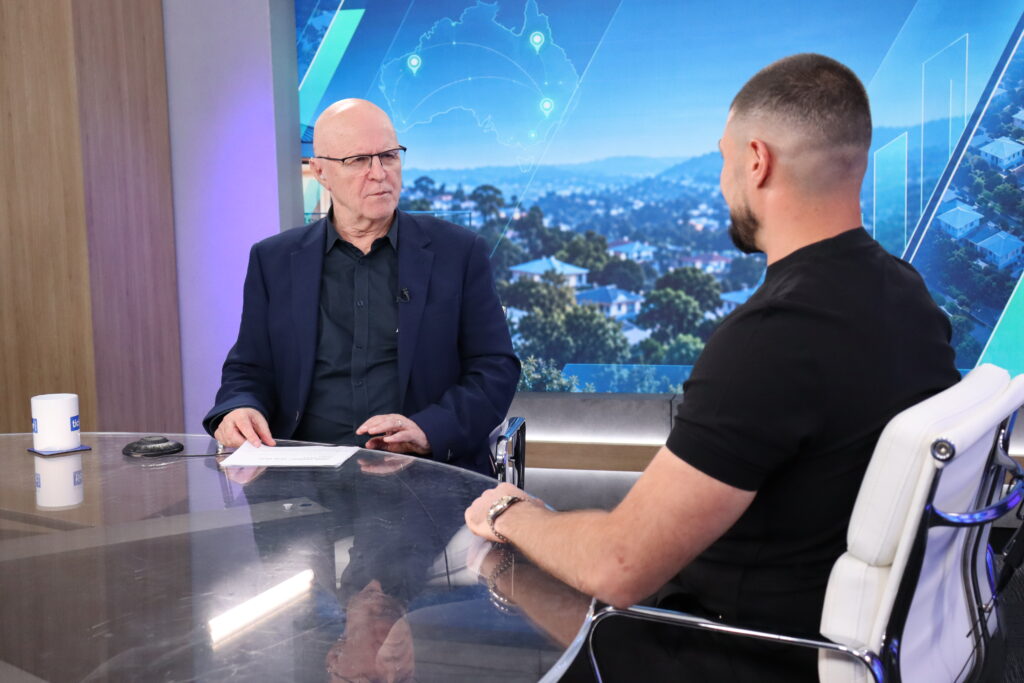
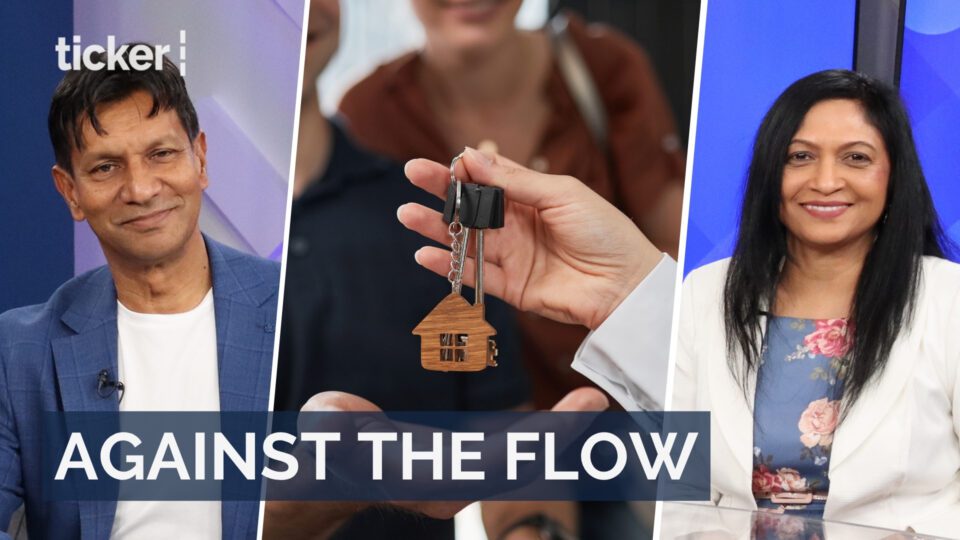
Terry Ryder with Jake Pipakis at the Ticker Studio
Building a portfolio without the holding costs
Pipakis illustrated his strategy through the example of a young client who began investing with limited funds and went on to purchase two positively geared properties in Darwin.
According to the example discussed, rental income covered the properties’ ongoing expenses, while equity generated from the first acquisition helped the client secure the second.
The approach demonstrates how cash flow and equity can work together to support portfolio expansion, potentially allowing investors to acquire additional assets without placing significant pressure on their personal finances.
However, outcomes depend on individual circumstances, financing arrangements, property performance and market conditions. Positive cash flow and capital growth are not guaranteed.
Pipakis’s broader message is that successful property investing requires a clear strategy, disciplined research and assets selected for their ability to support an investor’s long term objectives.
For more information, visit Hotspotting.