
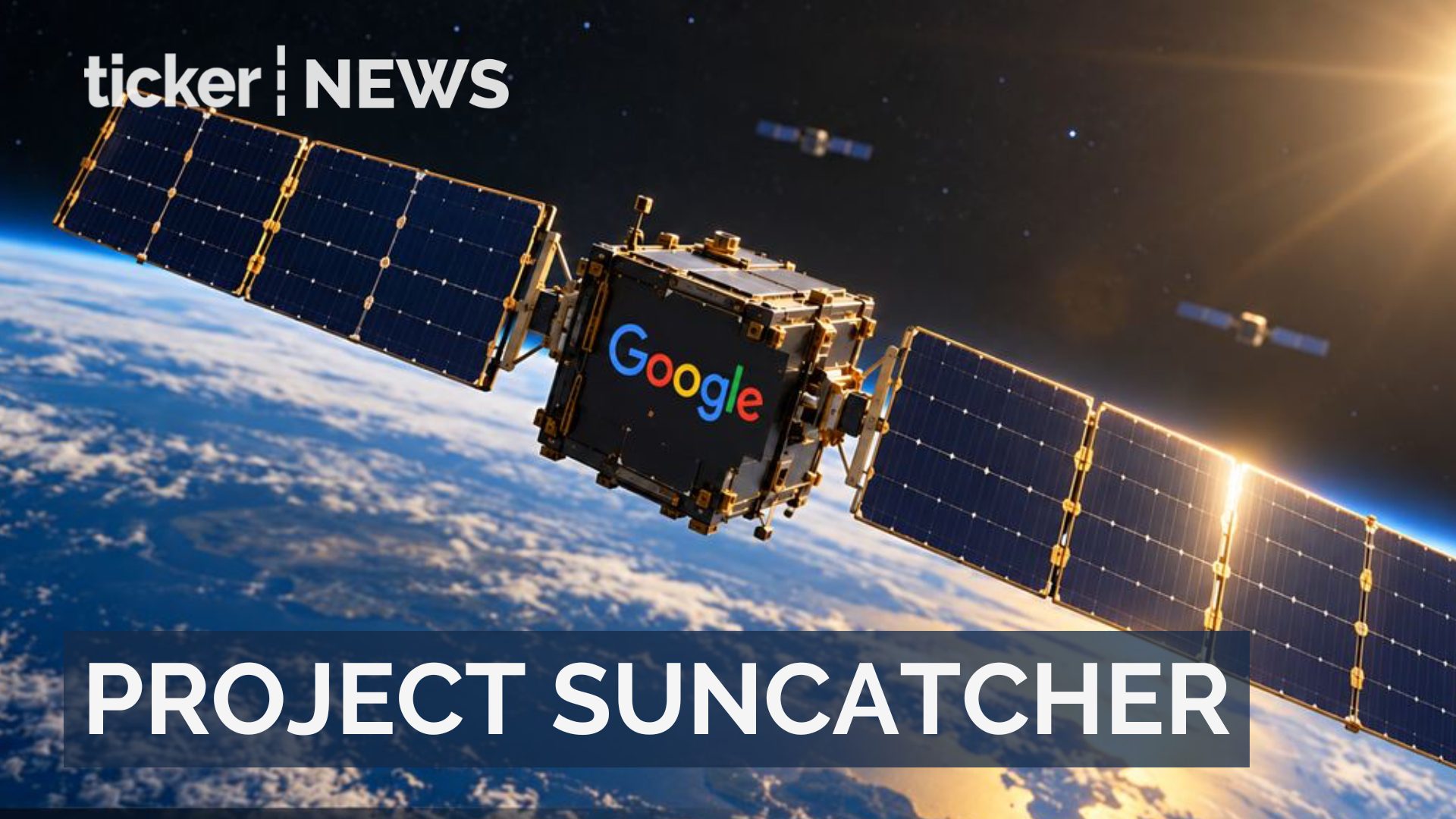
Google’s Project Suncatcher achieves first AI response from satellite, marking a milestone in space-based machine learning exploration
CEO Sundar Pichai announced the milestone in a post on X, describing it as a “‘hello world’ milestone.”
The team transmitted a command to the satellite, activated its Tensor Processing Unit (TPU), executed a prompt, and received a complete response back on Earth.
Project Suncatcher
The prototype satellite was launched on October 1 as part of a long-term research project.
Following the launch, the satellite conducted commissioning checks, including powering up its host and TPU trays.
During a ground-station pass, a prompt was sent to the onboard Gemma 4 open model, asking it to create a haiku about space.
The haiku was successfully received as the satellite passed over Svalbard, Norway.

Subsequent tests involved generating space-themed limericks and assessing the satellite’s systems.
Future phases include evaluating the TPUs’ performance under thermal and radiation stress in orbit.
These evaluations aim to confirm the chips can manage computing workloads effectively in space.
The successful testing is crucial for connecting two satellites by 2027 to manage larger AI tasks.
Google anticipates that satellites in low Earth orbit may produce up to eight times more solar power than on Earth.
The current progress in Project Suncatcher aligns with Google’s goal to explore scalable AI capabilities in space.