
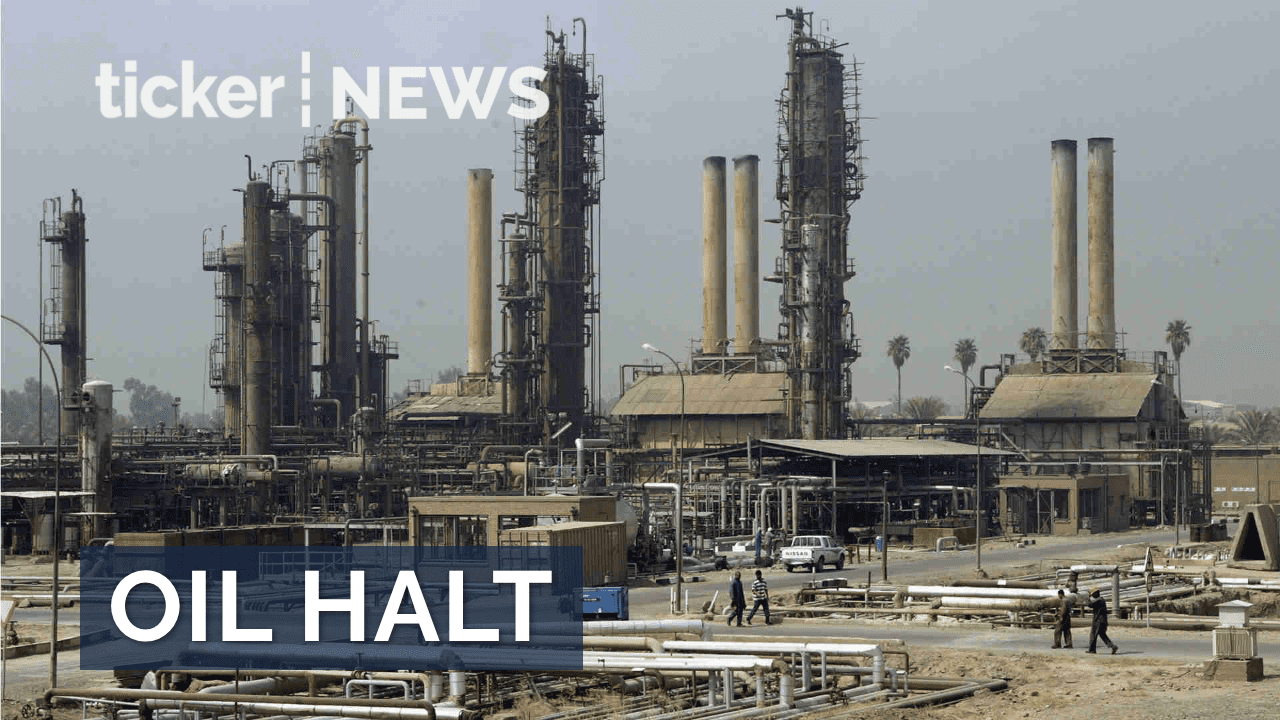
Iraq’s oil exports completely halt as Hormuz closure slashes production by 70% amidst ongoing regional conflict


Production crisis
Basra’s output fell from 3.1 million barrels per day to about 900,000, according to Bassem Abdul Karim of the Basra Oil Company.
The closure of the Strait of Hormuz, critical for Iraqi crude exports, directly impacts the economy, reliant on oil revenues for 90% of its budget.
Iran has closed the strait following U.S. and Israeli airstrikes, raising safety concerns for shipping.
Although Iran has claimed safety for Iraqi exports, the lack of a national tanker fleet has complicated the situation.
Recent reports indicated production had plunged by up to 80%, with storage facilities at capacity.
Attacks by Iran-aligned militias have further disrupted operations, targeting oil fields and infrastructures, including facilities run by BP and KBR.
Seeking solutions
Iraq is now exporting from its northern Kirkuk fields via a pipeline to Turkey’s Ceyhan port, though this route can only partially replace southern output losses.
Economic expert Ahmed Tabaqchali stated that the government can sustain expenses until mid-May without new revenues, after which bond issuance may be necessary.
President Trump indicated potential reopening of the Strait of Hormuz once hostilities cease, linking ceasefire terms to maritime safety.
The U.K. plans to host a conference with 35 nations to strategise on reopening the strait, underscoring the complexity of the situation.
Iraq’s current crisis has increased urgency for alternative infrastructure, even as project completion could take years.