
Connect with us
https://tickernews.co/wp-content/uploads/2023/10/AmEx-Thought-Leaders.jpg

News

Hong Kong tightens travel curbs to combat COVID-zero

Published

on

Residents and tourists returning from 16 countries are now considered “high-risk” due to the Delta outbreak
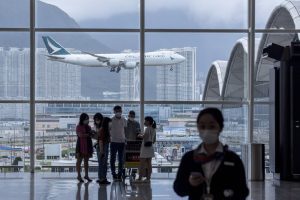
Hong Kong introduces tighter travel restrictions for incoming residents

Hong Kong appears to be caught between its COVID-zero policy and its strong desire to re-open after tightening travel restrictions for incoming travellers. 

The move comes less than two months after the easing of tough quarantine measures, as fears grow regarding a resurgence in COVID-19 cases from the Delta variant.

Travel curbs are tightened for residents returning from 16 countries including the United States, France and Spain.

Initially these countries were considered “medium-risk” but are now upgraded to the “high-risk” category following recent outbreaks, a government spokesperson says.

“The global COVID-19 epidemic situation is under serious threat from the Delta variant, with acute surges in the number of confirmed cases within a short period of time in many countries.”

“Despite large-scale vaccination programmes, many places are also experiencing resurgence of the virus, which poses enormous challenges to our local anti-epidemic efforts.”

The new restrictions, taking effect from midnight August 20, means vaccinated residents returning from those countries must spend 21 days in hotel quarantine upon arrival. 

The curb will also see unvaccinated residents and tourists denied entry into the region. 

“After considering a basket of factors, the Government … has imposed more stringent boarding, quarantine and testing requirements on relevant inbound travellers in order to uphold the local barrier against the importation of COVID-19,” a government spokesperson says.

Prior to the update in restrictions, arriving residents and tourists who are vaccinated, only had to isolate in hotel quarantine for one week. 

But the seven-day isolation period wasn’t enough for a returning resident from the United States who tested positive for the virus after completing their week-stay in quarantine. 

“The Government will continue to closely monitor the epidemic situation of various places and adopt a risk-based approach,” a government spokesperson says.

“[We will] adjust the boarding, quarantine and testing requirements for persons arriving at Hong Kong from relevant places based on the risk levels as the situation warrants.”

Written by Rebecca Borg

Click to comment

Leave a Reply

Your email address will not be published. Required fields are marked *

News

Bondi Beach shooting: Chaos at Hanukkah Festival – What we know

Published

on

Gunmen open fire at Bondi Beach Hanukkah Festival; chaos ensues, raising safety concerns for public events.


What started as a joyful summer Sunday at Bondi Beach quickly descended into chaos when a gunman opened fire during a Hanukkah festival, leaving multiple dead and injured. The attack prompted an immediate counter-terrorism response as authorities scrambled to contain the situation. Witnesses described the horror unfolding in a busy public space, with brave bystanders and first responders stepping in to help.

The attack raises serious questions about the safety of major public events and religious gatherings. Why are such spaces increasingly vulnerable to violence, and how do authorities assess and prepare for these risks? Experts point to growing concerns about radicalization and the challenges of protecting open, high-profile locations.

In an exclusive interview, we speak with Tim Harcourt from UTS to explore the bigger picture. He discusses the role of bystanders, the impact of such incidents on public safety, and how authorities balance immediate response with long-term safety measures. Tune in for insights into how our communities can stay safer in an unpredictable world.

Subscribe to never miss an episode of Ticker – https://www.youtube.com/@weareticker

#BondiBeach #HanukkahFestival #TerrorAttack #PublicSafety #CounterTerrorism #FirstResponders #AustraliaNews #PublicEvents


Download the Ticker app

Continue Reading

News

Trump and Albanese sign rare-earth deal: What it means for U.S.-Australia relations

Trump and Albanese’s rare-earth deal reshapes U.S.-Australia relations amid rising geopolitical challenges.

Published

on

Trump and Albanese’s rare-earth deal reshapes U.S.-Australia relations amid rising geopolitical challenges.


In a groundbreaking meeting in Washington, U.S. President Donald Trump and Australian Prime Minister Anthony Albanese signed a historic rare-earth deal that marks a significant shift in the relationship between the two nations. This agreement signals a potential alignment amid growing concerns over defense, technology, and foreign policy. As both countries face shifting geopolitical dynamics, this deal could redefine their strategic collaboration.

The U.S. and Australia have long been key allies in countering China’s influence, especially in the Indo-Pacific region. This deal, which focuses on rare-earth materials crucial for defense and technology sectors, demonstrates how both nations are looking to strengthen their ties. Australia’s role as a strategic partner is now more critical than ever, with the growing influence of China posing a shared challenge.

Chris Berg, an expert from RMIT University, discusses the implications of this partnership, including its impact on Australia’s security needs and its relationship with the U.S. regarding Taiwan, the Middle East, and the broader Indo-Pacific. From the AUKUS agreement to the U.S.-Australia approach to Palestine, these issues are shaping the future direction of bilateral relations.

Subscribe to never miss an episode of Ticker – https://www.youtube.com/@weareticker

#AustraliaUSRelations #RareEarthDeal #TrumpAlbanese #USAlliance #Geopolitics #IndoPacific #AUKUS #MiddleEastEurope


Download the Ticker app

Continue Reading

News

Bondi Beach terror attack: Hanukkah celebrations turned tragic

Gunmen attack Hanukkah celebration at Bondi Beach, resulting in 16 deaths and outrage over rising anti-Semitism in Australia.

Published

on

Gunmen attack Hanukkah celebration at Bondi Beach, resulting in 16 deaths and outrage over rising anti-Semitism in Australia.


In a devastating and unexpected attack, two gunmen opened fire on crowds celebrating Hanukkah at Bondi Beach, leading to at least 16 deaths and numerous injuries. This horrific act of terror has shocked the nation, igniting widespread outrage and calls for unity against anti-Semitism. The Jewish community, along with the public, is grappling with the unimaginable loss and trauma caused by the attack.

Government officials have condemned the violence, and law enforcement agencies are intensifying their efforts to prevent further incidents. While details about the gunmen are still emerging, the bravery of bystanders who intervened to stop the shooting has been widely praised. This act of terror has sparked a crucial conversation about safety, security, and the ongoing issue of anti-Semitism in Australia.

As the nation mourns, leaders from both religious and community sectors are calling for solidarity, urging authorities to take stronger action against hate-driven violence. Rabbi Abraham Cooper from the Simon Wiesenthal Center joins us to share his perspective on the impact of this tragedy on the Jewish community and how Australia can address the rise of anti-Semitism in the country.

Subscribe to never miss an episode of Ticker – https://www.youtube.com/@weareticker

#BondiBeach #HanukkahAttack #AntiSemitism #AustraliaTerror #JewishCommunity #GunViolence #SydneyTragedy #PublicSafety


Download the Ticker app

Continue Reading

Trending Now