

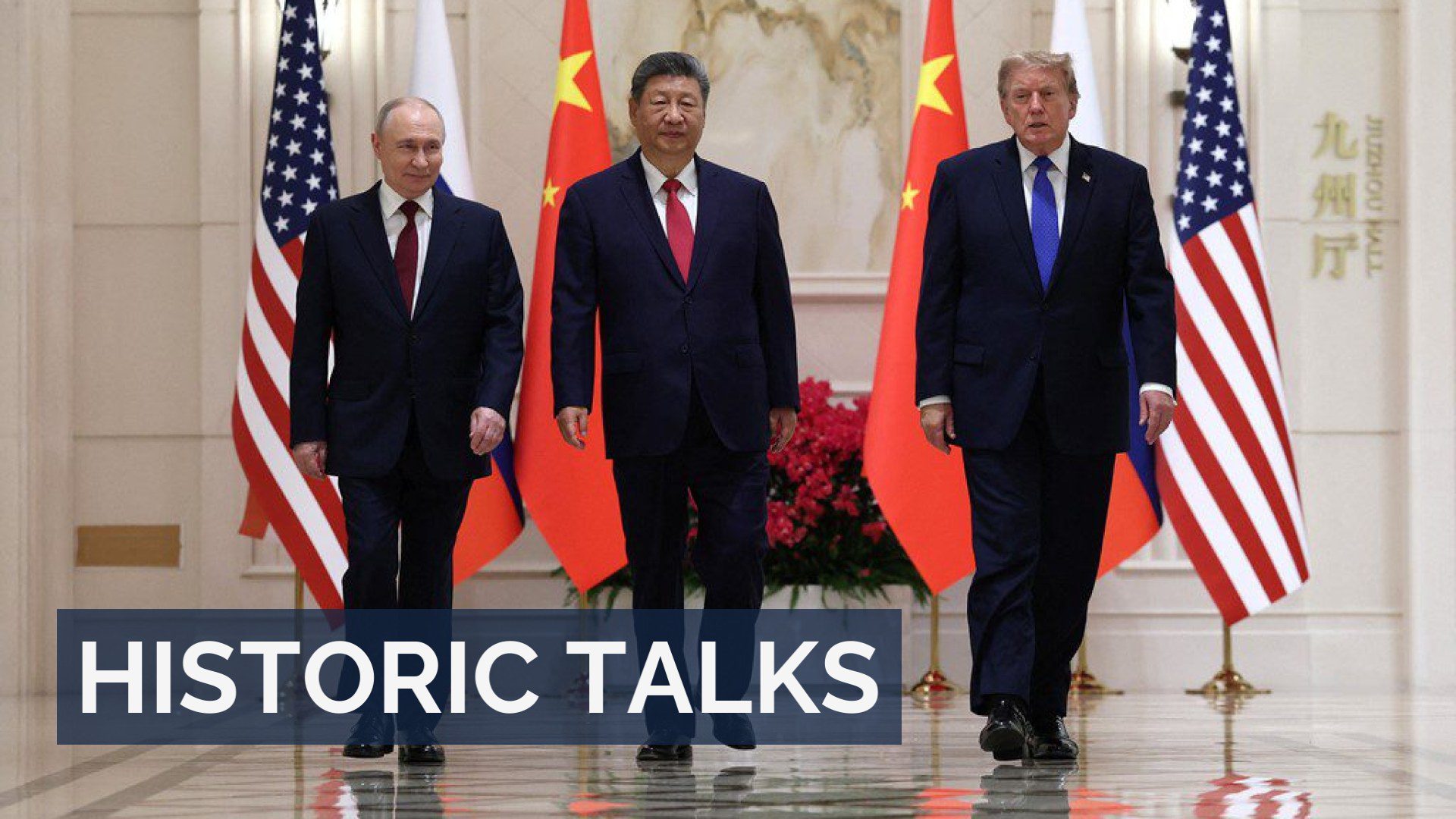
A highly anticipated trilateral meeting between Donald Trump, Xi Jinping, and Vladimir Putin has commenced, prompting observers to draw comparisons with the 1945 Yalta Conference. That historic gathering at the end of World War Two saw the leaders of the U.S., Britain and the Soviet Union redraw key aspects of the post-war global order, with long-lasting consequences for smaller nations.
Just before reporters were asked to leave today’s talks, a Russian journalist questioned Putin whether the summit “resembles Yalta 2.0”. According to video of the moment, Putin smiled and nodded in reply. Russian nationalists have welcomed such comparisons. Alexander Dugin, a nationalist ideologue, told Radio Sputnik that today’s event was “deeply symbolic,” and described it as evidence of a multi-polar world, rather than a Western-dominated one.
Concerns from smaller nations
The historical association has prompted anxiety among countries still locked in existential struggles with great powers. Volodymyr Zelenskyy warned that he does not want a repeat of past summits where major powers determined the fate of smaller states: “We really don’t want this to turn into ‘Yalta 2, 3, 4,’ with a redistribution of influence,” he said ahead of the meeting.
Asia correspondent Helen-Ann Smith notes that while Trump, Xi and Putin each spoke of the “historic significance” of their summit, the optics may be troubling for capitals such as Kyiv or Taipei. Ukraine continues to defend itself against Russia’s invasion, and Taiwan faces renewed pressure from China.
Speculation has grown after Trump remarked that “things are happening” regarding Ukraine, especially given his prior warm meeting with Putin. Analysts say such statements may raise alarm bells in Ukraine and throughout Europe.
Key points from bilateral talks
Before the trilateral talks, Trump and Xi met separately. According to China’s Xinhua news agency, the two leaders discussed a range of issues. Xi called current relations “stable and moving in a positive direction” and urged Trump to expand cooperation while managing differences constructively. Both agreed to draw up an “action plan for a constructive strategic stability relationship” and to collaborate on issues like AI, which Xi said must remain under human control.
Trump pledged that the U.S. does not support “Taiwan independence,” echoing Beijing’s priorities. Trade and investment ties, as well as ways to peacefully manage disputes, were also highlighted.
In his opening remarks at the trilateral, Trump said the three nations, as the world’s largest nuclear powers, have a “special responsibility” to discuss nuclear disarmament. He acknowledged that while cooperation is important, giving up nuclear weapons is “very hard.” Putin stressed joint responsibility for peace and claimed “numerous shared interests” exist, including in Ukraine, though recent actions and ongoing demands by Russia over Ukraine’s future remain unresolved.
What was agreed during the closed-door talks is not yet known. Observers say the potential for genuine progress remains uncertain, and concerns linger among those countries whose fate might be decided without their involvement.




















Comments
No comments yet. Start the conversation.