
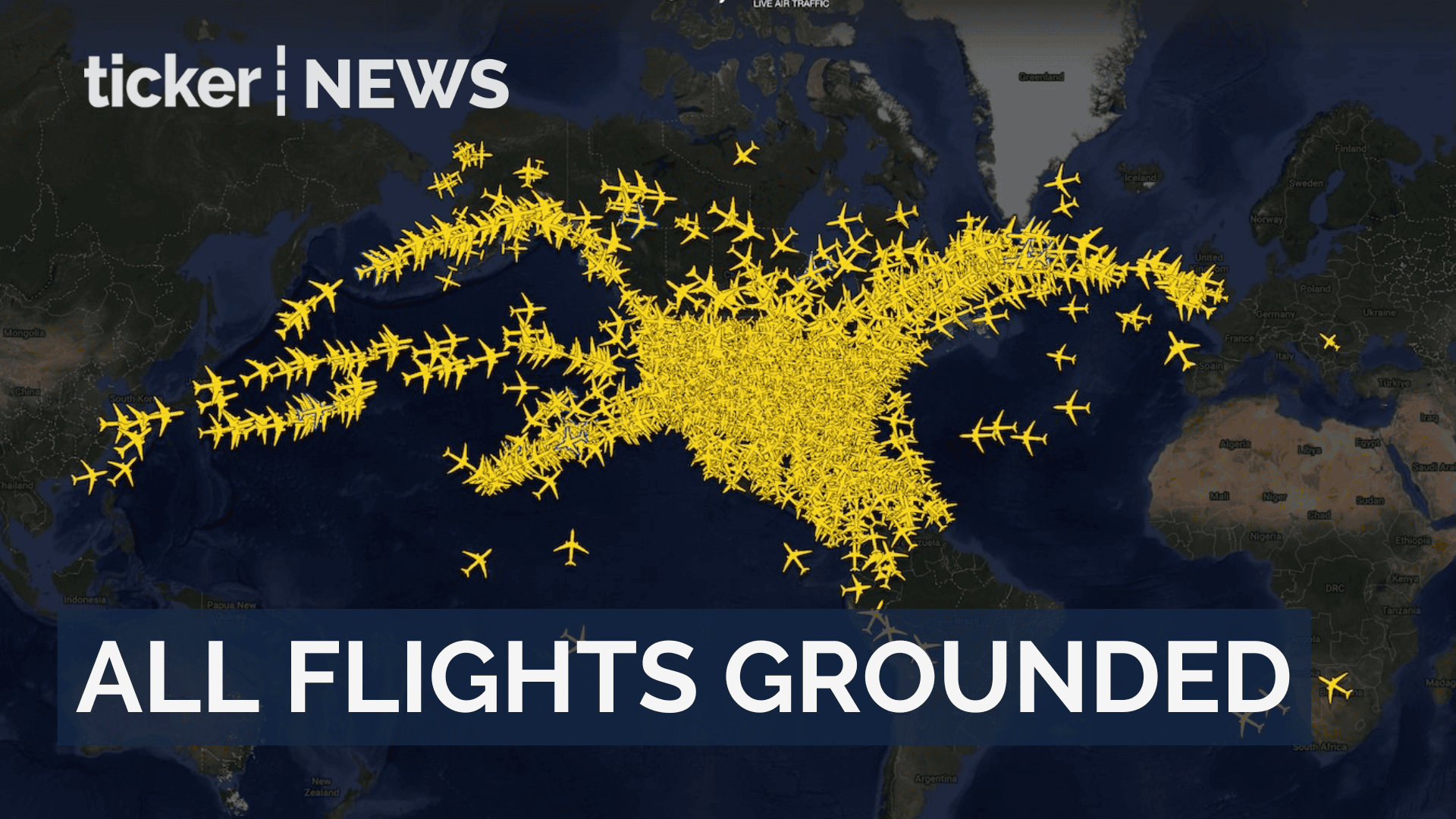
A major communications failure has forced the Federal Aviation Administration to halt departures across the United States, raising fresh concerns about the country’s ageing air traffic control infrastructure.
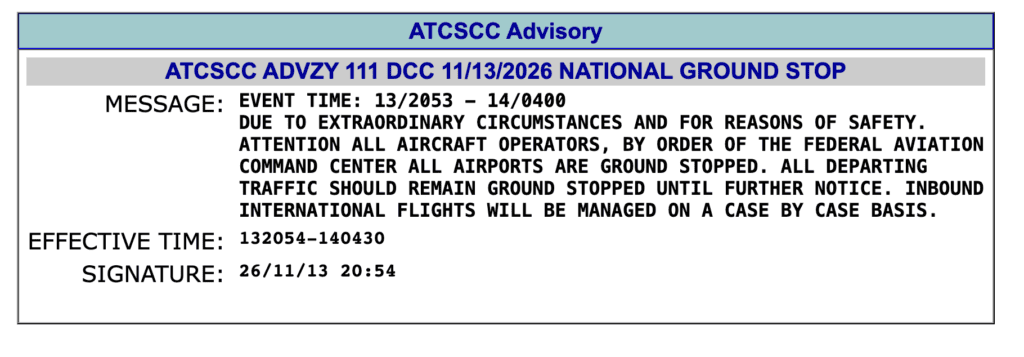
The Federal Aviation Administration (FAA) issued a rare nationwide ground stop on Friday, ordering departing aircraft to remain on the ground because of what it described as extraordinary circumstances and safety concerns.
U.S. Transportation Secretary Sean Duffy said the emergency order followed a communications issue affecting all 22 Air Route Traffic Control Centers, which manage aircraft travelling between airports across the country.
FAA technicians are investigating the disruption, but the precise technical cause has not been publicly established.
Air traffic control audio captured the moment controllers instructed aircraft to remain grounded, illustrating the immediate impact of the emergency order.
What caused the FAA ground stop?
The immediate trigger appears to be a widespread failure affecting communications between air traffic control facilities.
These communications systems are essential for coordinating aircraft movements, maintaining safe separation between flights and transferring responsibility for aircraft between regional control centres.
When controllers cannot reliably communicate or coordinate aircraft movements, the FAA can suspend departures to prevent additional aircraft from entering an already disrupted airspace system.
The nationwide order does not mean every aircraft already flying over the United States has been forced to land.
Instead, departing aircraft have been instructed to remain grounded until further notice, while international arrivals are being managed on a case-by-case basis.
Was the FAA outage caused by a cyberattack?
Preliminary reports suggest the disruption was not caused by a cyberattack, although investigators have not yet publicly established the underlying technical failure.
Questions have also emerged about whether the disruption could be connected to a reported Microsoft outage the previous day.
However, no confirmed evidence has established a connection between the two incidents.
The FAA and federal authorities will need to determine whether the failure originated in communications hardware, software, network infrastructure or another component of the national air traffic control system.
Is America’s ageing aviation infrastructure to blame?
The incident has renewed scrutiny of the ageing technology supporting the world’s busiest aviation system.
For decades, the FAA has relied on a complicated network of legacy communications equipment, including copper wiring, ageing radio systems and older computer infrastructure.
Congress approved $12.5 billion last year to begin modernising the air traffic control system.
That work includes replacing copper cables with fibre optic connections and upgrading radio equipment at airports across the country.
However, Duffy has warned that another $30 billion will be needed to complete the overhaul, with the White House seeking additional congressional funding.
The scale of the modernisation programme raises a critical question about whether the United States has invested enough to maintain the reliability of its aviation infrastructure.
While the latest communications failure has not been definitively linked to ageing equipment, it demonstrates the consequences when essential aviation systems become unavailable.
How rare is a nationwide FAA ground stop?
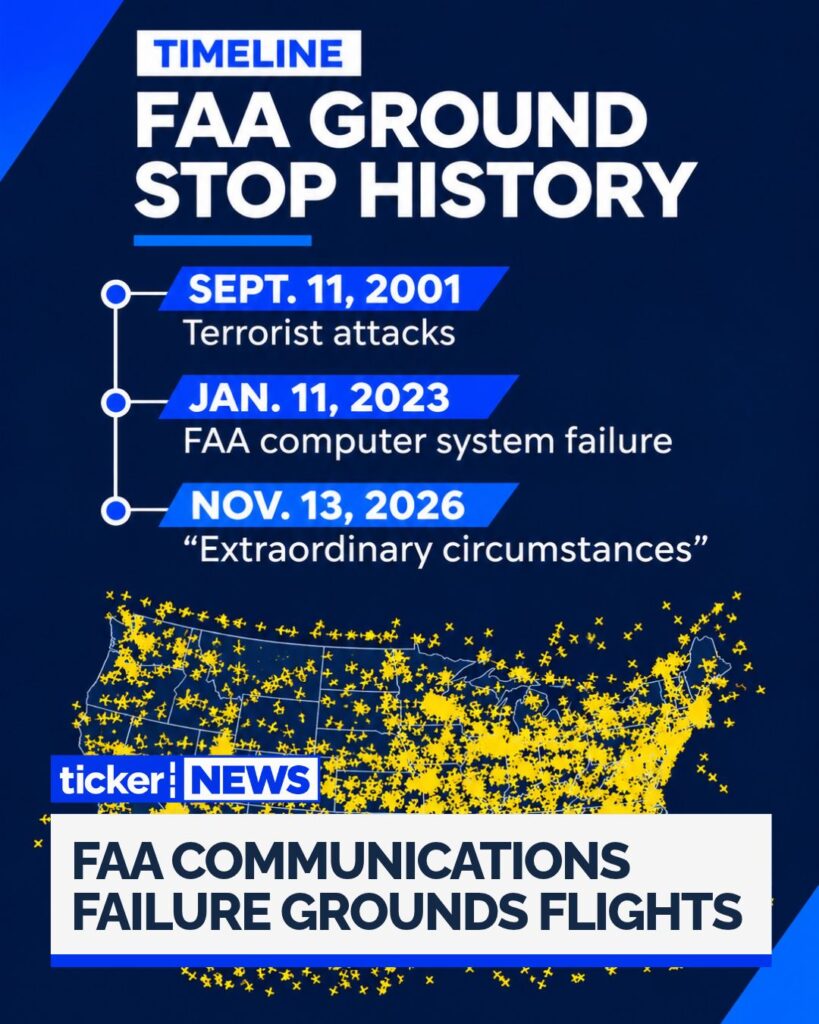
Nationwide ground stops are exceptionally unusual, with only three major incidents occurring over the past 25 years.
On September 11, 2001, the FAA grounded civilian air traffic following the terrorist attacks on New York and Washington.
On January 11, 2023, a malfunction involving the FAA’s Notice to Air Missions system forced the suspension of domestic departures across the country.
Now, on November 13, 2026, a nationwide communications disruption has prompted another extraordinary shutdown.
Unlike localised ground stops caused by severe weather, airport emergencies or equipment failures, a nationwide suspension affects the entire aviation network.
What happens next for passengers?
The immediate priority for the FAA is restoring reliable communications and determining when aircraft can safely resume departures.
Even after a nationwide ground stop is lifted, airlines can face significant disruption as aircraft, crews and passengers are left out of position.
Flight delays and cancellations can continue for hours as airlines work to restore normal schedules.
The latest incident also presents a broader challenge for Washington.
With aviation increasingly dependent on interconnected digital systems, the reliability of the nation’s air traffic control network is becoming an urgent infrastructure and national security concern.
For now, the central question remains unanswered: what caused communications across America’s air traffic control system to fail, and how quickly can authorities ensure it does not happen again?