Connect with us
https://tickernews.co/wp-content/uploads/2023/10/AmEx-Thought-Leaders.jpg

News

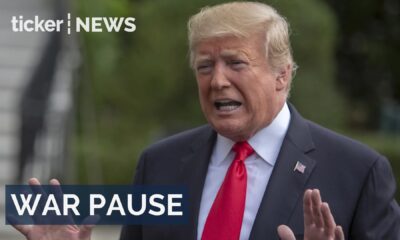
Trump denies tariff policy changes, calls report fake news

Trump Denies Tariff Plan Report, Calls It Fake News; Aides Discuss Targeting Critical Imports for National Security.

Published

on

Trump Denies Tariff Plan Report, Calls It Fake News; Aides Discuss Targeting Critical Imports for National Security.

U.S. President-elect Donald Trump has denied a report from the Washington Post suggesting that his aides are considering a revised tariff policy that would focus only on critical imports.

In a post on Truth Social, Trump labelled the report as “Fake News” and asserted that it inaccurately portrays his tariff stance. He dismissed the article, claiming it misrepresents his intended approach.

The Washington Post cited unnamed sources indicating that Trump’s team was reviewing tariff applications that would affect every country but concentrate on certain key sectors vital for national security. This would signify a departure from his earlier promises during the 2024 campaign. Following the report, European financial markets saw a notable increase.

Trump previously committed to imposing a 10% tariff on all global imports and a 60% tariff specifically on Chinese goods. Experts warn that these measures could disrupt trade dynamics, increase expenses, and provoke retaliatory actions against U.S. exports.

Details on which sectors would be affected by these potential tariffs remain unclear. However, preliminary discussions have highlighted priorities such as the defense supply chain, critical medical supplies, and energy production components.

Reports indicate that the Trump transition team may propose tariffs on all electric battery materials as part of a strategy to enhance domestic production. The Defense Department has also identified risks associated with dependence on Chinese supplies of essential materials.

News

Sheriff Nanos dismisses evidence claims in Nancy Guthrie case update

Sheriff Nanos addresses evidence claims and FBI collaboration in Nancy Guthrie case amidst ongoing investigation controversies

Published

on

Sheriff Nanos addresses evidence claims and FBI collaboration in Nancy Guthrie case amidst ongoing investigation controversies

video
play-sharp-fill
In Short:
– Sheriff Nanos confirmed no glove was found at Nancy’s residence and maintains evidence analysis through a trusted lab.
– He believes Nancy’s case involves kidnapping, but all new evidence and possibilities are still under investigation.

In a new interview with Pima County Sheriff Chris Nanos, he answers various topics concerning the ongoing investigation of Nancy’s case.Nanos stated that his office did not locate a glove at Nancy’s residence. He affirmed, “We have no glove. We never found a glove on that property.”

The sheriff explained that his office has utilised the same contracted lab for decades, long before his tenure. Evidence was initially submitted to this lab, which holds the Guthrie family DNA and other swabs. He stated it was logical to continue sending evidence there for immediate analysis alongside existing samples.

He noted the FBI’s agreement, expressing confidence in their crime lab but opting for the private lab due to initial arrangements.

Banner

Nanos asserted cooperation with the FBI, disputing claims of reluctance in seeking assistance. He contacted the FBI promptly after Nancy’s disappearance and allowed them to lead on ransom notes due to their expertise.

Investigation Details

On the possibility of kidnapping, he stated, “we believe it’s a kidnapping” while maintaining other possibilities should be considered. Different gloves were found miles away, but the importance of each remains under review.

No individuals have been definitively ruled out as suspects. Nanos described a man briefly detained nearby, stating he was satisfied with his alibi. He refrained from confirming any forced entry at Nancy’s home but did mention that blood and DNA were found at the scene.

He addressed criticism regarding the timing of releasing the crime scene, asserting that his office acted appropriately. Allegations about family involvement were dismissed, emphasising the family’s full cooperation.

Nanos confirmed communication with Savanah Guthrie but indicated she has her support system.

He dismissed past reports of a strained relationship with the FBI, asserting mutual respect and collaboration remain intact.


Download the Ticker app

Continue Reading

News

Russia bans WhatsApp and promotes state-backed messaging app

Kremlin blocks WhatsApp, urging citizens to use state-backed MAX; critics warn of surveillance, prompting protests in Moscow.

Published

on

Kremlin blocks WhatsApp, urging citizens to use state-backed MAX; critics warn of surveillance, prompting protests in Moscow.

The Kremlin has officially blocked WhatsApp, urging Russians to switch to MAX, a state-backed messaging app. This move comes after Meta refused to comply with local regulations, sparking debates over digital freedom in the country.

Critics warn that MAX could be used for government surveillance, though authorities deny these claims. The ban highlights Russia’s growing control over foreign tech platforms and its push for locally regulated alternatives.

Activists in Moscow have staged protests calling for an open and unregulated internet, while the public reacts with a mix of concern and resignation.

Subscribe to never miss an episode of Ticker – https://www.youtube.com/@weareticker


Download the Ticker app

Continue Reading

News

U.S. secretly sent 6,000 Starlink terminals to Iran after protests

US covertly sent 6,000 Starlink terminals to Iran amid protests, aiding internet access despite government shutdowns and crackdown violence.

Published

on

US covertly sent 6,000 Starlink terminals to Iran amid protests, aiding internet access despite government shutdowns and crackdown violence.

U.S. officials report that the Trump administration covertly sent around 6,000 Starlink satellite internet terminals into Iran following widespread protests. The move was designed to bypass strict internet blackouts imposed by authorities in Tehran.

The terminals reportedly enabled activists and dissidents to reconnect with the outside world during periods of severe digital restriction, raising fresh questions about foreign involvement and cyber strategy.

As geopolitical tensions simmer, the revelation underscores how connectivity has become a powerful tool in modern conflict.

#Iran #Starlink #DonaldTrump #MiddleEast #GlobalPolitics #TechNews #InternetFreedom #BreakingNews


Subscribe to never miss an episode of Ticker – https://www.youtube.com/@weareticker

Download the Ticker app

Continue Reading

Trending Now