
News
Eurovision 2022: fans celebrate a momentous victory

Torino was filled with fire, flare, and fans who packed the Pala Alpitour Arena for Eurovision 2022
WARNING: This story contains spoilers about the winner.
In a spectacular finish, Ukraine has won the Eurovision Song Contest 2022.
The winning entry, ‘Stefania’, was performed by the Kalush Orchestra. The song is an ode to a mother and takes a nostalgic look at the hardships and challenges, and touches on positive memories.
After the rap group performed their song, they addressed millions of viewers watching the final. “Save Mariupol, save Ukraine and help Azovstal,” they said, as they rallied support for their war-torn nation.
The victory is the nation’s second in eight years, after Jamala’s ‘1944’ controversially beat Russia. The song was about Joseph Stalin’s mass deportation of an ethnic group in Crimea.
‘Stefania’ is also the second Eurovision entry to be performed entirely in Ukrainian.
Ukraine’s President Volodymyr Zelensky says he believed in the group to win.
“Europe, vote for Kalush Orchestra. Let’s support our fellow countrymen! Let’s support Ukraine.”
UKRAINE’S PRESIDENT VOLODYMYR ZELENSKY
While the U.K. won the jury vote, it was not enough to topple Ukraine’s 439 points from public voters. They finished with 631 points—the second highest in Eurovision history.
Around 200 million are believed to have seen this year’s contest.
Martin Österdahl is the European Broadcasting Union’s Executive Supervisor. He says “the Eurovision Song Contest is the only cultural event that truly unites Europe.”
“This year it’s been more important than ever to bring millions together through our common values and love of music.”
MARTIN ÖSTERDAHL, EUROPEAN BROADCASTING UNION
The U.K., Spain, Sweden and Serbia rounded out the top five. It is the U.K.‘s best result since 1998, and follows a dismal performance last year in which they finished last with zero points.
“On a fantastic stage in front of hundreds of millions watching across the world, every artist and songwriter has brought something unique to the Contest and embodied what this competition is about—diversity, universality and uniting Europe on one stage,” Österdahl says.
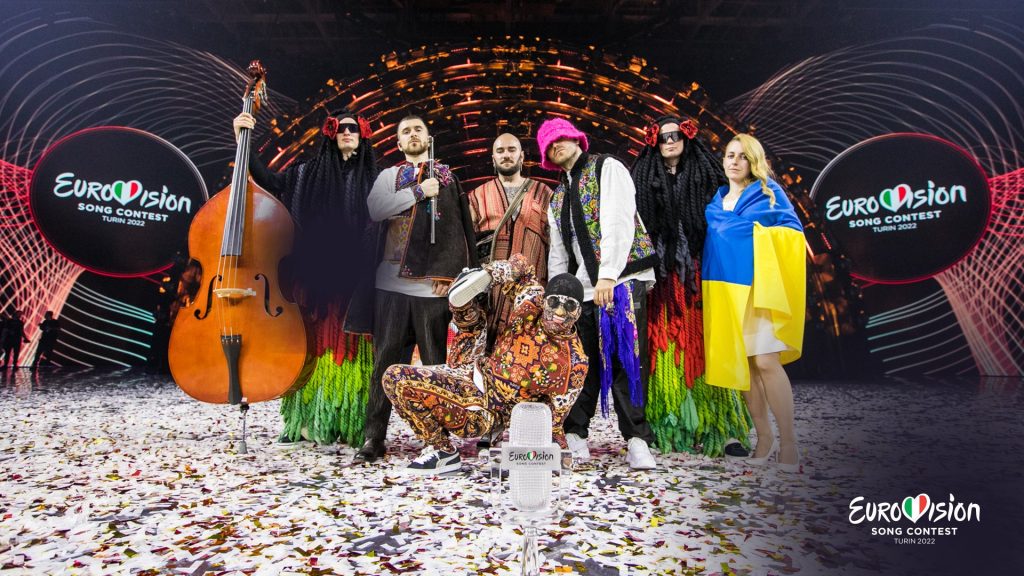
The Kalush Orchestra was formed in 2019. One of the group’s members travelled to Rotterdam last year to compete with his other band, ‘Go_A’, which finished in fifth place.
Eurovision is the world’s largest live music event and one of the most ambitious live TV moments each year.
This year’s theme, ‘The Sound of Beauty’, featured 24 cameras, 78 microphones and over 2,800 lighting fixtures. There were also 727 square metres of LED screens and 440 speakers.
Russia was banned from this year’s event as the war in Ukraine continues.
Around 500 journalists were also in the host city of Turin, Italy to cover the event. It’s believed over 1,000 journalists covered the event from their own countries.
Forty European countries took part in the event, as organisers cast their eyes towards 2023, where the Eurovision Song Contest will head to Ukraine.
-
 News4 days ago
Six nations pledge security for Strait of Hormuz
-
News4 days ago
Energy markets face turmoil from Iranian attacks
-
Tech19 hours ago
Meta to cut 20% workforce for AI focus
-
News4 days ago
Apple to earn over $1B in AI app fees
-
Tech4 days ago
Uber to invest $1.25 billion in Rivian robotaxis
-
News10 hours ago
Iran threatens infrastructure if U.S. attacks plants
-
Tech1 day ago
OpenAI to introduce ads for free ChatGPT users
-
Tech4 days ago
Australian scientists create world’s first quantum battery