

Connect with us
https://tickernews.co/wp-content/uploads/2023/10/AmEx-Thought-Leaders.jpg

Shows

Ticker Big Media

Published

on

The media industry has transformed dramatically in recent years. Streaming, radio, and traditional television platforms have got to keep up. Join Ahron Young and Mediaweek‘s James Manning as they talk to the movers and shakers of the media industry who are running race in style.

LATEST EPISODE

Podcasts have grown exponentially and Covid-19 has pushed those numbers more and more. Australian’s are seeing a radical shift from traditional radio that will effect seemingly have irreversible effects on audible advertising.

PREVIOUS EPISODES

Advertising outdoors has been hit the big time. As the country experiences, ongoing lockdowns and fewer workplaces are open for business, Billboards were made redundant and digital marketing flooded social media as marketing teams invest in the digital space like no tomorrow.

2020 was an intense year for media teams looking to pivot their strategies and remain relevant. Finding a method of benefitting on a global scale is a curious prospect for the radio industry as it suffers through some dark days, we unpack some predictions for what both advertisers and audiences want.

Pandemic profits are not uncommon considering the trouble we’ve seen in 2020. As we discuss today, it depends on the client, the products, and services and it is the economy as a whole that will provide a larger view of the way media outlets can recover.

2 Comments

2 Comments

  1. Pingback: Podcast Week: Maz Compton's rebellion, Lady-Brains at AAFW, Undesign

  2. Pingback: How Australia’s Ticker News channel built a new home in just two weeks

Leave a Reply

Your email address will not be published. Required fields are marked *

Shows

AI in education: Transforming learning, challenges, and future skills

AI transforms education, insights from Professor Robert Tai and Enquiry Tracker discussed in Beyond Education episode

Published

on

AI transforms education, insights from Professor Robert Tai and Enquiry Tracker discussed in Beyond Education episode

In Short:
– AI revolutionises education, acting as a tool to enhance learning when used effectively.
– Enquiry Tracker advises educators to embrace AI for efficiency, guiding students toward active learning.

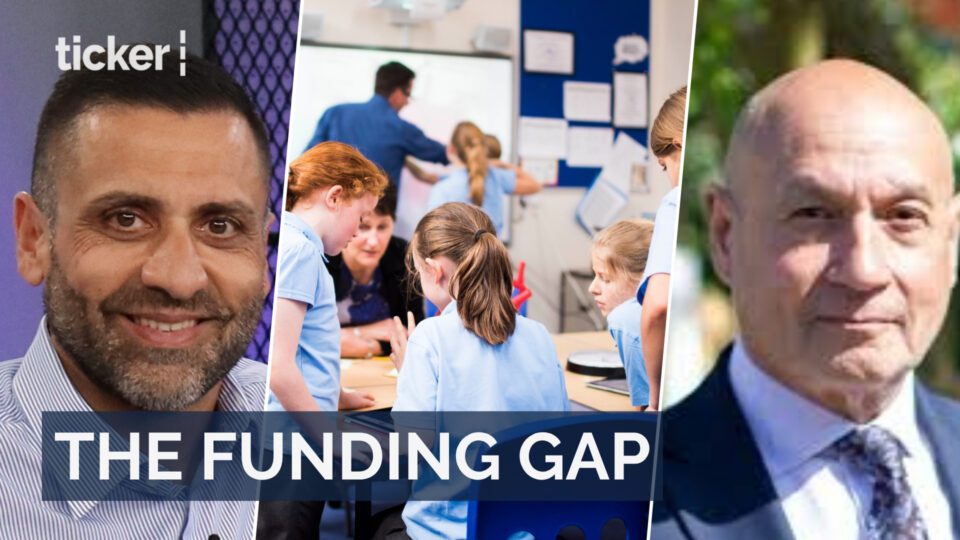
In this episode of Beyond Education, presented by Enquiry Tracker, we delve into the transformative impact of artificial intelligence on education. Co-hosted by Ahron Young and Enquiry Tracker CEO Antony Campitelli, the discussion features insights from Professor Robert Tai of the Australian Catholic University.

AI is increasingly recognised as both a revolutionary force and a practical tool in learning. Professor Tai highlights that, when applied thoughtfully, AI can enhance educational experiences and accelerate student progress. At Inquiry Tracker, AI is utilised for research and as coding agents, helping to improve efficiency and streamline tasks.

Historical fears

Despite these benefits, educators have expressed concerns about students over-relying on AI tools such as ChatGPT and Gemini for tasks like writing papers, potentially limiting authentic learning. Professor Tai points out that such anxieties echo historical fears surrounding the introduction of new technologies. He notes that AI can, in fact, foster critical thinking, as users must craft precise prompts to achieve desired results. For example, one student required 26 iterations to complete a paper using AI.

However, AI has its limitations. It primarily remixes existing information and cannot generate entirely novel concepts. The rapid advancements in AI since late 2022 have prompted educators to rethink their teaching strategies. Integrating AI for tasks such as summarising allows students to engage more deeply with material while freeing up time for critical analysis and creative thinking.

For more information, visit Enquiry Tracker.


Download the Ticker app

Continue Reading

Shows

Sally Capp discusses livability and urban leadership insights

Sally Capp on effective leadership strategies to enhance Melbourne’s livability and lessons from global cities

Published

on

Sally Capp on effective leadership strategies to enhance Melbourne’s livability and lessons from global cities

In Short:
– Melbourne consistently ranks among the world’s most livable cities, valuing both international rankings and local needs.
– Ongoing investments and balancing stakeholder needs are crucial for maintaining urban livability and preventing complacency.

In this episode of The Connector, host Belinda Coates sits down with Sally Capp, former Lord Mayor of Melbourne, to discuss what makes a city truly livable and the leadership required to sustain it. Capp shares insights from her tenure on balancing urban growth, infrastructure, and social wellbeing while keeping Melbourne consistently ranked among the world’s top cities.

Melbourne’s livability has been shaped by healthcare, education, culture, environment, and stability, often placing it alongside Vienna and Copenhagen in global rankings. Capp highlights that local perspectives are just as important as international recognition, especially as the city’s CBD population has surged from around 800 in the mid-1980s to roughly 60,000 today.

Capp also explores lessons from international cities like Singapore and London, from creating public spaces in private developments to promoting a 24-hour economy and higher residential density near transport hubs. She looks ahead to the upcoming World Cities Summit in Singapore, emphasising that effective leadership involves balancing the needs of diverse stakeholders in urban planning.

For more information, visit HarperB.


Download the Ticker app

Continue Reading

Shows

Adrian Pozzo reflects on Cbus Property’s successes and future

Adrian Pozzo steps down as Cbus Property leader after nearly two decades, overseeing $7 billion portfolio growth and sustainability efforts

Published

on

Adrian Pozzo steps down as Cbus Property leader after nearly two decades, overseeing $7 billion portfolio growth and sustainability efforts

In Short:
– Adrian Pozzo led Cbus Property for almost two decades, growing its portfolio from $500 million to $7 billion.
– Cbus Property focuses on member returns, balancing innovation and sustainability while preparing for hybrid work trends.

Adrian Pozzo, the long-serving leader of Cbus Property, is stepping down after nearly two decades, leaving behind one of Australia’s most significant property growth stories. Under his leadership, the organisation’s portfolio grew from $500 million to $7 billion, cementing its status as a major player in the sector.

In this episode of The Connector, host Belinda Coates sits down with Pozzo to reflect on his career and the future of Cbus Property.

Pozzo attributes this success to close alignment with the Cbus industry super fund and a focus on strong member returns, achieving an average of nearly 13 per cent over 20 years, even through challenging periods like the Global Financial Crisis.

Innovation and Environmental, Social, and Governance (ESG) principles have been central to his strategy. Cbus Property’s first development, 8 Exhibition Street, achieved a 4.5 NABERS rating, with newer projects now reaching six stars.

As hybrid work reshapes office demand, Cbus Property is rethinking workplaces. Developments such as 435 Burke Street emphasise high-quality amenities, while 205 North Quay in Brisbane incorporates wellness features, including a pool, to enhance tenant experience.

Chris Kufus will succeed Pozzo as CEO, marking a seamless transition after a two-decade collaboration. On sectors like build-to-rent, Pozzo remains cautious, citing risk and return profiles less compelling than office or build-to-sell projects.

Looking ahead, Cbus Property continues to balance commercial performance with social outcomes. The group incorporates affordable housing within premium developments while prioritising member returns. Pozzo has championed diversity, supporting women, Indigenous Australians, and apprenticeships in construction. International investment remains outside the company’s mandate, with a focus firmly on domestic opportunities.

For more information, visit HarperB.


Download the Ticker app

Continue Reading

Trending Now