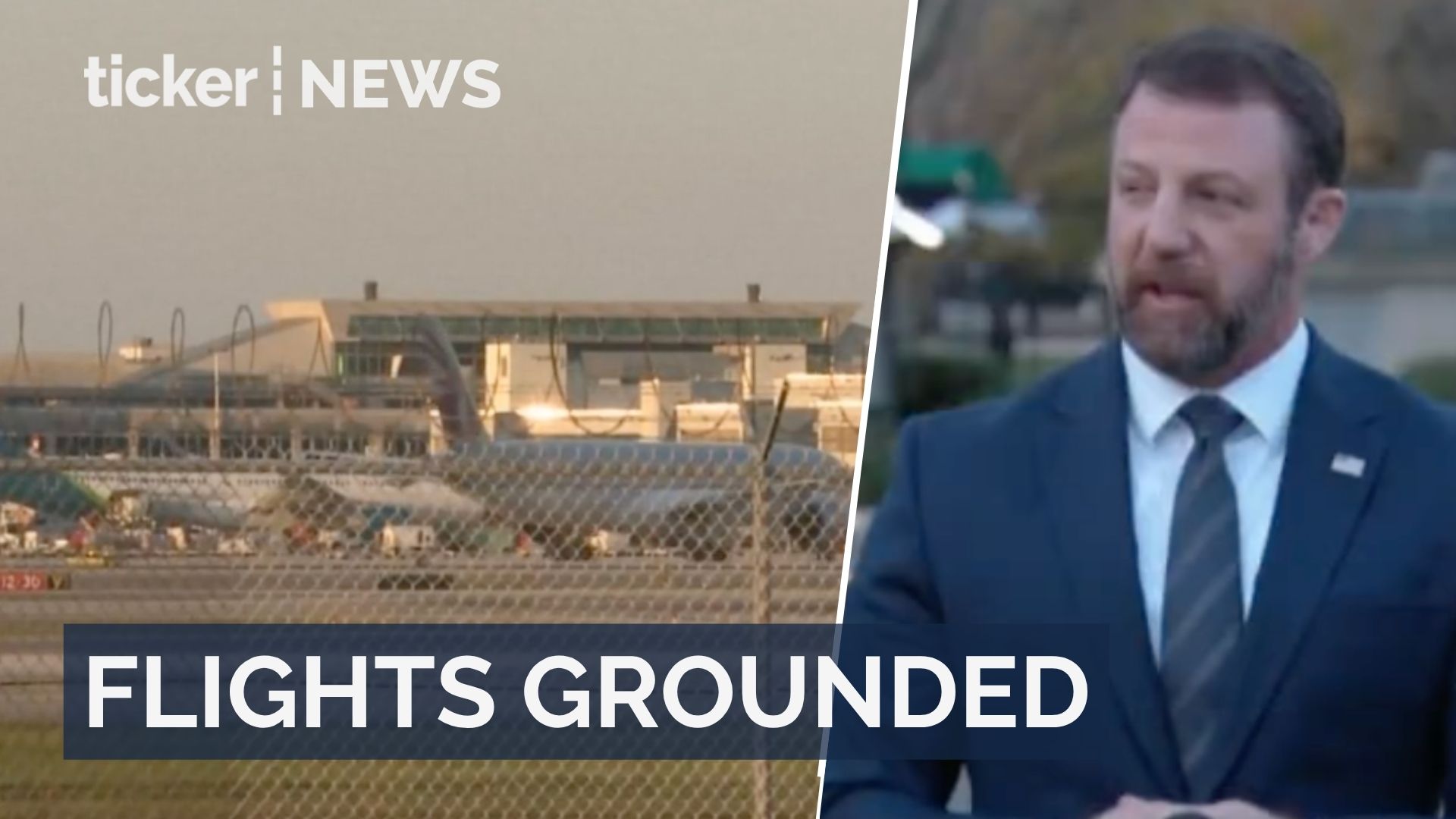
Homeland Security Secretary Markwayne Mullin says investigators have not ruled out a cyberattack or artificial intelligence-related failure as a telecommunications outage brings U.S. flight departures to a halt.
U.S. Homeland Security Secretary Markwayne Mullin has sought to reassure Americans that passengers remain safe as authorities investigate the unprecedented communications disruption behind Friday’s nationwide FAA ground stop.
Speaking at a press conference at the White House, Mullin confirmed that the government was investigating the cause of the outage, with cyberattacks and potential artificial intelligence-related problems among the possibilities that have not been excluded.
However, he stressed there was currently no evidence establishing that the disruption was a deliberate attack.
“There was no prior indication. There was no indication as of yet that this was a nefarious attack against us,” Mullin said.
“It’s just a telecommunication outage as of right now.”
Cyberattack and AI involvement remain under investigation
Asked whether the disruption could have been caused by a cyberattack or an AI-related intrusion, Mullin said authorities were keeping all possibilities open.
“We don’t want to get ahead of ourselves,” he told reporters.
Mullin acknowledged that the frequency of cyberattacks meant investigators needed to consider that possibility, even without evidence of malicious activity.
“We’re not ruling out anything at this point,” he said.
The Homeland Security Secretary also addressed speculation linking the FAA disruption to a separate Microsoft outage reported the previous day.
“I don’t see any reason to connect those two at all. Those are separate issues,” Mullin said.
He indicated that investigators would establish the cause before determining what measures were necessary to prevent another disruption.
Communications systems overwhelmed as flights remain grounded
Mullin confirmed that the disruption was affecting the ability of air traffic control facilities to communicate normally.
Although some communications remained operational, he said the outage had overwhelmed parts of the existing system.
“We are able to communicate at certain levels, but it’s overwhelmed some of the systems we have,” he said.
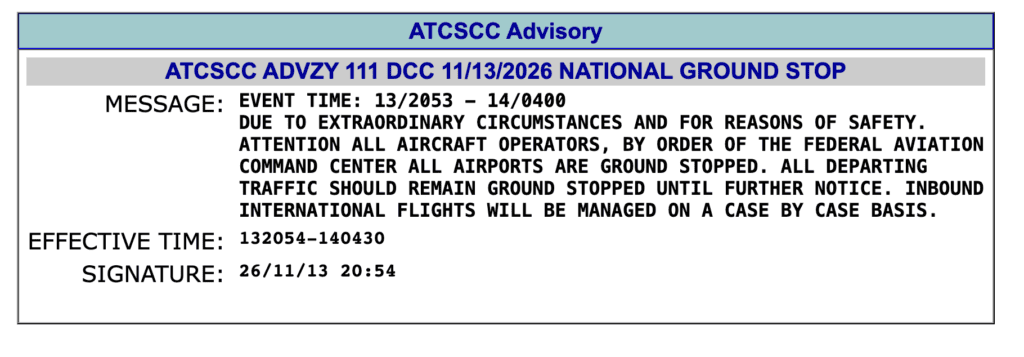
The FAA has ordered departing aircraft to remain grounded, while flights already in the air and international arrivals are being assessed individually.
Authorities are prioritising aircraft movements to ensure planes can land safely without placing additional pressure on the affected communications network.
Mullin said restoring reliable communications was the first priority, followed by getting aircraft safely on the ground and returning the aviation system to normal operations.
White House briefed as emergency response continues
Mullin confirmed that President Donald Trump had been briefed on the situation, with Transportation Secretary Sean Duffy coordinating the aviation response.
He said Duffy had spoken with the president and other senior officials as the government worked to resolve the crisis.
Multiple federal agencies and officials were involved in the response, although Mullin did not provide a complete list of participating departments.
The Homeland Security Secretary described the disruption as an unprecedented situation requiring extensive federal resources.
He said authorities would continue deploying the resources necessary to restore normal flight operations and identify the underlying cause.
No timetable for flights to resume
Despite growing concerns about disruption to passengers and airlines, Mullin said officials could not yet estimate when the nationwide ground stop would end.
“That’s too early to tell,” he said when questioned about the duration of the shutdown.
He warned that even after communications were restored, restarting the aviation network would take time.
Aircraft, passengers and airline crews would need to be repositioned, while airports would have to manage a backlog of departures.
“This isn’t going to just be resolved and turned around within the hour,” Mullin said.
“This is going to take some time.”
Homeland Security rejects comparisons with September 11
Mullin repeatedly sought to calm fears that the nationwide ground stop could be connected to terrorism.
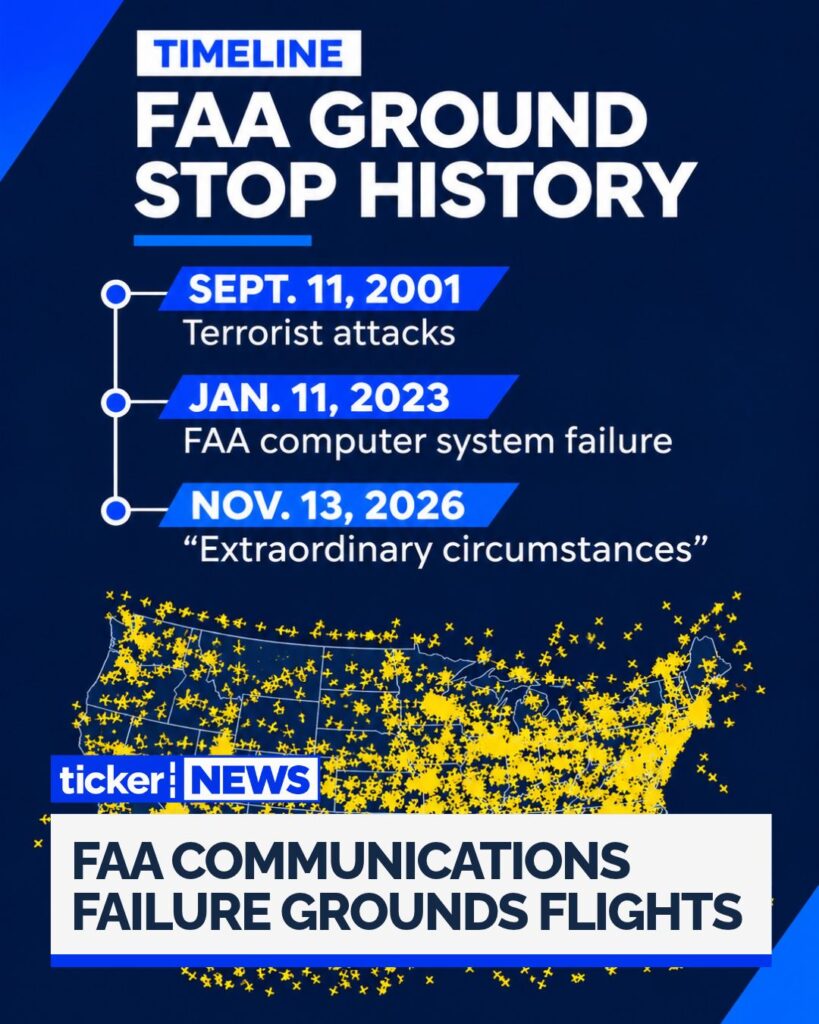
The extraordinary decision to halt departures has prompted comparisons with September 11, 2001, when the FAA grounded civilian air traffic following the terrorist attacks.
But Mullin rejected suggestions that the latest incident represented a similar threat.
“This isn’t another 9/11. I just can’t repeat that enough,” he said.
He told Americans there was no reason to fear for family members currently travelling by air.
“Everybody’s safe. There is no reason to be concerned about your loved ones if they’re flying,” he said.
The comments came as Homeland Security received calls from concerned Americans asking whether the shutdown was connected to a terrorist attack.
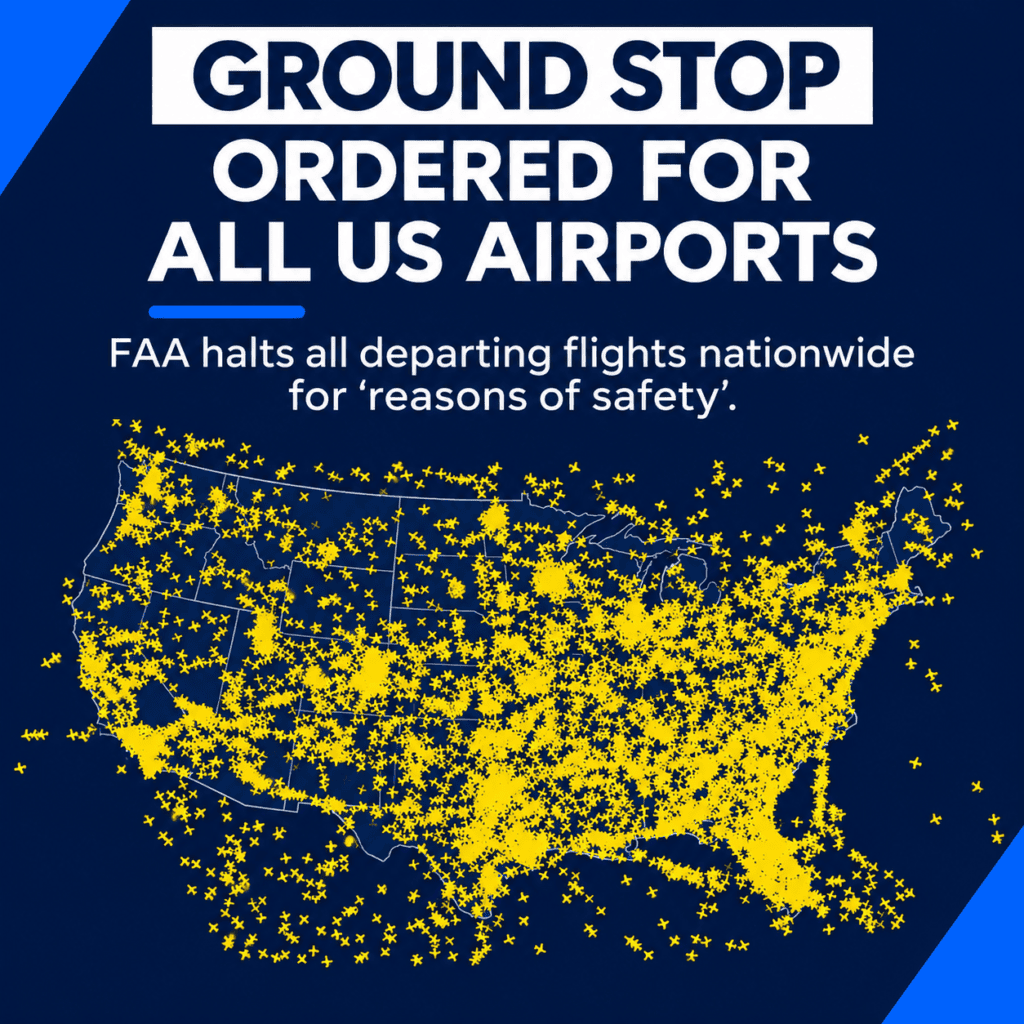
Questions remain over the cause of the FAA shutdown
The disruption has renewed attention on the resilience of America’s ageing air traffic control infrastructure and the vulnerability of essential aviation systems to major technical failures.
While the government has characterised the incident as a telecommunications outage, investigators have yet to identify the precise failure or determine whether external interference played any role.
The immediate focus remains restoring communications, safely managing aircraft already in flight and allowing departures to resume.
For millions of passengers and the aviation industry, the biggest unanswered questions are what caused the failure, how long the disruption will last and whether America’s air traffic control network can prevent another nationwide shutdown.