Connect with us
https://tickernews.co/wp-content/uploads/2023/10/AmEx-Thought-Leaders.jpg

Ticker Views

Viruses experts are watching in 2026

Published

on

Viral outbreaks are always on the horizon – here are the viruses an infectious disease expert is watching in 2026

Viruses know no borders.
mammuth/iStock via Getty Images Plus

Patrick Jackson, University of Virginia

A new year might mean new viral threats.

Old viruses are constantly evolving. A warming and increasingly populated planet puts humans in contact with more and different viruses. And increased mobility means that viruses can rapidly travel across the globe along with their human hosts.

As an infectious diseases physician and researcher, I’ll be keeping an eye on a few viruses in 2026 that could be poised to cause infections in unexpected places or in unexpected numbers.

Influenza A – on the cusp of a pandemic

Influenza A is a perennial threat. The virus infects a wide range of animals and has the ability to mutate rapidly. The most recent influenza pandemic – caused by the H1N1 subtype of influenza in 2009 – killed over 280,000 people worldwide in its first year, and the virus continues to circulate today. This virus was often called swine flu because it originated in pigs in Mexico before circulating around the world.

Most recently, scientists have been monitoring the highly-pathogenic avian influenza H5N1 subtype, or bird flu. This virus was first found in humans in southern China in 1997; wild birds helped spread the virus around the world. In 2024, the virus was found for the first time in dairy cattle in the U.S. and subsequently became established in herds in several states.

Cow standing in a pen, looking into camera
Avian flu has spread across dairy herds in the U.S.
USDA Agricultural Research Service via AP

The crossover of the virus from birds to mammals created major concern that it could become adapted to humans. Studies suggest there have already been many cow-to-human transmissions.

In 2026, scientists will continue to look for any evidence that H5N1 has changed enough to be transmitted from human to human – a necessary step for the start of a new influenza pandemic. The influenza vaccines currently on the market probably don’t offer protection from H5N1, but scientists are working to create vaccines that would be effective against the virus.

Mpox – worldwide and liable to worsen

Mpox virus, formerly called monkeypox virus, was first discovered in the 1950s. For many decades, it was seen rarely, primarily in sub-Saharan Africa. Contrary to its original name, the virus mostly infects rodents and occasionally crossed over into humans.

Mpox is closely related to smallpox, and infection results in a fever and painful rash that can last for weeks. There are several varieties of mpox, including a generally more severe clade I and a milder clade II. A vaccine for mpox is available, but there are no effective treatments.

Microscopy image of clusters of teal circles
Mpox has spread around the world.
NIAID/Wikimedia Commons, CC BY-SA

In 2022, a global outbreak of clade II mpox spread to more than 100 countries that had never seen the virus before. This outbreak was driven by human-to-human transmission of the virus through close contact, often via sex.

While the number of mpox cases has significantly declined since the 2022 outbreak, clade II mpox has become established around the world. Several countries in central Africa have also reported an increase in clade I mpox cases since 2024. Since August 2025, four clade I mpox cases have occurred in the U.S., including in people who did not travel to Africa.

It is unclear how mpox outbreaks in the U.S. and abroad will continue to evolve in 2026.

Oropouche virus – insect-borne and poised to spread

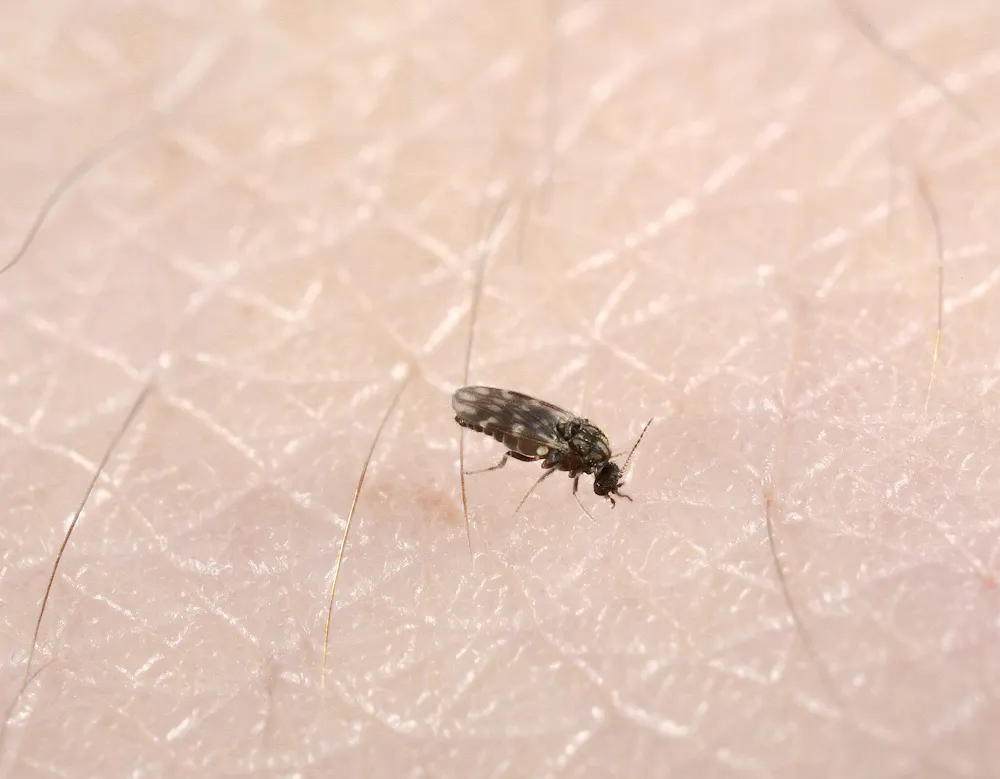
Oropouche virus was first identified in the 1950s on the island of Trinidad off the coast of South America. The virus is carried by mosquitoes and small biting midges, also known as no-see-ums.

Most people with the virus experience fever, headache and muscle aches. The illness usually lasts just a few days, but some patients have weakness that can persist for weeks. The illness can also recur after someone has initially recovered.
Close-up of small winged bug on human skin
Biting midges – which carry Oropouche virus – are hard to see, as their alias ‘no-seem-ums’ implies.
CSIRO via Wikimedia Commons, CC BY-SA

There are many unanswered questions about the Oropouche virus and the disease it causes, and there are no specific treatments or vaccines. For decades, infections in people were thought to occur only in the Amazon region. However, beginning in the early 2000s, cases began to show up in a larger area of South America, Central America and the Caribbean. Cases in the United States are usually among travelers returning from abroad.

In 2026, Oropouche outbreaks will likely continue to affect travelers in the Americas. The biting midge that carries Oropouche virus is found throughout North and South America, including the southeastern United States. The range of the virus could continue to expand.

Even more viral threats

A number of other viruses pose a risk in 2026.

Continuing global outbreaks of chikungunya virus may affect travelers, some of whom may want to consider getting vaccinated for this disease.

Measles cases continue to rise in the U.S. and globally against the backdrop of decreasing vaccination rates.

HIV is poised for a resurgence, despite the availability of effective treatments, due to disruptions in international aid.

Person standing in room, holding pills in hand
Despite the availability of effective treatments, diseases like HIV and measles are seeing resurgences.
Brian Inganga/AP Photo

And as-yet-undiscovered viruses can always emerge in the future as humans disrupt ecosystems and travel around the world.

Around the world, people, animals and the wider environment are dependent on each other. Vigilance for known and emerging viral threats and the development of new vaccines and treatments can help keep everyone safe.The Conversation

Patrick Jackson, Assistant Professor of Infectious Diseases, University of Virginia

This article is republished from The Conversation under a Creative Commons license. Read the original article.


Ticker Views

Why Greenland matters in a multipolar world

Published

on

Four ways to understand what’s going on with the US, Denmark and Greenland

Shutterstock/Michal Balada

Ian Manners, Lund University

European countries, and Denmark in particular, are scrambling to respond to threats from US officials over the future of Greenland.

Having successfully taken out the leadership of Venezuela in a raid on January 3, an emboldened US government is talking about simply taking Greenland for itself.

Various European leaders have expressed their concern but haven’t been able to formulate a coherent response to the betrayal by a supposed ally.

Since the September 11 attacks in 2001, Danish governments have willingly participated in US-led invasions of Afghanistan (2001-2021) and Iraq (2003-2007). The rightward movement across the Danish political spectrum had led to Denmark rejecting some Nordic and EU cooperation in favour of pro-US transatlanticism.

However, the 2022 Russian invasion of Ukraine led to a rethink of Danish foreign policy. The country joined the EU’s common security and defence policy and tightened cooperation with recent Nato members Finland and Sweden.

And when Trump came to power for the second time, the chaotic rightward swing of US foreign policy left Denmark reaching out for support from its EU colleagues over the challenge to Greenland.

While a member of the European Union, Denmark has placed itself at the bloc’s periphery since copying the UK in opting out of the euro and from cooperation in justice and home affairs. But any US invasion of Greenland is likely to break Denmark’s fixed exchange rate policy with the euro (and before that the deutschmark) that has been in place since 1982. So there are economic implications as well as territorial.

The fallout from the US’s threats, and certainly any US intervention in Greenland, go much further than Denmark. While the EU tried to stay in step with the US in its support of Ukraine during Joe Biden’s presidency, since the re-election of Trump, EU member states have very much fallen out with the US. During 2025, the US and EU clashed over trade and tariffs, social media regulation, environment and agriculture policies.

But the latest developments demonstrate that Trump’s US can no longer be trusted as a long-term ally – to Greenland and Denmark, the EU and Europe.

This is a crisis engulfing many countries and triggered by many drivers. In order to understand this complex situation, we can use four different analytical approaches from academic thinking. These can help us contextualise not just the Greenland case, but also the emerging multipolar world of “might makes right”.

1. Realism

Currently the most popular approach comes from within the conservative tradition of “realism”. This predicts every state will act in their own national interest.

In this framing, Trump’s actions are part of the emergence of a multipolar world, in which the great powers are the US, China, India and Russia. In this world, it makes sense for Russia to invade Ukraine to counter the US, for the US to seize assets in Venezuela and Greenland to counter China, and for China to invade Taiwan to counter the US.

2. The new elites

Many think that to understand the events of the past few years, including Trump’s return and Vladimir Putin’s foreign policies, you need to look beyond conservative or liberal explanations to seek out who holds power and influence in the global superpowers. That means the wealthy families, corporations and oligarchs who exert control over the politics of the ruling elite through media and campaign power and finance.

In the cases of Venezuela and Greenland there are two factors at work – the US rejection of the rule of law and the desire for personal wealth via energy resources. But the timing is also important. The operation in Venezuela has been the only story to eclipse the Epstein files in the news in many months.

3. The decline of the liberal order

Many academic explanations see these recent events in the context of the decline of a “liberal order” dominated by the US, Europe, the “developed world” and the UN. In this view, the actions of Putin and Trump are seen as the last days of international law, the importance of the UN, and what western nations see as a system based on multilateralism.

However, this approach tends to overlook the continued dominance of the global north in these systems. The lack of support for the US and EU’s defence of Ukraine has been repeatedly demonstrated in the unwillingness of many global south countries, including China and India, to condemn the Russian invasion in the UN general assembly. It would be interesting to see how such voting would play out if it related to a US invasion of Greenland.

4. The planetary approach

The final – and most important – view is found in the planetary politics approach. This approach is based on the simple observation that so many planetary crises, such as global heating, mass extinctions of wildlife, climate refugees, rising autocracy and the return of international conflict are deeply interrelated and so can only be understood when considered together.

From this perspective it is Greenland’s sustainability and Greenlanders’ lives that must shape the understanding of Denmark’s and other European responses to Trump’s claims. It is through acknowledging the deep relationship that indigenous people have to their ecology that solutions can be found.

And Greenlanders have already expressed their vision for the future. Living on the frontline of the climate crisis, they want an economy built on resilience – not on ego-driven political drama.

While it’s quick and easy to to judge the events in Venezuela or Greenland in terms of the daily news cycle, the four perspectives set out here force people to think for themselves how best to understand complex international crises.

There is, however, a final observation to emphasise. Only one of these perspectives is likely to bring any way of thinking ourselves out of our planetary political crisis.The Conversation

Ian Manners, Professor, Department of Political Science, Lund University

This article is republished from The Conversation under a Creative Commons license. Read the original article.

Continue Reading

Ticker Views

Pentagon’s AI gamble: Is Grok safe for defense?

Pentagon to integrate Elon Musk’s AI chatbot Grok, exploring military data and innovation amid AI controversies.

Published

on

Pentagon to integrate Elon Musk’s AI chatbot Grok, exploring military data and innovation amid AI controversies.


Defense Secretary Pete Hegseth announced that Elon Musk’s AI chatbot Grok will soon be integrated with the Pentagon’s networks.

The move aims to harness military data to develop advanced AI technology, despite recent controversies surrounding Grok’s content generation. This integration signals a bold step toward combining commercial AI tools with national defence systems.

Dr Karen Sutherland from UniSC explores the implications of this partnership. We discuss how Hegseth’s approach to AI differs from the Biden administration’s framework, the measures in place to ensure responsible use, and the limitations on Grok’s image generation capabilities.

We also examine the potential risks and international reactions, as well as Hegseth’s vision for innovation within the military. From civil rights considerations to prioritising key technologies, this story highlights the complex balancing act of AI in modern defence.

Subscribe to never miss an episode of Ticker – https://www.youtube.com/@weareticker

#PentagonAI #ElonMusk #GrokAI #MilitaryTech #AIControversy #TechNews #DefenseInnovation #TickerNews


Download the Ticker app

Continue Reading

Ticker Views

U.S. pushes Latin American dominance

Published

on

What lies ahead for Latin America after the Venezuela raid?

Nicolas Forsans, University of Essex

The Trump administration has justified the recent capture of Venezuelan leader Nicolás Maduro as a law enforcement operation to dismantle a “narco‑state”. It also claimed it would break Venezuela’s ties to China, Russia and Iran, and put the world’s largest known oil reserves back under US‑friendly control.

This mix of counter‑narcotics, great power rivalry and energy security had already been elevated to a central priority by the administration in its national security strategy. Published in late 2025, the document announced a pledge to “reassert and enforce American preeminence in the western hemisphere” and deny “strategically vital assets” to rival powers.

Donald Trump has referred to this hemispheric project as the “Donroe doctrine”, casting it as a revival of the Monroe doctrine policy of the 19th century through which the US sought to stop European powers from meddling in the Americas. He seems to be seeking to tighten the US grip on Latin America by rewarding loyal governments and punishing defiant ones.

If Venezuela is the first test case of the Donroe doctrine, several other Latin American countries now sit squarely in Washington’s crosshairs. The most immediate target is Cuba, which the US has opposed since 1959 when communist revolutionary Fidel Castro overthrew a US-backed regime there.

Trump and his secretary of state, Marco Rubio, have openly hinted that Cuba could be Washington’s next target. They have described Cuba as “ready to fall” after the loss of Venezuelan oil and have boasted that there is no need for direct intervention because economic collapse will finish the job.

Cuba is enduring its worst crisis since 1959. Blackouts now regularly last up to 20 hours, real wages are collapsing and roughly 1 million Cubans have fled the country since 2021. This is all happening as Venezuelan crude oil is being redirected under US control.

For over two decades, Venezuela has provided Cuba with fuel and financing in exchange for doctors, teachers and security personnel – 32 of whom were killed in the US capture of Maduro, according to the Cuban government. Strangling Cuba’s remaining lifelines may well be enough to topple the government there without US forces needing to fire a single shot.

It is possible that Mexico will also soon come under fire. Mexico has quietly become Cuba’s main oil supplier, shipping roughly 12,000 barrels per day in 2025 to account for about 44% of the island’s crude imports. This is unlikely to please the Trump administration, which has recently renewed its threats to “do something” about Mexican drug cartels.

The raid in Venezuela’s capital, Caracas, took six months of meticulous planning and required an extraordinary amount of resources. So it is unrealistic to expect similar raids on other Latin American countries. However, targeted military strikes cannot be excluded.

Speaking on Fox News’s “Hannity” show on January 8, Trump said: “We are going to start now hitting land with regard to the cartels. The cartels are running Mexico.” He did not provide further details about the plans.

Mexico’s president, Claudia Sheinbaum, is trying to construct protective buffers. She has combined condemnation of the raid on Caracas with intense cooperation with the US on migration and security. This includes a deal for Mexico’s navy to intercept suspected drug-running boats near its coastline before US forces do.

But as part of a strategy that pushes US dominance of Latin America, Trump has already floated classifying Mexico’s cartels as terrorist organisations and the fentanyl they traffic across the border as a weapon of mass destruction. These are legal framings that could be used to justify strikes on Mexican soil in the name of counter-narcotics in the near future.

Trump’s other targets

Colombia, historically Washington’s closest military ally in South America, has flipped from “pillar” to possible target. The country’s president, Gustavo Petro, has been one of the loudest critics of the Venezuela raid. He called it an “abhorrent violation” of Latin American sovereignty committed by “enslavers”, adding that it constituted a “spectacle of death” comparable to Nazi Germany’s 1937 carpet bombing of Guernica in Spain.

Trump, who imposed sanctions on Petro and his family in October, responded by labelling the Colombian president a “sick man who likes making cocaine and selling it to the United States”. He then mused that a Venezuela‑style operation in Colombia “sounds good to me” before a hastily arranged phone call and White House invitation dialled back the immediate threat.

How long the conciliation between the two men lasts remains to be seen. Colombia has entered a heated presidential campaign season in which Trump’s remarks are already being read as an attempt to tilt the race, much as his interventions shaped recent contests in Argentina and Honduras.

Further down the hierarchy, Nicaragua’s government will also have watched events unfold in Venezuela with terror. Long treated in Washington as part of a trilogy of dictatorships with Cuba and Venezuela, Nicaragua features in US indictments against Maduro as a transit point for cocaine flights. Nicaragua was also recently designated by the US as a key drug‑transit country.

The unusually cautious statement on the Venezuela raid by Nicaraguan presidential couple Daniel Ortega and Rosario Murillo, as well as the rapid reinforcement of the presidential compound in the capital Managua, suggest a regime that knows it could be next in line should Trump choose to extend his “narco‑terrorism” narrative.

Trump appears to be turning longstanding US concerns – drugs, migration and interference by other major powers – into a flexible toolbox for coercion in Latin America. Countries that defy Washington or host its rivals risk being framed as security threats, stripped of economic lifelines and, possibly, targeted militarily.

Those that keep their heads down may avoid immediate punishment. But this comes at the price of treating hemispheric dominance as a fact of life rather than a doctrine to be resisted.The Conversation

Nicolas Forsans, Professor of Management and Co-director of the Centre for Latin American & Caribbean Studies, University of Essex

This article is republished from The Conversation under a Creative Commons license. Read the original article.

Continue Reading

Trending Now