Connect with us
https://tickernews.co/wp-content/uploads/2023/10/AmEx-Thought-Leaders.jpg

Tech

How Tokyo’s drone show spectacular took flight

Published

on

How did almost two thousand drones light up the sky to create a spectacular better than fireworks? the idea for a done show began down under

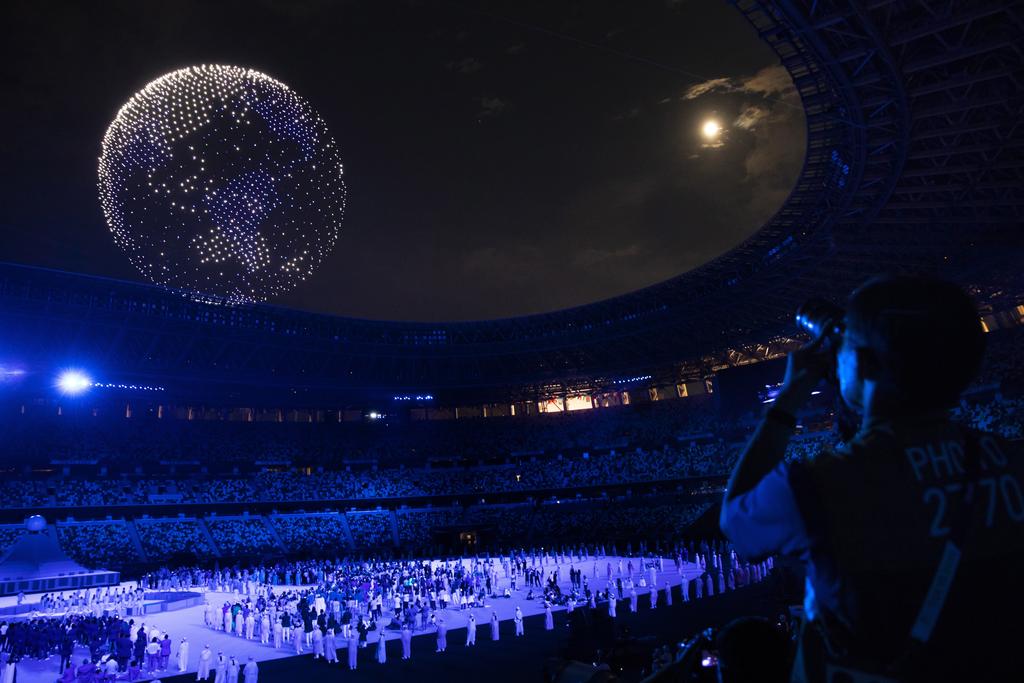
The drone show was the true highlight of the Tokyo 2020 opening ceremony

1,824 drones formed the shape of the world 175m in the air.

https://twitter.com/Olympics/status/1418571211982970884

The shapes kept rotating and shifting against each other, and some turned bright blue
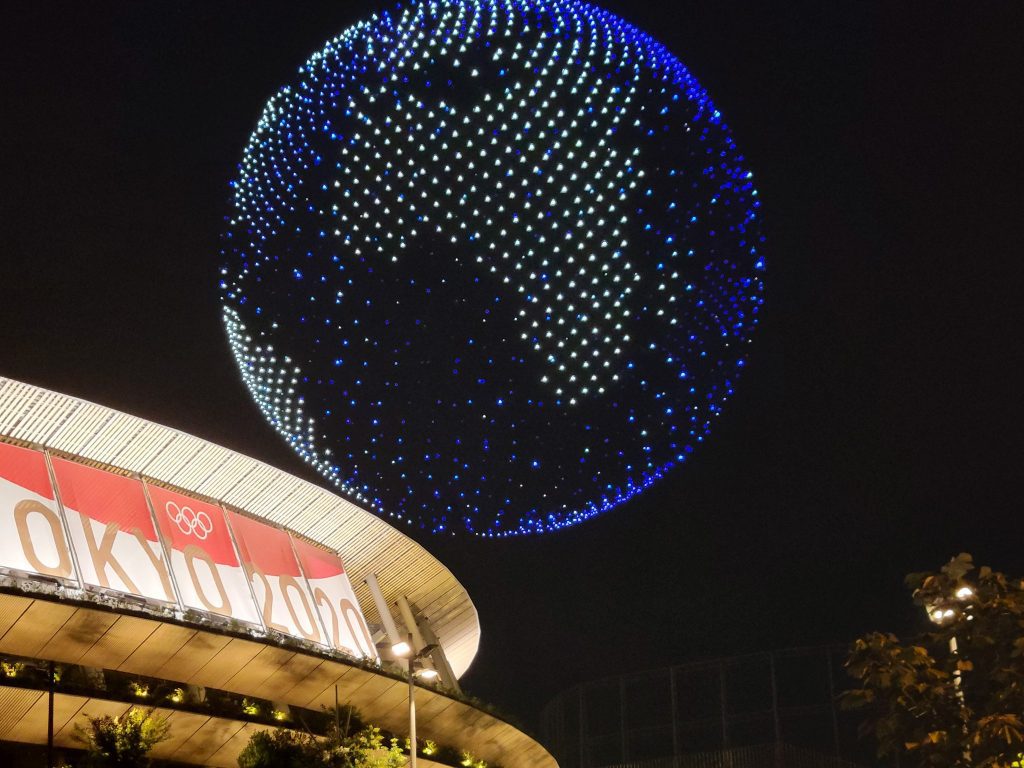
Millions of us, across the world were transfixed as the drones rotated just like Planet Earth. 

It was breathtaking and was quite literally the turning point that made most of us believe in the Olympics again.

Did you know Australia was behind the whole light show?

Back in 2019 the country was burning through a devastating black summer, so instead of having sparking flames in the air AKA fireworks, drone light shows became the answer.

“You can’t rely on people to be responsible with fireworks,” signatory Susan Fahey commented under the petition calling for the cancellation of Sydney’s New Year’s Eve fireworks show in 2019. “Fireworks displays are unnecessary when you can have amazing drone light shows.”

They can be fully customised to create anything imaginable, even to John Lennon’s song ‘imagine’ like we saw in Tokyo.

To perform a drone show, multiple quadcopters coordinate to fly in programmed, preset patterns, tracing out shapes in the sky that are often choreographed to music.
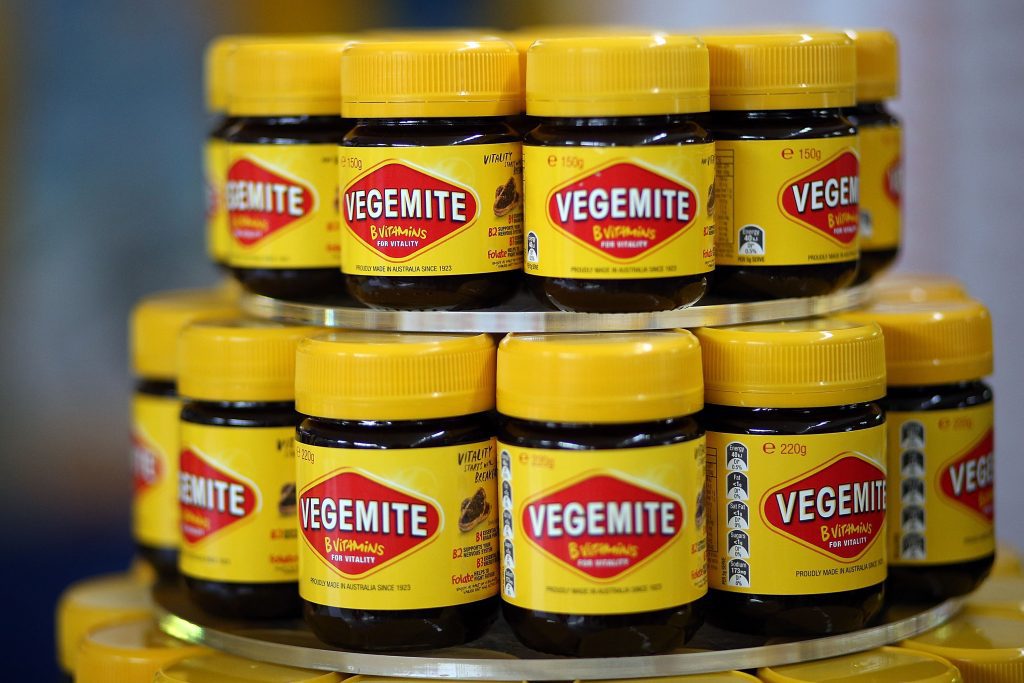
The drones are also relatively lightweight – less than a jar of Vegemite

After a few test runs, the lightweight drones in Tokyo were all controlled by a team of just 15 people.
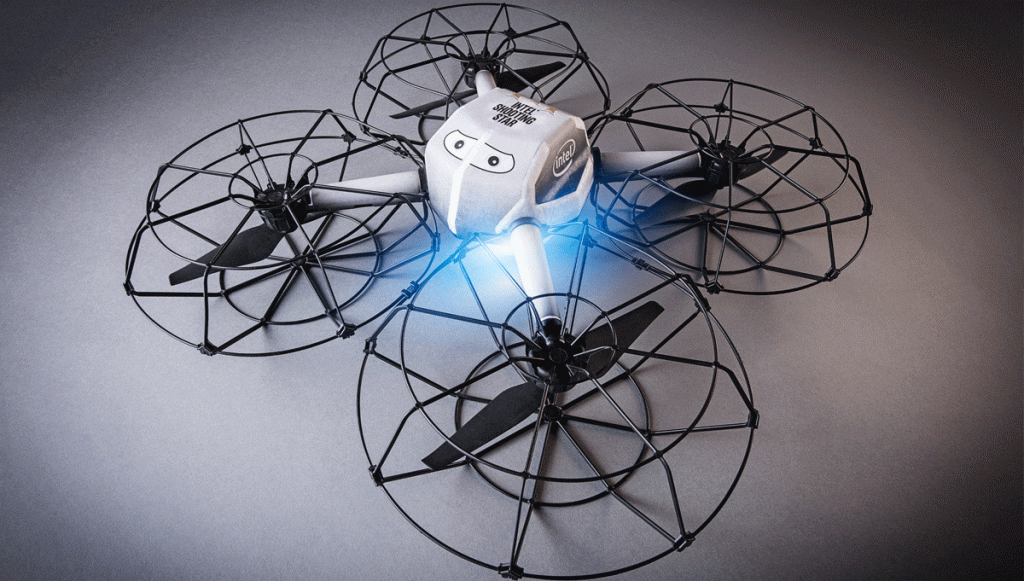
In a perfect performance – trained pilots, animators and programmers manoeuvred the high-tech equipment.
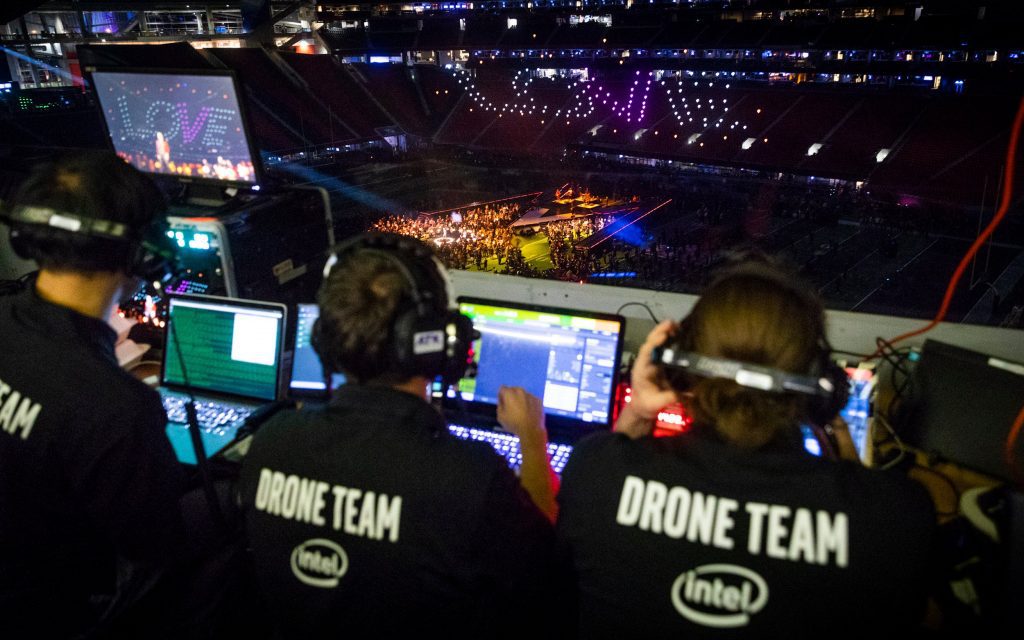
With the man behind the idea describing the drone spectacular as “an amazing feat of technology.”

“A lot of the story really came from the creative talents here in Japan, and then we collaborated on best ways to integrate the drones into the overall story,” Intel Olympic and Paralympic general manager Rick Echevarria said.

Will fireworks be replaced in the next few years as this emerging technology gains a sky hold?

Click to comment

Leave a Reply

Your email address will not be published. Required fields are marked *

Tech

Italy orders Meta to open WhatsApp to AI competitors

Italy orders Meta to allow rival AI chatbots on WhatsApp amid regulatory battle over market dominance

Published

on

Italy orders Meta to allow rival AI chatbots on WhatsApp amid regulatory battle over market dominance

video
play-sharp-fill
In Short:
– Italy’s antitrust authority requires Meta to allow access to rival AI chatbots on WhatsApp during an investigation.
– Meta plans to appeal the ruling, claiming it disrupts their system and questioning WhatsApp’s role as an AI service platform.

Italy’s antitrust authority has ordered Meta to allow competing AI chatbots access to WhatsApp, suspending rules that blocked rivals. The decision comes amid concerns that Meta’s policies could limit competition and harm consumers in the rapidly growing AI services market. Meta plans to appeal, calling the ruling “fundamentally flawed” and arguing that WhatsApp wasn’t designed to support third-party AI chatbots.

The Italian Competition Authority began investigating Meta after its March 2025 launch of Meta AI on WhatsApp, later expanding the probe to cover updated business terms that excluded rival AI providers, such as ChatGPT, Microsoft Copilot, and Perplexity. The European Commission has launched a parallel investigation, highlighting growing regulatory scrutiny on tech giants in Europe.

Europe’s stricter stance on Big Tech has sparked pushback from the industry and political figures in the U.S., including former President Donald Trump. Meta maintains that its Business API restrictions still allow AI for customer support and order tracking, but says general-purpose chatbot distribution falls outside its intended use.


Download the Ticker app

Continue Reading

Tech

China’s maglev breakthrough hits 700 km/h in seconds, reshaping the future of transport

China sets world record with maglev train hitting 700 km/h in just two seconds, revolutionising ultra-high-speed transport

Published

on

China sets world record with maglev train hitting 700 km/h in just two seconds, revolutionising ultra-high-speed transport

video
play-sharp-fill
In Short:
– Chinese researchers set a world record, accelerating a test vehicle to 700 km/h in two seconds.
– This milestone positions China as a leader in ultra-high-speed maglev technology and future transport developments.

China has set a new world record in magnetic levitation technology after accelerating a ton-class superconducting maglev test vehicle to 700 kilometres per hour in just two seconds. The achievement, reported by state broadcaster CCTV, marks the fastest acceleration ever recorded for an electric maglev system and cements China’s position at the forefront of ultra-high-speed transport innovation.

The test was conducted by researchers at the National University of Defense Technology on a 400-metre track, where footage showed the vehicle flashing across the rail-like structure in a blur, leaving a misty trail behind it. The breakthrough follows more than a decade of research tackling complex challenges such as ultra-high-speed electromagnetic propulsion, electric suspension guidance systems, and high-field superconducting magnets, all of which are critical to stable travel at extreme speeds.

Hyperloop technology

Beyond headline-grabbing velocity, the milestone opens the door to future transport systems, including vacuum-tube maglev networks, commonly referred to as hyperloop technology. Scientists say the same advancements could also be applied to aerospace launch assistance, electromagnetic launch systems, and advanced experimental testing. According to Professor Li Jie from the National University of Defense Technology, the successful trial will significantly accelerate China’s research into frontier technologies, with future work focusing on pipeline-based high-speed transport and aerospace equipment testing.

While China now leads in superconducting maglev acceleration, global competition remains fierce. Japan still holds the record for the fastest manned train, with its L0 Series maglev reaching 603 kilometres per hour during testing in 2015. China, however, operates the world’s only commercial maglev service — the Shanghai Maglev — which currently runs at 300 kilometres per hour after its top speed was reduced from 431 kilometres per hour in 2021.

The December test builds on earlier progress made this year, including a 1.1-ton test sled that reached 650 kilometres per hour in seven seconds over a 600-metre track in June 2025. Together, these developments signal rapid momentum in China’s push toward next-generation transport systems that could redefine how people and payloads move across the planet.


Download the Ticker app

Continue Reading

Tech

Nvidia signs $20 billion deal with Groq for AI tech

Nvidia strikes $20 billion deal to license Groq’s AI tech and hire executives, boosting its position in AI inference market

Published

on

Nvidia strikes $20 billion deal to license Groq’s AI tech and hire executives, boosting its position in AI inference market

video
play-sharp-fill
In Short:
– Nvidia has signed a $20 billion deal with AI chip startup Groq to enhance its AI inference capabilities.
– Groq will remain independent while Nvidia acquires technology and talent, excluding Groq’s cloud business.

Nvidia has made waves in the AI world with a complex $20 billion agreement with AI chip startup Groq, marking the chip giant’s largest deal to date. Unlike a traditional acquisition, Nvidia will license Groq’s AI inference technology while hiring key executives, including founder Jonathan Ross and president Sunny Madra, as Groq continues to operate independently. This arrangement highlights a growing Silicon Valley trend in which major tech companies selectively acquire intellectual property and top talent without fully integrating startups.

While CNBC reported the deal’s $20 billion valuation, neither Nvidia nor Groq confirmed financial terms. Nvidia CEO Jensen Huang clarified that the company is “adding talented employees to our ranks and licensing Groq’s IP, but we are not acquiring Groq as a company.” Groq described the transaction as a “non-exclusive licensing agreement” for its inference technology. The startup’s cloud business will remain under the leadership of new CEO Simon Edwards, formerly Groq’s CFO.

Increasing competition

The deal strategically targets AI inference — the process where trained models respond to user queries — a sector where Nvidia faces increasing competition. Groq’s Language Processing Unit reportedly executes large language models ten times faster while consuming one-tenth the energy of traditional GPUs. With Jonathan Ross, who previously helped develop Google’s Tensor Processing Unit, joining Nvidia, the company strengthens its expertise across the AI stack. Huang confirmed plans to integrate Groq’s low-latency processors into Nvidia’s AI factory architecture, expanding its capabilities for real-time AI workloads.

This $20 billion deal eclipses Nvidia’s previous largest acquisition, the $6.9 billion purchase of Mellanox in 2019. Groq itself raised $750 million in September at a $6.9 billion valuation, with investors including BlackRock, Samsung, Cisco, and 1789 Capital. The arrangement also reflects a broader shift in Silicon Valley: companies like Google, Amazon, and Microsoft have increasingly opted for “acqui-hire” deals that license technology and recruit founders while leaving the original companies structurally intact.

With more than $60 billion in cash reserves, Nvidia is clearly doubling down on its aggressive expansion strategy across the AI ecosystem. By combining top-tier talent, breakthrough technology, and strategic IP licensing, Nvidia is positioning itself to dominate the AI inference market and maintain its leadership in the global AI race.


Download the Ticker app

Continue Reading

Trending Now