
News
Putin calls off storming of Ukraine plant


Russian President Vladimir Putin has declared victory in Mariupol, despite hundreds of defenders still holed up at a sprawling steel works. He also called off the storming of the plant, saying it would be better to besiege the fighters than risk his troops’ lives
President Vladimir Putin claimed victory in the biggest battle of the Ukraine war on Thursday (April 21), declaring the port of Mariupol “liberated” after nearly two months of siege.
He called off plans to storm the vast Azovstal steel plant, which covers more than four miles, where hundreds of defenders are still holding out. He said they’d be hermetically sealed in instead.
Putin’s declaration of victory lets him claim his first big prize since his forces were driven out of northern Ukraine last month after failing to capture the capital, Kyiv.
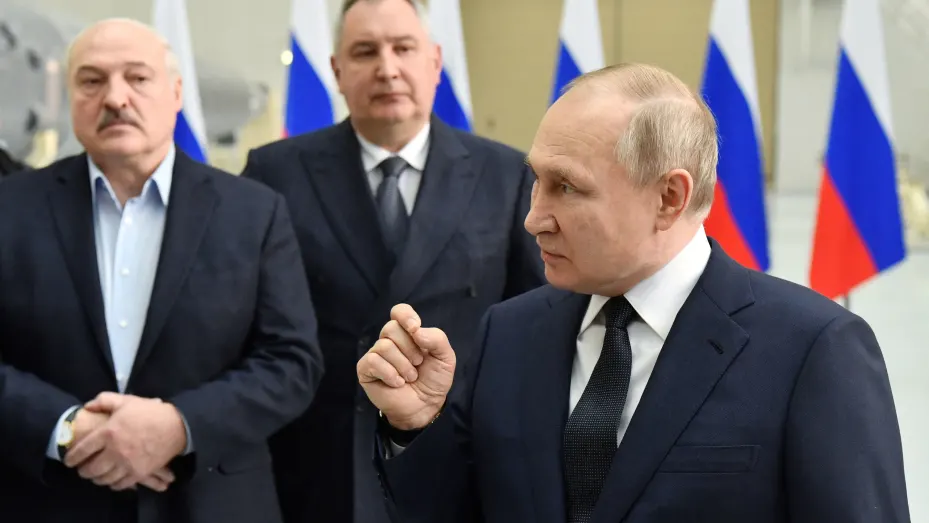
This was Putin in a meeting with his defense minister, Sergei Shoigu, at the Kremlin.
“I consider the proposed storming of the industrial zone unnecessary. I order you to cancel it (SHOIGU SAYING: “Roger that”) This is a case where we must think – I mean we always must think, but in this case more so – about preserving the lives and health of our soldiers and officers. There is no need to climb into these catacombs and crawl underground through these industrial facilities. Block off this industrial area so that a fly cannot not pass through.”
Ukraine’s presidential adviser, Oleksiy Arestovych, said Russia decided to blockade the Azovstal plant because it sustained huge losses there and could not take it by force.
Putin called on the remaining Ukrainian fighters in Azovstal to lay down their arms, saying Russia would treat them with respect and provide medical assistance.
Shoigu said more than 2,000 fighters are holed up there, and called Azovstal the de facto headquarters of the far-right nationalist Azov battalion.
Moscow has promised to destroy the battalion, which is now incorporated into Ukraine’s national guard.
On Tuesday (April 19), an Azov commander, apparently holed up at the plant, rejected Russia’s call to surrender but urged that the civilians with them be rescued.
A few dozen evacuees left Mariupol by bus on Wednesday (April 20), with more evacuations expected.
But Ukrainian deputy prime minister Iryna Vereshchuk said an agreed humanitarian corridor to evacuate civilians from the factory had not worked as planned, blaming Russian forces.
She said 1,000 civilians and 500 wounded soldiers needed to be brought out immediately.
Capturing Mariupol is central to Moscow’s plans to cut Ukraine off from the Sea of Azov and forge a land bridge connecting Russian-annexed Crimea to Russia.
It has seen the worst fighting of the war and its worst humanitarian catastrophe, with hundreds of thousands of civilians cut off under siege.
Via our Reuters



News
Oil prices surge amid rising Middle East conflict risks
Crude oil surges 7% amid fears of Middle East conflict; Strait of Hormuz disruptions may push Brent over $100.

Crude oil surges 7% amid fears of Middle East conflict; Strait of Hormuz disruptions may push Brent over $100.
Crude oil prices spiked dramatically as investors react to the growing risk of a wider conflict in the Middle East. U.S. crude surged 7.2 percent, trading near $71.84 a barrel, signalling heightened concern across energy markets.
The Strait of Hormuz, a critical shipping chokepoint, has come under intense scrutiny. Rising war-risk insurance premiums and suspended tanker traffic are already slowing the movement of oil, creating ripple effects in global supply chains.
JPMorgan has warned that prolonged disruptions over three weeks could force Gulf producers to reduce output, potentially pushing Brent crude prices to between $100 and $120 a barrel. Markets are closely watching for developments that could reshape global energy pricing.
Subscribe to never miss an episode of Ticker – https://www.youtube.com/@weareticker

News
Trump warns of last opportunity to hit Iran as conflict escalates
Trump declares final chance to strike Iran, aiming to dismantle missile systems and prevent nuclear weapons amid U.S. troop losses.
Trump declares final chance to strike Iran, aiming to dismantle missile systems and prevent nuclear weapons amid U.S. troop losses.
President Trump has declared this is the final opportunity to strike Iran as conflict intensifies across the Middle East, outlining four key military objectives including dismantling Iran’s missile capabilities and targeting its navy.
The U.S. says its mission is to prevent Iran from acquiring a nuclear weapon and to halt its alleged support for terrorist groups abroad, signalling a potentially prolonged campaign in the region.
Four U.S. troops have already been killed, with officials warning further casualties are possible as operations continue.
#Trump #Iran #MiddleEast
Subscribe to never miss an episode of Ticker – https://www.youtube.com/@weareticker
-
 News3 days ago
Crude oil prices spike amid U.S.-Israel military action
-
Tech5 days ago
Meta launches lawsuits over alleged scam advertising operations
-
News3 days ago
Iran warns ships to avoid Strait of Hormuz
-
News20 hours ago
Airlines face disruptions that surpass previous Middle East conflicts
-
News3 days ago
U.S. and Israel attack Iran, escalating regional conflict
-
News3 days ago
Markets brace for turmoil after U.S. strikes Iran
-
Shows2 days ago
Cities reshaped by capital, policy, and design insights
-
Shows2 days ago
Understanding commercial lending’s unique challenges and strategies