Connect with us
https://tickernews.co/wp-content/uploads/2023/10/AmEx-Thought-Leaders.jpg

News

Meta’s new rules on deepfakes and AI

Published

on

Meta announced major changes to its policies on digitally created and altered media, ahead of U.S. elections poised to test its ability to police deceptive content.

The social media giant will start applying “Made with AI” labels in May to AI-generated videos, images and audio posted on its platforms, expanding a policy that previously addressed only a narrow slice of doctored videos, Vice President of Content Policy Monika Bickert said in a blog post.

Bickert said Meta would also apply separate and more prominent labels to digitally altered media that poses a “particularly high risk of materially deceiving the public on a matter of importance,” regardless of whether the content was created using AI or other tools.

The new approach will shift the company’s treatment of manipulated content. It will move from one focused on removing a limited set of posts toward one that keeps the content up while providing viewers with information about how it was made.

Meta previously announced a scheme to detect images made using other companies’ generative AI tools using invisible markers built into the files, but did not give a start date at the time.

Posted content

A company spokesperson told Reuters the new labeling approach would apply to content posted on Meta’s Facebook, Instagram and Threads services.

Its other services, including WhatsApp and Quest virtual reality headsets, are covered by different rules.

Meta will begin applying the more prominent “high-risk” labels immediately, the spokesperson said.
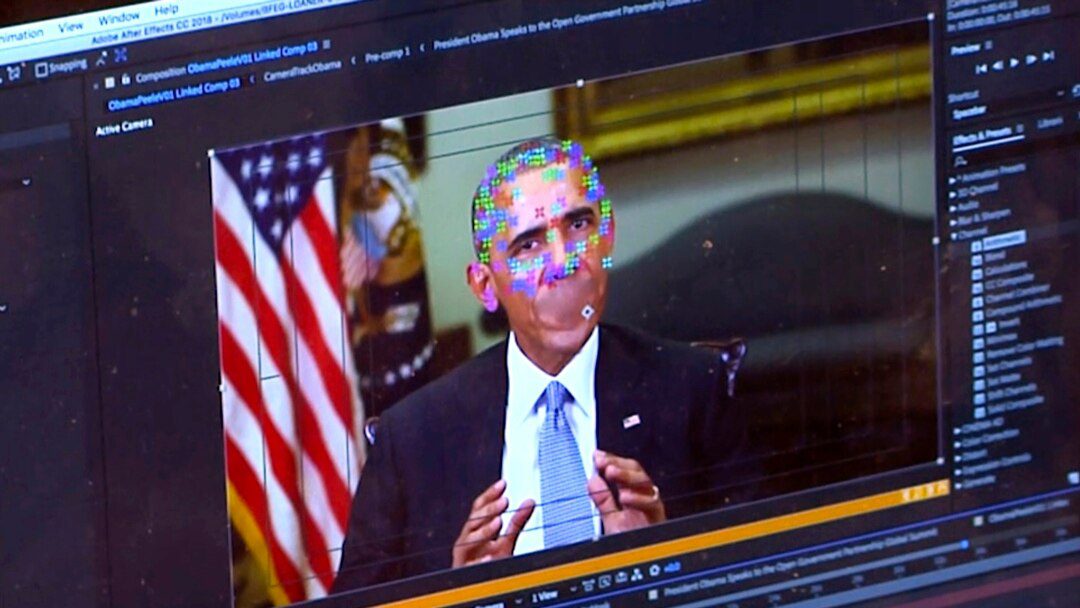
The changes come months before a U.S. presidential election in November that tech researchers warn may be transformed by new generative AI technologies.

A deepfake of former U.S. President Barak Obama.

Political campaigns have already begun deploying AI tools in places like Indonesia, pushing the boundaries of guidelines issued by providers like Meta and generative AI market leader OpenAI.
In February, Meta’s oversight board called the company’s existing rules on manipulated media “incoherent” after reviewing a video of U.S. President Joe Biden posted on Facebook last year that altered real footage to wrongfully suggest he had behaved inappropriately.

The footage was permitted to stay up, as Meta’s existing “manipulated media” policy bars misleadingly altered videos only if they were produced by artificial intelligence or if they make people appear to say words they never actually said.

The board said the policy should also apply to non-AI content, which is “not necessarily any less misleading” than content generated by AI, as well as to audio-only content and videos depicting people doing things they never actually did.

News

Sheriff Nanos dismisses evidence claims in Nancy Guthrie case update

Sheriff Nanos addresses evidence claims and FBI collaboration in Nancy Guthrie case amidst ongoing investigation controversies

Published

on

Sheriff Nanos addresses evidence claims and FBI collaboration in Nancy Guthrie case amidst ongoing investigation controversies

video
play-sharp-fill
In Short:
– Sheriff Nanos confirmed no glove was found at Nancy’s residence and maintains evidence analysis through a trusted lab.
– He believes Nancy’s case involves kidnapping, but all new evidence and possibilities are still under investigation.

In a new interview with Pima County Sheriff Chris Nanos, he answers various topics concerning the ongoing investigation of Nancy’s case.Nanos stated that his office did not locate a glove at Nancy’s residence. He affirmed, “We have no glove. We never found a glove on that property.”

The sheriff explained that his office has utilised the same contracted lab for decades, long before his tenure. Evidence was initially submitted to this lab, which holds the Guthrie family DNA and other swabs. He stated it was logical to continue sending evidence there for immediate analysis alongside existing samples.

He noted the FBI’s agreement, expressing confidence in their crime lab but opting for the private lab due to initial arrangements.

Banner

Nanos asserted cooperation with the FBI, disputing claims of reluctance in seeking assistance. He contacted the FBI promptly after Nancy’s disappearance and allowed them to lead on ransom notes due to their expertise.

Investigation Details

On the possibility of kidnapping, he stated, “we believe it’s a kidnapping” while maintaining other possibilities should be considered. Different gloves were found miles away, but the importance of each remains under review.

No individuals have been definitively ruled out as suspects. Nanos described a man briefly detained nearby, stating he was satisfied with his alibi. He refrained from confirming any forced entry at Nancy’s home but did mention that blood and DNA were found at the scene.

He addressed criticism regarding the timing of releasing the crime scene, asserting that his office acted appropriately. Allegations about family involvement were dismissed, emphasising the family’s full cooperation.

Nanos confirmed communication with Savanah Guthrie but indicated she has her support system.

He dismissed past reports of a strained relationship with the FBI, asserting mutual respect and collaboration remain intact.


Download the Ticker app

Continue Reading

News

Russia bans WhatsApp and promotes state-backed messaging app

Kremlin blocks WhatsApp, urging citizens to use state-backed MAX; critics warn of surveillance, prompting protests in Moscow.

Published

on

Kremlin blocks WhatsApp, urging citizens to use state-backed MAX; critics warn of surveillance, prompting protests in Moscow.

The Kremlin has officially blocked WhatsApp, urging Russians to switch to MAX, a state-backed messaging app. This move comes after Meta refused to comply with local regulations, sparking debates over digital freedom in the country.

Critics warn that MAX could be used for government surveillance, though authorities deny these claims. The ban highlights Russia’s growing control over foreign tech platforms and its push for locally regulated alternatives.

Activists in Moscow have staged protests calling for an open and unregulated internet, while the public reacts with a mix of concern and resignation.

Subscribe to never miss an episode of Ticker – https://www.youtube.com/@weareticker


Download the Ticker app

Continue Reading

News

U.S. secretly sent 6,000 Starlink terminals to Iran after protests

US covertly sent 6,000 Starlink terminals to Iran amid protests, aiding internet access despite government shutdowns and crackdown violence.

Published

on

US covertly sent 6,000 Starlink terminals to Iran amid protests, aiding internet access despite government shutdowns and crackdown violence.

U.S. officials report that the Trump administration covertly sent around 6,000 Starlink satellite internet terminals into Iran following widespread protests. The move was designed to bypass strict internet blackouts imposed by authorities in Tehran.

The terminals reportedly enabled activists and dissidents to reconnect with the outside world during periods of severe digital restriction, raising fresh questions about foreign involvement and cyber strategy.

As geopolitical tensions simmer, the revelation underscores how connectivity has become a powerful tool in modern conflict.

#Iran #Starlink #DonaldTrump #MiddleEast #GlobalPolitics #TechNews #InternetFreedom #BreakingNews


Subscribe to never miss an episode of Ticker – https://www.youtube.com/@weareticker

Download the Ticker app

Continue Reading

Trending Now