
Connect with us
https://tickernews.co/wp-content/uploads/2023/10/AmEx-Thought-Leaders.jpg

Ticker Views

All the President’s sins
Published

on

“Doors have opened, new subpoenas have been issued, and the dam has begun to break,” said Rep Liz Cheney, vice chair of the House Select Committee on the January 6 Attack on the Capitol

Holdouts from the Trump White House are now coming forward, especially with the conviction last week of Trump consigliere Stephen Bannon, who will likely go to jail for his contemptuous refusal to appear before the Select Committee.
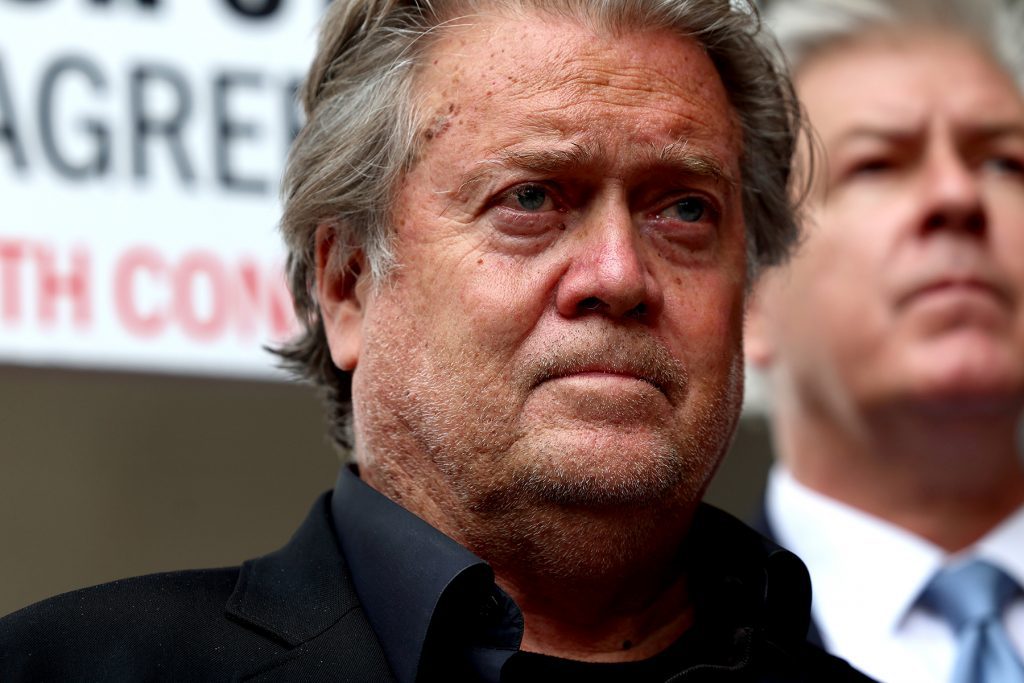
WASHINGTON, DC – JULY 21: Former White House Chief Strategist Steve Bannon speaks to reporters as he leaves the Federal District Court House at the end of the fourth day of his trial for contempt of Congress on July 21, 2022 in Washington, DC. The government rested its case against Bannon, who did not testify or call witnesses in his own trial. (Photo by Anna Moneymaker/Getty Images)

There will be much more ahead in putting in place the pieces of the mosaic that was, as Rep Bennie Thompson has said, an attempted coup by Donald Trump to overturn the 2020 presidential election and remain in power. It was, Thompson said, a path of lawlessness and corruption.

The Select Committee is presenting all the President’s sins.

Not even the Covid infection of the current president, Joe Biden, could dent the wall-to-wall media coverage – mainstream and social – of the blockbuster hearing last Thursday night. 
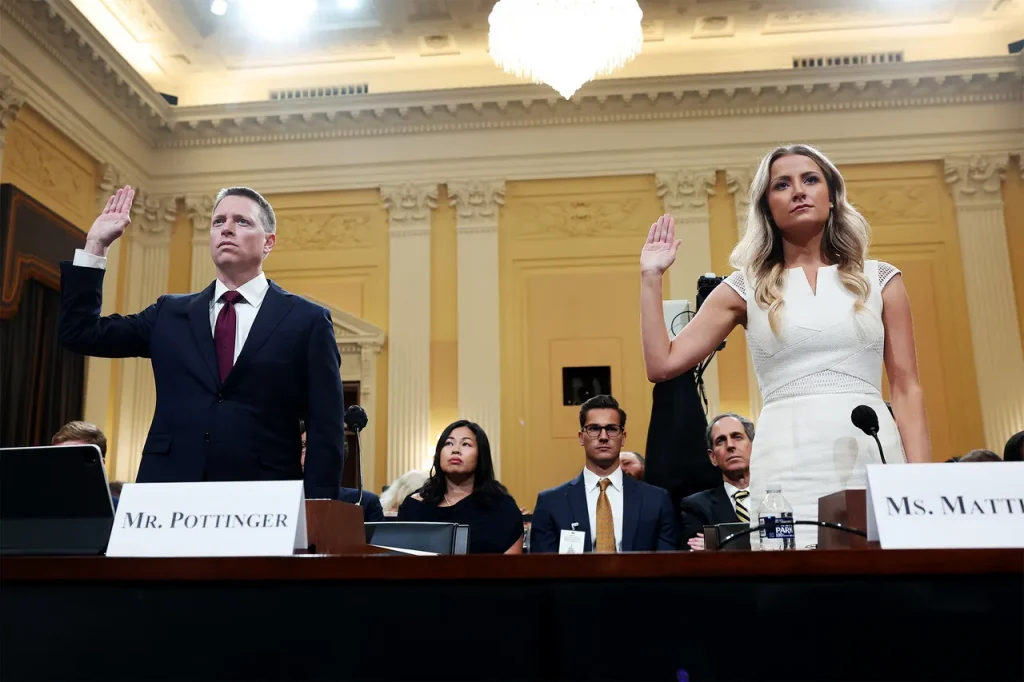
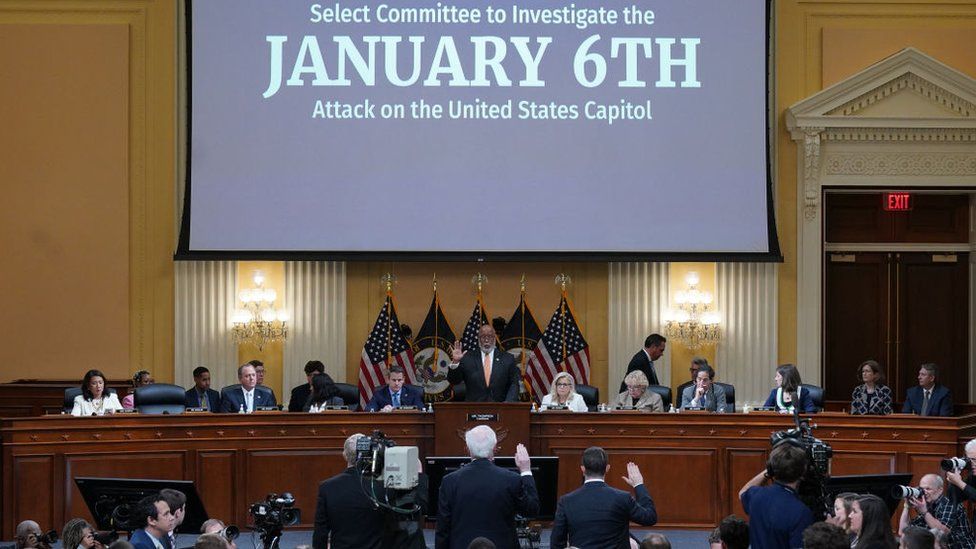
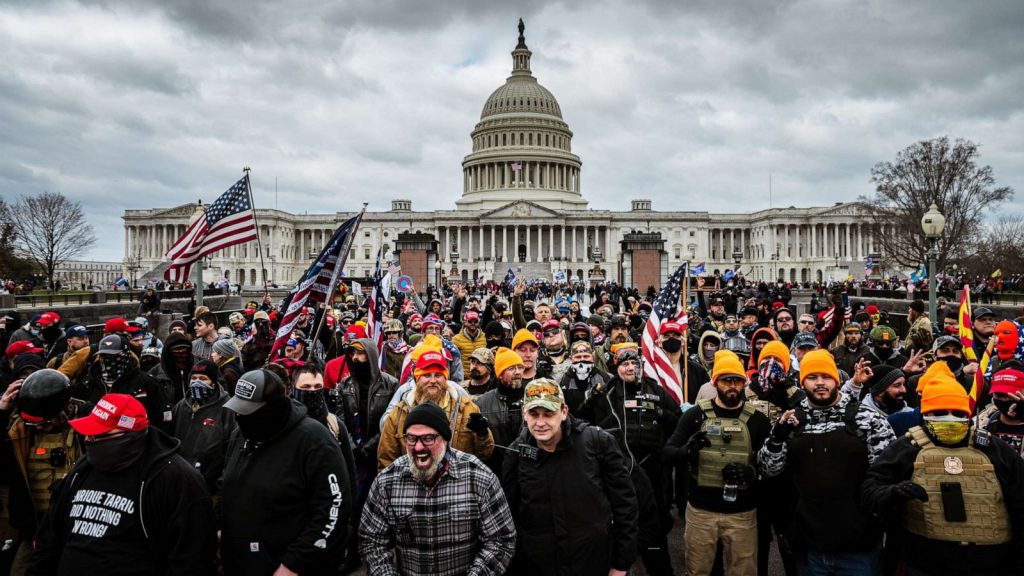
What is clear now, after nine hearings by the Select Committee, is that the January 6 attack was not simply a protest that got out of control, a one-off event of limited force and duration that was over by the end of the day, with no serious threat to America’s democracy.  

What we know now is that the events of that day were the culmination of a conspiracy to keep Donald Trump in power by whatever means necessary.

The evidence presented last week – direct testimony, videotapes, telephone recordings, cell phone video – was relentless:

  • Trump did not act because he did not want to stop the attack
  • Trump was adamant that he wanted to go to the Capitol and join the mob
  • Trump did not call any law enforcement or military officials to respond to the attack
  • Trump did not call on the mob to go home until it was clear the insurrection was lost
  • Trump rejected the urgings of those around him that day to call on the mob to leave
  • Trump was indifferent to the physical, mortal danger to Vice President Pence
  • The people around Pence, agents and staff, feared for their lives
  • Trump’s tweet at 224 pm attacking Pence for not overturning the election – “Mike Pence didn’t have the courage to do what should have been done to protect our Country and our Constitution.”– intensified the fury of the mob’s attack
  • For hours, Trump rejected pleas from his family his staff, Republican members of Congress, political associates, to issue a statement calling on the attackers to go home
  • When Trump finally made a video statement late in the day, he called the attackers “patriots.” ”We love you. Go home in peace.”

What was so powerful about the presentation – aside from its unique made-for-television, cinematic quality and the highest reality TV production values – was that every witness, every person whose testimony was shown was not only a Republican, but a Trump Republican: professionals who have worked for and with Trump during his term, who were loyal to him, who believed in him, and who were ultimately repelled by what Trump did – and did not do – that day. Trump’s people turned on Trump and spit out their stories in prime time.

In preparing his video message the day after the attack, Trump could not say, “The election is over.”
That was left on the cutting room floor “I don’t want to say the election’s over,” the video out-take reveals.

“I just want to say Congress has certified the results without saying the election is over.”

Trump never in a million years believed he would be haunted by his own videos that did not make it to air the day after the insurrection.  

That mosaic of conspiracy already includes direct efforts by Trump to pressure state legislatures and state election officials to overturn the certified election results in their states.  It includes a Trump attempt to decapitate the leadership of the Justice Department and install his loyalists in order for them to pressure several states to overturn their election results. 
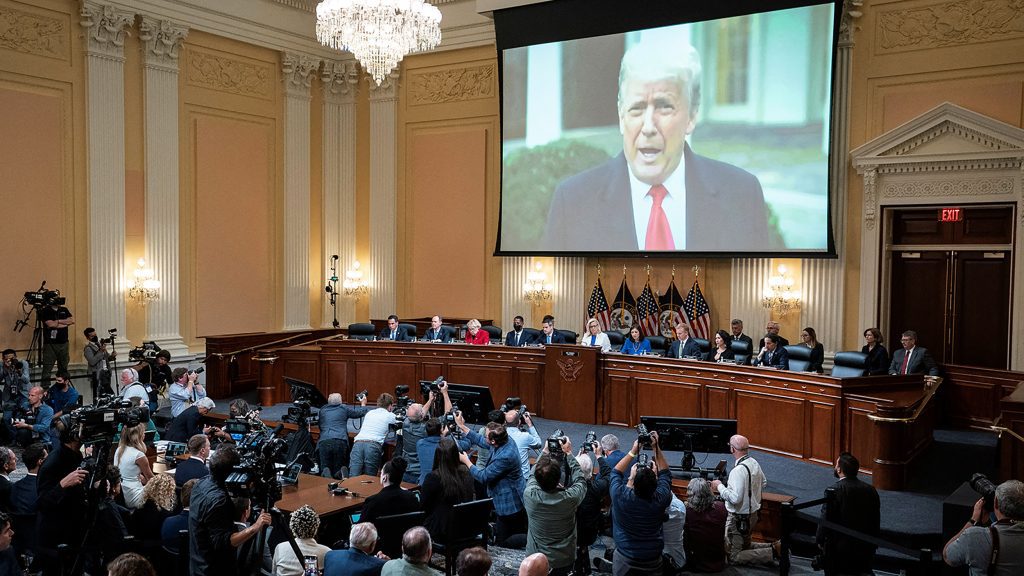
A video of former President Donald Trump is shown on a screen, as the House select committee investigating the Jan. 6 attack on the U.S. Capitol holds a hearing at the Capitol in Washington, Thursday, July 21, 2022. Alex Brandon/Pool via REUTERS

It includes intensive pressure on the Vice President to prevent him from carrying out his constitutional responsibilities to certify the election result in the joint session on January 6.  It includes efforts by Trump to incite the mob to attack the Capitol in order to prevent the House and Senate from completing their business that day.

Trump is now haunted by the prospect of the Attorney General, Merrick Garland, convening a grand jury to assess whether crimes were committed by Trump between Election Day in November 2020 and the attack on the Capitol. 
JAN 6

There is now huge pressure on the Attorney General to prosecute Trump for what he did and failed to do.  There is a strong case: Trump wanted to join the insurrectionists, he did not call on law enforcement or the military to deploy force to put the riot down, he did not tell his supporters to go home while the attack was raging.

Trump wanted the electoral count to be stopped – he wanted Congress to  be stopped from doing its duty under the law. He did not care about the mortal danger to the Vice President. 

All the President’s sins continue to this day.  His is sinning some more. 
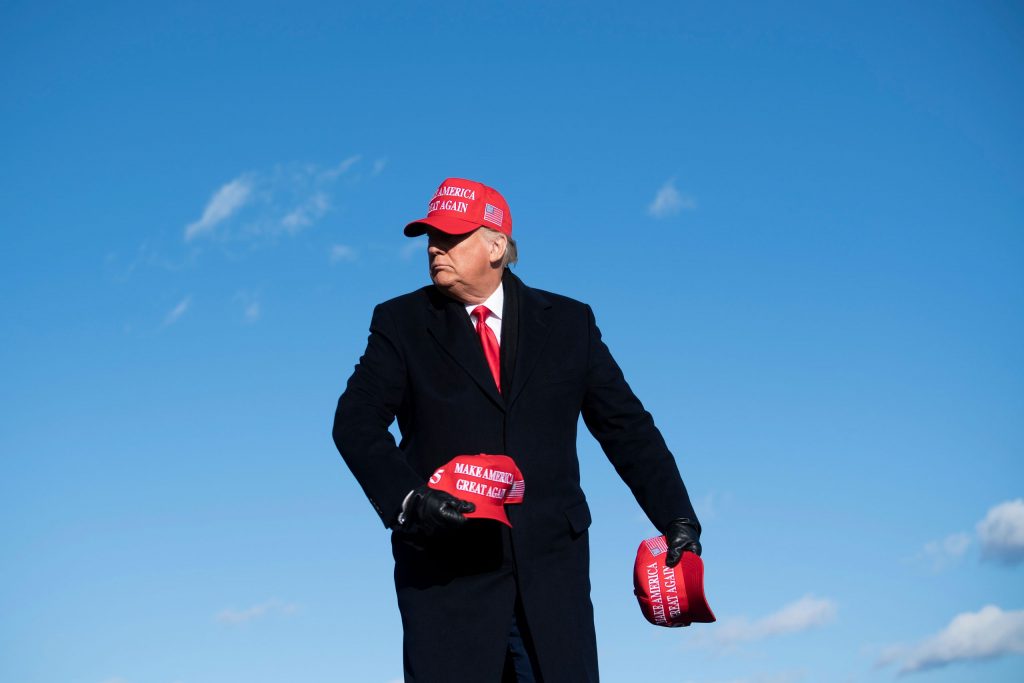
As the Select Committee hearing convened last week, the New York Times reported:

“Donald J. Trump called a top Republican in the State Legislature in Wisconsin in recent days to lobby for a measure that would overturn his 2020 loss in the state to President Biden.” The state official, who is a Trump supporter, told Trump that there was no provision in law in Wisconsin to rescind that state’s certification of the 2020 votes, and that such an act would violate the state’s constitution.

Trump wants the 2020 election overturned. 

The only thing that can stop him is the rule of law and the commitment of all public officials who take an oath of office to preserve, protect and defend the Constitution of the United States to ensure the rule of law applies to everyone – including  to the former president of the United States.

Bruce Wolpe is a Ticker News US political contributor. He’s a Senior Fellow at the US Studies Centre and has worked with Democrats in Congress during President Barack Obama's first term, and on the staff of Prime Minister Julia Gillard. He has also served as the former PM's chief of staff.

Ticker Views

Deepfakes leveled up in 2025 – here’s what’s coming next

Published

on

Deepfakes leveled up in 2025 – here’s what’s coming next

AI image and video generators now produce fully lifelike content.
AI-generated image by Siwei Lyu using Google Gemini 3

Siwei Lyu, University at Buffalo

Over the course of 2025, deepfakes improved dramatically. AI-generated faces, voices and full-body performances that mimic real people increased in quality far beyond what even many experts expected would be the case just a few years ago. They were also increasingly used to deceive people.

For many everyday scenarios — especially low-resolution video calls and media shared on social media platforms — their realism is now high enough to reliably fool nonexpert viewers. In practical terms, synthetic media have become indistinguishable from authentic recordings for ordinary people and, in some cases, even for institutions.

And this surge is not limited to quality. The volume of deepfakes has grown explosively: Cybersecurity firm DeepStrike estimates an increase from roughly 500,000 online deepfakes in 2023 to about 8 million in 2025, with annual growth nearing 900%.

I’m a computer scientist who researches deepfakes and other synthetic media. From my vantage point, I see that the situation is likely to get worse in 2026 as deepfakes become synthetic performers capable of reacting to people in real time.

Just about anyone can now make a deepfake video.

Dramatic improvements

Several technical shifts underlie this dramatic escalation. First, video realism made a significant leap thanks to video generation models designed specifically to maintain temporal consistency. These models produce videos that have coherent motion, consistent identities of the people portrayed, and content that makes sense from one frame to the next. The models disentangle the information related to representing a person’s identity from the information about motion so that the same motion can be mapped to different identities, or the same identity can have multiple types of motions.

These models produce stable, coherent faces without the flicker, warping, or structural distortions around the eyes and jawline that once served as reliable forensic evidence of deepfakes.

Second, voice cloning has crossed what I would call the “indistinguishable threshold.” A few seconds of audio now suffice to generate a convincing clone – complete with natural intonation, rhythm, emphasis, emotion, pauses, and breathing noise. This capability is already fueling large-scale fraud. Some major retailers report receiving over 1,000 AI-generated scam calls per day. The perceptual tells that once gave away synthetic voices have largely disappeared.

Third, consumer tools have pushed the technical barrier almost to zero. Upgrades from OpenAI’s Sora 2 and Google’s Veo 3, and a wave of startups mean that anyone can describe an idea, let a large language model such as OpenAI’s ChatGPT or Google’s Gemini draft a script, and generate polished audio-visual media in minutes. AI agents can automate the entire process. The capacity to generate coherent, storyline-driven deepfakes at a large scale has effectively been democratized.

This combination of surging quantity and personas that are nearly indistinguishable from real humans creates serious challenges for detecting deepfakes, especially in a media environment where people’s attention is fragmented and content moves faster than it can be verified. There has already been real-world harm – from misinformation to targeted harassment and financial scams – enabled by deepfakes that spread before people have a chance to realize what’s happening.

AI researcher Hany Farid explains how deepfakes work and how good they’re getting.

The future is real-time

Looking forward, the trajectory for next year is clear: Deepfakes are moving toward real-time synthesis that can produce videos that closely resemble the nuances of a human’s appearance, making it easier for them to evade detection systems. The frontier is shifting from static visual realism to temporal and behavioral coherence: models that generate live or near-live content rather than pre-rendered clips.

Identity modeling is converging into unified systems that capture not just how a person looks, but how they move, sound, and speak across contexts. The result goes beyond “this resembles person X,” to “this behaves like person X over time.” I expect entire video-call participants to be synthesized in real time; interactive AI-driven actors whose faces, voices and mannerisms adapt instantly to a prompt; and scammers deploying responsive avatars rather than fixed videos.

As these capabilities mature, the perceptual gap between synthetic and authentic human media will continue to narrow. The meaningful line of defense will shift away from human judgment. Instead, it will depend on infrastructure-level protections. These include secure provenance, such as media signed cryptographically, and AI content tools that use the Coalition for Content Provenance and Authenticity specifications. It will also depend on multimodal forensic tools such as my lab’s Deepfake-o-Meter.

Simply looking harder at pixels will no longer be adequate.The Conversation

Siwei Lyu, Professor of Computer Science and Engineering; Director, UB Media Forensic Lab, University at Buffalo

This article is republished from The Conversation under a Creative Commons license. Read the original article.

Continue Reading

Ticker Views

EU backs Ukraine with €90bn loan as unity fractures over Russia

Published

on

EU agrees €90 billion loan to Ukraine, but squabbles over frozen Russian assets expose the bloc’s deep divisions

Richard Whitman, University of Kent; Royal United Services Institute and Stefan Wolff, University of Birmingham

By agreeing to provide a loan of €90 billion (£79 billion) for the years 2026-2027, EU leaders have set the direction for the future of support for Ukraine.

At stake at the meeting of the European Council on December 18 was not just Kyiv’s ability to continue to defend itself against Russia’s ongoing aggression, but also the credibility of the EU as a player in the future of European security.

The key decision for the EU’s leaders was whether, and how, they would provide financial support for Ukraine over the next two years. Europeans have provided a vital drip-feed of ongoing financial assistance to Kyiv throughout almost four years of war.

But they have also struggled to fill, in its entirety, the hole created by the withdrawal of US support since the return of Donald Trump to the White House in January 2025.

The estimated €136 billion of budget support needed by Ukraine in 2026 and 2027 is a relatively fixed figure regardless of whether any peace initiative comes to fruition. A large part of it – €52 billion in 2026 and €33 billion in 2027 – is for military support.

The EU-agreed loan of €90 billion, “based on EU borrowing on the capital markets backed by the EU budget headroom”, thus covers at least the essential military needs of Ukraine. The loan will either contribute to the ongoing war effort or help create a sufficiently large and credible defence force to deter any future aggression by Russia.

Brussels is now the most important financial partner for Ukraine by any measure.

To fund the support the EU wants to provide to Ukraine, the commission developed two proposals. The most widely supported – and ultimately rejected – proposal was to use the Russian assets held by the Belgium-based Euroclear exchange as collateral to for a loan to fund Ukraine’s defence and reconstruction over the next few years.

In view of Belgian opposition because of insufficient protections against likely Russian retaliation, the European Commission had also proposed joint EU borrowing to fund support for Kyiv. Despite resistance from a group of EU member states, it was the only agreeable solution at the end.

The agreement on a loan to Ukraine funded from EU borrowing achieves the primary goal of securing at least a modicum of budgetary stability for Kyiv. But it came at the price of EU unity.

An “opt-out clause” had to be provided for Hungary, Slovakia and Czechia. All three countries are governed by deeply Euro-sceptical and Russia-leaning parties.

The deep irony is that by opposing EU support for Ukraine, they expose Ukrainians to a fate similar to that they suffered when the Soviet Union suppressed pro-democracy uprisings in Hungary in 1956 and then Czechoslovakia in 1968.

The EU until now managed to maintain a relatively united front on sanctions against Russia, on political, economic and military support for Ukraine, and on strengthening its own defence posture and defence-industrial base.

Over the past year, these efforts have accelerated in response to Trump’s return to the White House. This has shifted the US position to one which is in equal measure more America first and more pro-Russia than under any previous US administration.

And the pressure on Kyiv and Brussels has increased significantly over the past few weeks.

First there was the 28-point peace plan, which may have been a US-led proposal, but read as if it was Kremlin-approved. Then the new US national security strategy, which gave significantly more space to criticisms of Europe than to condemnation of Russia for the war in Ukraine.

No longer casting Russia as a threat to international security shows how detached the US has become from reality and the transatlantic alliance.

Russia’s president, Vladimir Putin, keeps insisting that he will achieve his war aims of fully annexing another four Ukrainian regions – in addition to Crimea – by force or diplomacy. Giving his usually optimistic outlook on Russia’s military and economic strength, Putin reiterated these points at his annual press conference on December 19.

EU divisions widen

In light of how squeezed Brussels and Kyiv now are between Washington and Moscow, the agreement on EU financing for Ukraine, despite its flaws and the acrimony it has caused within the EU, is a significant milestone in terms of the EU gaining more control over its future security. But it is not a magic wand resolving Europe’s broader problems of finding its place and defining its role in a new international order.

The agreement reached at the summit between the EU’s leaders on how to financially support Ukraine was overshadowed by their failure to overcome disagreement on signing a trade agreement with the South American trade group, Mercosur.

A decision on this trade deal with Argentina, Bolivia, Brazil, Paraguay, Uruguay and (currently suspended) Venezuela had been 25 years in the making. The deal was due to be signed on December 20, but this has now been postponed until January.

This is meant to provide time for additional negotiations to assuage opponents of the deal in its current form, especially France, Italy and Poland, who fear that cheaper imports from Mercosur countries will hurt European farmers. Those farmers staged a fiery protest at the European parliament ahead of the European Council meeting.

The delay does not derail the trade deal, which aims to create one of the world’s largest free trade areas. But it severely dents the EU’s claim to leadership of an international multilateral trading system based on rules that prioritise mutual benefit, as an alternative to the Trump administration’s unpredictable and punitive America-first trade practices.

Both disagreements continue to hamper the EU’s capacity for a decisive international role more generally. Where Trump’s US offers unpredictability, Brussels for now only offers extended procrastination on key decisions.

This places limits on the confidence that the EU’s would-be partners in a new international order can have in its ability to lead the shrinking number of liberal democracies. Without skilled and determined leadership, they will struggle to survive – let alone thrive – in a world carved up between Washington, Moscow and Beijing.The Conversation

Richard Whitman, Member of the Conflict Analysis Research Centre, University of Kent; Royal United Services Institute and Stefan Wolff, Professor of International Security, University of Birmingham

This article is republished from The Conversation under a Creative Commons license. Read the original article.

Continue Reading

Ticker Views

TikTok sale confirmed as ByteDance agrees to sell majority stake to US investors

Published

on

ByteDance’s agreement to sell TikTok puts app’s algorithm in the spotlight – a social media expert explains how the ‘For You’ page works and what’s to come

TikTok is on track to change hands, but what that means for users is up in the air.
Stefani Reynolds/AFP via Getty Images

Kelley Cotter, Penn State

Chinese tech giant ByteDance has signed an agreement to sell a majority stake in its video platform TikTok to a group of U.S. investors. President Donald Trump announced a preliminary agreement for the sale on Sept. 19, 2025, following his negotiation with Chinese leader Xi Jinping.

TikTok CEO Shou Zi Chew told employees in a memo obtained by news organizations that the company is working to close the deal by Jan. 22, 2026. Chinese and U.S. authorities will also need to approve the deal.

The deal creates a new U.S.-only version of the app, bringing it into compliance with a law signed by President Joe Biden on April 23, 2024, and upheld by the Supreme Court on Jan. 17, 2025. Specifics of the deal remain to be hammered out, but some details are emerging. These include what will happen to the video-sharing app’s core algorithm – and what that means for TikTok’s millions of U.S. users.

The Chinese government has indicated it will not permit ByteDance to sell the algorithm, because it is classified as a controlled technology export, per Chinese law. Meanwhile, U.S. tech industry executives and some lawmakers say compliance with the law requires the algorithm to be under American control. The deal as proposed includes licensing the algorithm so that it remains Chinese intellectual property while the U.S. version of the app continues to use the technology.

TikTok’s “For You” page algorithm is widely considered the most important part of the app. As one analyst put it: “Buying TikTok without the algorithm would be like buying a Ferrari without the engine.”

The algorithm’s value lies in its uncanny capacity to anticipate users’ content preferences. Many users claim it knows them better than they know themselves – a sentiment that has evolved into a curious mix of spiritual belief and conspiracy theorizing, as my colleagues and I have documented. Other scholars have similarly noted that users feel more intimately seen and known by TikTok’s algorithm than those powering other popular platforms.

I have studied social media algorithms for nearly a decade, exploring how our relationships with them have evolved as they become increasingly entwined with daily life. As both a social media scholar and TikTok devotee, I want to shed some light on how the algorithm works and how the app is likely to change in the wake of its sale.

How the TikTok algorithm works

In some ways, the TikTok algorithm does not differ significantly from other social media algorithms. At their core, algorithms are merely a series of steps used to accomplish a specific goal. They perform mathematical computations to optimize output in service of that goal.

There are two layers to the TikTok algorithm. First, there is the abstract layer that defines the outcome developers wish to accomplish. An internal document shared with The New York Times specified that TikTok’s algorithm optimizes for four goals: “user value,” “long-term user value,” “creator value” and “platform value.”

But how do you turn these goals into math? What does an abstract concept like “user value” even mean? It’s not practical to ask users whether they value their experience every time they visit the site. Instead, TikTok relies on proxy signals that translate abstract outcomes into quantifiable measures – specifically, likes, comments, shares, follows, time spent on a given video and other user-behavior data. These signals then become part of an equation to predict two key concrete outcomes: “retention,” or the likelihood that a user will return to the site, and “time spent” on the app.

The TikTok For You page algorithm relies on machine learning for predicting retention and time spent. Machine learning is a computational process in which an algorithm learns patterns in a dataset, with little or no human guidance, to produce the best equation to predict an outcome. Through learning patterns, the algorithm determines how much individual data signals matter for coming up with a precise prediction.

A Wall Street Journal investigation found that the amount of time users spend watching each video plays a large role in how the algorithm chooses videos it suggests to users. Using the equation it has generated to predict retention and time spent, the algorithm assigns a score to each video and ranks possible videos that could be shown to the user by this score. The higher the score for an individual user, the more likely the video will appear in their feed.

Of course, content characteristics and other users additionally inform recommendations, and there are other subprocesses folded into the equation. This step is where algorithmic moderation usually comes in. If a video looks like engagement bait or has excessive gore, for example, the content’s score will be penalized.

Here are the basics of how TikTok’s algorithm works.

What’s likely to change for US users

The sale has not been finalized, but the algorithm’s fate is coming into focus. According to reports, the United States-only version of the algorithm will be retrained on only U.S. users’ data. Users won’t need to download a new version of the app for the changed algorithm to work.

Even though the algorithm itself is the same as before, it’s fairly certain that TikTok will change. I see two key reasons for change.

First, the proposed app’s U.S.-only user population will alter the makeup of the underlying dataset informing algorithmic recommendations on an ongoing basis. As the kinds of content come to reflect American cultural preferences, values and behaviors, the algorithm may be slightly different as it “learns” new patterns.

Though users are more likely to stick with the app because they don’t need to download a new version, not all users will choose to, especially if it is seen as under the control of Trump’s allies. Under the current deal, Oracle Corp. and the U.S. government would oversee the algorithm’s retraining. This arrangement suggests that the U.S. government may have significant influence over how the app works.

The deal would give an 80% share to U.S. investors, including 50% to new investors Oracle, Silver Lake and Andreessen Horowitz. These investors have connections to Trump, and an apparent provision of the deal allows the U.S. government to select one board member.

These influences raise the possibility of a boycott from left-leaning users and creators similar to earlier boycotts of Target for rolling back DEI measures and Disney after the since-reversed suspension of Jimmy Kimmel. This may result in a user population – and data – reflective of a narrower realm of interests and ideologies.

Second, it’s possible that the majority shareowners of the new app will decide to adjust the algorithm, particularly when it comes to content moderation. The new owners may wish to modify TikTok’s Community Guidelines according to their view of acceptable and unacceptable speech.

For example, TikTok’s current Community Guidelines prohibit misinformation and work with independent fact-checkers to assess the accuracy of content. While Meta used to follow a similar approach for Instagram and Facebook, in January 2025 Meta announced that it would end its relationships with independent fact-checkers and loosen content restrictions. YouTube has similarly relaxed its content moderation this year.

With reports that the U.S. government would oversee retraining the algorithm, there’s a possibility that not only the new investors but also the government itself could influence how content is prioritized and moderated.

The bottom line is algorithms are highly sensitive to context. They reflect the interests, values and worldviews of the people who build them, the preferences and behaviors of people whose data informs their models and the legal and economic contexts they operate within.

This means that while it’s difficult to predict exactly what a U.S.-only TikTok will be like, it’s safe to assume it will not be a perfect mirror image of the current app.

This story was updated on Dec. 19, 2025, to include new details about TikTok’s sale.The Conversation

Kelley Cotter, Assistant Professor of Information Sciences and Technology, Penn State

This article is republished from The Conversation under a Creative Commons license. Read the original article.

Continue Reading

Trending Now