U.S. President Joe Biden has announced that he ended his reelection campaign on Sunday after several fellow Democrats lost faith in his mental acuity and ability to beat Donald Trump, leaving the presidential race in uncharted territory.
Biden, in a post on X, said he will remain in his role as president and commander-in-chief until his term ends in January 2025 and will address the nation this week.
The unprecedented announcement reads in part, “It has been the greatest honor of my life to serve as your President. And while it has been my intention to seek reelection, I believe it is in the best interest of my party and the country for me to stand down and to focus solely on fulfilling my duties as President for the remainder of my term,” Biden wrote.
Biden, 81, also announced that he will endorse Vice President Kamala Harris to top the ticket.
U.S. President Joe Biden announced he is ending his troubled reelection campaign amid growing opposition within his own Democratic Party. He endorsed Vice President Kamala Harris to replace him as the party’s candidate against Republican Donald Trump.
FILE PHOTO: U.S. Vice President Kamala Harris has been endorsed by Joe Biden to run for President.
In a post on X, Biden, 81, stated he will continue his role as president and commander-in-chief until his term concludes in January 2025. He plans to address the nation this week. Biden has not been seen publicly since testing positive for COVID-19 and isolating at his home in Rehoboth Beach, Delaware, last week.
“While it has been my intention to seek reelection, I believe it is in the best interest of my party and the country for me to stand down and to focus solely on fulfilling my duties as President for the remainder of my term,” Biden wrote.
Democratic National Committee Chair Jaime Harrison mentioned that the party will soon communicate the next steps and the process for selecting the nominee. This marks the first time in over fifty years that an incumbent U.S. president has relinquished his party’s nomination.
Biden’s campaign faced significant challenges after a faltering debate against former President Trump on June 27. Opposition from within the Democratic Party intensified, with 36 congressional Democrats urging him to withdraw, fearing his candidacy could jeopardise their control of the White House and Congress.
In contrast, the Republican Party showed unity, rallying behind Trump and his running mate, Senator J.D. Vance. If Harris becomes the nominee, she would be the first Black woman to run at the top of a major-party ticket.
Trump expressed confidence that Harris would be easier to defeat. A source familiar with the situation revealed that Biden had a last-minute change of heart, initially planning to stay in the race before deciding to withdraw on Sunday afternoon.
It remains unclear if other senior Democrats will challenge Harris for the nomination or if the party will open the field for nominations. Polls indicate that Harris performs similarly to Biden against Trump.
Congressional Republicans have called for Biden to resign immediately, arguing his incapacity to run for president raises questions about his ability to govern. They have also hinted at potential legal challenges to the Democrats’ move to replace Biden on the ballot.
Biden’s announcement follows mounting pressure from Democratic lawmakers and officials, exacerbated by his poor debate performance and gaffes at a NATO summit. This move makes him the first sitting president to relinquish his party’s nomination since Lyndon B. Johnson in 1968.
If Harris becomes the nominee, it would represent an unprecedented move by the Democratic Party, with Harris being the first Black and Asian American woman to run for the White House. Biden, the oldest U.S. president ever elected, initially set his sights on a second term, believing he was the only Democrat who could beat Trump again. However, concerns over his age and recent poor performance have led to significant pressure for him to withdraw.
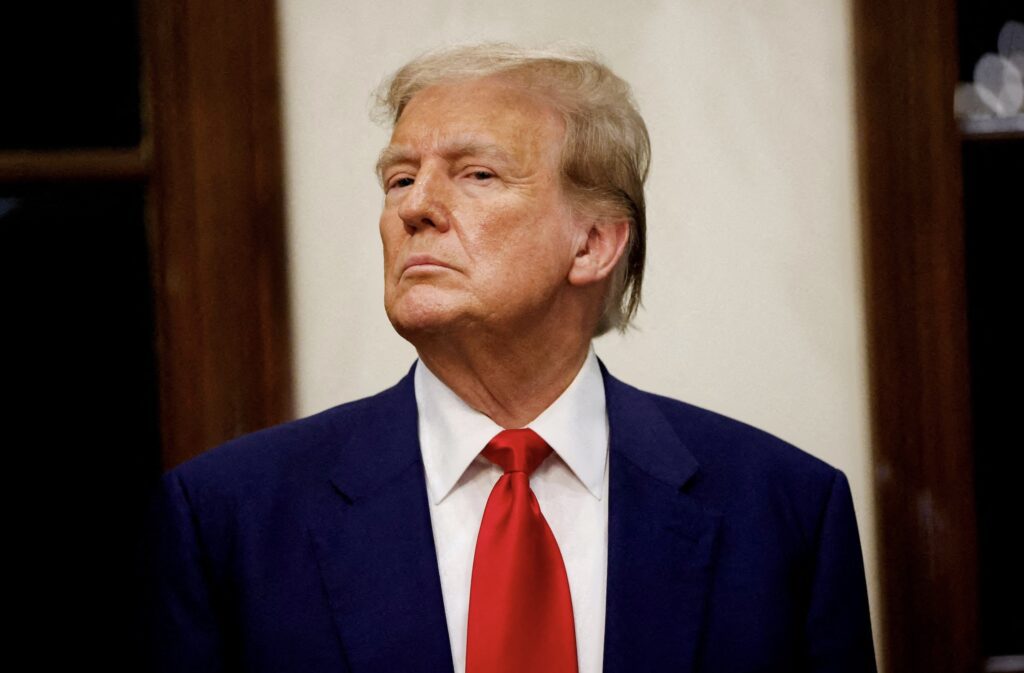
Biden’s departure sets up a stark contrast between Harris, a former prosecutor, and Trump, who faces multiple criminal prosecutions related to his attempts to overturn the 2020 election result. Harris has been reaching out to key voter groups in recent months, and her support will be crucial for the Democratic Party moving forward.
Biden accumulated a significant number of delegates during the primary race, but unless the party changes the rules, these delegates will enter the convention “uncommitted,” potentially influencing the nomination process. The outcome of the Democratic National Convention in August will determine the party’s nominee for the presidential election.
In Short:
– NASA and Lawrence Livermore National Laboratory will launch the Pandora Mission on January 5, 2026, to find signs of life.
– The mission will study 20 exoplanets’ atmospheres for biosignatures, utilising an innovative telescope design.
NASA is gearing up to launch the Pandora Mission on January 5, 2026, aboard a SpaceX Falcon 9 rocket from Vandenberg Space Force Base. The compact satellite, developed with Lawrence Livermore National Laboratory, is designed to probe distant exoplanets for signs of life by analyzing their atmospheric composition. This $20 million mission focuses on detecting water vapor and other biosignatures across 20 known worlds.
At the core of Pandora is CODA, a 45-centimeter all-aluminum telescope offering innovative, cost-effective observations in both visible and near-infrared light. By separating planetary signals from the bright light of host stars, scientists hope to confirm the presence of water—a critical ingredient for life as we know it. Each of the 20 target planets will be observed 10 times during planetary transits, enabling continuous 24-hour monitoring sessions.
Pandora arrives amid growing excitement over exoplanet discoveries, including potential biosignatures found on K2-18b in 2025. Its observations will pave the way for future missions, like NASA’s Habitable Worlds Observatory, while rideshare payloads from Spire Global and Kepler Communications join the launch. The mission operations center at the University of Arizona will process all incoming data.
In Short:
– Trump and Zelenskyy discussed a peace plan at Mar-a-Lago, expressing optimism despite unresolved territorial disputes.
– Zelenskyy indicated a 90% agreement on the peace plan, emphasising security guarantees and significant reconstruction funding for Ukraine.
US President Donald Trump and Ukrainian President Volodymyr Zelenskyy have held high-stakes talks at Mar-a-Lago, claiming a revised peace framework to end Russia’s nearly four-year war in Ukraine is now 90% agreed. The meeting followed weeks of negotiations between US and Ukrainian officials and came just hours after Trump held an unexpected phone call with Russian President Vladimir Putin, a move that reportedly caught Kyiv off guard.
Zelenskyy says security guarantees are the central breakthrough, with the plan allowing Ukraine to maintain an 800,000-strong military while receiving NATO Article 5-style protections from the United States and European allies. The proposal also includes an $800 billion reconstruction fund and an accelerated path toward European Union membership. Trump described the talks as “outstanding,” warning that without a deal, the conflict could drag on with devastating human costs.
However, major obstacles remain — particularly over territorial control in the eastern Donbas region and the future of the Zaporizhzhia nuclear power plant. Russia is demanding Ukraine surrender all of Donbas, while Kyiv wants borders frozen at the current battle lines. Washington has floated demilitarised and free economic zones, while Zelenskyy has signalled he may put the full proposal to a national referendum. The talks come as Russia intensifies missile and drone attacks on Kyiv, even as European leaders join calls to shape the next phase of negotiations.
In Short:
– Ukrainian President Zelenskyy offered a 20-point peace proposal to Russia to end the four-year war.
– The plan requires Russian troop withdrawal and includes NATO-like security guarantees for Ukraine’s defence.
Ukraine has formally presented a US-backed 20-point peace proposal to Russia, offering a potential framework to end the nearly four-year war. President Volodymyr Zelenskyy unveiled the revised plan on December 23 after weeks of negotiations with American officials and formally delivered it to the Kremlin on December 24. The proposal includes NATO-style security guarantees, demilitarized zones in eastern Ukraine, and other measures designed to secure Ukraine’s sovereignty while reducing the risk of future conflict.
Under the plan, Ukraine would maintain a peacetime force of 800,000 troops and remain a non-nuclear state, with “Article 5-like” guarantees from the United States, NATO, and European partners. Territorial arrangements would require Russian forces to withdraw from parts of Dnipropetrovsk, Mykolaiv, Sumy, and Kharkiv regions. Zelenskyy also floated the creation of demilitarized “free economic zones” in parts of Donetsk Oblast, but only if Russian troops pull back as well. One of the most contentious issues remains the Zaporizhzhia nuclear power plant, with the US proposing joint management by Ukraine, Russia, and the US, while Zelenskyy countered with a Ukraine-US partnership giving Americans oversight of their allocated energy share.
Fragile reality
Even as peace efforts advanced, the conflict raged on. On Christmas night, Russia launched 131 drones across Ukraine, with 106 intercepted by Ukrainian forces but 22 hitting 15 locations. The attacks killed at least two people and caused widespread power outages in several regions. The strikes highlighted the fragile reality of negotiations, showing that the road to peace remains perilous.
Moscow has confirmed that President Vladimir Putin has been briefed on the proposal, though Russian officials have repeatedly rejected key provisions, including NATO-style security guarantees and territorial concessions. The agreement would be overseen by a Peace Council chaired by US President Donald Trump, with violations triggering automatic sanctions. Ratification would require either approval by Ukraine’s parliament or a nationwide referendum within 60 days, with a full ceasefire taking effect immediately once all parties accept the deal.
The plan represents the most comprehensive effort yet to bring Ukraine and Russia to the negotiating table, balancing security guarantees, territorial compromises, and oversight of strategic infrastructure. However, with ongoing attacks and deeply entrenched positions on both sides, analysts warn that achieving lasting peace will require unprecedented diplomacy and international cooperation.