
Australia has hit a key target in its fight against the pandemic
The nation’s Prime Minister announced that one million vaccinations were administered in the past week, but the rollout remains two months behind its original schedule.
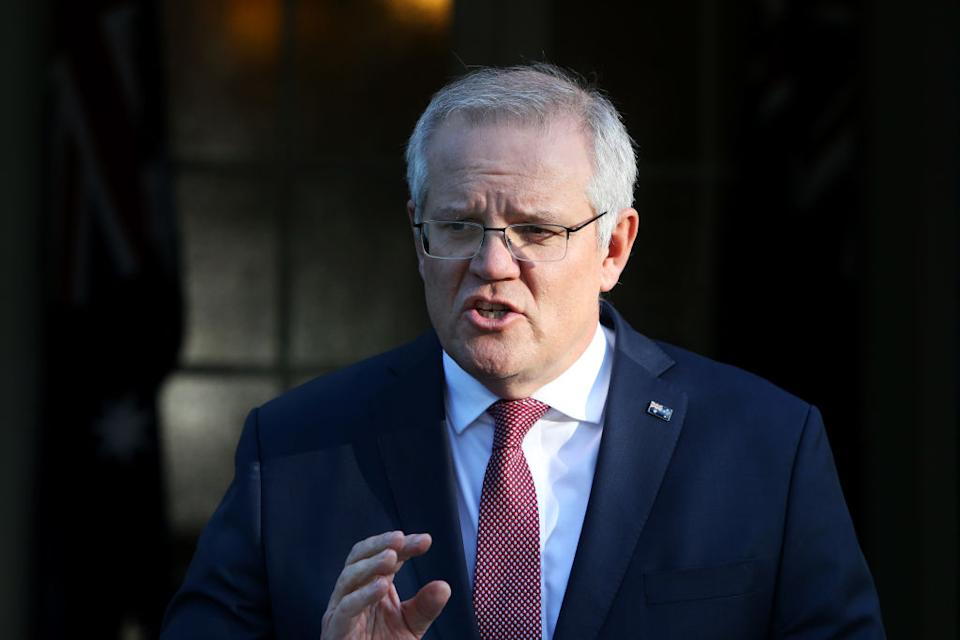
Scott Morrison revealed the milestone at a press conference from the Lodge this afternoon.
“Today, with the most recent seven days’ data, we finally hit that mark of a million doses in arms in a week,”
The latest figures put yesterday’s vaccination doses at close to record numbers, with 174,589 vaccines given.
Extra Pfizer lands on shore
One million extra doses of the Pfizer vaccine have landed into the nation and is hoped to speed up the rollout.
“I take responsibility for the problems that we have had but I am also taking responsibility for the solutions
The Prime Minister acknowledged “significant challenges” in the early stages of the nation’s vaccination program, but refused to apologise for his failure to meet his own government’s vaccination targets.
He addressed the government’s decision to use AstraZeneca as its primary vaccine, pointing to anticipated difficulties in distributing Pfizer at sub minus-70 degree temperatures across remote Australia.
Politicians are calling for the return of JobKeeper
With lockdowns continuing into the foreseeable future, Politicians are urging for JobKeeper payments to return for those in need.
“A wide range of people are calling the Government to revisit JobKeeper.”
Stephen jones, Australian shadow minister finance
"A wide range of voices are calling for the Government to revisit #JobKeeper."
— ticker NEWS (@tickerNEWSco) July 21, 2021
– @StephenJonesMP on #Australia lockdowns pic.twitter.com/LU6C63hbBF
What is JobKeeper and can Australia afford to bring it back?
JobKeeper is a support payment to those affected or out of work during the lockdown. The JobKeeper Payment assists the employer to continue operating by subsidising all or part of the income of their employee.
If an employee would otherwise receive less than $1,500 in income per fortnight before tax, their employer must pay their employee, at a minimum, $1,500 per fortnight before tax.
With the Australian economy already devastated by the pandemic, questions remain whether the Government can afford to bring JobKeeper back.
Jones says it will cost more not to.
Should Australia bring back #JobKeeper and can it afford it? @StephenJonesMP says it will cost more not to. pic.twitter.com/BoU3HOlAav
— ticker NEWS (@tickerNEWSco) July 21, 2021
A message to the Morrison Government
The vaccination rollout is key to Australia moving through its four-phase recovery plan. The Government has given no exact details on when the transition between the phases is going to happen.
Jones is urging the Morrison Government to put politics aside and help the Australian people.
"Get the vaccination rollout happening… Ensure people are financially supported… JobKeeper worked in 2020, it will work again."
— ticker NEWS (@tickerNEWSco) July 21, 2021
– @StephenJonesMP message to @ScottMorrisonMP #Australia #vaccinerollout #ScottMorrison pic.twitter.com/54pApbzQZV