
Connect with us
https://tickernews.co/wp-content/uploads/2023/10/AmEx-Thought-Leaders.jpg

News

Biden, Putin arrive in Geneva for high-stakes summit

Published

on

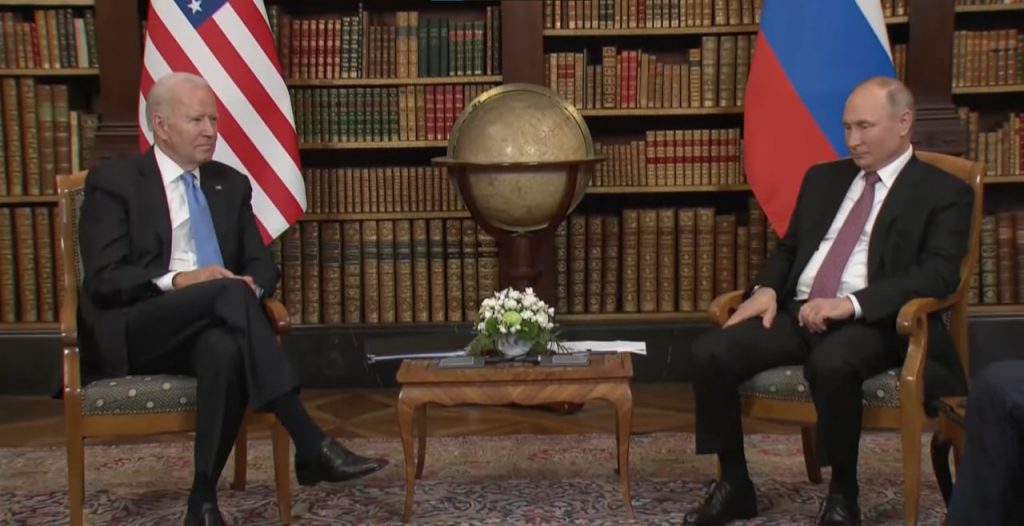
Russian President Putin and US President Biden have arrived in Geneva.
https://twitter.com/tickerNEWSco/status/1405126877790887959?s=20
https://twitter.com/tickerNEWSco/status/1405114675352670215?s=20

Why the Biden and Putin summit could change the world | TICKER VIEWS

As the new US President prepares to meet Russia’s Vladimir Putin in Geneva, foreign countries, from Europe, to the Baltic States and China, are left wondering what sort of decisions will be made, and how it will impact them. This is Joe Biden’s moment. And this summit could have major consequences for the world ahead.

It’s not the first time Joe Biden has met Vladimir Putin. But it’s tne first time as President of the United States. Earlier this week at the NATO summit, Joe Biden referred to Putin as a “worth adversary”.

So it’s no wonder they chose Switzerland as the location for their meeting. This is a meeting that will start, at least, in a neutral space.

We’re expecting a very different tone compared to the meeting between Putin and Donald Trump in Helsinki. Back then, Trump decided to meet Putin without aides in Helsinki for a one on one meeting.

Joe Biden is far more hawkish towards Russia, and has been building support this week from leaders across Europe.
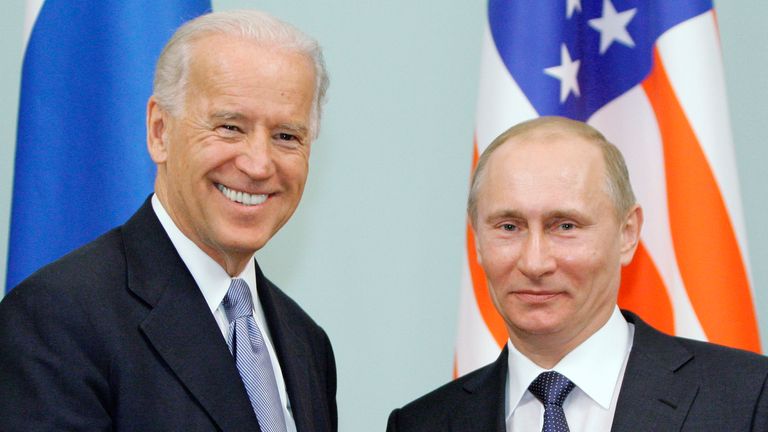
Joe Biden and Vladimir Putin will beat their chests
https://twitter.com/tickerNEWSco/status/1405081910049529859?s=20

What’s on the agenda

It’s what we don’t know, but later find out, that is always intriguing for any watcher of global politics.

But what we do know is we can expect lots of talk about signals – issues like Russia’s treatment of Kremlin critic Alexei Navalny and his imprisonment in Russia.

Navalny flew back to Russia in January and was arrested at passport control.

Vladimir Putin has refused to give any guarantee that the opposition leader Alexei Navalny will get out of prison alive.

These sorts of issues become major news around the world, but really, there’s so much more going on behind the scenes that impacts the daily lives of millions of us who live outside of Moscow and Washington.

With respect to Navalny, issues like this are a smokescreen for far broader issues.
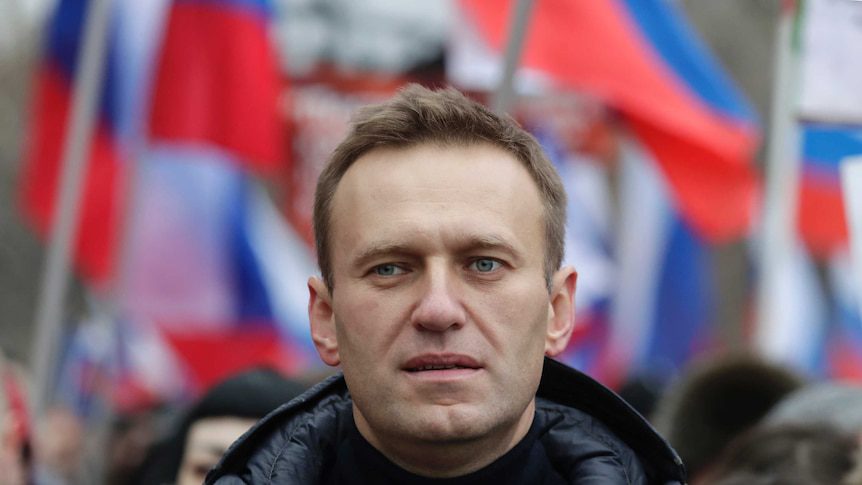
Alexei Navalny is still in prison

Cyber hacking

Not a week goes by without a major cyber attack somewhere in the world. And the finger is almost always pointed towards Russia. Either people working for the Russian government, or Russians no longer living in Russia.

The FBI is currently investigating a major hack against the world’s largest meat processing company, which forced the company to close its operations in the US and Australia. JBS ended up paying the ransom, believed to have been demanded by Russian hackers.

Ransomware attacks involve malware that encrypts files on a device or network causing the system to become inoperable. Criminals behind these types of cyberattacks typically demand a ransom in exchange for the release of data.

The Kremlin has denied claims that it has launched cyberattacks against the United States.

Russia has been blamed for hacking foreign governments and business.

Will there be a change in relations?

Experts can only hope, but know it’s highly unlikely. Vladimir Putin is a strongman, and the best outcome from this meeting would be a return to “mutual respect”. To get that, Joe Biden needs to go in tough, as tough as Putin.

For anyone watching over a long period of time, through the Cold War and even recent years, it’s as if the leaders of Russia and the United States both need each other.

For the US, Russia poses an omni-present threat. A reason to keep its bases around the world. A reason to do business with countries it might otherwise avoid due to public sentiment.

For Russia, well, the people love a strongman. It’s as if Russia has middle child syndrome. Always wanting to play with the big boys, but suffering from an economy which is smaller than Australia’s. With a heavy reliance on natural resources but unable to control the price, and therefore it’s future.

What will they agree on?

For all their disagreements, Russia and the United States have a lot in common. They both play in similar territories. They both have relationships with China, and Moscow is probably envious that it’s once smaller sibling is quickly outgrowing them in terms of regional power.

The US and Russia both have similar views on tackling climate change and controlling nuclear arms and the countries that might get hold of them. It’s these issues we might see some progress from this meeting.

But aside from “strategic stability”, whatever that means, there’s unlikely to be an end in sight to this sibling squabble. Siblings, with nuclear weapons.

Click to comment

Leave a Reply

Your email address will not be published. Required fields are marked *

News

NASA’s Pandora satellite set to search for alien life

NASA’s Pandora satellite set for January launch to search exoplanets for signs of alien life

Published

on

NASA’s Pandora satellite set for January launch to search exoplanets for signs of alien life

video
play-sharp-fill
In Short:
– NASA and Lawrence Livermore National Laboratory will launch the Pandora Mission on January 5, 2026, to find signs of life.
– The mission will study 20 exoplanets’ atmospheres for biosignatures, utilising an innovative telescope design.

NASA is gearing up to launch the Pandora Mission on January 5, 2026, aboard a SpaceX Falcon 9 rocket from Vandenberg Space Force Base. The compact satellite, developed with Lawrence Livermore National Laboratory, is designed to probe distant exoplanets for signs of life by analyzing their atmospheric composition. This $20 million mission focuses on detecting water vapor and other biosignatures across 20 known worlds.

At the core of Pandora is CODA, a 45-centimeter all-aluminum telescope offering innovative, cost-effective observations in both visible and near-infrared light. By separating planetary signals from the bright light of host stars, scientists hope to confirm the presence of water—a critical ingredient for life as we know it. Each of the 20 target planets will be observed 10 times during planetary transits, enabling continuous 24-hour monitoring sessions.

Pandora arrives amid growing excitement over exoplanet discoveries, including potential biosignatures found on K2-18b in 2025. Its observations will pave the way for future missions, like NASA’s Habitable Worlds Observatory, while rideshare payloads from Spire Global and Kepler Communications join the launch. The mission operations center at the University of Arizona will process all incoming data.


Download the Ticker app

Continue Reading

News

Trump and Zelenskyy progress on Ukraine peace plan

Trump and Zelenskyy announce Ukraine peace plan is 90% complete amid ongoing territorial disputes and renewed Russian attacks

Published

on

Trump and Zelenskyy announce Ukraine peace plan is 90% complete amid ongoing territorial disputes and renewed Russian attacks

video
play-sharp-fill
In Short:
– Trump and Zelenskyy discussed a peace plan at Mar-a-Lago, expressing optimism despite unresolved territorial disputes.
– Zelenskyy indicated a 90% agreement on the peace plan, emphasising security guarantees and significant reconstruction funding for Ukraine.

US President Donald Trump and Ukrainian President Volodymyr Zelenskyy have held high-stakes talks at Mar-a-Lago, claiming a revised peace framework to end Russia’s nearly four-year war in Ukraine is now 90% agreed. The meeting followed weeks of negotiations between US and Ukrainian officials and came just hours after Trump held an unexpected phone call with Russian President Vladimir Putin, a move that reportedly caught Kyiv off guard.

Zelenskyy says security guarantees are the central breakthrough, with the plan allowing Ukraine to maintain an 800,000-strong military while receiving NATO Article 5-style protections from the United States and European allies. The proposal also includes an $800 billion reconstruction fund and an accelerated path toward European Union membership. Trump described the talks as “outstanding,” warning that without a deal, the conflict could drag on with devastating human costs.

However, major obstacles remain — particularly over territorial control in the eastern Donbas region and the future of the Zaporizhzhia nuclear power plant. Russia is demanding Ukraine surrender all of Donbas, while Kyiv wants borders frozen at the current battle lines. Washington has floated demilitarised and free economic zones, while Zelenskyy has signalled he may put the full proposal to a national referendum. The talks come as Russia intensifies missile and drone attacks on Kyiv, even as European leaders join calls to shape the next phase of negotiations.


Download the Ticker app

Continue Reading

News

Ukraine presents US-backed peace proposal to Russia

Ukraine presents US-backed peace proposal to Russia amid ongoing drone strikes and escalating tensions

Published

on

Ukraine presents US-backed peace proposal to Russia amid ongoing drone strikes and escalating tensions

video
play-sharp-fill
In Short:
– Ukrainian President Zelenskyy offered a 20-point peace proposal to Russia to end the four-year war.
– The plan requires Russian troop withdrawal and includes NATO-like security guarantees for Ukraine’s defence.

Ukraine has formally presented a US-backed 20-point peace proposal to Russia, offering a potential framework to end the nearly four-year war. President Volodymyr Zelenskyy unveiled the revised plan on December 23 after weeks of negotiations with American officials and formally delivered it to the Kremlin on December 24. The proposal includes NATO-style security guarantees, demilitarized zones in eastern Ukraine, and other measures designed to secure Ukraine’s sovereignty while reducing the risk of future conflict.

Under the plan, Ukraine would maintain a peacetime force of 800,000 troops and remain a non-nuclear state, with “Article 5-like” guarantees from the United States, NATO, and European partners. Territorial arrangements would require Russian forces to withdraw from parts of Dnipropetrovsk, Mykolaiv, Sumy, and Kharkiv regions. Zelenskyy also floated the creation of demilitarized “free economic zones” in parts of Donetsk Oblast, but only if Russian troops pull back as well. One of the most contentious issues remains the Zaporizhzhia nuclear power plant, with the US proposing joint management by Ukraine, Russia, and the US, while Zelenskyy countered with a Ukraine-US partnership giving Americans oversight of their allocated energy share.

Fragile reality

Even as peace efforts advanced, the conflict raged on. On Christmas night, Russia launched 131 drones across Ukraine, with 106 intercepted by Ukrainian forces but 22 hitting 15 locations. The attacks killed at least two people and caused widespread power outages in several regions. The strikes highlighted the fragile reality of negotiations, showing that the road to peace remains perilous.

Moscow has confirmed that President Vladimir Putin has been briefed on the proposal, though Russian officials have repeatedly rejected key provisions, including NATO-style security guarantees and territorial concessions. The agreement would be overseen by a Peace Council chaired by US President Donald Trump, with violations triggering automatic sanctions. Ratification would require either approval by Ukraine’s parliament or a nationwide referendum within 60 days, with a full ceasefire taking effect immediately once all parties accept the deal.

The plan represents the most comprehensive effort yet to bring Ukraine and Russia to the negotiating table, balancing security guarantees, territorial compromises, and oversight of strategic infrastructure. However, with ongoing attacks and deeply entrenched positions on both sides, analysts warn that achieving lasting peace will require unprecedented diplomacy and international cooperation.


Download the Ticker app

Continue Reading

Trending Now