US President Biden has just wrapped up a phone call with his Ukrainian counterpart, Zelenskyy.
During the call, Biden reaffirmed the United States’ commitment to Ukraine’s sovereignty and territorial integrity.
Biden has condemned Putin’s decision to recognise the independence of two breakaway regions in the east.
Journalist Ben Arvis, says that the crisis is beginning to dangerously escalate.
“This crisis is now starting to reach the scale of the Cuban Missile Crisis,” he says.
The United States is standing ready to enact sanctions and respond decisively to Russia’s actions if required in lockstep with its Allies.
The White House says it is ready to order fresh sanctions against two separatist Ukraine regions, following Putin’s decision to formally recognise the areas.
This comes as the United Nations addresses the crisis, noting Russia is violating Ukraine’s sovereignty.
US, EU and UK to impose sanction
It’s also been confirmed the European Union and the United Kingdom will move to impose coordinated sanctions against Russia following Moscow’s deployment of troops to eastern Ukraine’s breakaway regions.
It’s expected these sanctions will be economic and financial in nature, essentially cutting Russia off from international financial markets.
The Donetsk and Luhansk have long been contested by Ukraine and Russian-backed Rebels.
World leaders react
Biden, Macron and Scholz say Putin’s recognition of the independence of breakaway regions ‘will not go unanswered’.
US Pentagon Press Secretary John Kirby warns if a war does occur, the result will be nothing short of devastating.
The West has been preparing for a Russian invasion of Ukraine for days and while war does seem imminent, the US says it will continue to push for diplomacy.
Concerns with Nord Stream 2
While the diplomatic path is narrowing, a lot of focus is now turning to the $11 billion gas pipeline that is set to run between Russia and Germany.
The Nord Stream 2 is of huge significance because it would make Europe heavily reliant on Russia’s energy supplies.
However, threatening the future of the pipeline could be an important political bargaining chip to deter Putin from invading Ukraine.

The United States has announced an additional $6 million in humanitarian aid for Cuba, bringing total assistance since Hurricane Melissa struck the island in October to $9 million. The new relief package will focus on Cuba’s eastern provinces, including Holguín, Granma, Santiago de Cuba, and Guantánamo, providing staples like rice, beans, pasta, canned tuna, and solar lamps. U.S. officials said embassy staff will monitor distribution to prevent the government from diverting supplies.
The announcement comes amid worsening energy and fuel shortages. Cuba has faced widespread blackouts, leaving millions without electricity in several provinces, while rising food prices and limited fuel supplies have intensified humanitarian pressures. Officials warn that without sufficient oil imports, hospitals, transport, and essential services could be severely affected. The crisis has escalated following U.S. restrictions on Cuba’s oil shipments and Venezuela’s inability to supply fuel, forcing Cuba to turn to Mexico as its primary energy partner.
Humanitarian situation
Cuba’s President Miguel Díaz‑Canel accused the U.S. of imposing an “energy blockade,” while Mexican officials work to deliver fuel without triggering U.S. tariffs. Díaz‑Canel expressed willingness to engage in dialogue but insisted talks must respect Cuba’s sovereignty. U.N. Secretary-General António Guterres has voiced serious concern, warning that the humanitarian situation could deteriorate further if oil supplies remain restricted.
As Cuba struggles to balance disaster recovery with an ongoing energy crisis, the international community faces a delicate challenge: providing humanitarian support while navigating complex geopolitical tensions.
SpaceX expands Starlink with a mobile device and space tracking, raising concerns over revenue and US government reliance.
SpaceX is pushing Starlink beyond internet from space, with plans underway for new consumer facing services that could reshape the telecom landscape.
The company is reportedly exploring a Starlink mobile device, positioning it as a potential rival to established smartphone players as it looks to extend its reach from orbit to everyday tech.
Starlink has become SpaceX’s financial powerhouse, generating an estimated $8 billion in revenue last year, with fresh trademark and patent filings signalling even more ambitious expansion ahead.
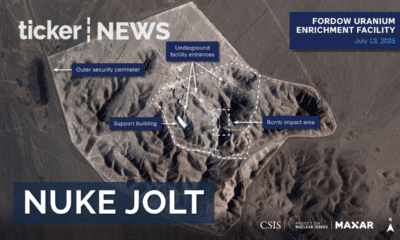
Crude oil prices jumped over 3% on Wednesday as U.S.-Iran nuclear talks showed signs of faltering, pushing WTI futures above $65 per barrel. Axios reported disagreements over the venue and scope of Friday’s talks, while President Trump warned Iran’s supreme leader to “be very worried,” stoking fears of military escalation.
Tensions in the Persian Gulf added to the volatility. A U.S. F-35C shot down an Iranian drone near the USS Abraham Lincoln, and Iranian vessels threatened a U.S.-flagged tanker in the Strait of Hormuz. The USS McFaul escorted the tanker to safety, highlighting the region’s fragile oil supply routes.
Despite the clashes, nuclear talks will go ahead on Friday in Oman, but uncertainty continues to drive oil market volatility, with traders closely watching both diplomatic and military developments.