

News
U.S. President Joe Biden ends reelection bid for the White House

U.S. President Joe Biden has announced that he ended his reelection campaign on Sunday after several fellow Democrats lost faith in his mental acuity and ability to beat Donald Trump, leaving the presidential race in uncharted territory.
Biden, in a post on X, said he will remain in his role as president and commander-in-chief until his term ends in January 2025 and will address the nation this week.
The unprecedented announcement reads in part, “It has been the greatest honor of my life to serve as your President. And while it has been my intention to seek reelection, I believe it is in the best interest of my party and the country for me to stand down and to focus solely on fulfilling my duties as President for the remainder of my term,” Biden wrote.
Biden, 81, also announced that he will endorse Vice President Kamala Harris to top the ticket.
U.S. President Joe Biden announced he is ending his troubled reelection campaign amid growing opposition within his own Democratic Party. He endorsed Vice President Kamala Harris to replace him as the party’s candidate against Republican Donald Trump.

In a post on X, Biden, 81, stated he will continue his role as president and commander-in-chief until his term concludes in January 2025. He plans to address the nation this week. Biden has not been seen publicly since testing positive for COVID-19 and isolating at his home in Rehoboth Beach, Delaware, last week.

“While it has been my intention to seek reelection, I believe it is in the best interest of my party and the country for me to stand down and to focus solely on fulfilling my duties as President for the remainder of my term,” Biden wrote.
Democratic National Committee Chair Jaime Harrison mentioned that the party will soon communicate the next steps and the process for selecting the nominee. This marks the first time in over fifty years that an incumbent U.S. president has relinquished his party’s nomination.
Biden’s campaign faced significant challenges after a faltering debate against former President Trump on June 27. Opposition from within the Democratic Party intensified, with 36 congressional Democrats urging him to withdraw, fearing his candidacy could jeopardise their control of the White House and Congress.
In contrast, the Republican Party showed unity, rallying behind Trump and his running mate, Senator J.D. Vance. If Harris becomes the nominee, she would be the first Black woman to run at the top of a major-party ticket.
Trump expressed confidence that Harris would be easier to defeat. A source familiar with the situation revealed that Biden had a last-minute change of heart, initially planning to stay in the race before deciding to withdraw on Sunday afternoon.

It remains unclear if other senior Democrats will challenge Harris for the nomination or if the party will open the field for nominations. Polls indicate that Harris performs similarly to Biden against Trump.
Congressional Republicans have called for Biden to resign immediately, arguing his incapacity to run for president raises questions about his ability to govern. They have also hinted at potential legal challenges to the Democrats’ move to replace Biden on the ballot.
Biden’s announcement follows mounting pressure from Democratic lawmakers and officials, exacerbated by his poor debate performance and gaffes at a NATO summit. This move makes him the first sitting president to relinquish his party’s nomination since Lyndon B. Johnson in 1968.
If Harris becomes the nominee, it would represent an unprecedented move by the Democratic Party, with Harris being the first Black and Asian American woman to run for the White House. Biden, the oldest U.S. president ever elected, initially set his sights on a second term, believing he was the only Democrat who could beat Trump again. However, concerns over his age and recent poor performance have led to significant pressure for him to withdraw.
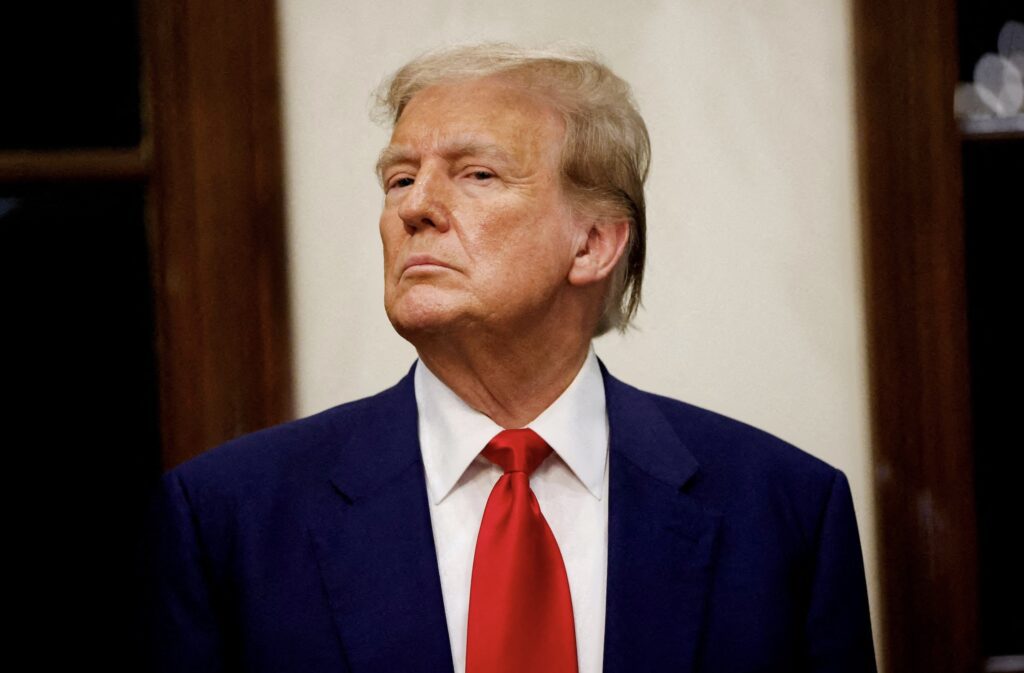
Biden’s departure sets up a stark contrast between Harris, a former prosecutor, and Trump, who faces multiple criminal prosecutions related to his attempts to overturn the 2020 election result. Harris has been reaching out to key voter groups in recent months, and her support will be crucial for the Democratic Party moving forward.
Biden accumulated a significant number of delegates during the primary race, but unless the party changes the rules, these delegates will enter the convention “uncommitted,” potentially influencing the nomination process. The outcome of the Democratic National Convention in August will determine the party’s nominee for the presidential election.

-
 News3 days ago
AI Review Committee provides expert advice on governance
-
News3 days ago
Apple launches products on October 13
-
News3 days ago
Trump: US won’t attack Iran before midterms
-
News5 days ago
OpenAI apologises to Australia for AI incident
-
Shows4 days ago
Redefining success: beyond money and status
-
Shows5 days ago
High-quality early childhood education: roles and responsibilities
-
News5 days ago
Drone strike sinks ship; crew missing
-
News5 days ago
Widespread student protests in France escalate tensions