

News
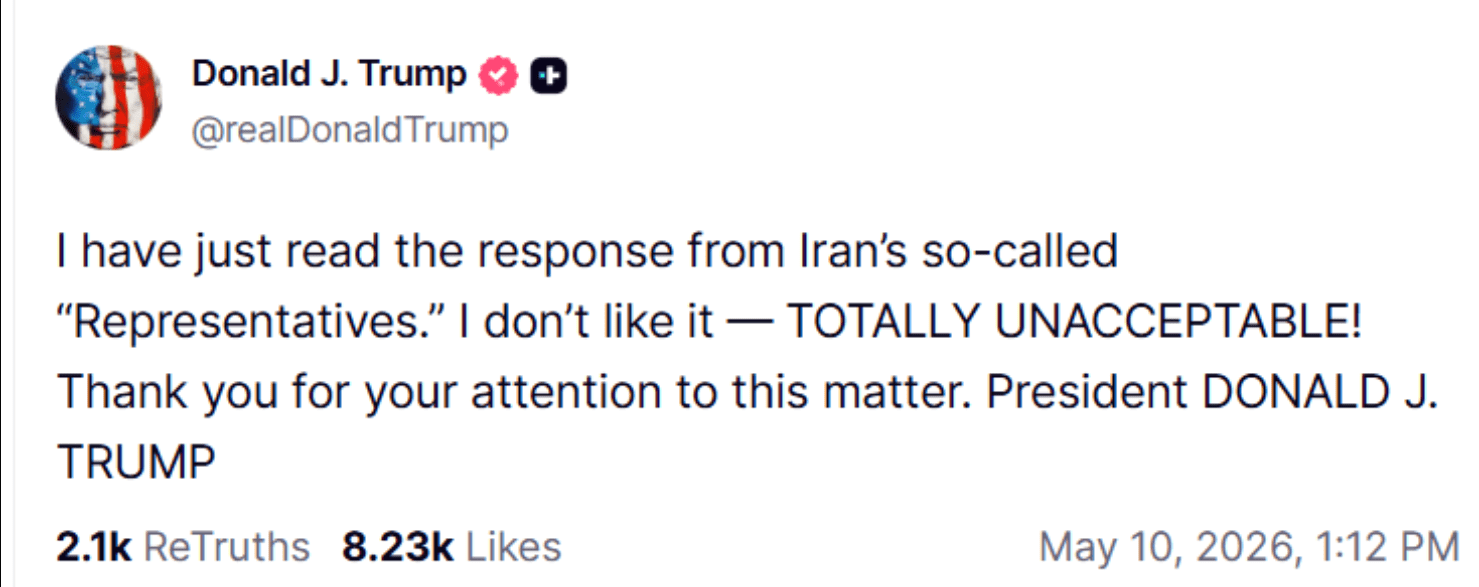
Trump rejects Iran’s response to peace plan
Trump rejects Iran’s response to U.S. peace plan, citing it as ‘totally unacceptable’ amid ongoing conflict and stalled negotiations

Trump rejects Iran’s response to U.S. peace plan, citing it as ‘totally unacceptable’ amid ongoing conflict and stalled negotiations

– Trump calls Iran’s response to U.S. ceasefire proposal “totally unacceptable,” raising conflict concerns.
– Disagreements persist over nuclear program, Strait of Hormuz, and sanctions relief amidst ongoing diplomatic tensions.
President Donald Trump on Sunday deemed Iran’s response to the latest U.S. ceasefire proposal as “totally unacceptable,” raising concerns about the ongoing conflict now entering its fourth month.
Iran’s formal reply was conveyed through Pakistani mediators, according to Iranian state news outlet IRNA.
This communication reflects the ongoing stalemate marked by multiple proposals exchanged between the two nations since a ceasefire commenced on April 8.
Key disagreements persist over Iran’s nuclear program, the status of the Strait of Hormuz, and conditions for American sanctions relief.

Iran response rejected
Washington’s latest 14-point offer required Iran to halt uranium enrichment for a minimum of 12 years and to give up a substantial quantity of enriched uranium. In return, the U.S. would progressively relieve sanctions and unfreeze Iranian assets.
Iran’s counterproposal focused on a comprehensive resolution to the conflict, including securing shipping routes in the Strait of Hormuz, while also relegating nuclear discussions to a later date, something the U.S. opposes.
Military tensions escalated with U.S. Navy fighter jets targeting two Iranian tankers attempting to breach the blockade, prompting threats from the Iranian Revolutionary Guard Corps against U.S. interests in the region.
Clashes in the Strait of Hormuz pose ongoing challenges to the ceasefire’s viability.
Diplomatic tension continues
Qatar’s Prime Minister recently met with U.S. officials to address the war, and there are hints that an agreement on Iran’s nuclear program could be reached soon, although it might not be solely through negotiation.
Trump previously rejected an Iranian proposal to end hostilities that also involved deferring nuclear discussions, which called for lifting sanctions and U.S. troop withdrawal.
Iranian Foreign Minister Abbas Araghchi maintains that the U.S. opts for military rather than diplomatic solutions.

-
 News4 days ago
California subpoenas OpenAI over cybersecurity issues
-
News4 days ago
Global bond yields hit multi-decade highs
-
News4 days ago
Labor targets rogue agents profiting from visas
-
News4 days ago
U.S. boosts military presence amid Iran tensions
-
Ticker Views3 days ago
Big techs are caught in Washington’s China fight
-
News5 days ago
OpenAI launches Dots, autonomous background AI agents
-
News5 days ago
US economic growth upgraded to 2.2%
-
News14 hours ago
Lab incident in Russia linked to pneumonia