Connect with us
https://tickernews.co/wp-content/uploads/2023/10/AmEx-Thought-Leaders.jpg

Ticker Views

TikTok sale confirmed as ByteDance agrees to sell majority stake to US investors

Published

on

ByteDance’s agreement to sell TikTok puts app’s algorithm in the spotlight – a social media expert explains how the ‘For You’ page works and what’s to come

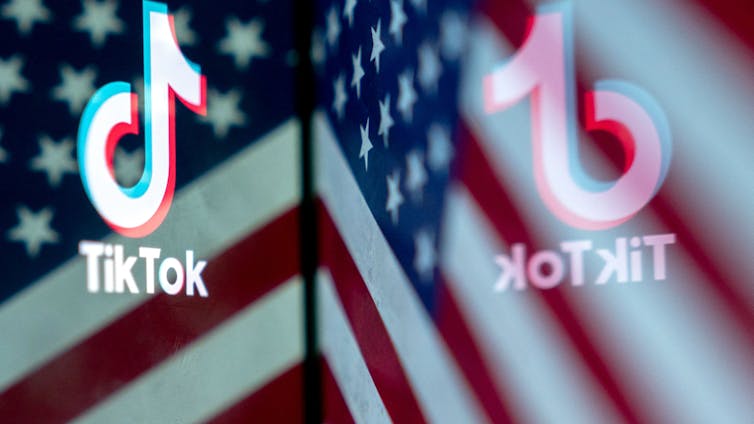
TikTok is on track to change hands, but what that means for users is up in the air.
Stefani Reynolds/AFP via Getty Images

Kelley Cotter, Penn State

Chinese tech giant ByteDance has signed an agreement to sell a majority stake in its video platform TikTok to a group of U.S. investors. President Donald Trump announced a preliminary agreement for the sale on Sept. 19, 2025, following his negotiation with Chinese leader Xi Jinping.

TikTok CEO Shou Zi Chew told employees in a memo obtained by news organizations that the company is working to close the deal by Jan. 22, 2026. Chinese and U.S. authorities will also need to approve the deal.

The deal creates a new U.S.-only version of the app, bringing it into compliance with a law signed by President Joe Biden on April 23, 2024, and upheld by the Supreme Court on Jan. 17, 2025. Specifics of the deal remain to be hammered out, but some details are emerging. These include what will happen to the video-sharing app’s core algorithm – and what that means for TikTok’s millions of U.S. users.

The Chinese government has indicated it will not permit ByteDance to sell the algorithm, because it is classified as a controlled technology export, per Chinese law. Meanwhile, U.S. tech industry executives and some lawmakers say compliance with the law requires the algorithm to be under American control. The deal as proposed includes licensing the algorithm so that it remains Chinese intellectual property while the U.S. version of the app continues to use the technology.

TikTok’s “For You” page algorithm is widely considered the most important part of the app. As one analyst put it: “Buying TikTok without the algorithm would be like buying a Ferrari without the engine.”

The algorithm’s value lies in its uncanny capacity to anticipate users’ content preferences. Many users claim it knows them better than they know themselves – a sentiment that has evolved into a curious mix of spiritual belief and conspiracy theorizing, as my colleagues and I have documented. Other scholars have similarly noted that users feel more intimately seen and known by TikTok’s algorithm than those powering other popular platforms.

I have studied social media algorithms for nearly a decade, exploring how our relationships with them have evolved as they become increasingly entwined with daily life. As both a social media scholar and TikTok devotee, I want to shed some light on how the algorithm works and how the app is likely to change in the wake of its sale.

How the TikTok algorithm works

In some ways, the TikTok algorithm does not differ significantly from other social media algorithms. At their core, algorithms are merely a series of steps used to accomplish a specific goal. They perform mathematical computations to optimize output in service of that goal.

There are two layers to the TikTok algorithm. First, there is the abstract layer that defines the outcome developers wish to accomplish. An internal document shared with The New York Times specified that TikTok’s algorithm optimizes for four goals: “user value,” “long-term user value,” “creator value” and “platform value.”

But how do you turn these goals into math? What does an abstract concept like “user value” even mean? It’s not practical to ask users whether they value their experience every time they visit the site. Instead, TikTok relies on proxy signals that translate abstract outcomes into quantifiable measures – specifically, likes, comments, shares, follows, time spent on a given video and other user-behavior data. These signals then become part of an equation to predict two key concrete outcomes: “retention,” or the likelihood that a user will return to the site, and “time spent” on the app.

The TikTok For You page algorithm relies on machine learning for predicting retention and time spent. Machine learning is a computational process in which an algorithm learns patterns in a dataset, with little or no human guidance, to produce the best equation to predict an outcome. Through learning patterns, the algorithm determines how much individual data signals matter for coming up with a precise prediction.

A Wall Street Journal investigation found that the amount of time users spend watching each video plays a large role in how the algorithm chooses videos it suggests to users. Using the equation it has generated to predict retention and time spent, the algorithm assigns a score to each video and ranks possible videos that could be shown to the user by this score. The higher the score for an individual user, the more likely the video will appear in their feed.

Of course, content characteristics and other users additionally inform recommendations, and there are other subprocesses folded into the equation. This step is where algorithmic moderation usually comes in. If a video looks like engagement bait or has excessive gore, for example, the content’s score will be penalized.

Here are the basics of how TikTok’s algorithm works.

What’s likely to change for US users

The sale has not been finalized, but the algorithm’s fate is coming into focus. According to reports, the United States-only version of the algorithm will be retrained on only U.S. users’ data. Users won’t need to download a new version of the app for the changed algorithm to work.

Even though the algorithm itself is the same as before, it’s fairly certain that TikTok will change. I see two key reasons for change.

First, the proposed app’s U.S.-only user population will alter the makeup of the underlying dataset informing algorithmic recommendations on an ongoing basis. As the kinds of content come to reflect American cultural preferences, values and behaviors, the algorithm may be slightly different as it “learns” new patterns.

Though users are more likely to stick with the app because they don’t need to download a new version, not all users will choose to, especially if it is seen as under the control of Trump’s allies. Under the current deal, Oracle Corp. and the U.S. government would oversee the algorithm’s retraining. This arrangement suggests that the U.S. government may have significant influence over how the app works.

The deal would give an 80% share to U.S. investors, including 50% to new investors Oracle, Silver Lake and Andreessen Horowitz. These investors have connections to Trump, and an apparent provision of the deal allows the U.S. government to select one board member.

These influences raise the possibility of a boycott from left-leaning users and creators similar to earlier boycotts of Target for rolling back DEI measures and Disney after the since-reversed suspension of Jimmy Kimmel. This may result in a user population – and data – reflective of a narrower realm of interests and ideologies.

Second, it’s possible that the majority shareowners of the new app will decide to adjust the algorithm, particularly when it comes to content moderation. The new owners may wish to modify TikTok’s Community Guidelines according to their view of acceptable and unacceptable speech.

For example, TikTok’s current Community Guidelines prohibit misinformation and work with independent fact-checkers to assess the accuracy of content. While Meta used to follow a similar approach for Instagram and Facebook, in January 2025 Meta announced that it would end its relationships with independent fact-checkers and loosen content restrictions. YouTube has similarly relaxed its content moderation this year.

With reports that the U.S. government would oversee retraining the algorithm, there’s a possibility that not only the new investors but also the government itself could influence how content is prioritized and moderated.

The bottom line is algorithms are highly sensitive to context. They reflect the interests, values and worldviews of the people who build them, the preferences and behaviors of people whose data informs their models and the legal and economic contexts they operate within.

This means that while it’s difficult to predict exactly what a U.S.-only TikTok will be like, it’s safe to assume it will not be a perfect mirror image of the current app.

This story was updated on Dec. 19, 2025, to include new details about TikTok’s sale.The Conversation

Kelley Cotter, Assistant Professor of Information Sciences and Technology, Penn State

This article is republished from The Conversation under a Creative Commons license. Read the original article.


Ticker Views

Pentagon’s AI gamble: Is Grok safe for defense?

Pentagon to integrate Elon Musk’s AI chatbot Grok, exploring military data and innovation amid AI controversies.

Published

on

Pentagon to integrate Elon Musk’s AI chatbot Grok, exploring military data and innovation amid AI controversies.


Defense Secretary Pete Hegseth announced that Elon Musk’s AI chatbot Grok will soon be integrated with the Pentagon’s networks.

The move aims to harness military data to develop advanced AI technology, despite recent controversies surrounding Grok’s content generation. This integration signals a bold step toward combining commercial AI tools with national defence systems.

Dr Karen Sutherland from UniSC explores the implications of this partnership. We discuss how Hegseth’s approach to AI differs from the Biden administration’s framework, the measures in place to ensure responsible use, and the limitations on Grok’s image generation capabilities.

We also examine the potential risks and international reactions, as well as Hegseth’s vision for innovation within the military. From civil rights considerations to prioritising key technologies, this story highlights the complex balancing act of AI in modern defence.

Subscribe to never miss an episode of Ticker – https://www.youtube.com/@weareticker

#PentagonAI #ElonMusk #GrokAI #MilitaryTech #AIControversy #TechNews #DefenseInnovation #TickerNews


Download the Ticker app

Continue Reading

Ticker Views

U.S. pushes Latin American dominance

Published

on

What lies ahead for Latin America after the Venezuela raid?

Nicolas Forsans, University of Essex

The Trump administration has justified the recent capture of Venezuelan leader Nicolás Maduro as a law enforcement operation to dismantle a “narco‑state”. It also claimed it would break Venezuela’s ties to China, Russia and Iran, and put the world’s largest known oil reserves back under US‑friendly control.

This mix of counter‑narcotics, great power rivalry and energy security had already been elevated to a central priority by the administration in its national security strategy. Published in late 2025, the document announced a pledge to “reassert and enforce American preeminence in the western hemisphere” and deny “strategically vital assets” to rival powers.

Donald Trump has referred to this hemispheric project as the “Donroe doctrine”, casting it as a revival of the Monroe doctrine policy of the 19th century through which the US sought to stop European powers from meddling in the Americas. He seems to be seeking to tighten the US grip on Latin America by rewarding loyal governments and punishing defiant ones.

If Venezuela is the first test case of the Donroe doctrine, several other Latin American countries now sit squarely in Washington’s crosshairs. The most immediate target is Cuba, which the US has opposed since 1959 when communist revolutionary Fidel Castro overthrew a US-backed regime there.

Trump and his secretary of state, Marco Rubio, have openly hinted that Cuba could be Washington’s next target. They have described Cuba as “ready to fall” after the loss of Venezuelan oil and have boasted that there is no need for direct intervention because economic collapse will finish the job.

Cuba is enduring its worst crisis since 1959. Blackouts now regularly last up to 20 hours, real wages are collapsing and roughly 1 million Cubans have fled the country since 2021. This is all happening as Venezuelan crude oil is being redirected under US control.

For over two decades, Venezuela has provided Cuba with fuel and financing in exchange for doctors, teachers and security personnel – 32 of whom were killed in the US capture of Maduro, according to the Cuban government. Strangling Cuba’s remaining lifelines may well be enough to topple the government there without US forces needing to fire a single shot.

It is possible that Mexico will also soon come under fire. Mexico has quietly become Cuba’s main oil supplier, shipping roughly 12,000 barrels per day in 2025 to account for about 44% of the island’s crude imports. This is unlikely to please the Trump administration, which has recently renewed its threats to “do something” about Mexican drug cartels.

The raid in Venezuela’s capital, Caracas, took six months of meticulous planning and required an extraordinary amount of resources. So it is unrealistic to expect similar raids on other Latin American countries. However, targeted military strikes cannot be excluded.

Speaking on Fox News’s “Hannity” show on January 8, Trump said: “We are going to start now hitting land with regard to the cartels. The cartels are running Mexico.” He did not provide further details about the plans.

Mexico’s president, Claudia Sheinbaum, is trying to construct protective buffers. She has combined condemnation of the raid on Caracas with intense cooperation with the US on migration and security. This includes a deal for Mexico’s navy to intercept suspected drug-running boats near its coastline before US forces do.

But as part of a strategy that pushes US dominance of Latin America, Trump has already floated classifying Mexico’s cartels as terrorist organisations and the fentanyl they traffic across the border as a weapon of mass destruction. These are legal framings that could be used to justify strikes on Mexican soil in the name of counter-narcotics in the near future.

Trump’s other targets

Colombia, historically Washington’s closest military ally in South America, has flipped from “pillar” to possible target. The country’s president, Gustavo Petro, has been one of the loudest critics of the Venezuela raid. He called it an “abhorrent violation” of Latin American sovereignty committed by “enslavers”, adding that it constituted a “spectacle of death” comparable to Nazi Germany’s 1937 carpet bombing of Guernica in Spain.

Trump, who imposed sanctions on Petro and his family in October, responded by labelling the Colombian president a “sick man who likes making cocaine and selling it to the United States”. He then mused that a Venezuela‑style operation in Colombia “sounds good to me” before a hastily arranged phone call and White House invitation dialled back the immediate threat.

How long the conciliation between the two men lasts remains to be seen. Colombia has entered a heated presidential campaign season in which Trump’s remarks are already being read as an attempt to tilt the race, much as his interventions shaped recent contests in Argentina and Honduras.

Further down the hierarchy, Nicaragua’s government will also have watched events unfold in Venezuela with terror. Long treated in Washington as part of a trilogy of dictatorships with Cuba and Venezuela, Nicaragua features in US indictments against Maduro as a transit point for cocaine flights. Nicaragua was also recently designated by the US as a key drug‑transit country.

The unusually cautious statement on the Venezuela raid by Nicaraguan presidential couple Daniel Ortega and Rosario Murillo, as well as the rapid reinforcement of the presidential compound in the capital Managua, suggest a regime that knows it could be next in line should Trump choose to extend his “narco‑terrorism” narrative.

Trump appears to be turning longstanding US concerns – drugs, migration and interference by other major powers – into a flexible toolbox for coercion in Latin America. Countries that defy Washington or host its rivals risk being framed as security threats, stripped of economic lifelines and, possibly, targeted militarily.

Those that keep their heads down may avoid immediate punishment. But this comes at the price of treating hemispheric dominance as a fact of life rather than a doctrine to be resisted.The Conversation

Nicolas Forsans, Professor of Management and Co-director of the Centre for Latin American & Caribbean Studies, University of Essex

This article is republished from The Conversation under a Creative Commons license. Read the original article.

Continue Reading

Ticker Views

Antisemitism debate a political minefield for royal commission

Published

on

The antisemitism debate is already a political minefield. The royal commission must rise above it

Matteo Vergani, Deakin University

What we currently know about antisemitism in Australia is pieced together from a fragmented body of information produced by community organisations, researchers and law enforcement. And it is largely interpreted and translated to the public through news reporting.

Through this reporting, Australians have learned that organised criminal groups were involved in targeting Jewish communities and foreign actors also played a role.

At the same time, some data on antisemitic incidents released by security agencies has been incorrect. Other statistics produced by community organisations has been publicly challenged.

Researchers like myself have also produced data on antisemitic incidents, but this is limited in many ways.

In a nutshell, the picture of what constitutes antisemitism and how and why it has spiked in recent years is far from being clear.

This lack of clarity matters. Without a reliable understanding of what happened in the lead-up to the Bondi terror attack, which data can be trusted, and how different forms of antisemitism intersect, Australia cannot fully grasp how it reached a point where Jewish Australians were murdered at a public religious gathering.

Shedding light on this problem will be difficult, but it is essential to understand both the scale of the problem and how to respond.

Potential for more divisiveness

The royal commission established by Prime Minister Anthony Albanese is designed to address many of these unresolved issues.

As set out in its terms of reference, it will examine the nature and prevalence of antisemitism in Australia and assess how it can be more effectively addressed. It will also:

  • Review the responses of security and law enforcement agencies
  • Investigate what happened before, during, and after the Bondi attack
  • develop recommendations aimed at strengthening social cohesion.

Social cohesion and national consensus are the stated end goals of the entire exercise. Yet, the context in which the commission is operating is highly volatile. There is a real risk that rather than repairing social cohesion, the process itself could damage it.

This risk comes from the heavy political pressure now attached to the royal commission and from the way some political actors are using it as a weapon in broader political battles, including attacks on the government.

The antisemitism debate is already a political minefield. And the commission has entered that terrain from its first day.

The decision to acknowledge the International Holocaust Remembrance Alliance’s definition of antisemitism in the terms of reference is likely to be used by some to delegitimise the commission altogether. Critics argue the definition can be used to silence legitimate criticism of Israel, while supporters say it draws a necessary line between political critique and antisemitic tropes.

At the same time, some politicians have questioned the appointment of Former High Court justice Virginia Bell to head the commission, which could also undermine the credibility of the inquiry.

As a result, the commission is already inflaming existing political tensions. This is deeply unfortunate because it makes the task harder for those who are genuinely focused on understanding antisemitism, responding to it effectively, and improving the safety and well-being of Jewish Australians.

Why the Christchurch royal commission was successful

Royal commissions carry strong symbolic weight. They are often implemented when something has gone badly wrong, and the social fabric feels strained. The aim is to restore trust and provide a clear public account of what happened and why.

A useful point of comparison is the royal commission that followed the Christchurch terrorist attack in New Zealand. The inquiry led to wide-ranging reforms, including changes to firearms laws, counter-terrorism frameworks, approaches to social cohesion and inclusion, hate crime and hate speech legislation, and improved support for victims and witnesses.

It also contributed to the creation of the Christchurch Call to eliminate terrorist and violent extremist content online. This global initiative involving governments and technology companies has been successful in limiting the spread of terrorist and violent extremist material.

However, the political and social climate in New Zealand at the time was very different. There was a stronger sense of national unity and far less public contestation about what constituted hate. The attack was also not entangled with an ongoing and deeply polarising international conflict.

In Australia, the context is far more charged. The war in Gaza continues to divide public debate, regularly spilling into domestic politics.

It’s worth noting that antisemitic attacks have not stopped after Bondi. There was a firebombing less than two weeks later. This makes the task of using a royal commission to calm tensions and rebuild trust significantly harder.

Many pieces to the puzzle

Despite these difficulties, the commission matters now more than ever. Jewish Australians need answers, and the broader public deserves to understand what actually happened.

At present, the picture of what has caused rising antisemitism and the Bondi attack is confused. Public sentiment on the war, organised crime, foreign actors and terrorist ideology all appear to intersect, but how they connect remains unclear.

Different security agencies, researchers, and community organisations hold different pieces of evidence. Without bringing these strands together, Australians cannot fully understand the problem, let alone work out how to prevent it from happening again.

The path ahead will be difficult and exposed to disruption. One obvious challenge is the risk of further attacks while the inquiry is underway. Any new incident would complicate the process.

If, for example, an attack occurred that was shown to involve formal training or links to a terrorist organisation, serious questions would arise about whether the commission’s terms of reference remain adequate, or whether additional investigative processes would be required.

The most important test will come at the end. The commission’s recommendations must be acted on, regardless of which party is in government. That follow-through is what determines whether a royal commission produces real change or becomes just a symbolic exercise.

Meeting this test will require political restraint and maturity. It will mean resisting the temptation to turn the commission into a tool for partisan conflict and instead treating it as a shared national effort to protect communities and restore trust.The Conversation

Matteo Vergani, Associate Professor and Director of the Tackling Hate Lab, Deakin University

This article is republished from The Conversation under a Creative Commons license. Read the original article.

Continue Reading

Trending Now