Connect with us
https://tickernews.co/wp-content/uploads/2023/10/AmEx-Thought-Leaders.jpg

Ticker Views

2025 Arctic Report Card shows a region transforming faster than expected

Published

on

From record warming to rusting rivers, 2025 Arctic Report Card shows a region transforming faster than expected

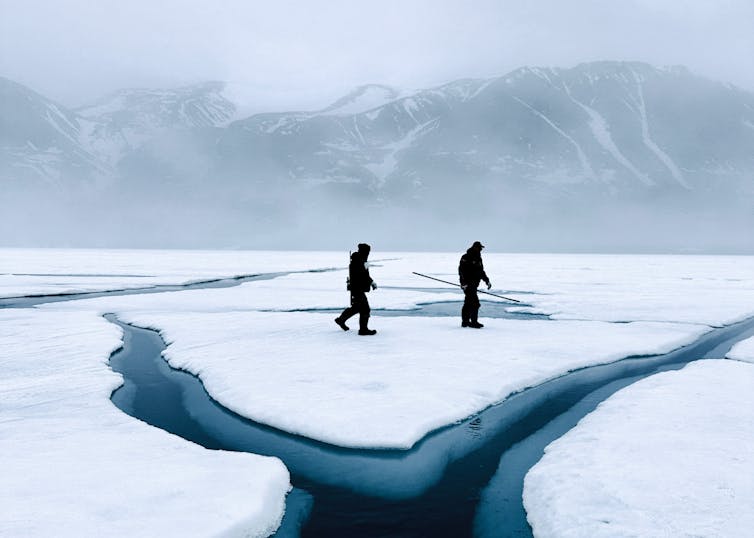
As temperatures rise, the timing of the ice thaw changes.
Vincent Denarie via Arctic Report Card

Matthew L. Druckenmiller, University of Colorado Boulder; Rick Thoman, University of Alaska Fairbanks, and Twila A. Moon, University of Colorado Boulder

The Arctic is transforming faster and with more far-reaching consequences than scientists expected just 20 years ago, when the first Arctic Report Card assessed the state of Earth’s far northern environment.

The snow season is dramatically shorter today, sea ice is thinning and melting earlier, and wildfire seasons are getting worse. Increasing ocean heat is reshaping ecosystems as non-Arctic marine species move northward. Thawing permafrost is releasing iron and other minerals into rivers, which degrades drinking water. And extreme storms fueled by warming seas are putting communities at risk.

The past water year, October 2024 through September 2025, brought the highest Arctic air temperatures since records began 125 years ago, including the warmest autumn ever measured and a winter and a summer that were among the warmest on record. Overall, the Arctic is warming more than twice as fast as the Earth as a whole.

Highlights from the National Oceanic and Atmospheric Administration’s 2025 Arctic Report Card.

For the 20th Arctic Report Card, we worked with the National Oceanic and Atmospheric Administration, an international team of scientists and Indigenous partners from across the Arctic to track environmental changes in the North – from air and ocean temperatures to sea ice, snow, glaciers and ecosystems – and the impacts on communities.

Together, these vital signs reveal a striking and interconnected transformation underway that’s amplifying risks for people who live there.

A wetter Arctic with more extreme precipitation

Arctic warming is intensifying the region’s water cycle.

A warmer atmosphere increases evaporation, precipitation and meltwater from snow and ice, adding and moving more water through the climate system. That leads to more extreme rainstorms and snowstorms, changing river flows and altering ecosystems.
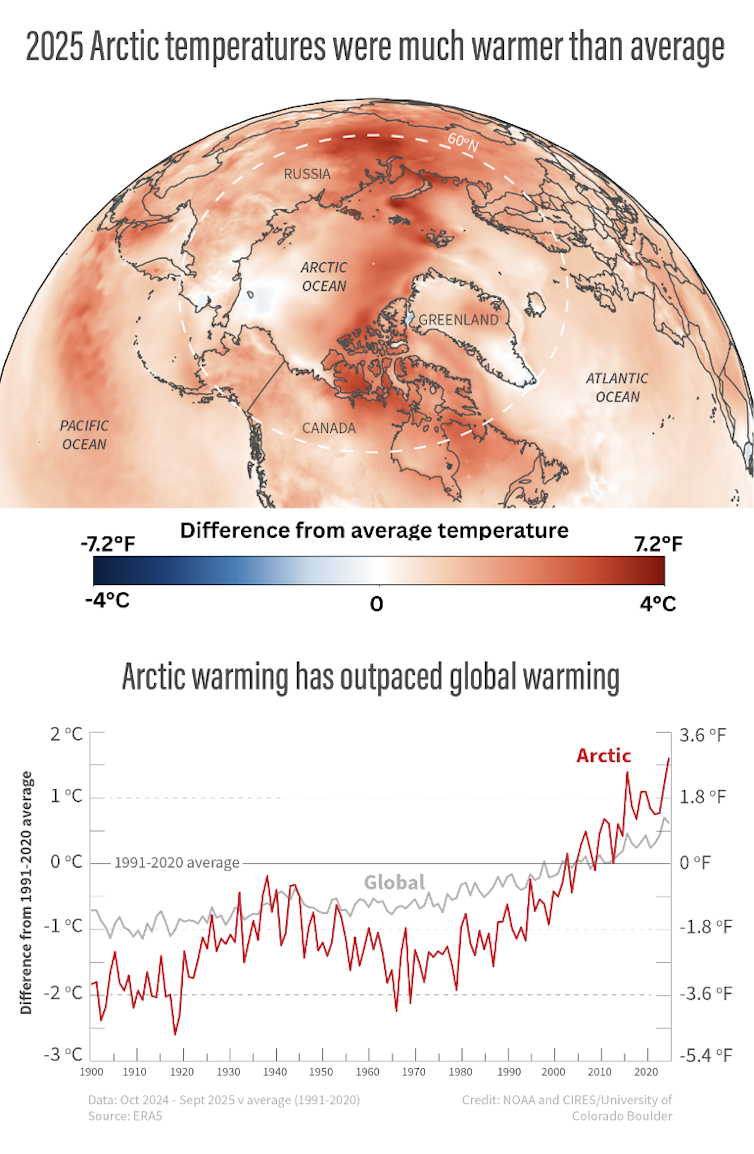
Charts show how the Arctic has warmed faster than the global average.
Arctic surface air temperatures are warming much faster than the global average.
NOAA and CIRES/University of Colorado Boulder.

The Arctic region saw record-high precipitation for the entire 2025 water year and for spring, with the other seasons each among the top-five wettest since at least 1950. Extreme weather – particularly atmospheric rivers, which are long narrow “rivers in the sky” that transport large amounts of water vapor – played an outsized role.

These wetter conditions are reshaping snow cover across the region.

Snow and ice losses accelerate warming, hazards

Snow blankets the Arctic throughout much of the year, but that snow cover isn’t lasting as long. In 2025, snowpack was above average in the cold winter months, yet rapid spring melting left the area covered by snow far smaller than normal by June, continuing a six-decade decline. June snow cover in recent years has been half of what it was in the 1960s.

Losing late spring snow cover means losing a bright, reflective surface that helps keep the Arctic cool, allowing the land instead to be directly warmed by the sun, which raises the temperature.
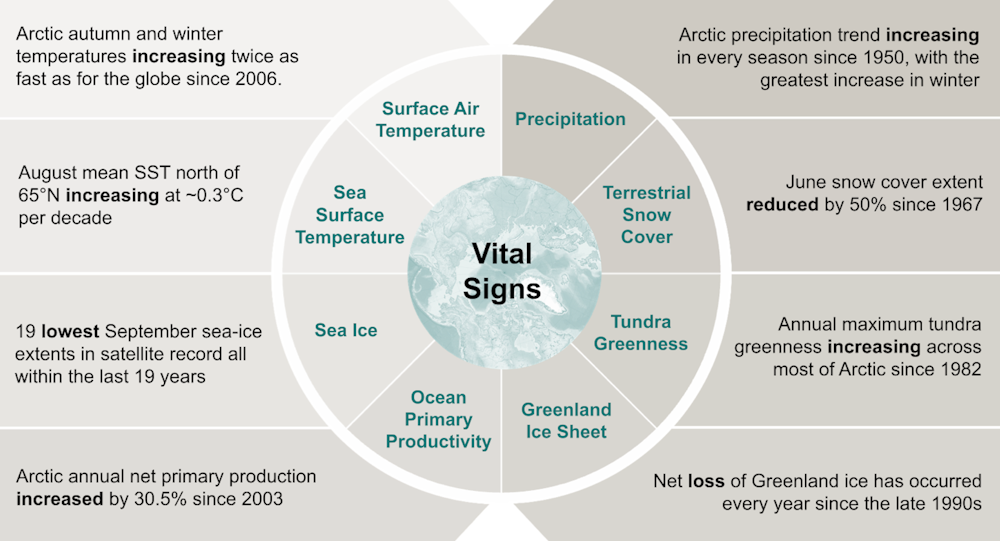
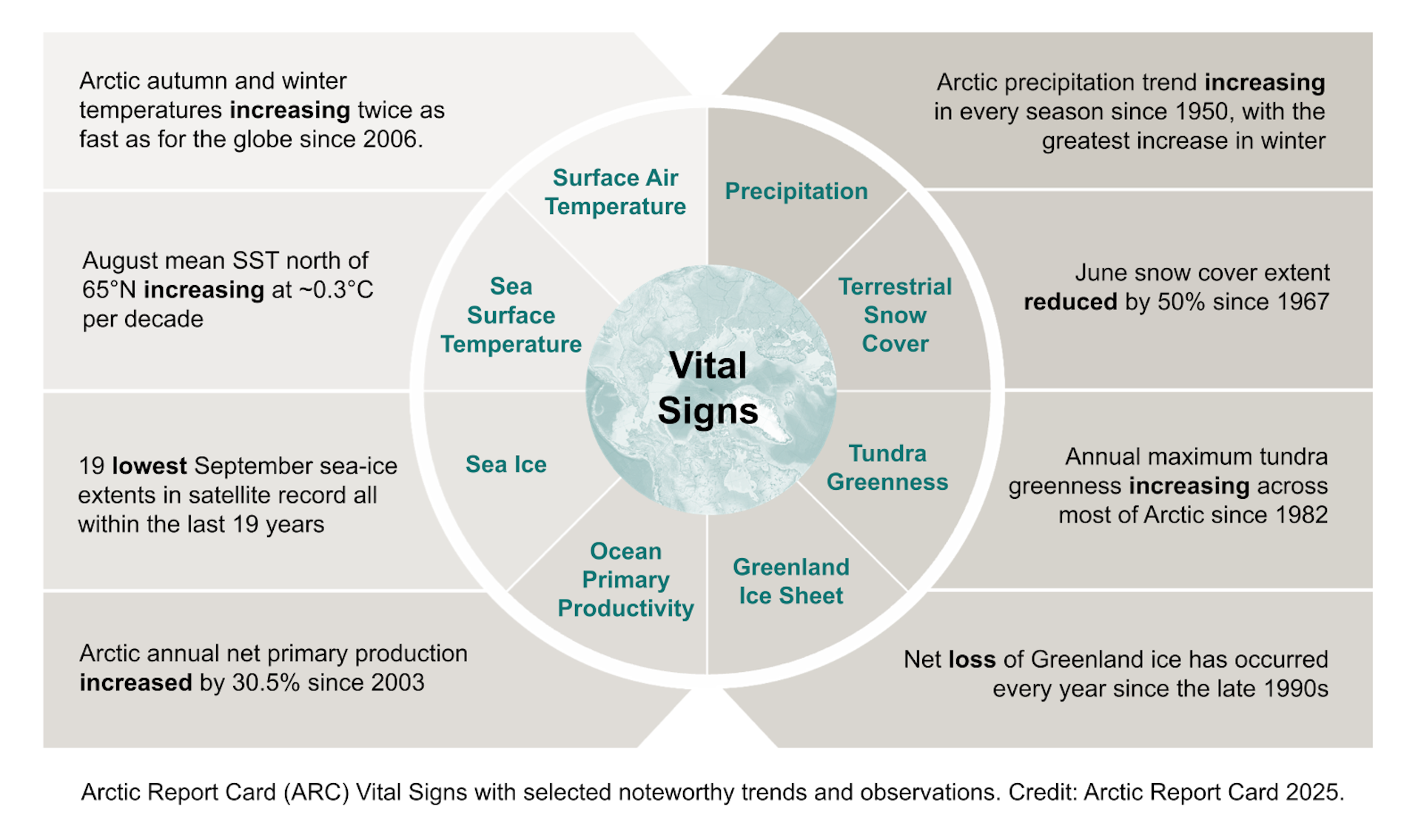
An illustration shows changes in sea level rise, temperature, precipitation, sea ice and other vital areas.
Eight vital signs and observations in 2025 from the 20th edition of the Arctic Report Card.
Arctic Report Card 2025

Sea ice tells a similar story. The year’s maximum sea ice coverage, reached in March, was the lowest in the 47-year satellite record. The minimum sea ice coverage, in September, was the 10th lowest.

Since the 1980s, the summer sea ice extent has shrunk by about 50%, while the area covered by the oldest, thickest sea ice – ice that has existed for longer than four years – has declined by more than 95%.

The thinner sea ice cover is more influenced by winds and currents, and less resilient against warming waters. This means greater variability in sea ice conditions, causing new risks for people living and working in the Arctic.
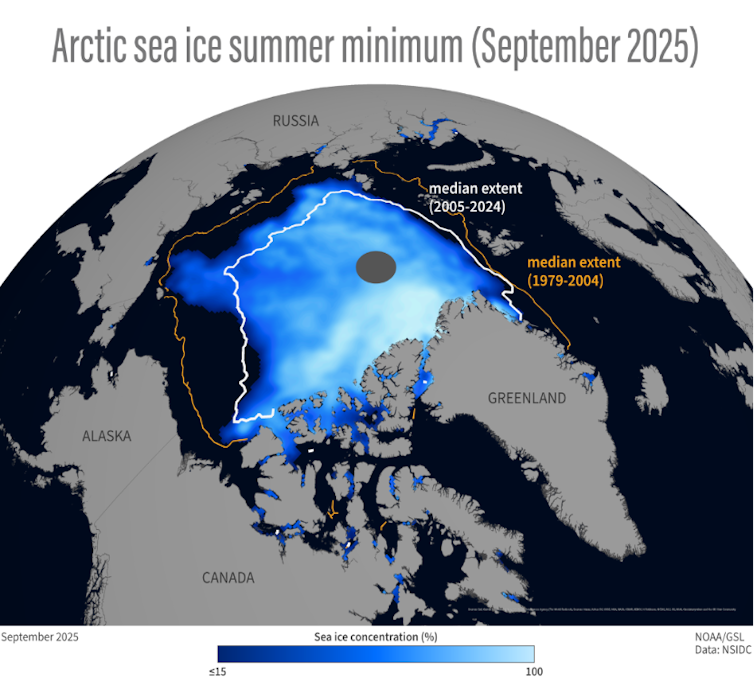
Map shows sea ice extent in 2025 and the 2005-2024 median is much smaller than the 1979-2004 median extent.
Arctic sea ice concentration in September 2025, during its annual minimum extent at the end of summer, was much smaller than the 1979-2004 median extent. The shades of blue reflect the concentration of sea ice.
NOAA and CIRES/University of Colorado Boulder.

The Greenland Ice Sheet continued to lose mass in 2025, as it has every year since the late 1990s. As the ice sheet melts and calves more icebergs into the surrounding seas, it adds to global sea-level rise.

Mountain glaciers are also losing ice at an extraordinary rate – the annual rate of glacier ice loss across the Arctic has tripled since the 1990s.

This poses immediate local hazards. Glacial lake outburst floods – when water that is dammed up by a glacier is suddenly released – are becoming more frequent. In Juneau, Alaska, recent outburst floods from Mendenhall Glacier have inundated homes and displaced residents with record-setting levels of floodwater.

A mountain view shows where the retreating glacier and possible permafrost thaw influenced valley walls exposed above open water.
An aerial photo shows the result of an Aug. 10, 2025, landslide at South Sawyer Glacier in Alaska. The light-colored area of the mountainside is where the slide occurred.
USGS

Glacier retreat can also contribute to catastrophic landslide impacts. Following the retreat of South Sawyer Glacier, a landslide in southeast Alaska’s Tracy Arm in August 2025 generated a tsunami that swept across the narrow fjord and ran nearly 1,600 feet (nearly 490 meters) up the other side. Fortunately, the fjord was empty of the cruise ships that regularly visit.

Record-warm oceans drive storms, ecosystem shifts

Arctic Ocean surface waters are steadily warming, with August 2025 temperatures among the highest ever measured. In some Atlantic-sector regions, sea surface temperatures were as much as 13 degrees Fahrenheit (7.2 Celsius) above the 1991-2020 average. Some parts of the Chukchi and Beaufort seas were cooler than normal.
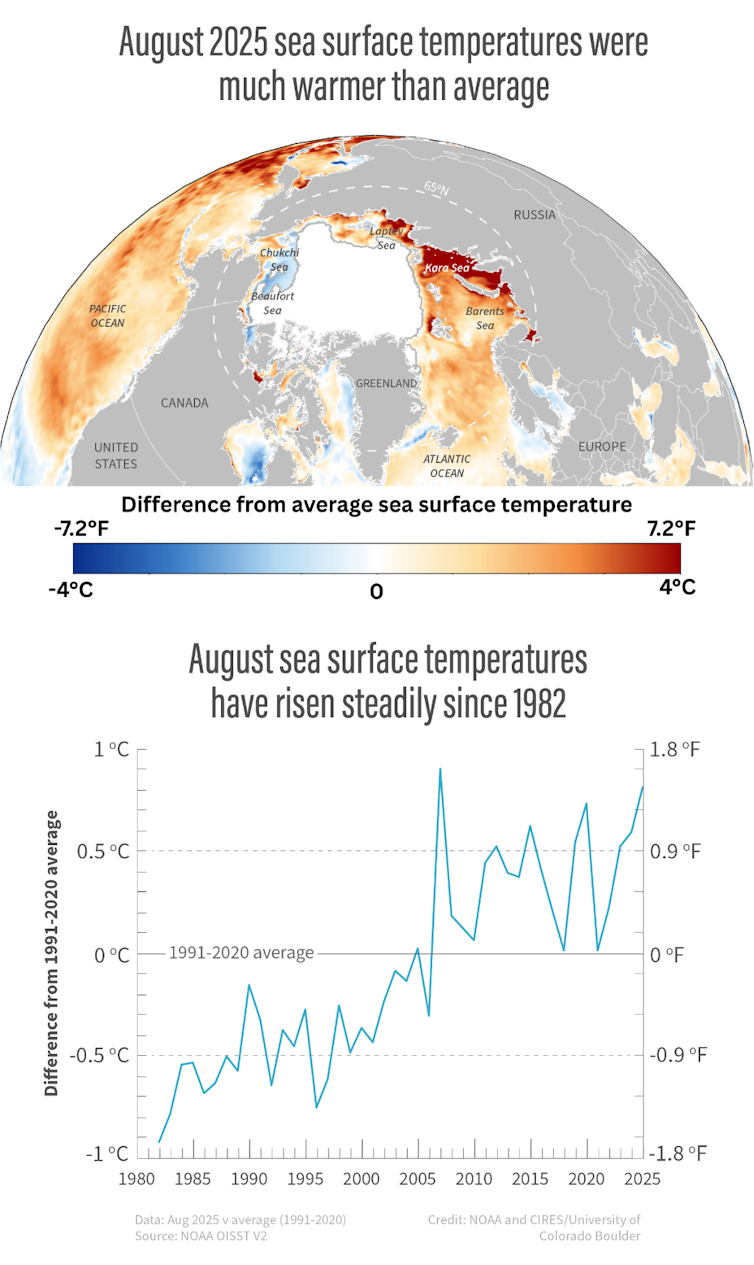
A map and chart show temperatures rising.
Arctic sea surface temperatures are much warmer today than in past decades, as this map and chart of August 2025 sea surface temperatures shows.
NOAA and CIRES/University of Colorado Boulder.

Warm water in the Bering Sea set the stage for one of the year’s most devastating events: Ex-Typhoon Halong, which fed on unusually warm ocean temperatures before slamming into western Alaska with hurricane-force winds and catastrophic flooding. Some villages, including Kipnuk and Kwigillingok, were heavily damaged.

As seas warm, powerful Pacific cyclones, which draw energy from warm water, are reaching higher latitudes and maintaining strength longer. Alaska’s Arctic has seen four ex-typhoons since 1970, and three of them arrived in the past four years.

A town with homes surrounded by water.
The village of Kipnuk, shown on Oct. 12, 2025, was devastated by ex-Typhoon Halong. The storm displaced at least 1,500 people from across western Alaska.
Alaska National Guard

The Arctic is also seeing warmer, saltier Atlantic Ocean water intrude northward into the Arctic Ocean. This process, known as Atlantification, weakens the natural layering of water that once shielded sea ice from deeper ocean heat. It is already increasing sea ice loss and reshaping habitat for marine life, such as by changing the timing of phytoplankton production, which provides the base of the ocean food web, and increasing the likelihood of harmful algal blooms.

From ocean ‘borealization’ to tundra greening

Warming seas and declining sea ice are enabling southern, or boreal, marine species to move northward. In the northern Bering and Chukchi seas, Arctic species have declined sharply – by two-thirds and one-half, respectively – while the populations of boreal species expand.

On land, a similar “borealization” is underway. Satellite data shows that tundra vegetation productivity – known as tundra greenness – hit its third-highest level in the 26-year record in 2025, part of a trend driven by longer growing seasons and warmer temperatures. Yet greening is not universal – browning events caused by wildfires and extreme weather are also increasing.
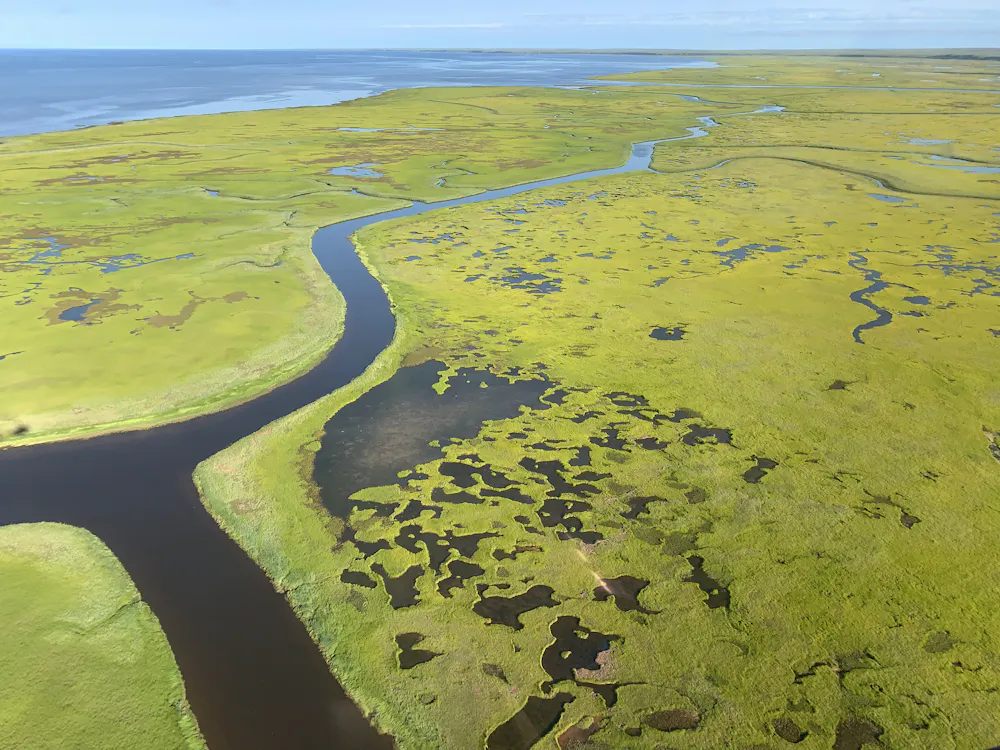
An aerial view of green land dotted with lakes and a river.
Coastal tundra vegetation on the Baldwin Peninsula of Alaska. The tundra is seeing longer growing seasons with warmer temperatures, leading to the overall ‘greening’ of the region.
G. V. Frost

Summer 2025 marked the fourth consecutive year with above-median wildfire area across northern North America. Nearly 1,600 square miles (over 4,000 square kilometers) burned in Alaska and over 5,000 square miles (over 13,600 square kilometers) burned in Canada’s Northwest Territories.

Permafrost thaw is turning rivers orange

As permafrost – the frozen ground that underlies much of the Arctic – continues its long-term warming and thaw, one emerging consequence is the spread of rusting rivers.

As thawing soils release iron and other minerals, more than 200 watersheds across Arctic Alaska now show orange discoloration. These waters exhibit higher acidity and elevated levels of toxic metals, which can contaminate fish habitat and drinking water and impact subsistence livelihoods.

In Kobuk Valley National Park in Alaska, a tributary to the Akillik River lost all its juvenile Dolly Varden and slimy sculpin fish after an abrupt increase in stream acidity when the stream turned orange.
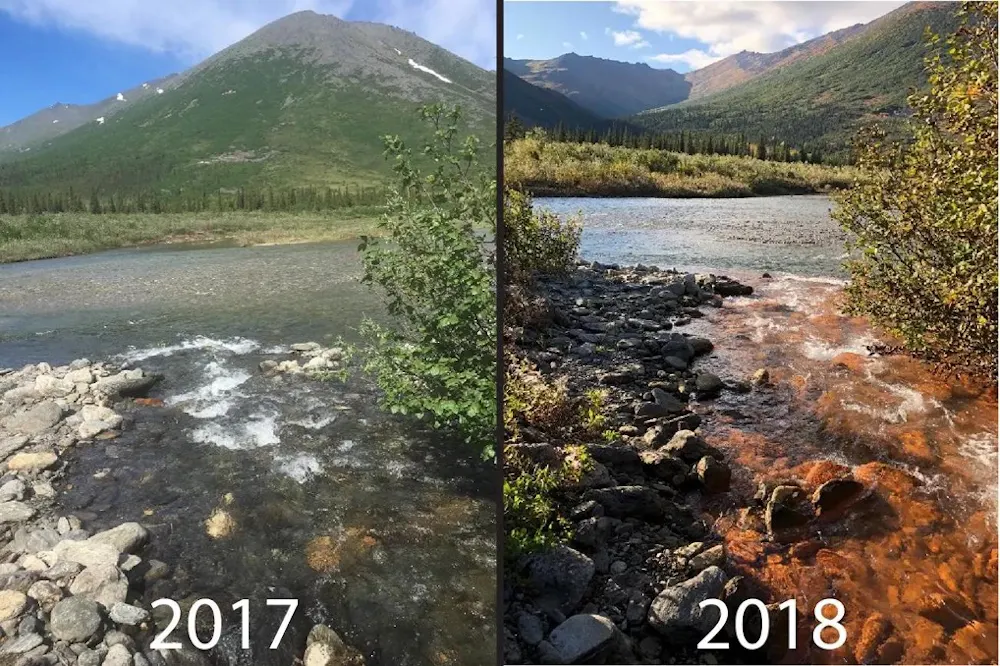
Side-by-side images show the same stream a year apart, one with rust-colored water.
Rust-colored water in a tributary of the Akillik River in Kobuk Valley National Park reflects permafrost thaw releasing metals into the water.
National Park Service/Jon O’Donnell

Arctic communities lead new monitoring efforts

The rapid pace of change underscores the need for strong Arctic monitoring systems. Yet many government-funded observing networks face funding shortfalls and other vulnerabilities.

At the same time, Indigenous communities are leading new efforts.

The Arctic Report Card details how the people of St. Paul Island, in the Bering Sea, have spent over 20 years building and operating their own observation system, drawing on research partnerships with outside scientists while retaining control over monitoring, data and sharing of results. The Indigenous Sentinels Network tracks environmental conditions ranging from mercury in traditional foods to coastal erosion and fish habitat and is building local climate resilience in one of the most rapidly changing environments on the planet.

A group of people with binoculars watch the water.
Observers with the Indigenous Sentinel Network, together with National Oceanic and Atmospheric Administration scientists, monitor the population and health of northern fur seals on St. Paul Island.
Hannah-Marie Ladd, CC BY

The Arctic is facing threats from more than the changing climate; it’s also a region where concerns of ecosystem health and pollutants come sharply into view. In this sense, the Arctic provides a vantage point for addressing the triple planetary crisis of climate change, biodiversity loss and pollution.

The next 20 years will continue to reshape the Arctic, with changes felt by communities and economies across the planet.The Conversation

Matthew L. Druckenmiller, Senior Scientist, National Snow and Ice Data Center (NSIDC), Cooperative Institute for Research in Environmental Sciences (CIRES), University of Colorado Boulder; Rick Thoman, Alaska Climate Specialist, University of Alaska Fairbanks, and Twila A. Moon, Deputy Lead Scientist, National Snow and Ice Data Center (NSIDC), Cooperative Institute for Research in Environmental Sciences (CIRES), University of Colorado Boulder

This article is republished from The Conversation under a Creative Commons license. Read the original article.


Ticker Views

Pentagon’s AI gamble: Is Grok safe for defense?

Pentagon to integrate Elon Musk’s AI chatbot Grok, exploring military data and innovation amid AI controversies.

Published

on

Pentagon to integrate Elon Musk’s AI chatbot Grok, exploring military data and innovation amid AI controversies.


Defense Secretary Pete Hegseth announced that Elon Musk’s AI chatbot Grok will soon be integrated with the Pentagon’s networks.

The move aims to harness military data to develop advanced AI technology, despite recent controversies surrounding Grok’s content generation. This integration signals a bold step toward combining commercial AI tools with national defence systems.

Dr Karen Sutherland from UniSC explores the implications of this partnership. We discuss how Hegseth’s approach to AI differs from the Biden administration’s framework, the measures in place to ensure responsible use, and the limitations on Grok’s image generation capabilities.

We also examine the potential risks and international reactions, as well as Hegseth’s vision for innovation within the military. From civil rights considerations to prioritising key technologies, this story highlights the complex balancing act of AI in modern defence.

Subscribe to never miss an episode of Ticker – https://www.youtube.com/@weareticker

#PentagonAI #ElonMusk #GrokAI #MilitaryTech #AIControversy #TechNews #DefenseInnovation #TickerNews


Download the Ticker app

Continue Reading

Ticker Views

U.S. pushes Latin American dominance

Published

on

What lies ahead for Latin America after the Venezuela raid?

Nicolas Forsans, University of Essex

The Trump administration has justified the recent capture of Venezuelan leader Nicolás Maduro as a law enforcement operation to dismantle a “narco‑state”. It also claimed it would break Venezuela’s ties to China, Russia and Iran, and put the world’s largest known oil reserves back under US‑friendly control.

This mix of counter‑narcotics, great power rivalry and energy security had already been elevated to a central priority by the administration in its national security strategy. Published in late 2025, the document announced a pledge to “reassert and enforce American preeminence in the western hemisphere” and deny “strategically vital assets” to rival powers.

Donald Trump has referred to this hemispheric project as the “Donroe doctrine”, casting it as a revival of the Monroe doctrine policy of the 19th century through which the US sought to stop European powers from meddling in the Americas. He seems to be seeking to tighten the US grip on Latin America by rewarding loyal governments and punishing defiant ones.

If Venezuela is the first test case of the Donroe doctrine, several other Latin American countries now sit squarely in Washington’s crosshairs. The most immediate target is Cuba, which the US has opposed since 1959 when communist revolutionary Fidel Castro overthrew a US-backed regime there.

Trump and his secretary of state, Marco Rubio, have openly hinted that Cuba could be Washington’s next target. They have described Cuba as “ready to fall” after the loss of Venezuelan oil and have boasted that there is no need for direct intervention because economic collapse will finish the job.

Cuba is enduring its worst crisis since 1959. Blackouts now regularly last up to 20 hours, real wages are collapsing and roughly 1 million Cubans have fled the country since 2021. This is all happening as Venezuelan crude oil is being redirected under US control.

For over two decades, Venezuela has provided Cuba with fuel and financing in exchange for doctors, teachers and security personnel – 32 of whom were killed in the US capture of Maduro, according to the Cuban government. Strangling Cuba’s remaining lifelines may well be enough to topple the government there without US forces needing to fire a single shot.

It is possible that Mexico will also soon come under fire. Mexico has quietly become Cuba’s main oil supplier, shipping roughly 12,000 barrels per day in 2025 to account for about 44% of the island’s crude imports. This is unlikely to please the Trump administration, which has recently renewed its threats to “do something” about Mexican drug cartels.

The raid in Venezuela’s capital, Caracas, took six months of meticulous planning and required an extraordinary amount of resources. So it is unrealistic to expect similar raids on other Latin American countries. However, targeted military strikes cannot be excluded.

Speaking on Fox News’s “Hannity” show on January 8, Trump said: “We are going to start now hitting land with regard to the cartels. The cartels are running Mexico.” He did not provide further details about the plans.

Mexico’s president, Claudia Sheinbaum, is trying to construct protective buffers. She has combined condemnation of the raid on Caracas with intense cooperation with the US on migration and security. This includes a deal for Mexico’s navy to intercept suspected drug-running boats near its coastline before US forces do.

But as part of a strategy that pushes US dominance of Latin America, Trump has already floated classifying Mexico’s cartels as terrorist organisations and the fentanyl they traffic across the border as a weapon of mass destruction. These are legal framings that could be used to justify strikes on Mexican soil in the name of counter-narcotics in the near future.

Trump’s other targets

Colombia, historically Washington’s closest military ally in South America, has flipped from “pillar” to possible target. The country’s president, Gustavo Petro, has been one of the loudest critics of the Venezuela raid. He called it an “abhorrent violation” of Latin American sovereignty committed by “enslavers”, adding that it constituted a “spectacle of death” comparable to Nazi Germany’s 1937 carpet bombing of Guernica in Spain.

Trump, who imposed sanctions on Petro and his family in October, responded by labelling the Colombian president a “sick man who likes making cocaine and selling it to the United States”. He then mused that a Venezuela‑style operation in Colombia “sounds good to me” before a hastily arranged phone call and White House invitation dialled back the immediate threat.

How long the conciliation between the two men lasts remains to be seen. Colombia has entered a heated presidential campaign season in which Trump’s remarks are already being read as an attempt to tilt the race, much as his interventions shaped recent contests in Argentina and Honduras.

Further down the hierarchy, Nicaragua’s government will also have watched events unfold in Venezuela with terror. Long treated in Washington as part of a trilogy of dictatorships with Cuba and Venezuela, Nicaragua features in US indictments against Maduro as a transit point for cocaine flights. Nicaragua was also recently designated by the US as a key drug‑transit country.

The unusually cautious statement on the Venezuela raid by Nicaraguan presidential couple Daniel Ortega and Rosario Murillo, as well as the rapid reinforcement of the presidential compound in the capital Managua, suggest a regime that knows it could be next in line should Trump choose to extend his “narco‑terrorism” narrative.

Trump appears to be turning longstanding US concerns – drugs, migration and interference by other major powers – into a flexible toolbox for coercion in Latin America. Countries that defy Washington or host its rivals risk being framed as security threats, stripped of economic lifelines and, possibly, targeted militarily.

Those that keep their heads down may avoid immediate punishment. But this comes at the price of treating hemispheric dominance as a fact of life rather than a doctrine to be resisted.The Conversation

Nicolas Forsans, Professor of Management and Co-director of the Centre for Latin American & Caribbean Studies, University of Essex

This article is republished from The Conversation under a Creative Commons license. Read the original article.

Continue Reading

Ticker Views

Antisemitism debate a political minefield for royal commission

Published

on

The antisemitism debate is already a political minefield. The royal commission must rise above it

Matteo Vergani, Deakin University

What we currently know about antisemitism in Australia is pieced together from a fragmented body of information produced by community organisations, researchers and law enforcement. And it is largely interpreted and translated to the public through news reporting.

Through this reporting, Australians have learned that organised criminal groups were involved in targeting Jewish communities and foreign actors also played a role.

At the same time, some data on antisemitic incidents released by security agencies has been incorrect. Other statistics produced by community organisations has been publicly challenged.

Researchers like myself have also produced data on antisemitic incidents, but this is limited in many ways.

In a nutshell, the picture of what constitutes antisemitism and how and why it has spiked in recent years is far from being clear.

This lack of clarity matters. Without a reliable understanding of what happened in the lead-up to the Bondi terror attack, which data can be trusted, and how different forms of antisemitism intersect, Australia cannot fully grasp how it reached a point where Jewish Australians were murdered at a public religious gathering.

Shedding light on this problem will be difficult, but it is essential to understand both the scale of the problem and how to respond.

Potential for more divisiveness

The royal commission established by Prime Minister Anthony Albanese is designed to address many of these unresolved issues.

As set out in its terms of reference, it will examine the nature and prevalence of antisemitism in Australia and assess how it can be more effectively addressed. It will also:

  • Review the responses of security and law enforcement agencies
  • Investigate what happened before, during, and after the Bondi attack
  • develop recommendations aimed at strengthening social cohesion.

Social cohesion and national consensus are the stated end goals of the entire exercise. Yet, the context in which the commission is operating is highly volatile. There is a real risk that rather than repairing social cohesion, the process itself could damage it.

This risk comes from the heavy political pressure now attached to the royal commission and from the way some political actors are using it as a weapon in broader political battles, including attacks on the government.

The antisemitism debate is already a political minefield. And the commission has entered that terrain from its first day.

The decision to acknowledge the International Holocaust Remembrance Alliance’s definition of antisemitism in the terms of reference is likely to be used by some to delegitimise the commission altogether. Critics argue the definition can be used to silence legitimate criticism of Israel, while supporters say it draws a necessary line between political critique and antisemitic tropes.

At the same time, some politicians have questioned the appointment of Former High Court justice Virginia Bell to head the commission, which could also undermine the credibility of the inquiry.

As a result, the commission is already inflaming existing political tensions. This is deeply unfortunate because it makes the task harder for those who are genuinely focused on understanding antisemitism, responding to it effectively, and improving the safety and well-being of Jewish Australians.

Why the Christchurch royal commission was successful

Royal commissions carry strong symbolic weight. They are often implemented when something has gone badly wrong, and the social fabric feels strained. The aim is to restore trust and provide a clear public account of what happened and why.

A useful point of comparison is the royal commission that followed the Christchurch terrorist attack in New Zealand. The inquiry led to wide-ranging reforms, including changes to firearms laws, counter-terrorism frameworks, approaches to social cohesion and inclusion, hate crime and hate speech legislation, and improved support for victims and witnesses.

It also contributed to the creation of the Christchurch Call to eliminate terrorist and violent extremist content online. This global initiative involving governments and technology companies has been successful in limiting the spread of terrorist and violent extremist material.

However, the political and social climate in New Zealand at the time was very different. There was a stronger sense of national unity and far less public contestation about what constituted hate. The attack was also not entangled with an ongoing and deeply polarising international conflict.

In Australia, the context is far more charged. The war in Gaza continues to divide public debate, regularly spilling into domestic politics.

It’s worth noting that antisemitic attacks have not stopped after Bondi. There was a firebombing less than two weeks later. This makes the task of using a royal commission to calm tensions and rebuild trust significantly harder.

Many pieces to the puzzle

Despite these difficulties, the commission matters now more than ever. Jewish Australians need answers, and the broader public deserves to understand what actually happened.

At present, the picture of what has caused rising antisemitism and the Bondi attack is confused. Public sentiment on the war, organised crime, foreign actors and terrorist ideology all appear to intersect, but how they connect remains unclear.

Different security agencies, researchers, and community organisations hold different pieces of evidence. Without bringing these strands together, Australians cannot fully understand the problem, let alone work out how to prevent it from happening again.

The path ahead will be difficult and exposed to disruption. One obvious challenge is the risk of further attacks while the inquiry is underway. Any new incident would complicate the process.

If, for example, an attack occurred that was shown to involve formal training or links to a terrorist organisation, serious questions would arise about whether the commission’s terms of reference remain adequate, or whether additional investigative processes would be required.

The most important test will come at the end. The commission’s recommendations must be acted on, regardless of which party is in government. That follow-through is what determines whether a royal commission produces real change or becomes just a symbolic exercise.

Meeting this test will require political restraint and maturity. It will mean resisting the temptation to turn the commission into a tool for partisan conflict and instead treating it as a shared national effort to protect communities and restore trust.The Conversation

Matteo Vergani, Associate Professor and Director of the Tackling Hate Lab, Deakin University

This article is republished from The Conversation under a Creative Commons license. Read the original article.

Continue Reading

Trending Now