
Connect with us
https://tickernews.co/wp-content/uploads/2023/10/AmEx-Thought-Leaders.jpg

Ticker Views

STREAMING WARS: How many services are you willing to sign up for? TICKER VIEWS

Published

on

How many times have we heard “it’s just a small monthly fee of” and signed up to another streaming service to add to the TV home screen (and the direct debit list).

Well, there is a new kid on the block.

Paramount+ is here to shake the market up. Television-focused businesses are turning their attention to streaming services instead, as cable TV’s importance slowly fades away.

Is there a limit to how many services people are willing to fork their money out for? or is the market expansion of streaming subscription services a win for all?

Gone are the days of Netflix dominating as the streaming powerhouse. Major networks are continuing to turn their attention to the way their audience consumes their content and Netflix competitors have sprung to life, all wanting a slice of the streaming pie.

Latest streaming service to go down under

The latest major network to take on Netflix will soon expand to Australasia.

ViacomCBS Australia and New Zealand announced its digital streaming network Paramount+ will launch in Australia this year.

Its global video subscription service will  feature locally produced content as well as major shows and movies from Paramount pictures.

Two years ago the ViacomCBS merger joined the power of Paramount Pictures and the TV talents of CBS, creating a single media powerhouse.

Paramount Plus is already available in the US, Canada, Latin America and Nordic countries.

Beverley McGarvey, Chief Content Officer & Executive Vice President, ViacomCBS Australia & New Zealand, said the company is “poised to become as powerful a player in streaming as we are in television.”

“By leveraging the iconic Paramount brand, leading edge infrastructure, along with an incredible super-sized pipeline of must-see content, Paramount+ will deliver an exceptional consumer entertainment experience,” she said.
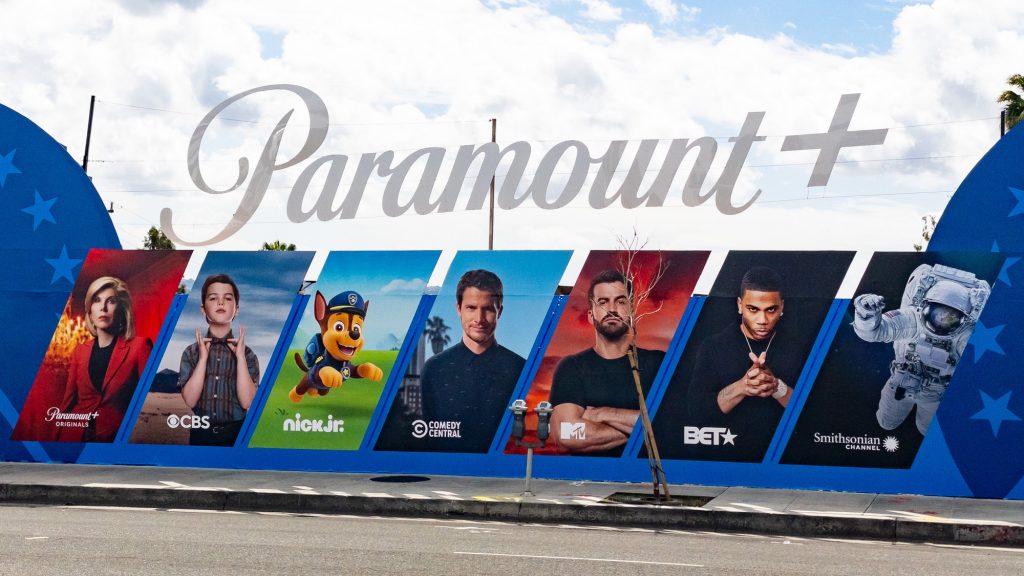
WEST HOLLYWOOD, CA – MARCH 10: General views of the Paramount+ billboard campaign along the Sunset Strip promoting the launch of the new streaming service on March 10, 2021 in West Hollywood, California. (Photo by AaronP/Bauer-Griffin/GC Images)

When Paramount+ comes to Australia in august this year, it will be replacing Network 10’s existing subscription offering with ViacomCBS confirming that 10 All Access will rebrand in August upon Paramount+ launch.

It’s a bid to take on global giants Netflix and Stan, that dominate the Australian market.

It will transform to bring high-profile films and television shows from channels Showtime and Nickelodeon and studio Paramount Pictures. Showtime, Nickelodeon and Paramount are all divisions of ViacomCBS, which bought Ten in 2017.
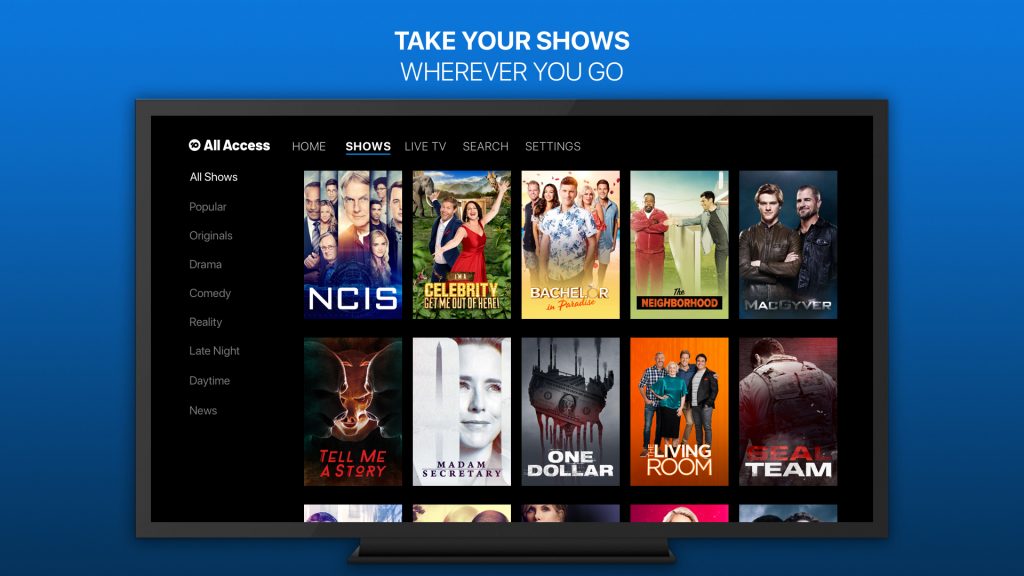
10 All Access will rebrand in August 2021. Paramount+ and lean on the catalogues of US networks Showtime and Nickelodeon and the Paramount Pictures film studio

10 All Access currently screens CBS shows such as NCIS and The Good Fight, alongside programs locally produced by Network Ten in Australia.

The service will be priced at $8.99 per month and subscribers will have access to more than 20,000 episodes and blockbuster movies throughout the year. This is cheaper than basic subscriptions in Australia for Netflix ($10.99), Stan ($10), Disney+ ($11.99) and Foxtel Now ($25).

Paramount+ expects to debut new original film every week starting in 2022

New original films like Paranormal Activity and The Inbetween will debut on the service by the end of 2021. 

ViacomCBS is following the suit of other major studios that are trying to promote their streaming services by sending new movies straight to streaming,

ViacomCBS is ramping up its streaming activity, CEO Bob Bakish said during its first quarter earnings call on Thursday (May 6).

“Turning to movies where we are poised to dramatically enhance the scale of our offering,” Bakish said

He added that Paramount+ expects to debut a new original film every week starting in 2022.

ViacomCBS global streaming revenue increased 65 per cent year-on-year to $816m, driven by a demand in streaming advertising revenue. This is led primarily by free service Pluto TV, and a 69 per cent rise in streaming subscription revenue, led by Paramount+.

Subscription TV viewers soared to 17.3 million Australians

global data and insights company, Pureprofile, surveyed those in Australia, New Zealand, the UK and the US to benchmark what their media consumption currently looks like.

 Australians consumed subscription TV services at an astonishing rate during 2020 as Australians endured a nation-wide lockdown from late March last year, according to data from Roy Morgan.
Netflix is the top subscription service in Australia.

Netflix is by far Australia’s most watched subscription television service, with 14,168,000 viewers in an average four weeks, an increase of 2,265,000 viewers from a year ago.

Over 80 per cent of Australians watch a subscription TV service

roy morgan data
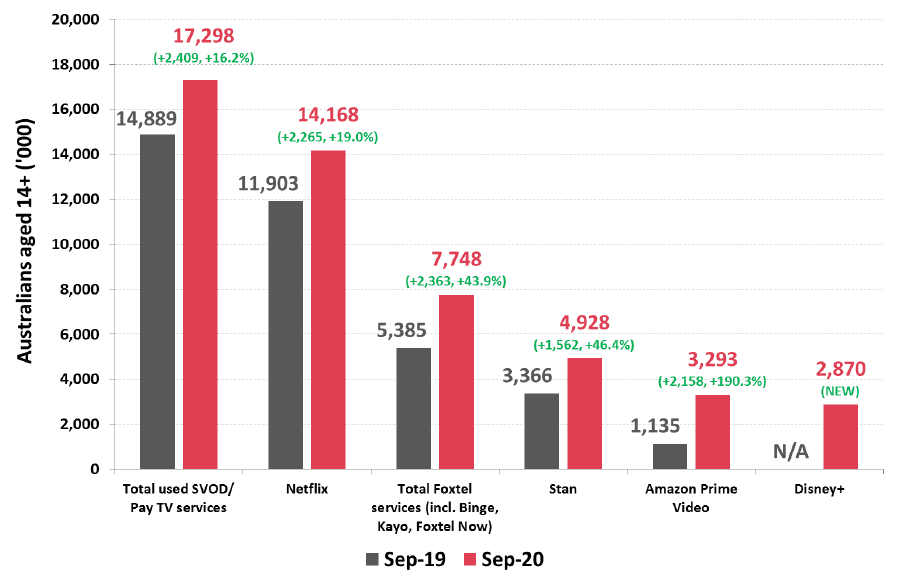
Number of Australians watching subscription television

“The strong growth for the leading services in the market shows Australians are increasingly viewing multiple services to find new and interesting content. For example over 5.6 million Australians watch both Netflix and Foxtel services in an average four weeks and nearly 4.7 million watch both Netflix and Stan,” Roy Morgan CEO Michele Levine says.

Will Paramount+ be chasing Stan Sport?

In the U.S, Paramount+ subscribers have access to sports as well as all entertainment offerings.

Will it compete with Stan, who according to Nine CEO Mike Sneesby, is Australia’s largest sports streaming platform.

Stan, a fully owned subsidiary of the Nine Entertainment Company, has recently expanded its content offering with the launch of ‘Stan Sport’. Stan Sport is offered as a bundle to the Stan streaming service that currently has more than two million subscribers.

Speaking at the recent Macquarie Australia conference, Sneesby said Stan’s sport streaming platform has grown to almost 150,000 subscribers.
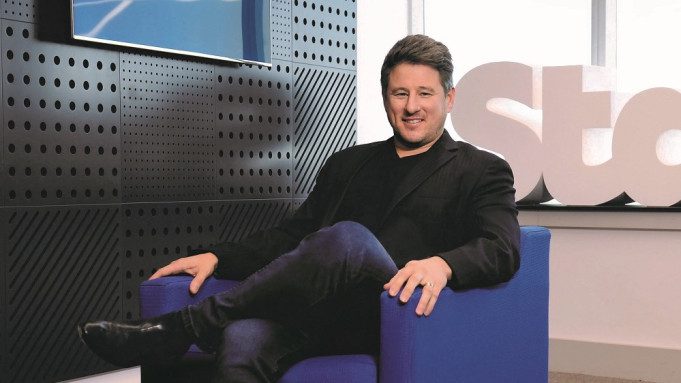
Stan CEO Mike Sneesby. Photo Nick Moir.

“This is a powerful proposition for Australian audiences,” Sneesby said.

He says the service is providing sporting codes who partner with Nine and Stan the opportunity to reach mass free-to-air audiences and high yields subscription audiences in a model that maximises revenue opportunity.

According to The Sydney Morning Herald and The Age, shares rose on the Australian Stock Exchange following Sneesby’s comments.

Stan announced its intention to start live streaming sports events after securing a three-year deal with Rugby Australia worth AUS$100 million (US$77.2 million) in November 2020.

So, do consumers want more than Netflix?

Some say the market is saturated, some say the market is just beginning.

Although, it’s clear in the numbers – both revenue and subscribers – that consumers are choosing streaming platforms as their dominant form of entertainment consumption.

Netflix still outperforms all the others, with more than 208 million subscribers around the globe. That is a massive reach… and selling point.

“Our strategy is simple: if we can continue to improve Netflix every day to better delight our members, we can be their first choice for streaming entertainment,” Netflix wrote in its January shareholder letter. 

“This past year is a testament to this approach. Disney+ had a massive first year (87 million paid subscribers!) and we recorded the biggest year of paid membership growth in our history.”
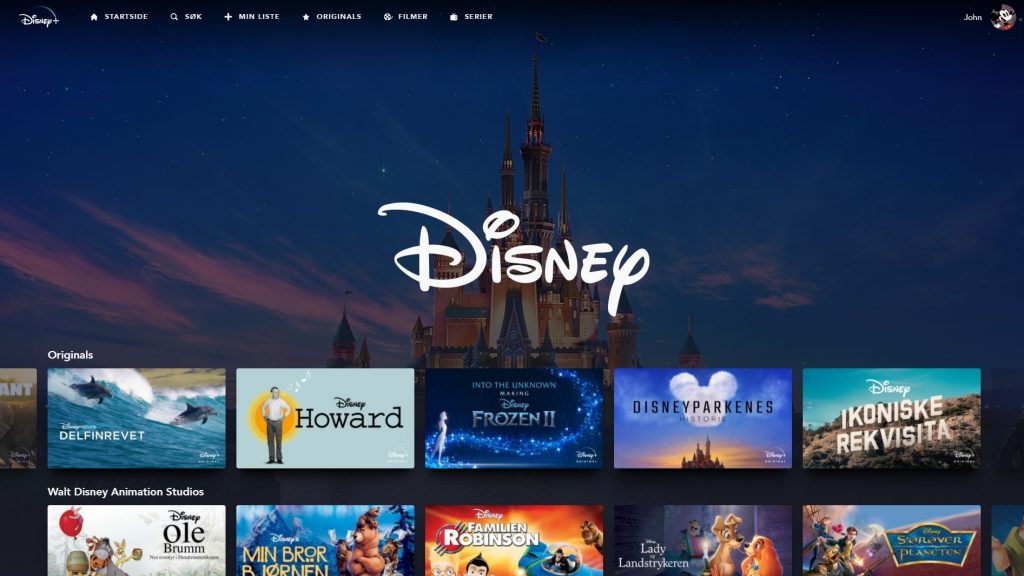
Disney Plus hit 100 million subscribers last month.

But with more players entering the so called ‘streaming wars’, Netflix’s astronomical growth appears to be slowing too.

“The production delays from covid-19 in 2020 will lead to a 2021 slate that is more heavily second half weighted with a large number of returning franchises,” it said in an investor letter recently.

Netflix may always be a part of a typical household’s content diet… but the streaming selection plate is certainly getting a lot more full.

Click to comment

Leave a Reply

Your email address will not be published. Required fields are marked *

Ticker Views

Deepfakes leveled up in 2025 – here’s what’s coming next

Published

on

Deepfakes leveled up in 2025 – here’s what’s coming next

AI image and video generators now produce fully lifelike content.
AI-generated image by Siwei Lyu using Google Gemini 3

Siwei Lyu, University at Buffalo

Over the course of 2025, deepfakes improved dramatically. AI-generated faces, voices and full-body performances that mimic real people increased in quality far beyond what even many experts expected would be the case just a few years ago. They were also increasingly used to deceive people.

For many everyday scenarios — especially low-resolution video calls and media shared on social media platforms — their realism is now high enough to reliably fool nonexpert viewers. In practical terms, synthetic media have become indistinguishable from authentic recordings for ordinary people and, in some cases, even for institutions.

And this surge is not limited to quality. The volume of deepfakes has grown explosively: Cybersecurity firm DeepStrike estimates an increase from roughly 500,000 online deepfakes in 2023 to about 8 million in 2025, with annual growth nearing 900%.

I’m a computer scientist who researches deepfakes and other synthetic media. From my vantage point, I see that the situation is likely to get worse in 2026 as deepfakes become synthetic performers capable of reacting to people in real time.

Just about anyone can now make a deepfake video.

Dramatic improvements

Several technical shifts underlie this dramatic escalation. First, video realism made a significant leap thanks to video generation models designed specifically to maintain temporal consistency. These models produce videos that have coherent motion, consistent identities of the people portrayed, and content that makes sense from one frame to the next. The models disentangle the information related to representing a person’s identity from the information about motion so that the same motion can be mapped to different identities, or the same identity can have multiple types of motions.

These models produce stable, coherent faces without the flicker, warping, or structural distortions around the eyes and jawline that once served as reliable forensic evidence of deepfakes.

Second, voice cloning has crossed what I would call the “indistinguishable threshold.” A few seconds of audio now suffice to generate a convincing clone – complete with natural intonation, rhythm, emphasis, emotion, pauses, and breathing noise. This capability is already fueling large-scale fraud. Some major retailers report receiving over 1,000 AI-generated scam calls per day. The perceptual tells that once gave away synthetic voices have largely disappeared.

Third, consumer tools have pushed the technical barrier almost to zero. Upgrades from OpenAI’s Sora 2 and Google’s Veo 3, and a wave of startups mean that anyone can describe an idea, let a large language model such as OpenAI’s ChatGPT or Google’s Gemini draft a script, and generate polished audio-visual media in minutes. AI agents can automate the entire process. The capacity to generate coherent, storyline-driven deepfakes at a large scale has effectively been democratized.

This combination of surging quantity and personas that are nearly indistinguishable from real humans creates serious challenges for detecting deepfakes, especially in a media environment where people’s attention is fragmented and content moves faster than it can be verified. There has already been real-world harm – from misinformation to targeted harassment and financial scams – enabled by deepfakes that spread before people have a chance to realize what’s happening.

AI researcher Hany Farid explains how deepfakes work and how good they’re getting.

The future is real-time

Looking forward, the trajectory for next year is clear: Deepfakes are moving toward real-time synthesis that can produce videos that closely resemble the nuances of a human’s appearance, making it easier for them to evade detection systems. The frontier is shifting from static visual realism to temporal and behavioral coherence: models that generate live or near-live content rather than pre-rendered clips.

Identity modeling is converging into unified systems that capture not just how a person looks, but how they move, sound, and speak across contexts. The result goes beyond “this resembles person X,” to “this behaves like person X over time.” I expect entire video-call participants to be synthesized in real time; interactive AI-driven actors whose faces, voices and mannerisms adapt instantly to a prompt; and scammers deploying responsive avatars rather than fixed videos.

As these capabilities mature, the perceptual gap between synthetic and authentic human media will continue to narrow. The meaningful line of defense will shift away from human judgment. Instead, it will depend on infrastructure-level protections. These include secure provenance, such as media signed cryptographically, and AI content tools that use the Coalition for Content Provenance and Authenticity specifications. It will also depend on multimodal forensic tools such as my lab’s Deepfake-o-Meter.

Simply looking harder at pixels will no longer be adequate.The Conversation

Siwei Lyu, Professor of Computer Science and Engineering; Director, UB Media Forensic Lab, University at Buffalo

This article is republished from The Conversation under a Creative Commons license. Read the original article.

Continue Reading

Ticker Views

EU backs Ukraine with €90bn loan as unity fractures over Russia

Published

on

EU agrees €90 billion loan to Ukraine, but squabbles over frozen Russian assets expose the bloc’s deep divisions

Richard Whitman, University of Kent; Royal United Services Institute and Stefan Wolff, University of Birmingham

By agreeing to provide a loan of €90 billion (£79 billion) for the years 2026-2027, EU leaders have set the direction for the future of support for Ukraine.

At stake at the meeting of the European Council on December 18 was not just Kyiv’s ability to continue to defend itself against Russia’s ongoing aggression, but also the credibility of the EU as a player in the future of European security.

The key decision for the EU’s leaders was whether, and how, they would provide financial support for Ukraine over the next two years. Europeans have provided a vital drip-feed of ongoing financial assistance to Kyiv throughout almost four years of war.

But they have also struggled to fill, in its entirety, the hole created by the withdrawal of US support since the return of Donald Trump to the White House in January 2025.

The estimated €136 billion of budget support needed by Ukraine in 2026 and 2027 is a relatively fixed figure regardless of whether any peace initiative comes to fruition. A large part of it – €52 billion in 2026 and €33 billion in 2027 – is for military support.

The EU-agreed loan of €90 billion, “based on EU borrowing on the capital markets backed by the EU budget headroom”, thus covers at least the essential military needs of Ukraine. The loan will either contribute to the ongoing war effort or help create a sufficiently large and credible defence force to deter any future aggression by Russia.

Brussels is now the most important financial partner for Ukraine by any measure.

To fund the support the EU wants to provide to Ukraine, the commission developed two proposals. The most widely supported – and ultimately rejected – proposal was to use the Russian assets held by the Belgium-based Euroclear exchange as collateral to for a loan to fund Ukraine’s defence and reconstruction over the next few years.

In view of Belgian opposition because of insufficient protections against likely Russian retaliation, the European Commission had also proposed joint EU borrowing to fund support for Kyiv. Despite resistance from a group of EU member states, it was the only agreeable solution at the end.

The agreement on a loan to Ukraine funded from EU borrowing achieves the primary goal of securing at least a modicum of budgetary stability for Kyiv. But it came at the price of EU unity.

An “opt-out clause” had to be provided for Hungary, Slovakia and Czechia. All three countries are governed by deeply Euro-sceptical and Russia-leaning parties.

The deep irony is that by opposing EU support for Ukraine, they expose Ukrainians to a fate similar to that they suffered when the Soviet Union suppressed pro-democracy uprisings in Hungary in 1956 and then Czechoslovakia in 1968.

The EU until now managed to maintain a relatively united front on sanctions against Russia, on political, economic and military support for Ukraine, and on strengthening its own defence posture and defence-industrial base.

Over the past year, these efforts have accelerated in response to Trump’s return to the White House. This has shifted the US position to one which is in equal measure more America first and more pro-Russia than under any previous US administration.

And the pressure on Kyiv and Brussels has increased significantly over the past few weeks.

First there was the 28-point peace plan, which may have been a US-led proposal, but read as if it was Kremlin-approved. Then the new US national security strategy, which gave significantly more space to criticisms of Europe than to condemnation of Russia for the war in Ukraine.

No longer casting Russia as a threat to international security shows how detached the US has become from reality and the transatlantic alliance.

Russia’s president, Vladimir Putin, keeps insisting that he will achieve his war aims of fully annexing another four Ukrainian regions – in addition to Crimea – by force or diplomacy. Giving his usually optimistic outlook on Russia’s military and economic strength, Putin reiterated these points at his annual press conference on December 19.

EU divisions widen

In light of how squeezed Brussels and Kyiv now are between Washington and Moscow, the agreement on EU financing for Ukraine, despite its flaws and the acrimony it has caused within the EU, is a significant milestone in terms of the EU gaining more control over its future security. But it is not a magic wand resolving Europe’s broader problems of finding its place and defining its role in a new international order.

The agreement reached at the summit between the EU’s leaders on how to financially support Ukraine was overshadowed by their failure to overcome disagreement on signing a trade agreement with the South American trade group, Mercosur.

A decision on this trade deal with Argentina, Bolivia, Brazil, Paraguay, Uruguay and (currently suspended) Venezuela had been 25 years in the making. The deal was due to be signed on December 20, but this has now been postponed until January.

This is meant to provide time for additional negotiations to assuage opponents of the deal in its current form, especially France, Italy and Poland, who fear that cheaper imports from Mercosur countries will hurt European farmers. Those farmers staged a fiery protest at the European parliament ahead of the European Council meeting.

The delay does not derail the trade deal, which aims to create one of the world’s largest free trade areas. But it severely dents the EU’s claim to leadership of an international multilateral trading system based on rules that prioritise mutual benefit, as an alternative to the Trump administration’s unpredictable and punitive America-first trade practices.

Both disagreements continue to hamper the EU’s capacity for a decisive international role more generally. Where Trump’s US offers unpredictability, Brussels for now only offers extended procrastination on key decisions.

This places limits on the confidence that the EU’s would-be partners in a new international order can have in its ability to lead the shrinking number of liberal democracies. Without skilled and determined leadership, they will struggle to survive – let alone thrive – in a world carved up between Washington, Moscow and Beijing.The Conversation

Richard Whitman, Member of the Conflict Analysis Research Centre, University of Kent; Royal United Services Institute and Stefan Wolff, Professor of International Security, University of Birmingham

This article is republished from The Conversation under a Creative Commons license. Read the original article.

Continue Reading

Ticker Views

TikTok sale confirmed as ByteDance agrees to sell majority stake to US investors

Published

on

ByteDance’s agreement to sell TikTok puts app’s algorithm in the spotlight – a social media expert explains how the ‘For You’ page works and what’s to come

TikTok is on track to change hands, but what that means for users is up in the air.
Stefani Reynolds/AFP via Getty Images

Kelley Cotter, Penn State

Chinese tech giant ByteDance has signed an agreement to sell a majority stake in its video platform TikTok to a group of U.S. investors. President Donald Trump announced a preliminary agreement for the sale on Sept. 19, 2025, following his negotiation with Chinese leader Xi Jinping.

TikTok CEO Shou Zi Chew told employees in a memo obtained by news organizations that the company is working to close the deal by Jan. 22, 2026. Chinese and U.S. authorities will also need to approve the deal.

The deal creates a new U.S.-only version of the app, bringing it into compliance with a law signed by President Joe Biden on April 23, 2024, and upheld by the Supreme Court on Jan. 17, 2025. Specifics of the deal remain to be hammered out, but some details are emerging. These include what will happen to the video-sharing app’s core algorithm – and what that means for TikTok’s millions of U.S. users.

The Chinese government has indicated it will not permit ByteDance to sell the algorithm, because it is classified as a controlled technology export, per Chinese law. Meanwhile, U.S. tech industry executives and some lawmakers say compliance with the law requires the algorithm to be under American control. The deal as proposed includes licensing the algorithm so that it remains Chinese intellectual property while the U.S. version of the app continues to use the technology.

TikTok’s “For You” page algorithm is widely considered the most important part of the app. As one analyst put it: “Buying TikTok without the algorithm would be like buying a Ferrari without the engine.”

The algorithm’s value lies in its uncanny capacity to anticipate users’ content preferences. Many users claim it knows them better than they know themselves – a sentiment that has evolved into a curious mix of spiritual belief and conspiracy theorizing, as my colleagues and I have documented. Other scholars have similarly noted that users feel more intimately seen and known by TikTok’s algorithm than those powering other popular platforms.

I have studied social media algorithms for nearly a decade, exploring how our relationships with them have evolved as they become increasingly entwined with daily life. As both a social media scholar and TikTok devotee, I want to shed some light on how the algorithm works and how the app is likely to change in the wake of its sale.

How the TikTok algorithm works

In some ways, the TikTok algorithm does not differ significantly from other social media algorithms. At their core, algorithms are merely a series of steps used to accomplish a specific goal. They perform mathematical computations to optimize output in service of that goal.

There are two layers to the TikTok algorithm. First, there is the abstract layer that defines the outcome developers wish to accomplish. An internal document shared with The New York Times specified that TikTok’s algorithm optimizes for four goals: “user value,” “long-term user value,” “creator value” and “platform value.”

But how do you turn these goals into math? What does an abstract concept like “user value” even mean? It’s not practical to ask users whether they value their experience every time they visit the site. Instead, TikTok relies on proxy signals that translate abstract outcomes into quantifiable measures – specifically, likes, comments, shares, follows, time spent on a given video and other user-behavior data. These signals then become part of an equation to predict two key concrete outcomes: “retention,” or the likelihood that a user will return to the site, and “time spent” on the app.

The TikTok For You page algorithm relies on machine learning for predicting retention and time spent. Machine learning is a computational process in which an algorithm learns patterns in a dataset, with little or no human guidance, to produce the best equation to predict an outcome. Through learning patterns, the algorithm determines how much individual data signals matter for coming up with a precise prediction.

A Wall Street Journal investigation found that the amount of time users spend watching each video plays a large role in how the algorithm chooses videos it suggests to users. Using the equation it has generated to predict retention and time spent, the algorithm assigns a score to each video and ranks possible videos that could be shown to the user by this score. The higher the score for an individual user, the more likely the video will appear in their feed.

Of course, content characteristics and other users additionally inform recommendations, and there are other subprocesses folded into the equation. This step is where algorithmic moderation usually comes in. If a video looks like engagement bait or has excessive gore, for example, the content’s score will be penalized.

Here are the basics of how TikTok’s algorithm works.

What’s likely to change for US users

The sale has not been finalized, but the algorithm’s fate is coming into focus. According to reports, the United States-only version of the algorithm will be retrained on only U.S. users’ data. Users won’t need to download a new version of the app for the changed algorithm to work.

Even though the algorithm itself is the same as before, it’s fairly certain that TikTok will change. I see two key reasons for change.

First, the proposed app’s U.S.-only user population will alter the makeup of the underlying dataset informing algorithmic recommendations on an ongoing basis. As the kinds of content come to reflect American cultural preferences, values and behaviors, the algorithm may be slightly different as it “learns” new patterns.

Though users are more likely to stick with the app because they don’t need to download a new version, not all users will choose to, especially if it is seen as under the control of Trump’s allies. Under the current deal, Oracle Corp. and the U.S. government would oversee the algorithm’s retraining. This arrangement suggests that the U.S. government may have significant influence over how the app works.

The deal would give an 80% share to U.S. investors, including 50% to new investors Oracle, Silver Lake and Andreessen Horowitz. These investors have connections to Trump, and an apparent provision of the deal allows the U.S. government to select one board member.

These influences raise the possibility of a boycott from left-leaning users and creators similar to earlier boycotts of Target for rolling back DEI measures and Disney after the since-reversed suspension of Jimmy Kimmel. This may result in a user population – and data – reflective of a narrower realm of interests and ideologies.

Second, it’s possible that the majority shareowners of the new app will decide to adjust the algorithm, particularly when it comes to content moderation. The new owners may wish to modify TikTok’s Community Guidelines according to their view of acceptable and unacceptable speech.

For example, TikTok’s current Community Guidelines prohibit misinformation and work with independent fact-checkers to assess the accuracy of content. While Meta used to follow a similar approach for Instagram and Facebook, in January 2025 Meta announced that it would end its relationships with independent fact-checkers and loosen content restrictions. YouTube has similarly relaxed its content moderation this year.

With reports that the U.S. government would oversee retraining the algorithm, there’s a possibility that not only the new investors but also the government itself could influence how content is prioritized and moderated.

The bottom line is algorithms are highly sensitive to context. They reflect the interests, values and worldviews of the people who build them, the preferences and behaviors of people whose data informs their models and the legal and economic contexts they operate within.

This means that while it’s difficult to predict exactly what a U.S.-only TikTok will be like, it’s safe to assume it will not be a perfect mirror image of the current app.

This story was updated on Dec. 19, 2025, to include new details about TikTok’s sale.The Conversation

Kelley Cotter, Assistant Professor of Information Sciences and Technology, Penn State

This article is republished from The Conversation under a Creative Commons license. Read the original article.

Continue Reading

Trending Now