

News
New York rattled by 4.8 magnitude earthquake

A rare earthquake measuring magnitude-4.8 struck the Northeast on Friday morning, causing tremors felt from Maine to Virginia.
-
A magnitude-4.8 earthquake struck the Northeast, rattling residents from Maine to Virginia but causing no major damage or injuries, according to the US Geological Survey.
-
The quake, centered in Whitehouse Station, N.J., startled many unaccustomed to tremors in the region, leading to brief disruptions in transportation and infrastructure operations.
-
Despite its rarity, the event prompted swift responses from officials, including President Biden, who offered assistance to affected areas, while residents and authorities remain vigilant for potential gas leaks or building damage.
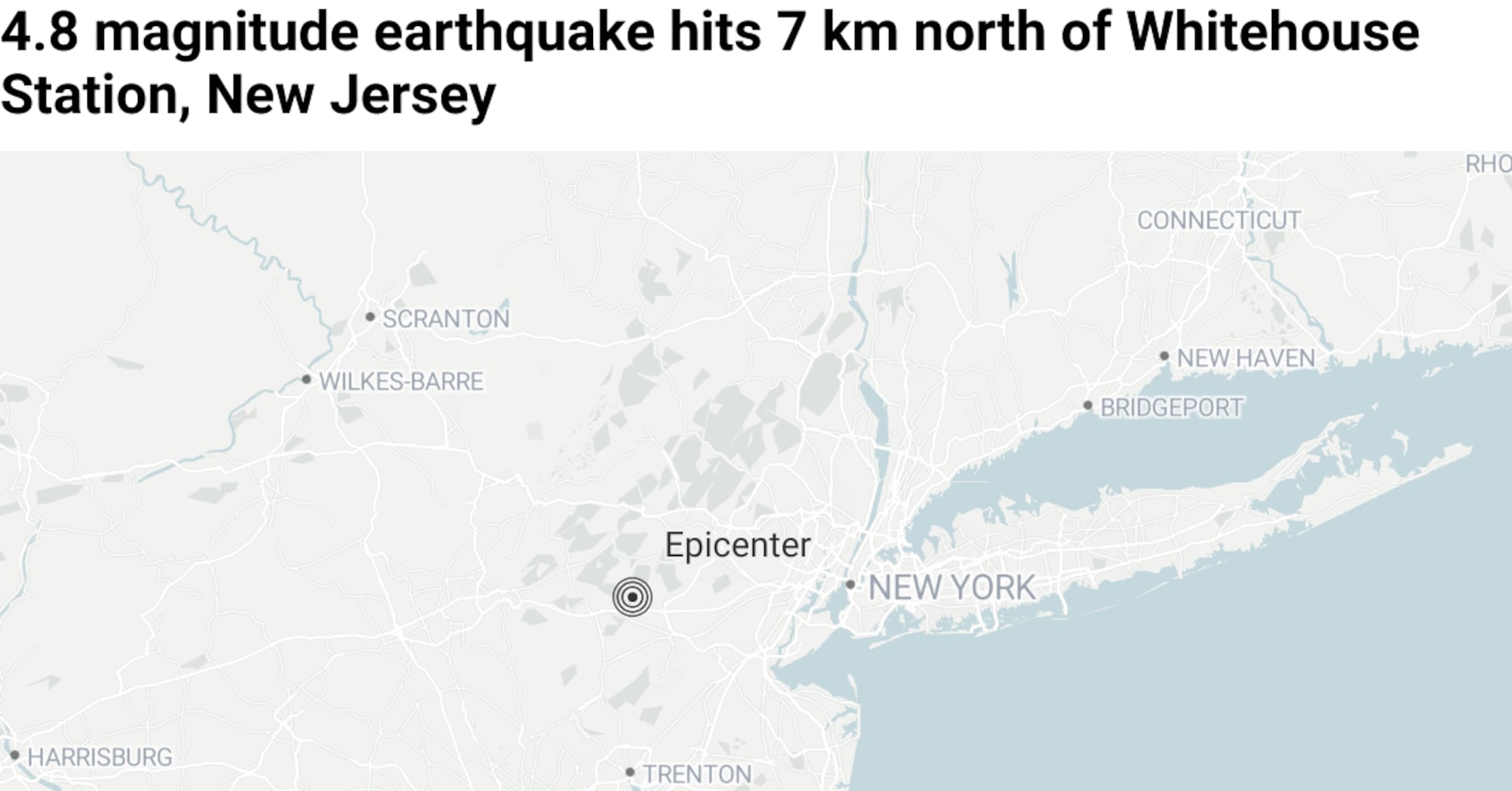
Magnitude 4.8 earthquake hits New York City region | Reuters
The epicenter of the quake was located in Whitehouse Station, N.J., approximately 40 miles west of New York City, and occurred around 10:23 a.m. ET.
The event surprised residents unaccustomed to such occurrences, but the relatively minor nature of the quake, lasting only several seconds, led to a swift return to normalcy once the shaking subsided.
New York City Mayor Eric Adams acknowledged the potential trauma of such events, stating, “Earthquakes don’t happen every day in New York. So this can be extremely traumatic.”
Although the quake was the largest in the region since 2011, no significant damage was reported.
However, the USGS recorded several aftershocks, with magnitudes up to 2.2, in the hours following the initial event.
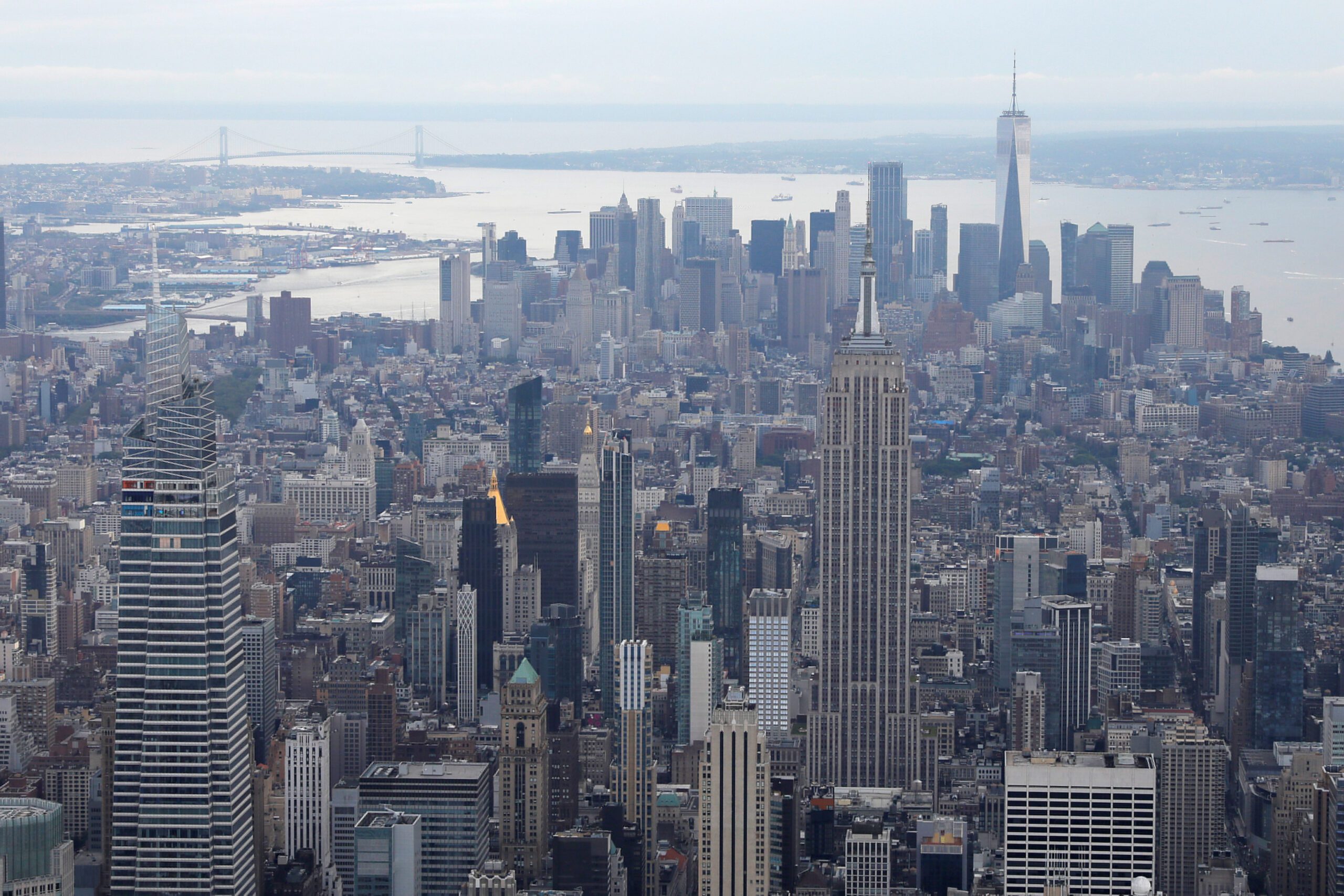
The skyline is seen in Manhattan, New York City, U.S.
Entirely unexpected
Seismologist Paul Earle explained that while earthquakes in the Northeast are uncommon, they are not entirely unexpected.
He noted that due to the harder rock and unique geological conditions of the East Coast, seismic waves can travel further, resulting in tremors felt across a wider area compared to similar-sized quakes on the West Coast.
Despite its relatively minor impact, the earthquake briefly disrupted transportation and infrastructure operations.
The Federal Aviation Administration temporarily halted departures at some airports, and Amtrak and NJ Transit trains experienced delays as tracks and bridges were inspected.
President Biden has been briefed on the earthquake and offered assistance to affected areas.
The last significant earthquake to affect the region was in 2011 in Virginia, with a magnitude-5.9 quake felt across multiple states.
As residents and officials assess the aftermath, attention is focused on potential gas leaks and building damage.
The Empire State Building, a New York City landmark, humorously reassured the public with a tweet: “I AM FINE.”
-
 News4 days ago
Nvidia supports Chinese AI amid U.S. concerns
-
News4 days ago
Yayoi Kusama, influential Japanese artist, dies at 97
-
News4 days ago
Warsh faces pressure on inflation’s status and solutions
-
News4 days ago
Himalayan flood risks prompt urgent warnings
-
Shows4 days ago
Exploring the complexities of early childhood education in Australia
-
News3 days ago
Kevin Warsh takes centre stage as markets await fresh rate clues
-
News16 hours ago
Flash flood causes chaos in Grand Canyon
-
News18 hours ago
U.S. forces strike Iranian launchers on Larak Island