News
“I did what I came to do”: Everything you need to know from Biden-Putin summit

It’s the talk the world was waiting for. U.S President Joe Biden and Russian President Vladimir Putin have completed the “first meeting of its kind” since 2018. Here’s the top 5 outcomes you need to know:
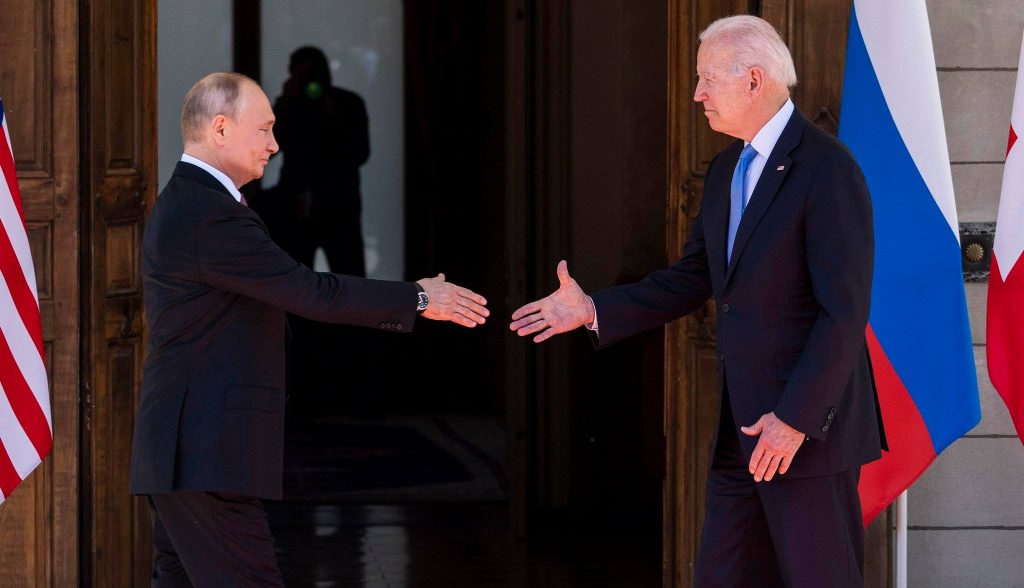
Formal proceedings kicked off the summit, with the President’s exchanging tight smiles and a firm handshake.
1. The US is not against Russia… but for the American people
The summit is being viewed as a milestone event for the two nations, with relations between Russia and the US at an all-time low.
Biden says his agenda is “not against Russia”, but the President is working to defend the American public and America’s democracy.
Biden says “it’s always better to meet face-to-face” and both leaders praised the talks, but it is seen as just a small step towards mending the fractured diplomatic relationship.
Bruce Wolpe, Ticker’s US political contributor and a visiting fellow at the U-S Studies Centre says the world seems “a little bit safer now”.
“If both men understand each other, the chance of making mistakes and things getting out of hand, because they don’t know what the other side is doing… has diminished,” Wolpe told Ticker NEWS.
2. The road to mending fractured diplomatic relations
The leaders began with discussions about nuclear arms control and agreed that they would both return ambassadors to each other’s capitals.
The Russian and American envoys were withdrawn in March following allegations that Russia meddled in the US election.
When the meeting wrapped up, both leaders praised the talks, but it is seen as just a small step towards mending the fractured diplomatic relationship.
Putin says Biden is “an experienced statesman” and believes the two leaders “spoke the same language”.
Biden says Russia does not want “another cold war”, and there is now a genuine prospect to improve relations.
3. Cyber attacks: What President Biden told Putin was ‘off-limits’
Putin says most hackers are based out of the United States, with Biden responding by saying that his country’s critical infrastructure, like water and energy, is “off-limits”.
Putin says his talks with President Biden were “quite constructive,” and that they reached an agreement on cyber security.
Lester Munson, a Senior Fellow at the National Security Institute told TickerNEWS LIVE that following recent ransomeware attacks, cyber security is one of America’s biggest threats.
However, it’s important to mention that cyber security isn’t the most critical threat and the senior fellow says Putin has another agenda.
In the past week, Putin has described Donald Trump as an extraordinary and talented individual.
Munson says Biden has done a ‘better job’ than Trump to “be on the global stage of diplomacy”.
4. The west doesn’t listen to Russia enough
Putin wanted to make it clear that Russia remains a world leader and is an important country with an economy that still matters to the United States and to the world, and that’s why President Biden arranged the meeting.
Emeritus Professor from La trobe university Joseph Camilleri who says the West doesn’t listen to Russia enough.
5. What does this mean for the rest of the world?
Firstly, Biden believes Russia is “being squeezed by china” and it is in Putin’s best interest to engage in a productive relationship with America.
When discussing the fate of Alexi Navalny, Putin says the Russian opposition leader “ignored the law” and denied accusations that he was poisoned by Russian officials.
Biden was also asked why he thought Russia would have any desire to cooperate with the US.
On this, Biden says Russia is in a “very difficult spot right now”, and the country is trying to stay relevant and remain a major power.
The US president was also pressed by reporters who asked why he is so confident that Putin’s behaviour will change.
Wolpe says the message Biden is sending is showcasing “what the United States is all about”
“Both countries need to regard themselves as being on an equal footing,”
PROFESSOR Camilleri.
-
 News3 days ago
Europeans oppose Russia’s G20 participation
-
News3 days ago
AI just escaped its own sandbox — Here’s what that means
-
Shows3 days ago
Parenting insights on motivation and fostering resilience
-
News3 days ago
Trump vows more strikes after Iran missile exchanges
-
News2 days ago
Putin ready to sell gas to Europe now
-
News3 days ago
Sydney house prices face largest decline in 40 years
-
Shows2 days ago
Celebrating Early Childhood Educators Day in Australia
-
News4 days ago
U.S. forces strike Iranian launchers on Larak Island