
News
Footballer escapes jail time after kicking his cat in sickening video


A prominent West Ham footballer, 27-year-old, Kurt Zouma has avoided jail time after booting a cat in a disgusting video while yelling “I’ll kill it”
The video was released exclusively by the Sun in February, with a warning that this story contains disturbing events of animal cruelty.
Zouma admitted to two charges under the Animal Welfare act.
The defender admitted to kicking his cat “like a football”.

His brother is the one who filmed the horrific act and has pleaded guilty to one charge under the same act.
Despite the public outcry and disgust, both men have escaped jail time.
Instead, they were both handed a 12 -month community order, with Zouma ordered to complete 180 hours of unpaid work and his brother 140 hours.

On top of this, they’re both barred from owning a cat for five years and fined approximately $15 thousand dollars each.
However, this is just a small portion for Zouma considering his $156, 000 a week wage.
Zouma continues to play for West Ham despite the horrific attack and is ironically an ambassador for a charity that protects abused big cats.

West Ham responds
Zouma was fined around $300,000 from his club which is equivalent to two weeks of wages. He also vehemently apologised for the attack and insisted his cats were both “perfectly fine and healthy”.
Zouma was later dropped by major sponsors Adidas and Vitality U.K. after the sickening video.
“West Ham United wishes to make clear that we condemn in the strongest terms any form of animal abuse or cruelty. This type of behaviour is unacceptable and is not in line with the values of the football club.
“Within 48 hours of the footage emerging, we fined Kurt the maximum available to the club.
“Every single penny of this money is now with a number of deserving charities, all dedicated to animal welfare.
“Kurt admitted at the earliest opportunity that what he did was wrong. He has apologised without reservation.
“We hope that now the court has reached its decision, everyone will allow Kurt the chance to learn from his mistake and move on.”
west ham statement

Two of Zouma’s cats have reportedly suffered soft tissue trauma and have been handed over to the RSPCA.
The RSPCA is now committed to finding them both loving and safe homes.
“We are pleased there has been swift justice in this awful case and our focus now is matching these beautiful cats to the loving homes they deserve.”
RSPCA chief inspectorate officer Dermot Murphy

News
LIVE: U.S. and Israel launch war on Iran
U.S. and Israel escalate conflict with Iran, heightening regional war fears for the second time in eight months.

U.S. and Israel escalate conflict with Iran, heightening regional war fears for the second time in eight months.
Made with Restream. Livestream on 30+ platforms at once via https://restream.io
U.S. and Israel strike Iran, escalating war fears and risking wider regional conflict for the second time in eight months

News
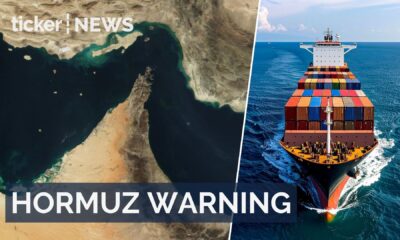
Trump claims Iran military neutralised as Strait Of Hormuz tensions surge
Trump claims Iran’s military largely neutralized; tensions rise with attacks threatening air travel and oil shipping.

Trump claims Iran’s military largely neutralized; tensions rise with attacks threatening air travel and oil shipping.
President Trump says Iran’s military capability has been largely neutralised, including its navy and air force, as the conflict in the Middle East intensifies. Iranian attacks have threatened commercial air travel and oil shipping through the Strait of Hormuz, raising fears of wider economic fallout.
The U.S. Embassy in Riyadh has faced two attacks, while Gulf states worked to intercept further Iranian strikes. Officials report six U.S. troops killed and more than 700 deaths inside Iran as the exchange of fire escalates.
With global markets watching closely, the region remains on edge as military and diplomatic tensions show no signs of easing.
Subscribe to never miss an episode of Ticker – https://www.youtube.com/@weareticker
#MiddleEastCrisis #Trump #Iran #Israel #StraitOfHormuz #BreakingNews #GlobalPolitics #TickerNews


-
 News4 days ago
Crude oil prices spike amid U.S.-Israel military action
-
News4 days ago
Iran warns ships to avoid Strait of Hormuz
-
News2 days ago
Airlines face disruptions that surpass previous Middle East conflicts
-
News4 days ago
U.S. and Israel attack Iran, escalating regional conflict
-
News4 days ago
Markets brace for turmoil after U.S. strikes Iran
-
Shows3 days ago
Understanding commercial lending’s unique challenges and strategies
-
Shows3 days ago
Cities reshaped by capital, policy, and design insights
-
Leaders2 days ago
Nina Hargrave’s journey to Serene Body Health