

Connect with us
https://tickernews.co/wp-content/uploads/2023/10/AmEx-Thought-Leaders.jpg

News

“Do something” on guns? It comes down to one political equation in Washington
Published

on

Over 100 people are killed in America by gunfire every day.  Half are suicides.  Half are violent acts with guns as the weapon of choice.  There are more guns in the country than America’s 330 million citizens and residents

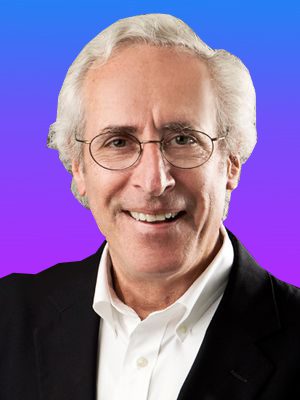
Bruce Wolpe on ticker NEWS

The United States has not followed Australia, New Zealand, Norway, Canada, the UK and other countries who have moved aggressively to curb gun ownership in the wake of gun massacres in their countries.

More weekends will be filled as this one has been with the President and Vice President visiting scenes of tragedy in Uvalde, Texas and Buffalo, New York.  

There is no end to the horror, the agony, the anger, the losses and the mourning.

Consider the words of two presidents.  Biden from the White House last week:
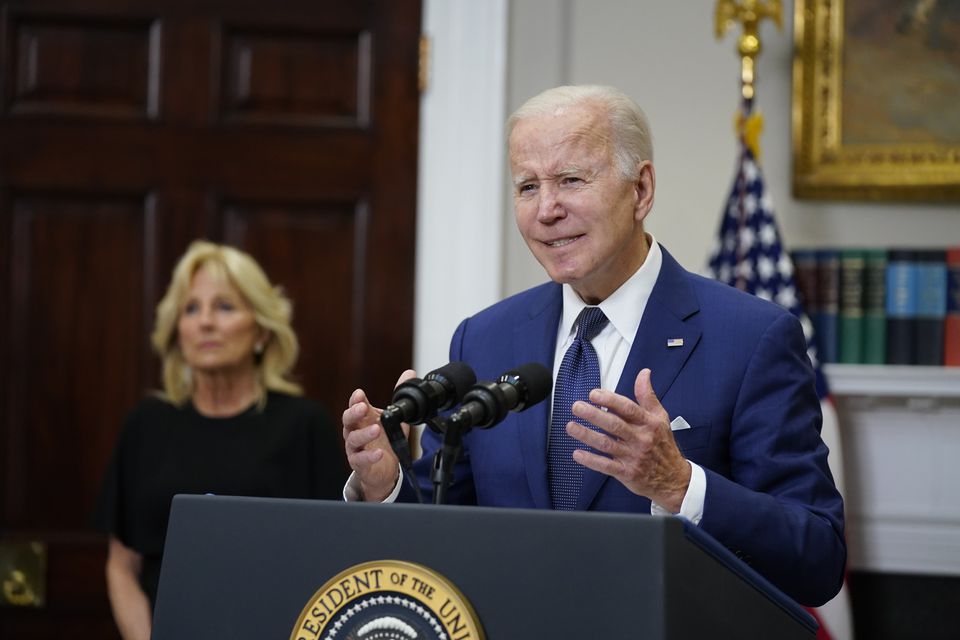
“As a nation, we have to ask: When in God’s name are we going to stand up to the gun lobby?  When in God’s name will we do what we all know in our gut needs to be done? …Why are we willing to live with this carnage?  Why do we keep letting this happen?  Where in God’s name is our backbone to have the courage to deal with it and stand up to the lobbies? 

It’s time to turn this pain into action. For every parent, for every citizen in this country, we have to make it clear to every elected official in this country: It’s time to act. It’s time — for those who obstruct or delay or block the commonsense gun laws, we need to let you know that we will not forget.”

And Trump who spoke at the National Rifle Association convention in Houston:

“Sadly, before the sun had even set on the horrible day of tragedy, we witnessed a now familiar parade of cynical politicians seeking to exploit the tears of sobbing families to increase their own power and take away our constitutional rights …In 2022, we are going to vote for tough on crime, pro-Second Amendment candidates in record numbers.

Get out and vote — make sure the voting is honest, by the way.  Together we’re going to take back the House, we’re going to take back the Senate. And in 2024, we are going to take back that great and beautiful White House that we love and cherish so much.” 
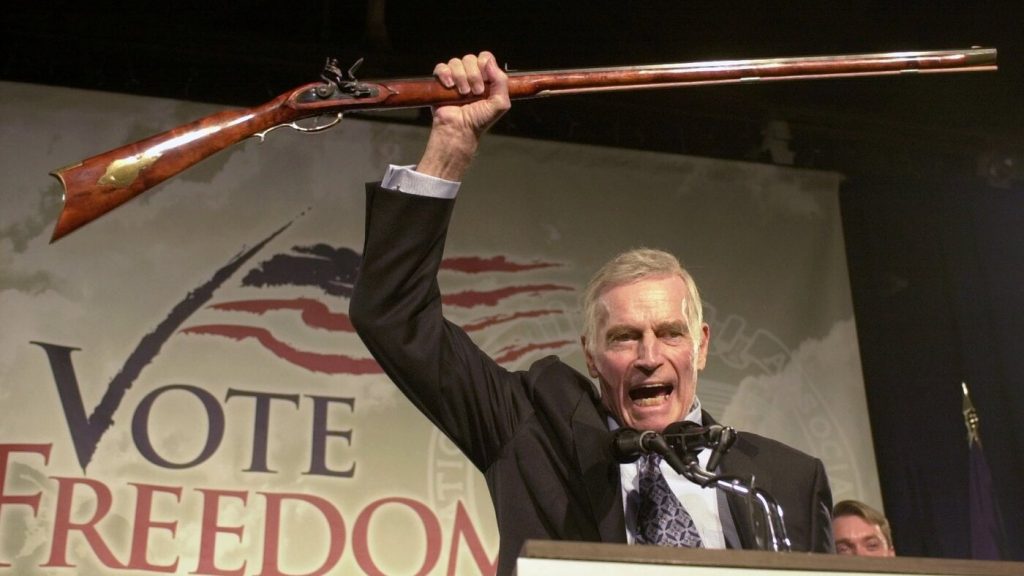
The late Charlton Heston, the former actor and head of the National Rifle Association, addresses gun owners during a “get-out-the-vote” rally in New Hampshire in October 2002.

These are impossible chasms to bridge. 

But some Senators are trying to get something accomplished.  The bills seen as most compelling at this moment, when openness to “do something” is more serious with these tragedies still so raw, are to improve the system of background checks on purchasers of guns, and to have “red flag” systems that can remove guns from the hands of those who are under mental stress. 

More attention is also being given to the argument to raise the age of purchasing a gun from 18 to 21.  Florida passed such a law after the Parkland school massacre in 2018.

All these measures are popular with the American people by margins of 70-90% support.

But the gun lobby is not going to give a pass on any legislation.

And it will take 60 votes in the Senate to pass a bill – and that means 10 of the 50 Republicans in the Senate will have to vote” yes” for gun legislation.  

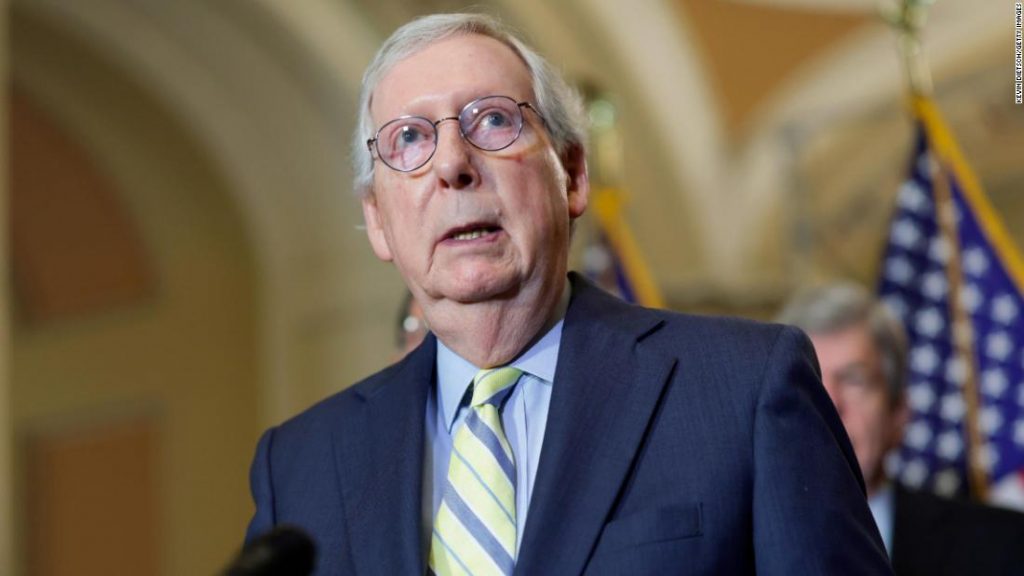
For decades, the Senate Republican leader, Mitch McConnell of Kentucky, has prevented that from happening.
But Senator Chris Murphy of Connecticut, the leading lawmaker on gun control in Congress, believes there is a chance for progress this time.  He said over the weekend:

“I am at the table in a more significant way right now with Republicans and Democrats than ever before—certainly many more Republicans are willing to talk right now than were willing to talk after Sandy Hook.” 

Everywhere President Biden and members of Congress go, the shouts from the crowds are: “Do something!” 

In Washington, this moral cause is governed by a raw political equation that has but one calculation: 

Will Senators Chris Murphy and Mitch McConnell agree on a gun control bill and urge Senators support it? Without that, all the words, all the tears, all the memorial services will have failed to get Congress to “do something”—and finally act.

Bruce Wolpe is a Ticker News US political contributor. He’s a Senior Fellow at the US Studies Centre and has worked with Democrats in Congress during President Barack Obama's first term, and on the staff of Prime Minister Julia Gillard. He has also served as the former PM's chief of staff.

Continue Reading

News

Seven things to know about Tasmania’s stadium-precinct and AFL push

Tasmania’s AFL bid hinges on the Macquarie Point stadium-precinct; insights from Professor Tim Harcourt on Footynomics.

Published

on

Tasmania’s AFL bid hinges on the Macquarie Point stadium-precinct; insights from Professor Tim Harcourt on Footynomics.


Seven things to know about the stadium-precinct and the Tassie Devils

Word by Tim Harcourt*

Tasmania’s been wanting a footy team in the national competition for decades.
Now they are pretty close, but they need the bill for the new stadium-precinct at Macquarie Point to pass the Legislative Council in order to cement their spot as the 19 th team in the Australian Football League (AFL). The bill passed the lower house by a whopping 25-9 majority and the Yes Stadium – Yes Team drew an amazing 15000 crowd from generations of Tasmanians all over the state compared to a paltry 1500 “No” crowd of a narrower demographic that turned up the week before.

I spoke to the Legislative Council stadium committee last week and to cut through all the noise and disinformation I came up with seven key things to consider with the stadium-precinct.


1. The stadium-precinct is a unique opportunity.

According to Brad Van Wely, stadium and sports innovation expert who appeared on my show Footynomics, Stadium Tasmania in Hobart with be the newest stadium in the southern hemisphere and an opportunity to implement all the amazing technology and innovation in smart stadiums that are happening around the world. Tasmania could be a leader in innovation not a laggard and develop a whole sports industry eco-system on the back of the success of the Devils, the JackJumpers, the Hobart Hurricanes and Cricket Tasmania.


2. It’s not just a stadium, it’s a stadium-precinct.

Stadium Tasmania won’t a cold concrete slab on the outskirts of the city. It will be right next to Hobart’s picturesque waterfront in close proximity to bars and restaurants, hotels and other attractions that can be explored easily. And the whole area can be developed as a precinct with cultural attractions, fan zones and the like to make the whole pre-game and post-game experience exciting and to engage fans and visitors all days of the week with a variety of activities.

For instance, why not have the AFL hall of fame in the precinct (for all of Australia not just Tasmania), a hotel to host the Draft or the Brownlow, and host some arts and cultural events in the precinct. The Tasmania Devils Arts Foundation can assist creative Tasmanians too – as arts and sport are not mutually exclusive – they can generate activity together.


3. The stadium-precinct is not just for footy.

Some have said all this is for 7 games a year. It’s not the case. It’s a multi-purpose stadium for a range of sports, footy, soccer, cricket, rugby union, rugby league and may more. It will be used for concerts and conventions, entertainment and with the precinct a whole range of arts and cultural amenities, fan zones etc. According to James Avery of Stadiums Tasmania, their modelling shows that the stadium-precinct will be able to host 334 events a year. This is a once in a century piece of infrastructure that Tasmanians can shape themselves for maximum benefit.

This is similar to international case studies like the soccer stadium in St Louis that hosted 200 events a year that had nothing to do with soccer, and the new Tottenham Hotspur ground that hosts 300 events a year including a National Football League game from the USA. The new rugby union stadiums in Christchurch and Dunedin host a range of other sports including soccer, cricket rugby league and concerts by Elton John. Pink and ACDC.

Similarly, with the Adelaide Oval redevelopment, the Oval now hosts a range of events, many non-sporting, and the whole CBD precinct has been revitalised. South Australian Premier Peter Malinauskas told us on Footynomics, the State Government originally faced great opposition spending $500 million on the Adelaide Oval redevelopment but now you couldn’t find a soul who opposed it, especially at Gather Round or the Adelaide Test match.


4. But the stadium-precinct does unlock the team and all its benefits.

Most importantly building the stadium-precinct unlocks the team and team infrastructure. As the AFL Tasmanian Taskforce says the stadium-precinct, the high performance training centre, and the upgrades around the state enables the Devils to enter the AFL on a sustainable footing to hit the ground running.

This brings economic and social benefits to the Tasmanian community or the ‘powerful enduring stimulus’ as the Devils CEO Brendon Gale put it. This included a boost in construction and other jobs – 6270 new jobs and with a potential boost to tourism of around 123,500 international and interstate visitors, plus intra state visitors.

Leading Burnie business woman Kelly Elphinstone pointed out the potential boost in the Tasmania brand in business and tourism, in education with TALS, UTAS and TAFE pathways for careers in sport and event management and the opportunity for a football club foundation to assist disadvantaged Tasmanians.

The boost in Tassie pride as the community has an emotional connection to their team was mentioned by basketball CEO Christine Finnegan about ‘the JackJumper effect’ with both economic and psychological benefits of having a team to rally around. The impact of a footy team would be even bigger than basketball Finnegan said as Tassie is footy heartland. There’s no need for the AFL to send out missionaries like they send out in western Sydney.

This community connection or emotional engagement was highlighted by Grant O’Brien in Footynomics. He related growing up in Penguin and the role the footy club played in the town and how the connection with the Devils would boost these ties all over the state. Economists call this ‘social capital’, and Grant’s description of his upbringing in Penguin and his motivation to steer a genuine Tassie team into the national competition was the perfect example of social capital at work and the economic benefit it brings to the community.

A genuine Tassie team has more economic benefit than a Fly In Flight Out (FIFO) team, as Hawthorn and North Melbourne have being doing in Launceston and Hobart respectively. It was useful as a stop gap, and brought some economic benefit. The Tasmanian AFL Taskforce cited research showing $28 million being injected into the Tasmanian economy due to Hawthorn playing in Launceston and $40 million due to North Melbourne playing in Hobart decade ago.

With the Devils this stimulus will be turbo charged. Given the scale of the Devils, there will be more home games, the players, staff and their families be based in Tasmania and contributing to the local economy, and they’ll also be AFLW, VFL and VFL teams as well.

The advantage of having a home-grown team, embedded in the state and the state owned infrastructure, rather than a FIFO or re-located team avoids some of the issues with sports economics in the USA when teams move. This is very different to Tasmania, where the Tassie Devils are here for good and the new stadium-precinct will be here to benefit the Tasmania whole community in the arts and entertainment and business and community events as well as sports.

The Tassie Devils will be more like the Green Bay Packers who can never leave Green Bay due to the ownership and governance requirements. And that hasn’t stopped Green Bay being one of the most famous, successful and best supported US football teams in the National Football League (NFL). Green Bay is a small town and much colder and less picturesque than Hobart (and not a state capital city either).


5. Investment in infrastructure is what governments do

Some have been worried about governments taking on the investment and not getting exactly the same amount in their coffers. This is confusing economics with public accounts. Only governments can take on big infrastructure projects like a bridge, or an airport or a stadium-precinct in the first instance (individuals can’t easily) but the benefits come in increased welfare in future jobs for workers and incomes for small business who pay taxes and regenerate the economy.

For instance when a government builds an airport, the passengers, the airlines and the tourism operators benefit and regenerate income in the economy, that improves the welfare of the community (in this case Tasmanians) over future generations. The same goes for a bridge or a stadium-precinct. The government is not like a household, it can take on big projects where required for economic and social benefit.


6. Tasmania can’t afford not to do it.

Many say the state can’t afford it because of the state of the Tasmanian budget. But the alternative is austerity, no growth, no population growth and with nothing to enable the economy to generate the jobs and income to fund education, health and essential services.

There’s a lot of talk about the cost of the stadium-precinct, but what about the cost of not doing it. Imagine the shock to confidence, and the signal to investors looking at Tasmania, if the team didn’t go ahead. It would be such a lost opportunity. Tassie with an ageing population, low literacy rate can’t end up an island state with everyone on NDIS or in nursing homes, it need jobs and growth and a reason for young people to stay or come back to. We have already seen that with the calibre of Tasmanians returning to work for the Devils as well as the VFL draftees.

If the stadium precinct bill was blocked, there would be the psychological shock of losing the team and then the demographic outcomes would follow – lower participation in sport, poorer health outcomes, another outflow of talent to the mainland, and ultimately worse budget outcomes.

And in undertaking this new project, remember Tasmania is not on its own. Tasmania is part of the federation and a foundation footy state. Therefore it will and it should get support from the Commonwealth and the AFL. And it has $240 million from the Commonwealth and $360 million from the Australian Football League (AFL) to invest in grass roots infrastructure not just in Hobart and Launceston but all around the state. And given the spending of $3.4 billion to Brisbane for the Olympics and a reported $1 billion to Adelaide for the climate change conference COP31 for a week in 2026, I’d say the multipurpose stadium-precinct in Hobart that will be around for a century for future generations is pretty good value for money for the Commonwealth.

And Tasmania is not alone as there are examples from other states, like the Adelaide Oval and Optus Stadium in Perth where state governments have built whole industrial strategies around sports and sport infrastructure.


7. The bottom line – maximise the benefits by following some basic principles.

In conclusion, this is a once in a century opportunity and I am excited for Tasmania as they can now maximise the benefits of the new club, the new stadium-precinct, the high performance centre and the upgrades to infrastructure around the whole state from Burnie to Bruny Island.

To maximise the benefits of this exciting new project, Tasmania can:

  • Use the stadium for multiple sports, entertainment, cultural and business and education events like concerts, conferences and conventions
  • See the stadium as a stadium-precinct to add a Hall of Fame, Arts centre, Hotel, fan zones and other facilities
  • Streamline the links to the rest of city to boost tourism and hospitality like restaurants, street vendors live music and the other delights of Hobart’s picturesque waterfront setting
  • Use the benefits of the AFL package to upgrade infrastructure and community football as well as fan engagement around the state.

This is exciting for Tasmania, and for the rest of Australia, whom I am sure will get behind Tassie and the Devils as they finally take their rightful place in the national competition of the game that we Australians invented ourselves, or as Geoffrey Blainey called it, ‘A game of our own.’


*Professor Tim Harcourt is Industry Professor and Chief Economist of the Institute of Public Policy and Governance (IPPG) and Centre for Sport, Business and Society (CSBS) at University of Technology Sydney and host of Footynomics: The Business of Sport on Ticker:
https://tickernews.co/a-powerful-enduring-stimulus-the-economics-of-the-tasmania-devils-football-club/
Download the Ticker app

Continue Reading

News

Dublin council’s push to rename Herzog Park sparks political debate

Dublin’s removal of Chaim Herzog’s name from a park sparks debate on Ireland’s political landscape and historical legacy.

Published

on

Dublin’s removal of Chaim Herzog’s name from a park sparks debate on Ireland’s political landscape and historical legacy.


Dublin City Council’s controversial move to strip Chaim Herzog’s name from a local park has ignited a national discussion about Ireland’s shifting political landscape. The decision has raised questions about historical legacy, community sentiment, and foreign policy motivations.

Professor Tim Harcourt from UTS joins us to unpack why the council made this call, how the Herzog family’s deep ties to Ireland play into the debate, and what this reveals about rising political movements shaping the country.

We also explore how global geopolitics, Eurovision tensions, and international sporting events such as the FIFA World Cup influence public perception and diplomatic relations in Europe.

Subscribe to never miss an episode of Ticker – https://www.youtube.com/@weareticker

#IrelandPolitics #DublinCouncil #HerzogPark #MiddleEastRelations #IsraelIreland #GlobalPolitics #TickerNews #WorldAffairs


Download the Ticker app

Continue Reading

News

Netanyahu requests presidential pardon as corruption trial intensifies

Netanyahu seeks pardon amid corruption trial, arguing it undermines governance and national unity, with Trump offering support.

Published

on

Netanyahu seeks pardon amid corruption trial, arguing it undermines governance and national unity, with Trump offering support.


Israeli Prime Minister Benjamin Netanyahu has formally asked President Isaac Herzog for a full pardon as his long-running corruption trial continues to dominate the political landscape. Netanyahu argues the legal battle is fracturing national unity and undermining his ability to govern effectively during a period of heightened tensions.

The request comes shortly after former U.S. President Donald Trump sent a letter supporting clemency, adding an international dimension to the already polarising case. Netanyahu maintains that ending the trial is essential to protecting Israel’s strategic interests and strengthening ties with its closest allies.

The Justice Ministry’s Pardons Department will now assess the request before President Herzog makes a final ruling. Meanwhile, opposition leaders insist that no pardon should be granted unless Netanyahu admits wrongdoing and shows remorse.

Subscribe to never miss an episode of Ticker – https://www.youtube.com/@weareticker

#Netanyahu
#IsraelPolitics
#MiddleEastNews
#GlobalAffairs
#CorruptionTrial
#BreakingNews
#USIsraelRelations
#TickerNews


Download the Ticker app

Continue Reading

Trending Now