

News
Biden En Marche with Macron | ticker VIEWS

The first reaction out of the White House was cheeky
Ron Klain, Chief of Staff to the President, tweeted right after the exit polls in France were released:
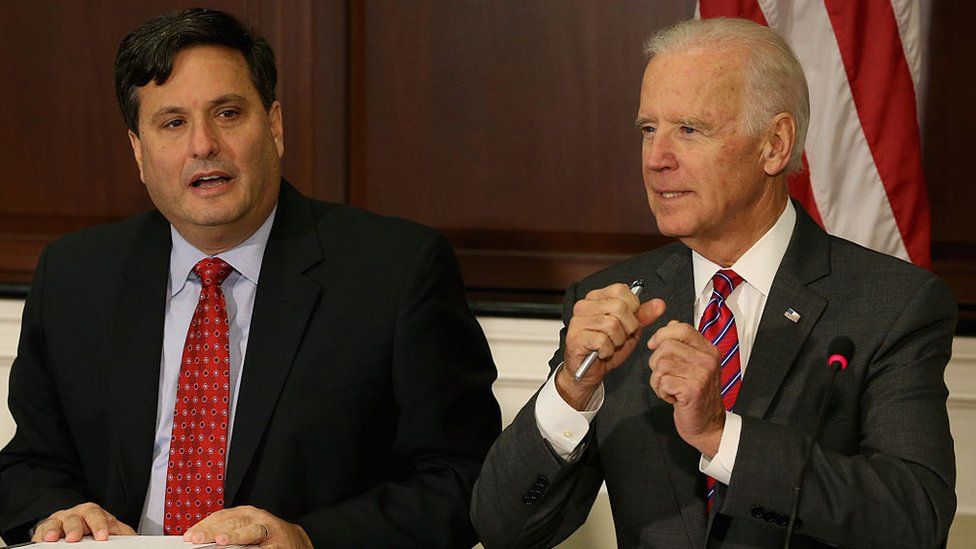
“President Macron appears to have secured a double-digit victory over Le Pen, at a time when his approval rating is 36%. Hmmm….”
Klain linked to a global survey of leader approval ratings. Macron, at 36% approval, is lower than Biden, at 40%, and still won – with 58%+ of the vote – a result would be considered a blowout landslide victory in France on Sunday over Marine Le Pen. Obama crushed John McCain in 2008 with 54% of the vote.
Who says Biden can’t win in 2024?

Macron was beset with violent Yellow Vest riots in Paris and elsewhere fed by working class anger and frustration; by an elitist attitude that talked down to so many French men and women across society; by heavy handed controls during the pandemic involving closures and substantial differential treatments between the vaccinated and unvaccinated; by an attitude of technocratic superiority; by reforms to retirement and other social entitlements that are deeply embedded in French society.

Macron prevailed in such an environment made more toxic, of course, by Le Pen, whose ugly nativism and anti-immigrant fear-mongering, and her alliance with Russia’s Putin, made her the great divider of France and France’s partnership with the US and NATO.
The first round of presidential voting, with Le Pen close to Macron, provoked a searing assessment by voters on all sides.
Her supporters were amped up, eager get her in power and overturn French society. Macron’s supporters, and those who voted for also-ran candidate on the left, Melenchon, were not confident of the outcome because their enthusiasm for Macron was muted. Would they vote? Le Pen hit your gut; Macron was saying, vote with your head.
Was France to be a replay of 2016: the UK vote for Brexit and a re-do of Trump’s taking the presidency?

Those shock results that upended Europe, tore apart US society, and savaged Americas’ engagement with its allies.
Macron beat Le Pen. It is her third successive defeat. But is her movement beaten? EJ Dionne in the Washington Post cautioned,
“Marine Le Pen’s projected vote is more than double the 17.8 percent that her father, Jean-Marie Le Pen, the founder of the predecessor party to his daughter’s, won in the 2002 runoff against then-president Jacques Chirac.”
This same issue is haunting American politics.
What does it take – what will it take – to defeat Trump and Trumpism?

Clearly, successive victories over Trumpism is the key, because over time, the defeated party, to win future elections, will need to absorb the lessons and re-engineer its political DNA. This is what the Democrats did after getting beaten three successive times by Ronald Reagan and George HW Bush in the 1980s, because the party was seen as so far left. The successful Democratic presidents in the decades since were Bill Clinton, Barack Obama and Joe Biden. Centrists all. As is Macron.
For Biden and Macron, to say this is a daunting task is a huge understatement.
Each needs to govern effectively to deliver economic security and social and racial equity. Abroad, democracy needs to be, and be seen as, prevailing over authoritarianism.

Current polls have Biden beating Trump 47%-41%. Media is reporting that Biden has told Obama that he is running in 2024 and is the only one who can beat Trump. On the record, Biden told reporters in March:
“In the next election, I’d be very fortunate if I had that same man running against me.”
There will be avalanches on the road to neuter Trumpism in American politics. The Republicans will take the House of Representatives in November, and they are within reach of controlling the Senate. 2024 will decide if Trumpism will truly emerge as a dominant force in American politics.
Biden is “en marche” with Macron. Sunday night, there was Champagne for the Biden team. And probably some Grey Goose too.
-
 News3 days ago
AI Review Committee provides expert advice on governance
-
News3 days ago
Apple launches products on October 13
-
News3 days ago
Trump: US won’t attack Iran before midterms
-
Shows4 days ago
Redefining success: beyond money and status
-
Leaders3 days ago
AI-driven cyber attacks surge amid authentication challenges
-
Shows4 days ago
Housing tax changes spark fresh political showdown
-
Leaders4 days ago
Defence security firm expands into Melbourne as Victoria’s industry surges
-
News4 days ago
25 killed, Zelenskiy condemns Russian missile strikes