

Money
Let’s get back to basics about the stock market

If you watch the news – and who doesn’t here at Ticker News – you’ll notice there is a lot of discussion about the stock market.
Whether a company price has moved up or down, a new feature has been announced, or if sales of a particular product have exceeded expectations, can have an impact.
So, what does it all mean? We’re here to help you get your head around it all.
WHAT IS THE STOCK MARKET?
The stock market is a place for people (typically known as investors) to buy and sell individual company shares, funds and other financial products.
Changes in share prices allow investors to buy or sell financial products they are interested in owning.
They allow for investors to trade owning part of a public company for capital.
Stock markets are regulated, and have to follow a defined set of rules and procedures, that are set out by regulators in each jurisdiction such as the Securities and Exchange Commission (SEC) in the United States, the Financial Conduct Authority (FCA) in the United Kingdom, and the Securities and Futures Commission (SFC) in Hong Kong, to name a few.

SO, YOU WANT TO BECOME AN INVESTOR?
Now that you have a grasp of what the stock market is, and how it broadly works, you’ve decided to take the next step and buy some shares (also known as equity) in a company – congratulations.
That choice is up to you, as there are thousands of companies available on each exchange to buy into.
But before you can buy a company that is listed on a stock exchange, you have to choose your broker – or the third-party that will allow you to buy and sell shares on the stock market. The broker is the one who will be able to grant you access to all the available companies.
And with thousands of brokers out there, how do you know who to choose?
Several factors come into play: access to markets right across the world, reputation (so you know they will be around during the good and bad times of the market), fees (as you don’t want to be paying too much for the service to buy and sell your stocks), speed (to enact a purchase and sell) and technological advancements.
And if you’re a person who likes to read reviews or follow guides from others about who to choose, winning the Best Online Broker Award five years in a row is a strong endorsement for Interactive Brokers, beating the likes of Robinhood, Vanguard and Charles Schwab.
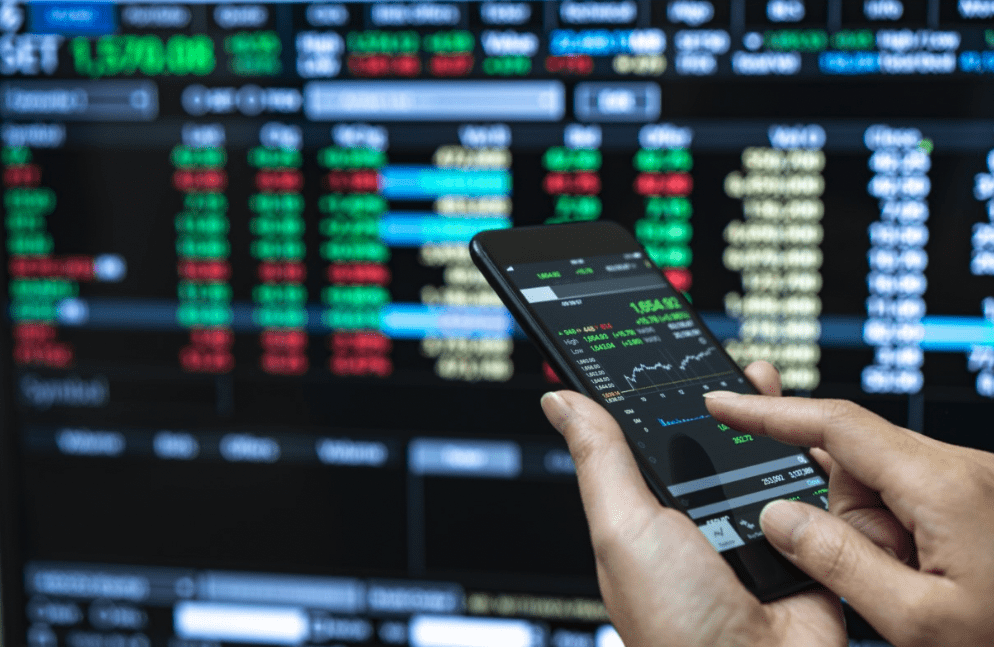
CAN IT BE RISKY?
Just like any form of investment, there is a chance that your capital can increase or decrease, and investors even need to take into consideration the possibility of losing all their invested money.
Investments in some companies are said to be riskier than in others.
This could have to do with how established a company is, how it is managed, how well it can raise money to expand, how successful their products are to the public or how nimble it is.
What’s the best thing you can do before outlaying any capital – research, research, research. And with a wealth of information at your fingertips, you can feel secure in the knowledge of the company – or companies – you are investing in.
Do your own research.

-
 Tech3 days ago
Nvidia buys Hugging Face for $12.93 billion
-
News4 days ago
Chalmers defends tax policies amid housing decline
-
News4 days ago
U.S. and Iran escalate tensions with major strikes
-
News4 days ago
Zelenskyy warns airlines against using Russian airspace
-
News4 days ago
High migration, rising costs: Why Australians feel left behind
-
News4 days ago
Rate hike could push Australian households towards recession
-
Shows4 days ago
From chiropractor to world poker champion: Joe Hachem’s unlikely path to success
-
Ticker Views4 days ago
Qantas is going premium — but what does it mean for Australian travellers?