China’s major cities are in lockdown in a bid to curb a growing cluster of COVID-19 infections
It’s sparking a fresh outcry over the strict lockdown measures, which are keeping millions confined to their homes.
Most recently in Shanghai, an elderly man was taken in a body bag to the morgue, while alive — depicting something out of a horror movie.
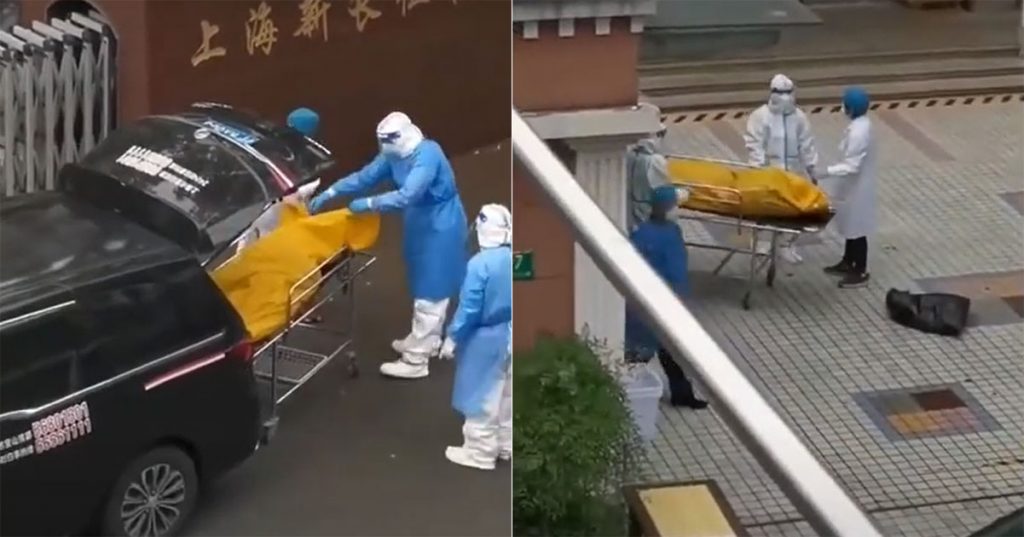
A man is taken to the morgue alive.
The footage, which shows workers dressed in full protective gear unzip a body bag to find a nursing home resident still alive, has gone viral on Chinese social media.
It has sparked outrage amongst Shanghai residents who are at breaking point after a month long lockdown.
Has China’s COVID policy gone too far?
Yaqiu Wang from Human Rights Watch spoke exclusively to tickerNEWS.
She says the Chinese government doesn’t care about human life, concerned China’s COVID zero policy has gone too far.
“The whole zero COVID lockdown was carried out in the name of protecting people’s life and health.” Wang says.
“But then they would actually stuff a live person into a bag and send the person to the morgue, it really says the government doesn’t care.”
Yaqiu wang, human rights watch
In recent weeks, the Shanghai lockdown has created headlines for a number of oppressive policies.
While COVID deaths in the country have been few, Wang says many people have died because they were restricted to their apartments, and refused access to medical treatment.
“There were terrible abuses related to the lockdown measures.” She says.
Last week, reports of people being fenced into residential buildings surfaced, and with full reliance on the state for resources, many people are suffering from a lack of food and medical supplies.
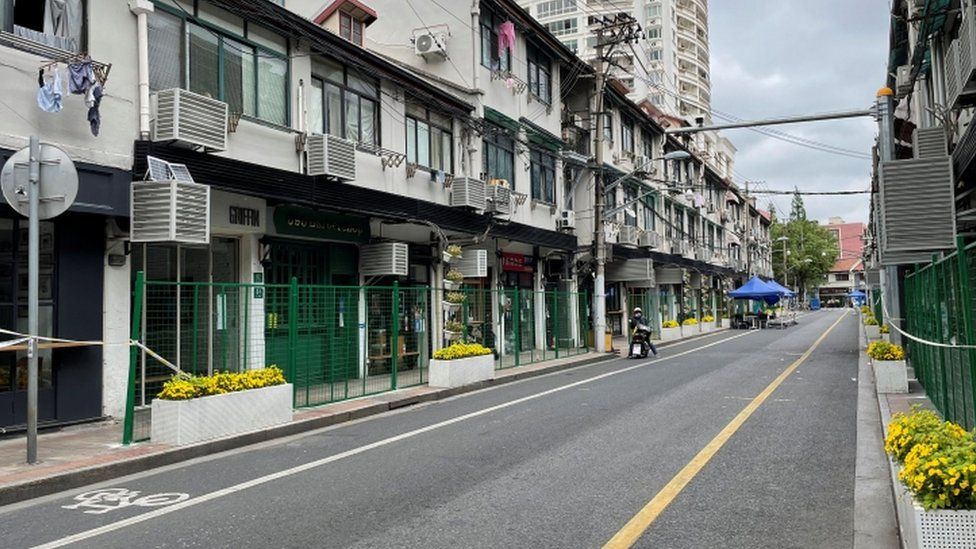
Fenced off houses in Shanghai, PHOTO: Reuters
Why should we be concerned about the human rights of Chinese citizens?
Wang says its important for international media to hold the Chinese government accountable for human rights abuses.
China is one of the most heavily censored nations in the world, and internet content within the nation is highly regulated by the government.
It also has one of the lowest press freedom ratings, ranking 175 out of 180 nations.
But despite this, Wang says people are managing to voice their anger over the terrible conditions they are being forced to live in.
“They are, you know, knocking things and trying to make noise about this.” She says
“But that’s the extent that they can hold the government accountable just by you know, saying something on the internet. Beyond that there’s not many mechanisms.”
Yaqiu wang, human rights watch
This is why Wang believes its so important for external media to cover the alleged abuses.
“You’re showing to the world that this is very abusive, and that people are suffering terribly.”
“I hope the Chinese government get the message that you know, people are angry, people are suffering terribly.” She says.
Is a COVID Zero policy unachievable?
China’s lockdown has become a difficult ideological issue for the government to back down from.
When directly compared with countries like the US, which has recorded nearly a million COVID deaths, China has escaped with relatively few.
Because of this, the government has been able to champion its zero COVID policy.
“The past two years the government has been saying, look, you know, our COVID policy really worked because we protected people’s lives. Look at America. You know, it’s very chaotic, and a million people died from COVID.” Wang says
“It became an issue that we’re better than the US model. So when you become political, it’s hard for the government to walk back from that kind of ideology.”
Yaqiu wang, human rights watch
According to Wang, It’s harder for Beijing to open up because the Chinese population is not as widely vaccinated as other places in the world, and because China’s main vaccine is not as effective as Western brands.
So even with the less deadly Omicron variant sweeping the globe, Wang believes it is unlikely the Chinese government will abandon their COIVD zero policy.
“The government feel, you know, this has been successful, and we want to continue this policy.” She says.
In Short:
– The U.S. Justice Department released documents showing Ghislaine Maxwell’s emails linking Prince Andrew to Jeffrey Epstein.
– Andrew denies involvement with Epstein, settling a lawsuit without admitting guilt amidst rising scrutiny.
Nearly 30,000 pages of Jeffrey Epstein-related documents were released by the U.S. Justice Department, including emails from 2001 between Ghislaine Maxwell and an individual signing as “A” from Balmoral. One email, signed “The Invisible Man,” asked Maxwell for “new inappropriate friends,” sparking renewed scrutiny of Prince Andrew’s connections.
Subsequent evidence suggests the sender may have been Andrew Mountbatten-Windsor, referencing personal details consistent with his life, including the death of his longtime valet and leaving the Royal Navy. A 2002 email further described “Andrew” as a “very English-sounding gentleman” coordinating a trip to Peru with requests for specific companions.
The documents reveal that U.S. prosecutors sought to interview Mountbatten-Windsor over two criminal investigations, citing evidence he engaged in sexual conduct involving one of Epstein’s victims. Despite mounting pressure and losing his royal titles, he has denied wrongdoing, settling a civil lawsuit without admitting guilt.
Pope Leo XIV addresses Gaza crisis during Christmas Mass
Pope Leo XIV highlights Gaza humanitarian crisis during first Christmas Mass, urging dialogue and addressing severe conditions for displaced Palestinians
Pope Leo XIV highlights Gaza humanitarian crisis during the first Christmas Mass, urging dialogue and addressing severe conditions for displaced Palestinians
In Short:
– Pope Leo XIV urged awareness of the Gaza crisis and the hardships faced by Palestinians during his Christmas Mass.
– He expressed concern for global homelessness and called for dialogue as essential for achieving peace.
Pope Leo XIV used his first Christmas Mass at St. Peter’s Basilica to deliver a powerful and deeply human message, placing the humanitarian crisis in Gaza at the centre of his inaugural Christmas address. Drawing on the story of Jesus’ birth, the pontiff made a stark comparison to the lives of displaced Palestinians, asking how the world could ignore families living in tents, exposed to weeks of rain, wind and cold. His remarks set an early tone for his papacy — one grounded in compassion, moral urgency and advocacy for those caught in conflict.
Massive shortfall
The Pope’s comments come as conditions in Gaza continue to deteriorate sharply. An estimated 1.3 million Palestinians are in urgent need of shelter this winter, with recent storms destroying approximately 110,000 tents. Humanitarian organisations report deaths due to exposure among vulnerable groups, including children and the elderly. The Norwegian Refugee Council says just 15,600 tents have been delivered so far, leaving a massive shortfall, while restrictions on the entry of shelter materials have compounded the crisis and intensified suffering across the region.
Beyond Gaza, Leo widened his message to condemn the broader toll of war, speaking of the “fragile flesh of defenceless populations” harmed by global conflicts. He criticised those who send young soldiers into battle and stressed that peace can only be achieved through dialogue, not entrenched monologues. “There will be peace when our monologues are interrupted,” he said, urging leaders to recognise the humanity of the other. His upcoming Urbi et Orbi blessing is expected to address multiple global crises, reinforcing his diplomatic approach and his call for peace, solidarity and human dignity.
Newly released court documents have revealed chilling details about the Bondi terror attack, marking one of Australia’s deadliest attacks in decades. Father-and-son duo Sajid and Naveed Akram allegedly spent months meticulously planning the assault, targeting the “Chanukah by the Sea” festival on Sydney’s Bondi Beach. Police say the pair rehearsed tactics, filmed extremist propaganda, and prepared multiple improvised explosive devices long before the attack that killed 15 people and injured dozens more.
Investigators allege the attack began with the men throwing four improvised bombs into a crowded festival of over 1,000 attendees. The devices, including pipe bombs and a “tennis ball bomb” packed with shrapnel, failed to detonate, but authorities have described them as “viable” IEDs. Moments later, the Akrams opened fire from a footbridge overlooking the festival, creating a scene of chaos and tragedy. Among the victims were a 10-year-old girl, a Holocaust survivor, and worshippers who attempted to confront the gunmen.
Court documents also reveal months of preparation, including firearms training in rural New South Wales. The pair was captured on video handling long-barrelled shotguns, moving tactically, and simulating an assault scenario. Additional footage shows the men seated in front of an Islamic State flag, guns and ammunition visible, as Naveed recites passages from the Quran and then outlines the ideological motivations behind the planned Bondi attack. Authorities say these materials demonstrate a pattern of premeditation and adherence to extremist ideology.
Overseas Islamist networks
Investigators also point to digital evidence recovered from Naveed’s phone, which includes a manifesto and detailed plans for the attack. Police allege the pair’s earlier month-long trip to the southern Philippines may have included contacts with overseas Islamist networks. Intelligence agencies previously reviewed Naveed for potential radicalisation in 2019, but concluded he did not pose a threat. Sajid Akram, meanwhile, legally owned six rifles and shotguns that were later used in the attack.
The human toll of the attack has had lasting impacts on the community. Survivors and witnesses recall the terror of that day as families gathered in celebration. Lawmakers have responded with urgency, including NSW Premier Chris Minns fast-tracked reforms to tighten firearm laws, ban public displays of terrorist symbols, and expand police powers. At a national level, Prime Minister Anthony Albanese has secured agreement from state and territory leaders to review and strengthen post-Port Arthur gun laws and introduce measures targeting extremist propaganda and hate speech.
The Bondi terror attack stands as a stark reminder of the devastating consequences of extremist planning and the importance of vigilant intelligence and community safety measures. While court proceedings continue, the public response underscores the shared grief and determination to prevent such tragedies in the future.