
News
Russia has cancelled itself. But the world should beware of poking the Russian bear
There’s a long time saying in foreign relations – never poke the Russian bear. Putin is a bully, but he’s not crazy. And his memory runs deeper than the consumer based societies in the West.
Once upon a time, nationhood had meaning. To belong to a country or a state. Globalisation helped change that, and the 747 allowed us to become citizens of the world.
And then there’s Russia. A country still obsessed with its past, and a nation which never fully adapted to the fundamental foundations of democracy – freedom.
But we in the liberal democracies and allies of the United States work to a different drum to the Russians. Our politics is fast, our leaders can live or die in an instant
The trouble with the West
Our political terms are short, and our memories are even shorter. You have to dig deep to remember that controversy involving Donald Trump and Ukraine’s President Zelensky didn’t you?
Consumerism was invented to keep people going to work. Work helped to give people something to do, in the belief we can own things and create better lives. That system plays to our deepest needs as humans.
The differences between the societies in the UK, Canada, NZ, Australia and the US shrink year on year. Local media struggles against global tech companies. Everything is imported, because it’s cheaper and better designed.
When did you last seek out a locally built car?
We have a relationship with our governments: keep our house prices climbing, our kids in school, our roads free and enough money to go to the pub, and we’ll let you keep your job.
But in Russia, their society has gone the opposite direction. Russia has renewed its aviation aircraft manufacturing sector. It’s space capabilities are state-of-the-art. It has one of the largest militaries in the world.
In Russia, to be, is to be Russian.
The heart of the problem in the Ukrainian crisis is the strength of the interstate system.
America has a habit of finishing a game of chess as the victor and walking away to start a new game. Never looking back to check what happened to its former opponent.
Once the Cold War was over, America moved on to other projects.
But Russian’s never forget.
How did Russia get here? My personal window into Putin’s media | TICKER VIEWS
Putin and the rat
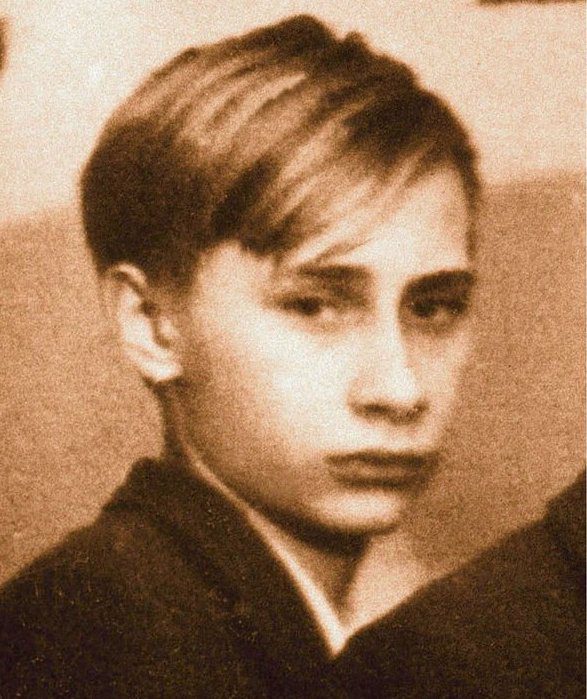
Vladimir Putin used to catch mice as a child in his home. One day he cornered a mouse. It’s a sinister story often called Putin and the Rat.
His mother, who had lost a child to diphtheria and nearly starved to death during World War 2, swept streets, cleaned lab equipment, and did other odd jobs for low pay.
Putin and his parents had no hot water, and their toilet sat next to a dilapidated stairwell. It’s here where Putin learned perhaps his most important life lesson.
He said: “There were hordes of rats in the front entryway. My friends and I used to chase them around with sticks.”
“It had nowhere to run. Suddenly it lashed around and threw itself at me. I was surprised and frightened. Now the rat was chasing me.”
Putin escaped, but the memory sits there with him. It not doubt helped him to climb the ranks to become Russia’s leader.
Russia has been cancelled
Now, the world has cancelled Russia. Every day more sanctions, flight bans and financial decisions are being made. Even Switzerland is considering sanctions. Even Germany has increased its military spending in response. Even sporting codes, usually reluctant to get involved in politics, are picking sides.
Right now, Putin’s Russia is backed into a corner like never before. Sure, it’s a corner of his own making, but a rat doesn’t know that. Nor does it care. A corner is a corner. And when you’re cornered you’re prepared to do whatever it takes to get out.
Putin is said to be held up in a secret location in the Ural Mountains, a handy place to be when you’re using the “N” word around your military commanders.
Alone and cut off from the real world, after spending much of the pandemic isolated from human beings, Putin is now that rat he once cornered.
The world should be prepared.
-
 News4 days ago
Nvidia supports Chinese AI amid U.S. concerns
-
News4 days ago
Yayoi Kusama, influential Japanese artist, dies at 97
-
News4 days ago
Warsh faces pressure on inflation’s status and solutions
-
News4 days ago
Himalayan flood risks prompt urgent warnings
-
Shows4 days ago
Exploring the complexities of early childhood education in Australia
-
Shows11 hours ago
Parenting insights on motivation and fostering resilience
-
News12 hours ago
Europeans oppose Russia’s G20 participation
-
News1 day ago
U.S. forces strike Iranian launchers on Larak Island