Connect with us
https://tickernews.co/wp-content/uploads/2023/10/AmEx-Thought-Leaders.jpg

News

Japan slams international border shut as Omicron fears grow

Published

on

Japan has closed its international border to foreign travellers

Prime Minister Fumio Kishida confirmed that Japan will close borders to new entries of foreign nationals, including business travellers, foreign students and foreign interns from Tuesday, as fears of the new omicron variant of COVID-19 grows.

“This is a preventive, emergency measure to avoid a worst-case scenario,” Kishida told reporters at the Prime Minister’s Office.

The entry ban does not affect foreign residents re-entering Japan and Japanese nationals. But Japanese citizens and foreign residents re-entering Japan traveling from 14 countries where cases of the omicron variant have been confirmed will be required to quarantine in government-designated facilities, Kishida said.

“This is an extraordinary measure for the time being just until we know more about the omicron variant,”

Kishida said.
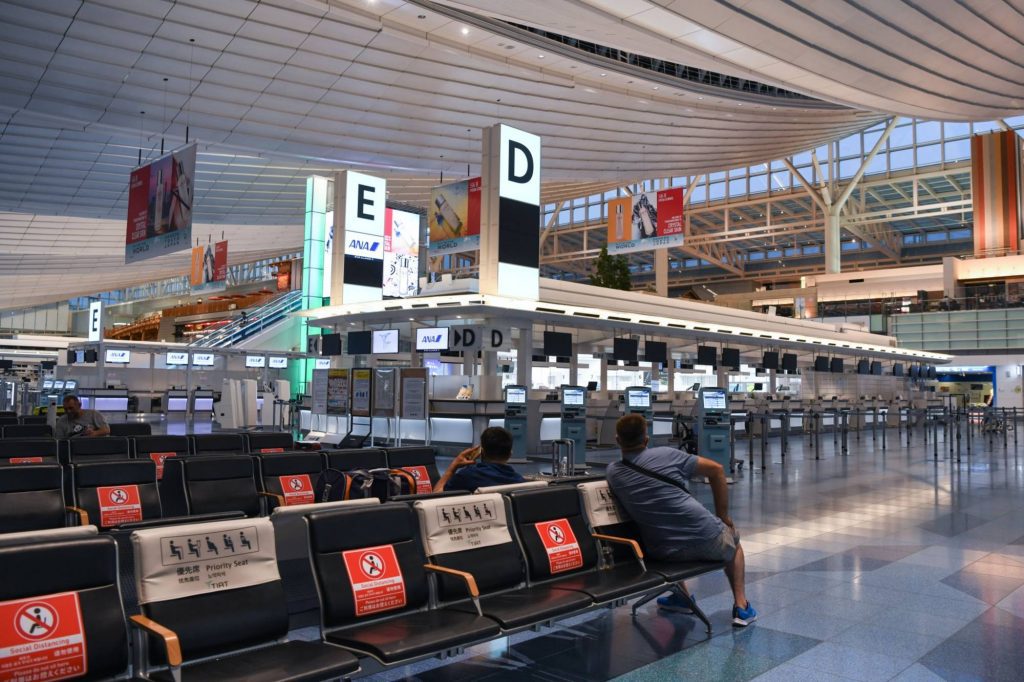
Social distancing signs sit on benches at Haneda Airport in Tokyo, Japan, on Tuesday, July 28, 2020. Concern over the virus situation in Japan in growing as cases have surged in recent weeks. An outbreak initially thought confined to nighttime entertainment areas in Tokyo has spread to workplaces and across the country. Photographer: Noriko Hayashi/Bloomberg

Experts say Omicron should not cause panic

Leading infectious disease experts say the new variant may be more infectious than other strains, but relatively little is known about how transmissible and better able to evade the body’s immune responses it is.

According to Japanese media, the prime minister urged the public to remain calm, wear masks and maintain social distancing, stressing that the country has the highest vaccination rate among the Group of Seven countries.

PM Kishida also said that there had been one traveler from Namibia who tested positive for COVID.

It was unclear if the person had been infected with the omicron variant, but the sample had been sent to a lab for genomic testing.

On November 8, Japan started allowing new entries of foreign students and technical interns for the first time in nearly a year, provided they quarantine for 14 days, a span that would be shortened to 10 days if they those arriving are fully vaccinated.
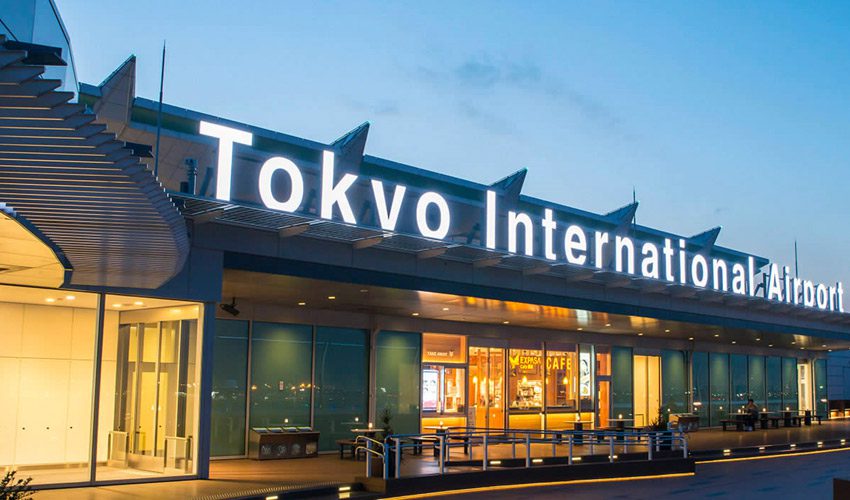
The border closure announcement is especially bad news for foreign students

Foreign students make up the largest chunk of foreign nationals hoping to newly enter Japan — with many having already started paperwork to come after studying remotely from their home countries for up to more than a year.

Japan had been gradually tightening entry restrictions since the new variant began spreading quickly around the globe. Over the weekend, it required travelers from nine hot spots in Africa — Botswana, Eswatini, Lesotho, Namibia, South Africa, Zimbabwe, Mozambique, Malawi and Zambia — to spend 10 days in government-designated quarantine facilities upon arrival.

News

Trump lifts India tariffs after New Delhi halts Russian oil imports

Published

on

President Donald Trump has moved to reshape US trade policy on two major fronts, signing executive orders that both ease tariffs on India and threaten new levies on countries that continue to trade with Iran.

The rollback of tariffs on India follows New Delhi’s commitment to halt imports of Russian oil, a move welcomed by Washington as it seeks to tighten pressure on Moscow’s energy revenues. The decision signals a thaw in trade tensions between the two nations and underscores the administration’s willingness to reward partners that align with US foreign policy priorities.

At the same time, Trump warned that nations maintaining commercial ties with Iran could face fresh US tariffs, escalating economic pressure on Tehran and its trade partners. The move reinforces a hardline strategy aimed at isolating Iran economically, while using trade measures as leverage in broader geopolitical negotiations.

Together, the twin decisions highlight the Trump administration’s increasingly assertive use of tariffs as a diplomatic tool, targeting both allies and adversaries. From the Indo-Pacific to the Middle East, the approach underscores how trade policy is being deployed not just to protect US industries, but to advance America’s strategic interests on the global stage.

#Trump #India #TradePolicy #Tariffs #USIndiaRelations #GlobalTrade #RussiaOil #Ticker


Download the Ticker app

Continue Reading

News

U.S. ramps up Cuba aid as energy crisis deepens

Published

on

The United States has announced an additional $6 million in humanitarian aid for Cuba, bringing total assistance since Hurricane Melissa struck the island in October to $9 million. The new relief package will focus on Cuba’s eastern provinces, including Holguín, Granma, Santiago de Cuba, and Guantánamo, providing staples like rice, beans, pasta, canned tuna, and solar lamps. U.S. officials said embassy staff will monitor distribution to prevent the government from diverting supplies.

The announcement comes amid worsening energy and fuel shortages. Cuba has faced widespread blackouts, leaving millions without electricity in several provinces, while rising food prices and limited fuel supplies have intensified humanitarian pressures. Officials warn that without sufficient oil imports, hospitals, transport, and essential services could be severely affected. The crisis has escalated following U.S. restrictions on Cuba’s oil shipments and Venezuela’s inability to supply fuel, forcing Cuba to turn to Mexico as its primary energy partner.

Humanitarian situation

Cuba’s President Miguel Díaz‑Canel accused the U.S. of imposing an “energy blockade,” while Mexican officials work to deliver fuel without triggering U.S. tariffs. Díaz‑Canel expressed willingness to engage in dialogue but insisted talks must respect Cuba’s sovereignty. U.N. Secretary-General António Guterres has voiced serious concern, warning that the humanitarian situation could deteriorate further if oil supplies remain restricted.

As Cuba struggles to balance disaster recovery with an ongoing energy crisis, the international community faces a delicate challenge: providing humanitarian support while navigating complex geopolitical tensions.


Download the Ticker app

Continue Reading

News

SpaceX expands Starlink with phone plans and satellite tracking ambitions

SpaceX expands Starlink with a mobile device and space tracking, raising concerns over revenue and US government reliance.

Published

on

SpaceX expands Starlink with a mobile device and space tracking, raising concerns over revenue and US government reliance.

SpaceX is pushing Starlink beyond internet from space, with plans underway for new consumer facing services that could reshape the telecom landscape.

The company is reportedly exploring a Starlink mobile device, positioning it as a potential rival to established smartphone players as it looks to extend its reach from orbit to everyday tech.

Starlink has become SpaceX’s financial powerhouse, generating an estimated $8 billion in revenue last year, with fresh trademark and patent filings signalling even more ambitious expansion ahead.


Subscribe to never miss an episode of Ticker – https://www.youtube.com/@weareticker

Download the Ticker app

Continue Reading

Trending Now