

Tech
Step aside Android, Apple’s announced their most powerful devices yet

Expert advice, in-depth device explanations and all the updates – everything you need to know about Apple’s latest product launch.
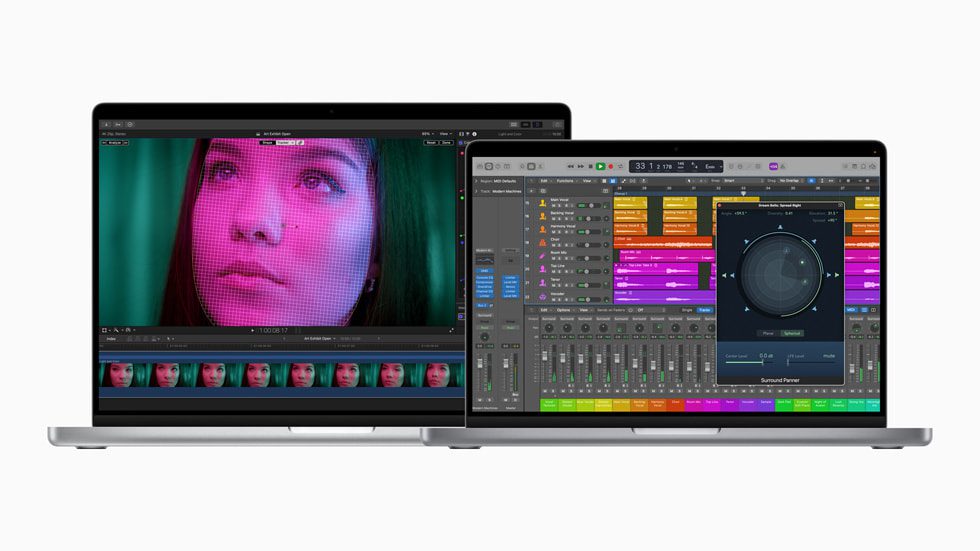
Apple’s freshest products are in, but there’s something quite different about the tech giant’s latest product release.
In the past, Apple fans have witnessed the tech company outdo themselves each year, with their much-loved devices advancing in technicality each model.
But after wrapping up their latest product showcase, Apple’s so-called “unleashed event” has turned user expectation on its head.
Rather than going out with the old and in with the new, the newest models of MacBook laptops and Airpods share similar features to much older models of their respective devices.
The latest release of devices will see SD card ports reintroduced to laptops and the next generation of Airpods share their design of their original model.
Apple has also taken aim at professional content developers opposed to general consumer leisure.
But first, here’s all you need to know about Apple’s new approach to their latest tech:
What exactly did Apple unveil at their latest event?
While many would say the third generation of Airpods and the release of the new MacBook Pro were the highlights of Apple’s events, the tech giant unveiled a series of new updates and features to some of their pre-existing products.
All-new MacBook Pro and Airpods aside, here’s some more changes coming to Apple devices that you need to be aware of.
The M1 Pro and M1 Max
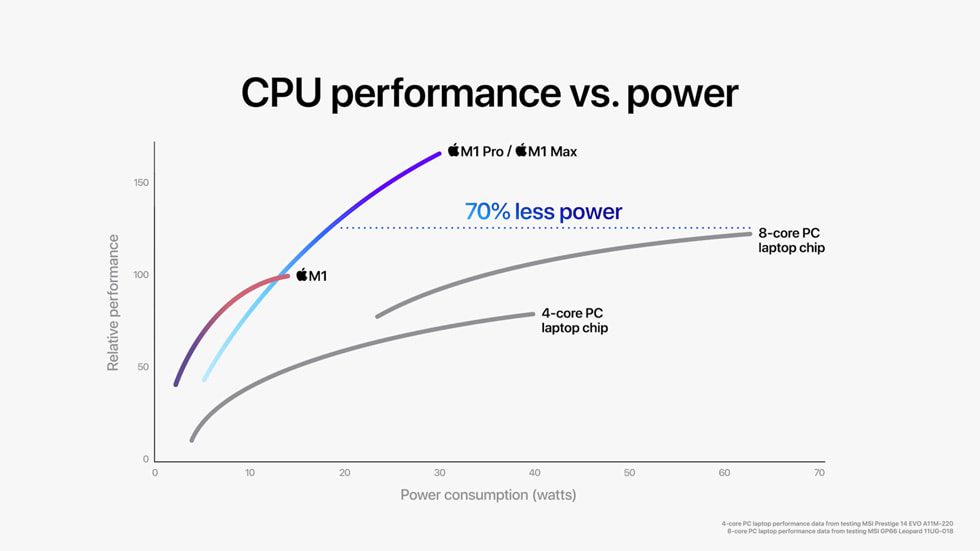
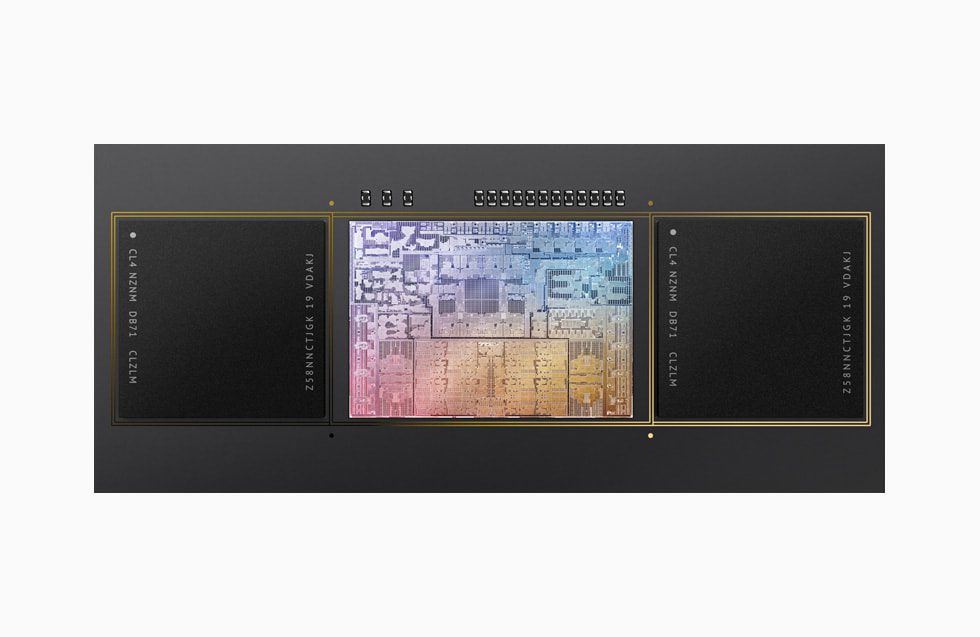
The tech giant has introduced their most powerful chips built in-house, the M1 Pro and M1 Max.
Installed to power the all-new MacBook Pro, the new chips feature up to a 10-core CPU, 32-core GPU, 64GB of unified memory, ProRes acceleration and industry-leading power efficiency.
The new chips are up to two times faster and one-up the pre-existing M1 chip installed in earlier models of the MacBook Pro and Air, iPad and the latest iMac.
Additionally, memory bandwidth, graphics and battery life are enhanced, making it one of the most powerful chips built for a pro notebook.
To all video editors, graphic designers and film makers – the tech giant hasn’t forgotten about you.
Loaded with advanced custom technologies, the M1 Pro and M1 Max chips can deal with intense workflows.
And if that still doesn’t convince you, both chips are 100 percent carbon neutral as Apple works towards their goal of net-zero by 2030.
The Apple Music Voice Plan
From just $5.99 a month, you can access the ultimate music experience designed exclusively for Siri.
The Apple Music Voice Plan exposes subscribers to a catalogue of 90 million songs, tens of thousands of playlists, personalised mixes and genre stations, as well as the award-winning Apple Music Radio.
To access all these features, plus more, all you have to do is call out to Siri.
“Apple Music and Siri are natural partners and already work seamlessly together.”
Oliver Schusser, Apple’s vice president of Apple Music and Beats..
“With Siri actively used on hundreds of millions of devices worldwide, we are thrilled to add this new plan that delivers an effortless music experience just by using your voice and makes Apple Music accessible to even more people around the world.”
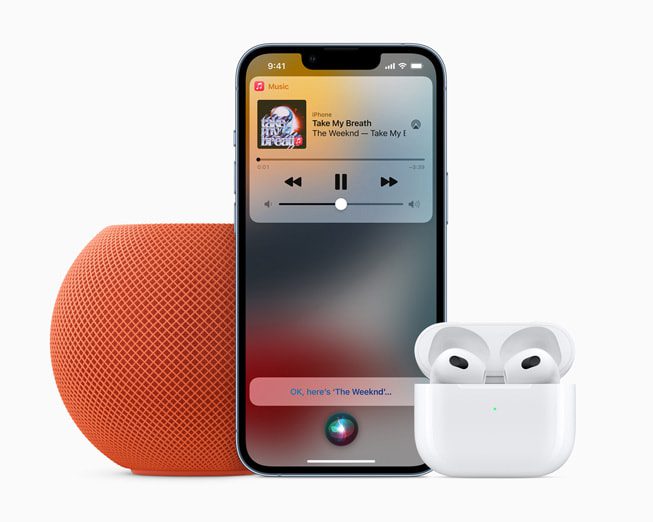
Apple users can access the Apple Music Voice Plan across all Siri-enabled devices including HomePod mini, AirPods, iPhone or any other Apple device, and when using CarPlay.
It comes as competition ramps up in the music streaming world, with the Apple Music Voice Plan offering voice assistant technology that neither Spotify or Android’s Music Player have current access to.
Final Cut Pro and Logic Pro
Who needs access to a state-of-the-art editing suite when you can access studio-level features from your living room?
Apple’s update to their Final Cut Pro and Logic Pro programs is doing just that, thanks to powerful new features and optimisations from the M1 Pro and M1 Max chips.
Professional video editors are performing tasks never thought possible on a Mac, with the updates providing the ability to play seven streams of 8K ProRes or colour-grade 8K HDR video, among other features.
“The world’s most creative people use Final Cut Pro, Logic Pro and the Mac to make the memorable movies, TV shows, online videos, songs and soundtracks that we all enjoy,” Bob Borchers, Apple’s vice president of Worldwide Product Marketing, says.
“Pros will be able to push the limits of their creativity like never before.”
Final Cut Pro 10.6 and Logic Pro 10.7 are available from today as a free update for existing users, or for A$499.99 and A$319.99 including GST, respectively for new users on the Mac App Store.
HomePod Mini goes vibrant
In line with the release of the Apple Music Voice Plan, Apple’s HomePod Mini is getting a splash of colour, with fans now able to purchase the device in yellow, orange or blue.
These colours are in addition to the pre-existing options of white and space grey.
“HomePod mini sounds incredible, and with access to more than 90 million songs in the global Apple Music catalogue and deep integration with your Apple devices, it’s the must-have smart speaker for iPhone users.”
Bob Borchers, Apple’s vice president of Worldwide Product Marketing.
“With new vibrant colours, HomePod mini fits in even more places and delivers amazing sound, the power of Siri, and simple and secure smart home controls, all while protecting your privacy.”
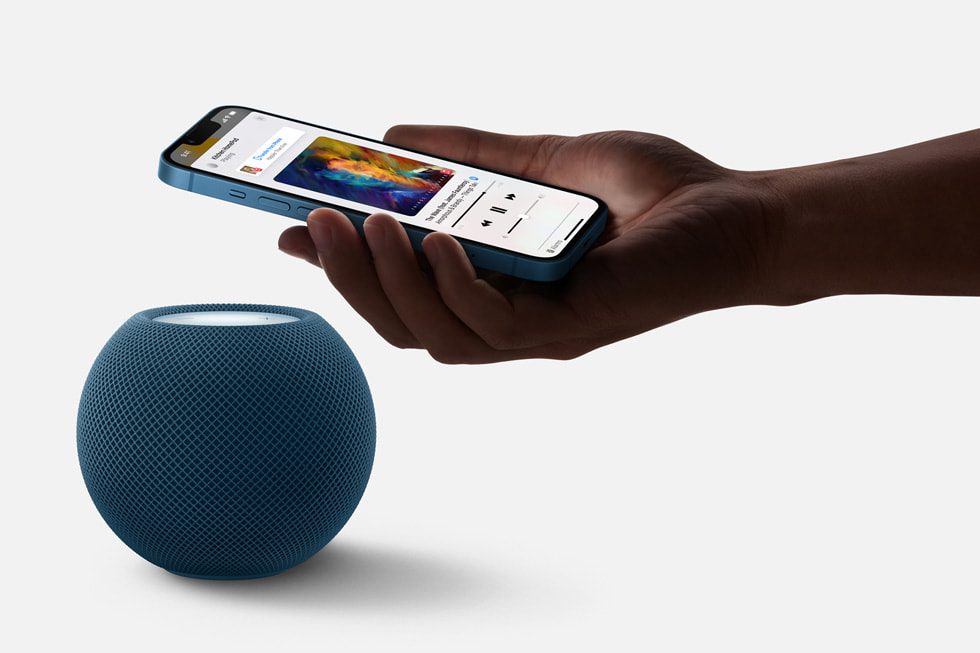
In addition to the new colour palette, Apple is enlarging their list of available device features.
Expanding multi-user voice recognition, automatic Siri volume control and new ways to control smart devices are among some of the new features to be added to the device.
The HomePod mini also takes the environment into consideration.
Just under 100 per cent of the device is manufactured with recycled rare earth elements, while the neodymium magnet in the speaker driver utlises 100 per cent recycled rare earth elements.
HomePod mini consumes 75 per cent less energy than the stringent requirements for ENERGY STAR.
Old features on new products
Okay, so back to the stars of the show, it’s quite noticeable that the new generations of MacBook pro and AirPods share some similarities with their respective predecessors.
Some might question if it’s even worth purchasing them seeing that Apple has taken a step back to old times.
However, Apple has raised the bar in other aspects, taking their goal or working towards net-zero by 2030 into account.
MacBook Pro with M1 Pro and M1 Max
Available in 14 inch and 16 inch models, the new MacBook Pro features a 1080p camera, the best audio system in a notebook and the most advanced connectivity ever seen.
Developers, photographers, filmmakers, 3D artists, scientists and music producers are at the forefront of the latest MacBook release.
“We set out to create the world’s best pro notebook, and today we’re excited to introduce the all-new MacBook Pro with M1 Pro and M1 Max — a game-changing combination of phenomenal performance, unrivalled battery life and groundbreaking features.”
Greg Joswiak, Apple’s senior vice president of Worldwide Marketing.
“The all-new MacBook Pro adds a breathtaking XDR display, more ports like MagSafe 3, an advanced 1080p camera and a sensational six-speaker sound system, all in a stunning new design.”
“The new MacBook Pro simply has no equal and is by far the best pro notebook we’ve ever built.”
If you’re still not entirely convinced, lets compare the newest model to the previous Pro.
MacBook Pro 2020 M1 chip
8 core CPU
8 core GPU
Up to 16GB unified memory
Up to 2 TB storage
Up to 20 hours battery life
Touch bar and touch ID
720p FaceTime HD camera
Advanced image signal processor with computational video
Stereo speakers with high dynamic range
MacBook Pro 2021 M1 Pro or M1 Max
Up to 10-core CPU
Up to 32-core GPU
Up to 64GB unified memory
Up to 8 TB storage
Up to 17 hours battery life
Touch ID
1080p FaceTime HD camera
Advanced image signal processor with computational video
High-fidelity six-speaker sound system with force-cancelling woofers
In addition, the 2021 model of the MacBook pro comes with additional ports for an SD card, HDMI and three thunderbolt 4 (USB-C) ports.
Both models also come in silver and space grey.
Unlike other pro notebooks that lose performance when they are not plugged in, MacBook Pro delivers the same level of performance whether it is plugged in or using the battery.
Ultimately it’s designed for performance, with capabilities that go beyond the expectations of any other notebooks.
The new MacBook Pro models are available from today with a retail price from $2,999.
AirPods 3rd Generation
While the new AirPods feature spatial audio, industry-leading sound and longer battery life, they do share a similar design to their first generation relatives.
Additionally, the new AirPods are resistant to sweat and water.
Again, in line with the release of Apple Music Voice Plan, the new earphones feature a force sensor for easy and intuitive control of music and phone calls plus extended battery life.
“AirPods forever changed wireless headphones with their groundbreaking design, incredible sound and magical experience.”
Greg Joswiak, Apple’s senior vice president of Worldwide Marketing.
“We are excited to introduce the next generation of AirPods, featuring unrivalled sound through Adaptive EQ and spatial audio with dynamic head tracking, along with seamless interaction between Apple devices — making the world’s best-selling headphones even better.”
While the third generation does share similarities with the first generation, the device’s stem is shorter with the goal of having a more subtle appearance.
Sound quality is also improved and microphone quality is also taken into account, covered by an acoustic mesh to block the sound of wind, all part of Apple’s intentions of creating a magical experience.
So how does this compare to the second generation of AirPod Pro?
AirPods 3rd Generation 2021
Spatial audio with dynamic head tracking
Sweat and water resistant
H1 chip
6 hours of listening time on charge
Up to 30 hours of listening time with charging case
Automatic switching
MagSafe charging
AirPods Pro
Spatial audio with dynamic head tracking
Sweat and water resistant
H1 chip
4.5 hours of listening time on charge
More than 24 hours of listening time with charging case
Automatic switching
MagSafe charging
While the AirPods pro do have the active noise cancellation feature, if you’re after a cheaper and longer-charging alternative, the AirPods 3rd Generation may be the option for you.
AirPods 3rd Generation are available to order from today, with their debut in store to occur from the 26th of October this year.
They start at a retail price of $279, therefore reducing the price of AirPods 2nd Generation to $219.
And to personalise your new AirPods even more, Apple offers free engraving for free if you order online.
And that’s a wrap
There you have it, you’re now up to date on Apple’s latest product release.
Stay tuned with ticker news and ticker tech for all the information on what’s to come from the Apple empire.
Written by Rebecca Borg

-
 Tech3 days ago
Nvidia denies plans for China-specific AI chip
-
Ticker Views3 days ago
Global markets brace for higher oil, bond yields and a possible rate hike
-
Leaders4 days ago
Managing shadow AI risks in the workplace effectively
-
News3 days ago
Australia enforces tech giants to pay news levies
-
News3 days ago
U.S. likely won’t restart large-scale Iran combat
-
News4 days ago
Hospitality sector faces significant closures and defaults
-
News4 days ago
Australia’s debt exceeds $1 trillion for first time
-
News4 days ago
‘Compromising the effectiveness’: new gambling laws criticised