
Connect with us
https://tickernews.co/wp-content/uploads/2023/10/AmEx-Thought-Leaders.jpg

Money

Why now is a good time to rethink monetary policy

Published

on

Since the beginning of the pandemic, concerns have been raised about the Federal Reserve’s approach to handling economic challenges.

While the Fed’s perceived political involvement has garnered attention, the more pressing issue at hand is the way it tackles inflation and interest rates using what some describe as a sledgehammer when a scalpel might be more appropriate.

Instead of implementing infrequent and substantial moves of 25, 50, or even 75 basis points, which can disrupt financial markets and investment strategies, the argument put forth is that the Fed should opt for smaller, more frequent adjustments of five or ten basis points.

The goal is to create a smoother economic landscape, as opposed to the sharp and unpredictable fluctuations that are currently experienced.
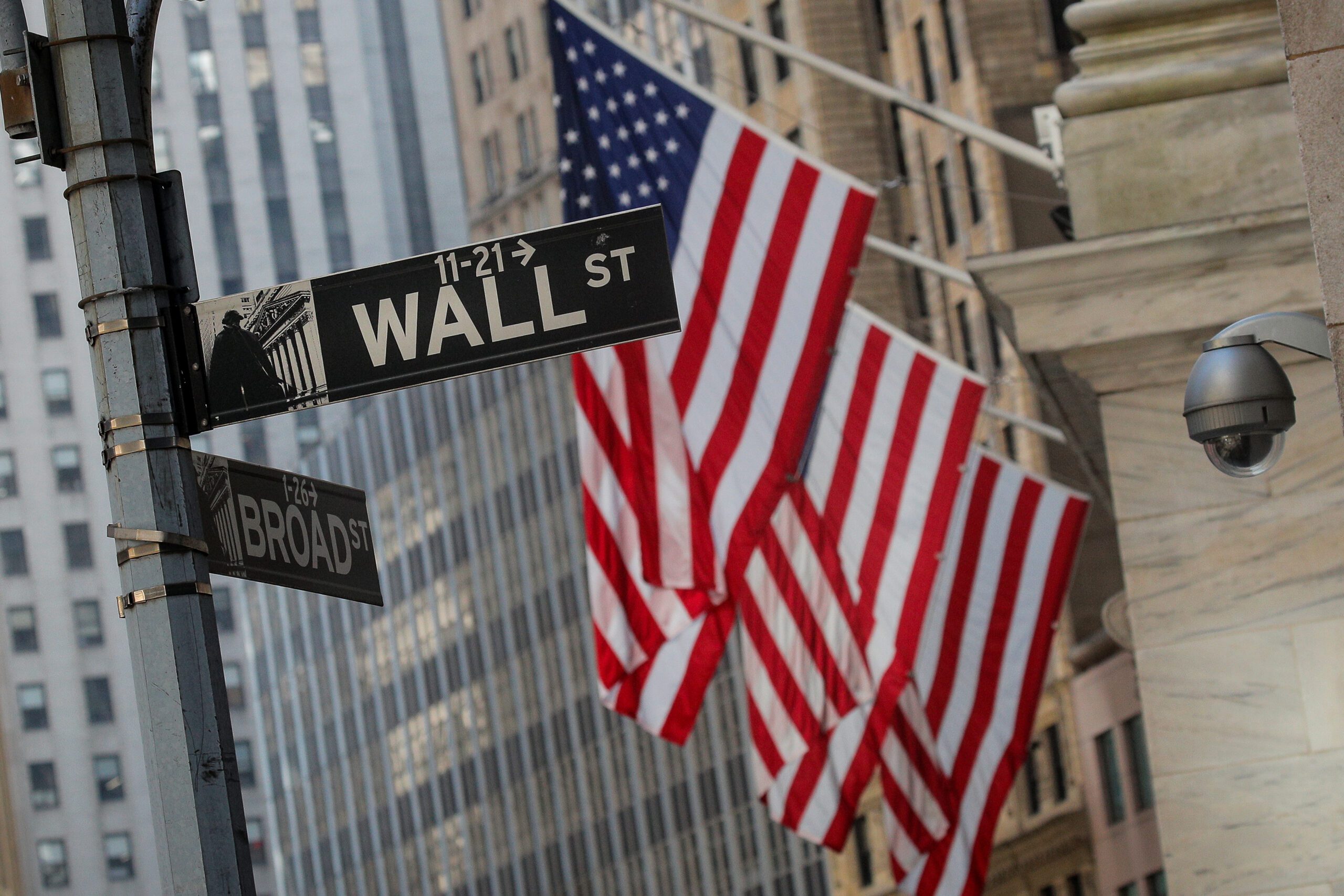
FILE PHOTO: A Wall St. sign is seen outside the New York Stock Exchange (NYSE) in the financial district in New York City, U.S.

Rate curve

The proposed ideal scenario envisions a gradual and controlled interest rate curve, consistently hovering between 3% and 4%, within a relatively narrow range.

This approach would entail a longer-term cycle, spanning 10 or 20 years, rather than the shorter two- or three-year cycles witnessed today.

By implementing minor basis-point adjustments over a few weeks, financial markets, lending practices, and the stock market would adapt in a more measured manner.

These adjustments would be small, fostering a more rational and predictable economic environment conducive to better planning.

The debate over the Fed’s approach to monetary policy is ongoing, and while the central bank continues to grapple with economic challenges, alternative strategies like the one proposed here could reshape the way it addresses these issues in the future.

Ahron Young is an award winning journalist who has covered major news events around the world. Ahron is the Managing Editor and Founder of TICKER NEWS.

Money

U.S. investors flee stock market for global opportunities

U.S. investors withdrew $75 billion from stocks in six months, fastest in 16 years, with $52 billion in 2026 alone.

Published

on

U.S. investors withdrew $75 billion from stocks in six months, fastest in 16 years, with $52 billion in 2026 alone.

U.S. investors are withdrawing money from domestic stocks at the fastest rate in 16 years, with $75 billion leaving equity products over the past six months. The trend accelerated in 2026, with $52 billion pulled from Wall Street so far.

Concerns over AI risks and weaker performance at home are prompting investors to look abroad, even though a softer dollar makes foreign investments more expensive. Emerging markets are seeing inflows at the fastest pace in five years, according to Bank of America.

As global opportunities become more attractive, many U.S. investors are now evaluating overseas markets for growth potential.

Subscribe to never miss an episode of Ticker – https://www.youtube.com/@weareticker


Download the Ticker app

Continue Reading

Money

US dollar strength hits NZ dollar amid FX market shifts

US dollar rises amid strong US growth; New Zealand faces pressure as traders navigate volatile FX and geopolitical impacts.

Published

on

US dollar rises amid strong US growth; New Zealand faces pressure as traders navigate volatile FX and geopolitical impacts.


The US dollar is surging as strong economic growth in the United States contrasts with softer conditions in New Zealand. Policy divergence and complex global FX factors are putting pressure on the New Zealand dollar, leaving traders navigating choppy waters.

Steve Gopalan from SkandaFX breaks down how US interest rates are influencing key currency pairs like USD/JPY, and explains why hedging flows are crucial in today’s volatile environment.

We also explore the ripple effects of geopolitical tensions on oil and broader markets, while examining the Australian labour market’s role in shaping the Reserve Bank of Australia’s monetary policy.

Subscribe to never miss an episode of Ticker – https://www.youtube.com/@weareticker


Download the Ticker app

Continue Reading

Money

Oil hits seven-month high, and gold surpasses $5,000 amid US-Iran tensions

Oil prices hit seven-month high amid U.S.-Iran tensions; experts analyze impacts on global economy and energy markets.

Published

on

Oil prices hit seven-month high amid U.S.-Iran tensions; experts analyze impacts on global economy and energy markets.


Oil prices have surged to a seven-month high as escalating tensions between the U.S. and Iran spark fears of global supply disruptions. The Strait of Hormuz remains a flashpoint, with analysts closely monitoring potential military actions that could further strain energy markets.

Investors are reacting to geopolitical uncertainty, with oil markets pricing in heightened risk.

Kyle Rodda from Capital.com joins us to discuss what is driving these record-breaking price movements and the potential implications for the global economy.

Subscribe to never miss an episode of Ticker – https://www.youtube.com/@weareticker


Download the Ticker app

Continue Reading

Trending Now