
Joseph Kony’s face was once plastered on the internet but the viral documentary failed to lead to his arrest
It was the documentary that broke the internet.
Click after click, and share after share, Joseph Kony quickly became a household name.
But what happened next, was a fall from grace like no other, which sent the internet into overdrive once again.
At the start of 2012, much of the world had never heard of Joseph Kony. However, he was already on an international most wanted list for his crimes against humanity.
Human rights groups were among those who had him firmly in their sights. UNICEF believed he was responsible for displacing over 2.5 million people across Central Africa.
The International Criminal Court charged Kony with responsibility for war crimes and crimes against humanity, including the forced enlistment of children as soldiers through abduction, and sexual enslavement.
His operation would come to the limelight on 5 March, 2012, when Jason Russell’s documentary, Kony 2012 comes to life.
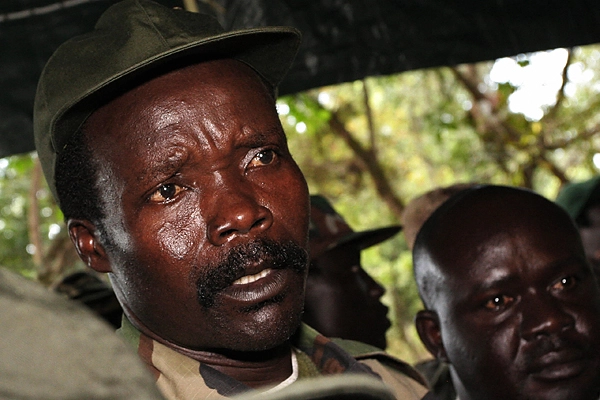
Joseph Kony was the leader of the Lord’s Resistance Army.
Russell was one of the co-founders of the charity organisation, Invisible Children.
He explains the conflict in simple terms to his son Gavin, who was five at the time.
“I’ve never really explained to him what I do. He knows I work in Africa but he doesn’t know what the war’s about, or who Joseph Kony is.”
Russell’s message was simple: make Joseph Kony a household name.
“The next 27 minutes are an experiment. But in order for it to work, you have to listen.
“If we succeed, we change the course of human history,” Russell said.
it is time to make him known. Im calling on ALL MY FANS, FRIENDS, and FAMILY to come together and #STOPKONY – http://t.co/qaz9GjQ2
Justin Bieber and Oprah Winfrey were among the celebrities who pounced on finding the African war lord and bringing him to justice.
What happened next?
The documentary quickly became the most viral YouTube video of all time. It exploded to over 100 million views in six days.
“Before Kony 2012, the most viral video on the internet was Susan Boyle’s Britain’s Got Talent video,” said Emma Madden, who has recently written about the 10-year anniversary of the documentary.
“Virality was a new phenomenon and things that tended to go viral at this time were things that aroused emotions, which the Kony 2012 video did.”
EMMA MADDEN, FREELANCE WRITER
The campaign asked people to like and share the documentary, and buy a $30 action kit, which included posters, t-shirts and stickers.
Madden said the video targeted younger people, and empowered them to use their voices to demand change.
“I was 17 when I saw this video, so I was the target audience. If I am talking to anyone else my age, there are common memories.”
In the documentary, Russell encourages viewers to continue the momentum by writing to their local government representatives, and covering their cities with posters.
It became known as the now-infamous ‘Cover the Night’ campaign, where “every city, on every block” would be covered with posters and stickers of Joseph Kony.
“That was a huge failure. There was really only a handful of people showing up in cities across the U.S. and Canada,” said Dr Johannes von Engelhardt from the University of Amsterdam.
Dr von Engelhardt has conducted research on audience perspectives of Kony 2012. He found the filmmakers mitigated a sense of personal moral responsibility to act towards the distant suffering of others.
“It was really every organisations worst nightmare. The fierceness and scale of the attack that was launched on Invisible Children was disastrous.”
DR JOHANNES VON ENGELHARDT, UNIVERSITY OF AMSTERDAM
The net proceeds from the Kony 2012 campaign amounted to approximately $12.6 million.
But as fast as the campaign took off, it quickly came crashing down.
Was Jason Russell running naked in the street?
Yes. One week after the documentary’s release, Jason Russell was filmed nude, and screaming profanities by TMZ.
“There were at the time rumours he was masturbating publicly, which was not true,” Dr von Engelhardt said.
“It shows how interesting the story was of seeing him collapse like that as a result of the attacks on the organisation, which were immense.”
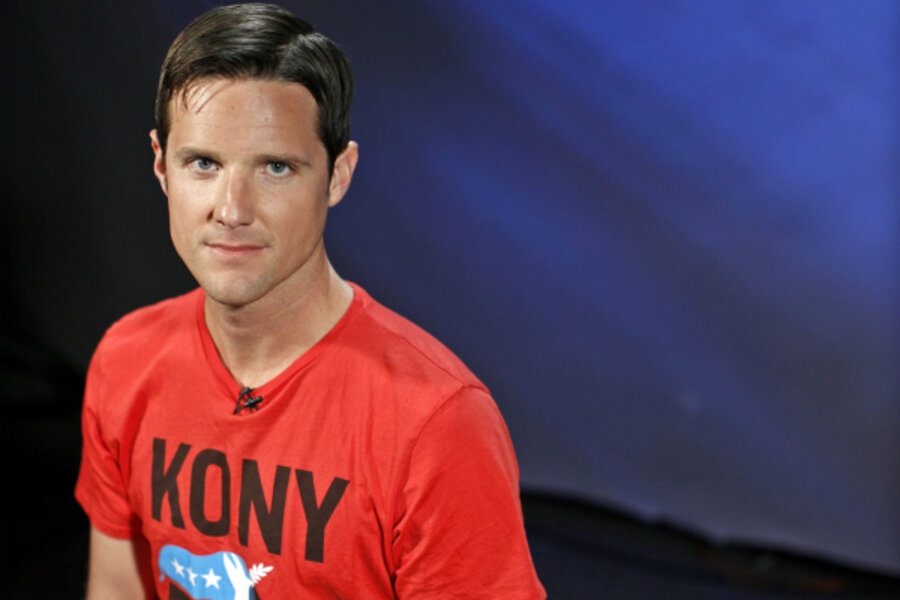
Jason Russell is the man behind the Kony 2012 documentary.
The filmmaker was not arrested but was instead placed in psychiatric support.
Emma Madden said this was a turning point for the Kony 2012 movement.
“Jason has a breakdown within 10 days. That was quite a pivotal moment for the video, it’s response and its implosion.”
EMMA MADDEN, WRITER
“10 years later, nobody knows who Kony is. They are more likely to remember Jason’s breakdown,” she said.
The dream of capturing Josef Kony had become as far and distant as the conflict itself.
“I think the word slacktivism was coined in this time—putting the word ‘slacker’ and ‘activism’ together—you can’t enforce change by just using Twitter,” Madden said.
Where is Joseph Kony?
The Lord’s Resistance Army remains active across Africa. Although, its members have dropped over time.
In 2017, Ugandan military forces abandoned their search efforts for Kony. Brigadier Richard Karemire, from the Uganda People’s Defense Force said he no longer posed a threat.
“As far as we are concerned, we’ve already achieved our mission,” he told the New York Times.
Invisible Children continues its work through a range of projects across central Africa.
“Most of what they do isn’t really on social media anymore. They’re working in Uganda, helping to build infrastructure,” Madden said.
Jason Russell declined an interview for this story. However, he has written a series of children’s books. Meanwhile, his son Gavin is in high school.
Costa is a news producer at ticker NEWS. He has previously worked as a regional journalist at the Southern Highlands Express newspaper. He also has several years' experience in the fire and emergency services sector, where he has worked with researchers, policymakers and local communities. He has also worked at the Seven Network during their Olympic Games coverage and in the ABC Melbourne newsroom.
He also holds a Bachelor of Arts (Professional), with expertise in journalism, politics and international relations. His other interests include colonial legacies in the Pacific, counter-terrorism, aviation and travel.
Where to switch off, reset and travel well for a week
For executives in their 40s, travel has shifted. It is less about ticking off sights and more about space, comfort and coming back sharper than when you left.
In 2026, the most appealing one-week holidays are destinations that combine calm, quality and a sense of being ahead of the curve.
For executives, switching off from work is essential, but true rest comes from being gently engaged rather than completely idle.
The most rewarding breaks offer just enough stimulation, culture, nature or conversation, to quiet the mind without replacing one form of busyness with another.
Here are five global locations quietly rising to the top of travel wish lists.
East Coast Barbados
Barbados has long been associated with polished beach holidays, but the east coast offers something different.
Wild Atlantic surf, boutique retreats and fewer crowds create a slower rhythm that suits travellers who want proper rest without sacrificing style.
Days are spent between long coastal walks, ocean-facing spas and unhurried dinners, with just enough local culture to keep things interesting.
Barbados: Book a holiday package (flights + hotel) to Barbados here.
Phu Quoc
Vietnam’s largest island is emerging as a refined alternative to more established Asian beach destinations.
Phu Quoc blends thoughtful luxury with a grounded, local feel. Resorts are discreet rather than flashy, wellness is taken seriously, and the pace encourages doing very little very well.
It is an easy week of warm water swims, exceptional food and genuine mental downtime.
Phu Quoc, Vietnam: Find holiday packages and deals for Phu Quoc here.
Peloponnese
For travellers who want culture without crowds, the Peloponnese is becoming Greece’s most compelling region.
Ancient ruins sit alongside olive groves, quiet beaches and wellness-focused resorts designed for long lunches and early nights.
It offers the Mediterranean experience executives love, without the intensity of Santorini or Mykonos.
Peloponnese, Greece: Browse and book Peloponnese holiday packages with flights and hotels here.
The Red Sea
Saudi Arabia’s Red Sea coast is one of the most ambitious luxury travel projects in the world.
Opening progressively through 2025 and 2026, it promises adults-focused resorts built around sustainability, privacy and high-end wellness.
For those seeking something genuinely new, this is a destination that feels exclusive, restorative and future-facing.
Red Sea Coast (gateway for Red Sea resorts): Book a Red Sea Coast holiday package (flight + hotel) here.
Margaret River
Margaret River continues to refine its appeal for travellers who value space and quality. World-class wineries, dramatic coastline and understated luxury accommodation make it ideal for a reset without jet lag.
It is a reminder that a great week away does not need excess. It needs good food, good wine and room to breathe.
In 2026, the best holidays for executives are not about escape in the dramatic sense. They are about intention. A change of pace, fewer decisions, and environments designed to help you slow down properly. These destinations understand that luxury is not about doing more, but about feeling better when you return.
Margaret River, Western Australia: Find Margaret River holiday packages (accommodation + flight) here.
In Short:
– Iranian President Pezeshkian urged action to meet protesters’ demands amid economic crisis and currency devaluation.
– Protests intensified with shop closures in Tehran, following significant inflation and political unrest after Mahsa Amini’s death.
Iran is grappling with its most severe economic crisis in years. Mass protests erupted across Tehran following the dramatic collapse of the national currency. The rial plunged to 1.42 million against the U.S. dollar over the weekend, briefly recovering to 1.38 million. This marks a loss of more than two-thirds of its value since 2022.
Annual inflation soared to 42.2 percent in December, with food prices up 72 percent year-on-year. Many Iranians are struggling to make ends meet, fueling public anger and unrest.
In response, Iranian President Masoud Pezeshkian ordered his government to engage directly with protest representatives. Calling the demonstrations “legitimate,” he emphasized the need for reforms in the monetary and banking sectors. Officials announced a dialogue framework to hear the voices of demonstrators.
The unrest coincided with the resignation of Central Bank Governor Mohammad Reza Farzin. Former Economy Minister Abdolnaser Hemmati is set to replace him, signaling possible shifts in economic policy.
Tehran’s commercial districts were paralyzed as shopkeepers in the Grand Bazaar and major streets closed businesses in solidarity. Videos on social media showed crowds chanting slogans as security forces used tear gas to disperse them.
International pressure is also rising. U.S. officials warned they would support action against Iran if the country resumes nuclear or missile development, following recent airstrikes on Iranian facilities.
The World Bank forecasts Iran’s GDP will contract 1.7 percent in 2025 and 2.8 percent in 2026, deepening economic concerns. How the government responds to these protests and reforms its economy may shape the country’s stability in the months ahead.
In Short:
– The CIA conducted its first drone strike in Venezuela since the Trump administration’s military campaign began.
– Trump’s operation targeted a dock linked to drug trafficking, resulting in no casualties.
The United States has carried out its first confirmed drone strike inside Venezuela, marking a dramatic escalation in Washington’s expanding military campaign across the Caribbean. The operation, reportedly conducted by the CIA, targeted a remote port facility believed to be used by the Tren de Aragua gang to store and transport narcotics. No casualties were reported, as the dock was empty at the time of the strike.
President Donald Trump publicly acknowledged the attack in late December, describing a “major explosion” at a dock where drug-laden boats were allegedly loaded. Trump first revealed the strike during a radio interview, placing the operation around December 24, before later confirming it to reporters while declining to specify whether the CIA or the military carried out the mission. “I know exactly who it was, but I don’t want to say who it was,” he said from his Mar-a-Lago residence.
Drug networks
The strike comes amid a significant expansion of Operation Southern Spear, now the largest US military deployment in the Caribbean since the Cuban Missile Crisis. Around 15,000 US troops have been positioned across the region, supported by the USS Gerald R. Ford carrier strike group and F-35 fighter jets. Since September, US forces have carried out at least 28 strikes on vessels in the Caribbean and eastern Pacific, resulting in more than 100 deaths, as Washington intensifies efforts to dismantle transnational drug networks.
The campaign has drawn fierce criticism from legal experts and international bodies. United Nations investigators have condemned the strikes as “extrajudicial executions,” warning they violate the UN Charter’s prohibition on the use of force. US legal scholars have also questioned the domestic legality of the operation, arguing it exceeds constitutional and statutory limits on executive power.
A slave’s peace
Venezuela has not formally commented on the dock strike, though Interior Minister Diosdado Cabello has accused the United States of months of “imperial madness.” President Nicolás Maduro has rejected Trump’s demands to step aside, telling supporters the country seeks peace “with sovereignty, equality, and freedom” — not what he described as “a slave’s peace.”