
Connect with us
https://tickernews.co/wp-content/uploads/2023/10/AmEx-Thought-Leaders.jpg

Ticker Views

TikTok and the lollipop Washington wants to take away
Published

on

What to do with Tik Tok hit home even with the prime minister of Canada, Justin Trudeau, as he stood next to the American president, Joe Biden, last Friday afternoon for their joint media conference in Ottawa Biden’s visit, including an address to the Canadian parliament

Question to the PM: “Knowing what you know, are you comfortable with the idea of your children or family members using TikTok?”

“I am obviously concerned with their privacy and their security, which is why I’m glad that on their phones — that happen to be issued by the government — they no longer access TikTok.  (Laughter.)  That was a big frustration for them.  “Really?  This applies to us too, Dad?”  “Yes, I just did that.”  (Laughter.)

Trudeau says
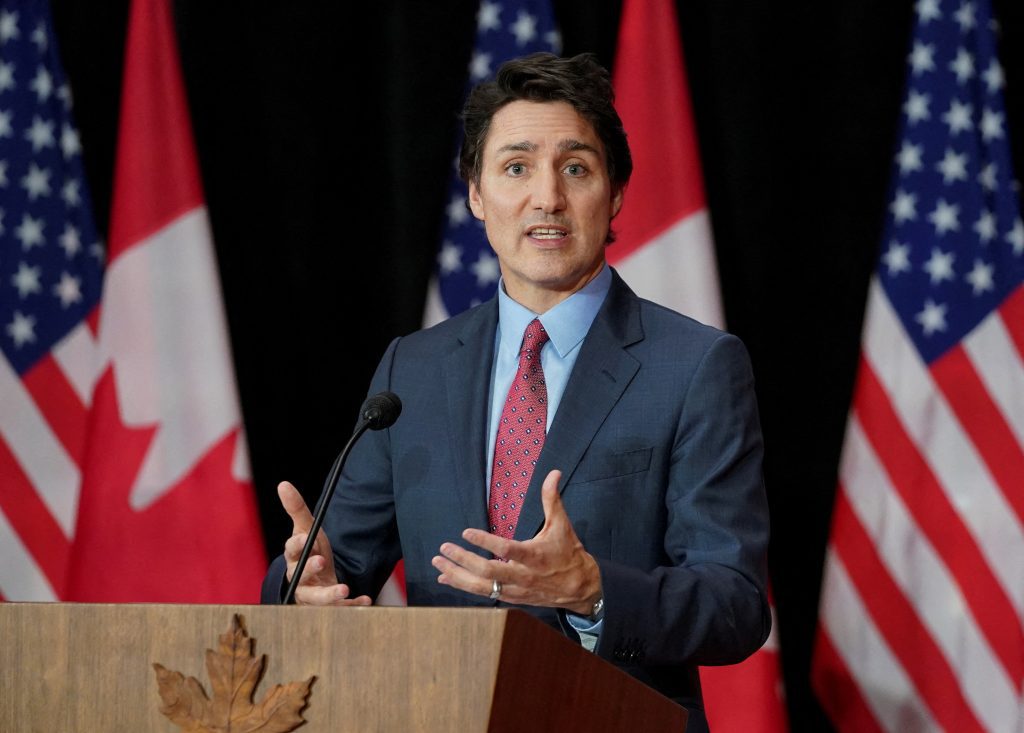
Canadian Prime Minister Justin Trudeau speaks during a joint news conference with U.S. President Joe Biden, in Ottawa, Ontario, Canada, March 24, 2023. REUTERS/Kevin Lamarque

It’s no laughing matter in Washington. 

Tik Tok’s CEO Shou Zi Chew was monstered by the House of Representative Energy and Commerce  Committee last week.  He was bludgeoned for five hours, solo at the witness table while a bipartisan howl raged against Tik Tok, its ownership, its practices, its ties to the Chinese Communist Party, and its vast influence in the United States.

“We do not trust TikTok will ever embrace American values,” said committee chair Cathy McMorris Rodgers, a Republican of Washington .

“TikTok has repeatedly chosen the path for more control, more surveillance and more manipulation. Your platform should be banned.”

“I still believe that the Beijing Communist government will still control and influence what you do,” said Rep. Frank Pallone Jr. of New Jersey, the ranking Democrat.

Politico’s reporter was asked if there was any support for Chew or Tik Tok. “No. There was no real support. That’s why they brought him in, to yell at him and show they’re strong on China.”

Senator Mark Warner of Virginia, cosponsor of legislation with the best chance of being enacted by Congress this year, said this about the hearing, and the core issue posed by the Tik Tok: “I kind of feel for the guy. Because [Chew] can’t rebut the fact that TikTok is owned by ByteDance, ByteDance is a Chinese company, Chinese law as of 2017 says the first obligation of any Chinese company is not shareholders or customers, it’s the Communist Party… At any point in time, that data can be asked for. And there are plenty of examples where it appears that it may have been already vulnerable. On top of that, you’ve got the ability for this incredibly powerful tool to have content manipulation.”

This was exact issue presented by Huawei, owned by the Chinese government, that under China’s national security law that government has the right to full access to all the data held by the company. 

This is why Huawei was banned from being as telecoms supplier in Australia, New Zealand, Japan, Taiwan and the US, and with 5G restrictions in the UK.

In recent weeks, the Biden Administration has been moving to a position of requiring ByteDance to sell TikTok to another US company, or face a ban.
In response, TikTok has developed “Project Texas”, where all the data generated in the US would be secured on US company Oracle servers in Texas. “The bottom line is this: American data is stored on American soil by an American company overseen by American personnel,” Chew said. But that would leave TikTok under Chinese government control over the data it obtains.  And China is not budging.  A Chinese Commerce Ministry spokeswoman said last week that China would “firmly oppose” the forced sale TikTok, and that this would “seriously undermine the confidence of investors from various countries, including China, to invest in the United States.”

Many members of the House and Senate want to ban TikTok – now.  But previous efforts to limit TikTok initiated under President Trump to ban Tik Tok if it was not sold were never concluded.  

A US government ban or forced divestiture of  Tik Tok  poses both First Amendment – free speech –  and due process of law issues.  There has not yet been an official finding of sufficient authority and weight to support such a radical action by the government.

What has been put in place are bans on Tik Tok on government-issued phones.

This is why Senator Warner’s legislation could prove crucial. 

In Washington, if you can’t solve a problem – get a process to work the problem.  The Restricting the Emergence of Security Threats that Risk Information and Communications Technology (RESTRICT) Act would give the Department of Commerce  the authority to evaluate and block technology deals involving companies from six “foreign adversary” countries, including China, Russia, Iran, Cuba, Venezuela and North Korea.  

By expanding the scope of technologies examined through a thorough process that can document and describe the urgency of addressing the threats the Tik Tok app poses, the key to locking in a ban or sale of Tik Tok can be found and used.
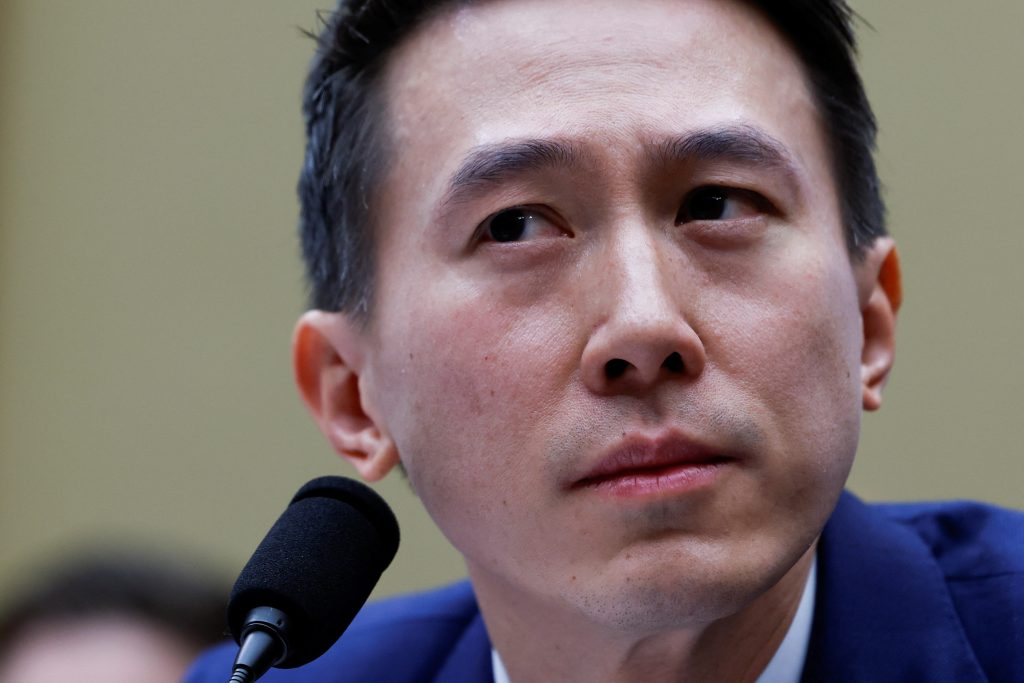
TikTok Chief Executive Shou Zi Chew looks on as he testifies before a House Energy and Commerce Committee hearing entitled “TikTok: How Congress can Safeguard American Data Privacy and Protect Children from Online Harms,” as lawmakers scrutinize the Chinese-owned video-sharing app, on Capitol Hill in Washington, U.S., March 23, 2023. REUTERS/Evelyn Hockstein

Last week’s Tik Tok hearing showed the Cold War with China is deepening.  The bipartisan roar of anger is growing.

But there is a real political disconnect between the rage building in Washington and the unhappiness of Trudeau’s children at losing Tik Tok . 

There are 150 million Americans – half the population – that use Tik Tok.  It is enormously influential.  Do lawmakers really think they can take Tik Tok away – without any political repercussions?  

You know what happens when you take a lollipop away from a child?  He or she starts screaming.  Take Tik Tok away and America’s Tik Tok users may start screaming – with their votes in 2024.

This is why the most likely outcome, aside from nothing being done, is passage of the Warner legislation and a forced sale of Tik Tok to a US company.

Stay tuned.

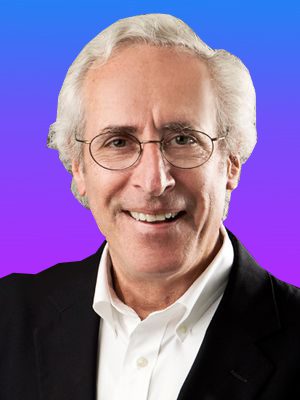
Bruce Wolpe is a Ticker News US political contributor. He’s a Senior Fellow at the US Studies Centre and has worked with Democrats in Congress during President Barack Obama's first term, and on the staff of Prime Minister Julia Gillard. He has also served as the former PM's chief of staff.

Ticker Views

Viral outbreaks are always on the horizon – here are the viruses an infectious disease expert is watching in 2026

Published

on

Viral outbreaks are always on the horizon – here are the viruses an infectious disease expert is watching in 2026

Viruses know no borders.
mammuth/iStock via Getty Images Plus

Patrick Jackson, University of Virginia

A new year might mean new viral threats.

Old viruses are constantly evolving. A warming and increasingly populated planet puts humans in contact with more and different viruses. And increased mobility means that viruses can rapidly travel across the globe along with their human hosts.

As an infectious diseases physician and researcher, I’ll be keeping an eye on a few viruses in 2026 that could be poised to cause infections in unexpected places or in unexpected numbers.

Influenza A – on the cusp of a pandemic

Influenza A is a perennial threat. The virus infects a wide range of animals and has the ability to mutate rapidly. The most recent influenza pandemic – caused by the H1N1 subtype of influenza in 2009 – killed over 280,000 people worldwide in its first year, and the virus continues to circulate today. This virus was often called swine flu because it originated in pigs in Mexico before circulating around the world.

Most recently, scientists have been monitoring the highly-pathogenic avian influenza H5N1 subtype, or bird flu. This virus was first found in humans in southern China in 1997; wild birds helped spread the virus around the world. In 2024, the virus was found for the first time in dairy cattle in the U.S. and subsequently became established in herds in several states.

Cow standing in a pen, looking into camera
Avian flu has spread across dairy herds in the U.S.
USDA Agricultural Research Service via AP

The crossover of the virus from birds to mammals created major concern that it could become adapted to humans. Studies suggest there have already been many cow-to-human transmissions.

In 2026, scientists will continue to look for any evidence that H5N1 has changed enough to be transmitted from human to human – a necessary step for the start of a new influenza pandemic. The influenza vaccines currently on the market probably don’t offer protection from H5N1, but scientists are working to create vaccines that would be effective against the virus.

Mpox – worldwide and liable to worsen

Mpox virus, formerly called monkeypox virus, was first discovered in the 1950s. For many decades, it was seen rarely, primarily in sub-Saharan Africa. Contrary to its original name, the virus mostly infects rodents and occasionally crossed over into humans.

Mpox is closely related to smallpox, and infection results in a fever and painful rash that can last for weeks. There are several varieties of mpox, including a generally more severe clade I and a milder clade II. A vaccine for mpox is available, but there are no effective treatments.

Microscopy image of clusters of teal circles
Mpox has spread around the world.
NIAID/Wikimedia Commons, CC BY-SA

In 2022, a global outbreak of clade II mpox spread to more than 100 countries that had never seen the virus before. This outbreak was driven by human-to-human transmission of the virus through close contact, often via sex.

While the number of mpox cases has significantly declined since the 2022 outbreak, clade II mpox has become established around the world. Several countries in central Africa have also reported an increase in clade I mpox cases since 2024. Since August 2025, four clade I mpox cases have occurred in the U.S., including in people who did not travel to Africa.

It is unclear how mpox outbreaks in the U.S. and abroad will continue to evolve in 2026.

Oropouche virus – insect-borne and poised to spread

Oropouche virus was first identified in the 1950s on the island of Trinidad off the coast of South America. The virus is carried by mosquitoes and small biting midges, also known as no-see-ums.

Most people with the virus experience fever, headache and muscle aches. The illness usually lasts just a few days, but some patients have weakness that can persist for weeks. The illness can also recur after someone has initially recovered.

Close-up of small winged bug on human skin
Biting midges – which carry Oropouche virus – are hard to see, as their alias ‘no-seem-ums’ implies.
CSIRO via Wikimedia Commons, CC BY-SA

There are many unanswered questions about the Oropouche virus and the disease it causes, and there are no specific treatments or vaccines. For decades, infections in people were thought to occur only in the Amazon region. However, beginning in the early 2000s, cases began to show up in a larger area of South America, Central America and the Caribbean. Cases in the United States are usually among travelers returning from abroad.

In 2026, Oropouche outbreaks will likely continue to affect travelers in the Americas. The biting midge that carries Oropouche virus is found throughout North and South America, including the southeastern United States. The range of the virus could continue to expand.

Even more viral threats

A number of other viruses pose a risk in 2026.

Continuing global outbreaks of chikungunya virus may affect travelers, some of whom may want to consider getting vaccinated for this disease.

Measles cases continue to rise in the U.S. and globally against the backdrop of decreasing vaccination rates.

HIV is poised for a resurgence, despite the availability of effective treatments, due to disruptions in international aid.

Person standing in room, holding pills in hand
Despite the availability of effective treatments, diseases like HIV and measles are seeing resurgences.
Brian Inganga/AP Photo

And as-yet-undiscovered viruses can always emerge in the future as humans disrupt ecosystems and travel around the world.

Around the world, people, animals and the wider environment are dependent on each other. Vigilance for known and emerging viral threats and the development of new vaccines and treatments can help keep everyone safe.The Conversation

Patrick Jackson, Assistant Professor of Infectious Diseases, University of Virginia

This article is republished from The Conversation under a Creative Commons license. Read the original article.

Continue Reading

Ticker Views

Iran’s leaders should take Trump’s warnings seriously. They have few options left

Published

on

Today Venezuela, tomorrow Iran: can the Islamic Republic survive a second Trump presidency?

Better days: Venezuelan President Nicolas Maduro, left, met the supreme leader of Iran, Ali Khamenei, in Tehran on Oct. 22, 2016.
Pool/Supreme Leader Press Office/Anadolu Agency/Getty Images

Aaron Pilkington, University of Denver

Perhaps no one outside of Venezuela or Cuba should care more about the U.S. capture of nominal President Nicolás Maduro than the Islamic Republic of Iran’s supreme leader, Ali Khamenei.

Khamenei and his regime are in trouble, and it’s not clear how they would survive should the Trump administration decide to support the millions who want a new government system without Khamenei and his ilk.

Iran has no state allies that would be willing to intervene militarily on its behalf. Further, its once-powerful network of partner and proxy militias – Lebanese Hezbollah, the Houthi rebels in Yemen, and other members of the Axis of Resistance – has been rendered incapable or reluctant to get involved. And Iran’s economy is in shambles in the midst of an ongoing water crisis with no relief in sight.

Further, the Iranian people have again taken to the streets to air their grievances against harsh economic conditions as well as government corruption, mismanagement and hypocrisy, echoing similar conditions to Venezuela in recent years.

Lastly, President Donald Trump has returned his attention to Iran. On Jan. 2, Trump warned Khamenei that if his forces violently suppress protesters, Iran would be “hit very hard” by the U.S.

Trump’s warning and show of solidarity will likely embolden protesters, which will almost certainly cause Iran’s internal security to crack down harder, as has happened in the past. Such U.S. intervention could lead to the overthrowing of the ayatollah, intended or not. Furthermore, Maduro’s fate demonstrates that the Trump administration is willing to use military force for that purpose if deemed necessary.

As an analyst of Middle East affairs focusing on Iran, I believe that these conditions place Khamenei’s regime under greater threat today than perhaps any other time in its 46-year history.

Protesters and security forces clash in Tehran’s Grand Bazaar in a video released on Jan. 6, 2026.

Growing threats, internal and external

If Khamenei hopes to survive politically or mortally, I believe he has three options.

First, he could capitulate to U.S. demands to halt Iran’s nuclear enrichment program. Second, Iran could sprint toward a nuclear bomb. Lastly, he could flee.

In hopes of restoring deterrence, Khamenei could also continue rebuilding his country’s military capabilities, which were significantly degraded during the June 2025 12-day war in which Israel and the U.S. aimed to destroy Iran’s nuclear capability.

Israel is eager to stifle Iran’s reconstitution plans, protests are spreading and growing more intense, and Trump – through hostile rhetoric and offensive military action – has put Khamenei on notice.

Khameini’s problems aren’t his alone. The revolutionary theocratic system of government that he leads is in danger of falling. And his military and internal security apparatus may not have the time or ability to address its growing and interrelated internal and external threats simultaneously.

There are two fundamental factors analysts like me consider when assessing enemy threats: offensive capability to inflict damage and hostile intentions to use these capabilities to harm enemies.

Determining offensive capability involves evaluating the quality of a country or organization’s complete arsenal – air, ground, maritime, cyber and space capabilities – and how trained, disciplined, integrated and lethal their forces might be. Determining intentions involves evaluating if, when and under what conditions offensive capabilities will be used to achieve their goals.

If states hope to survive when they come under such pressure, their defense strategy should account for differences between their own military capability and the enemy’s, especially if enemies intend to attack. Or states need to convince enemies to be less hostile, if possible.

Maduro’s mistake was his inability to defend against a far superior U.S. military capability while believing that U.S. leaders would not remove him from office. Maduro gambled and lost.

Bad choices

Iran’s supreme leader faces a similar conundrum: First, there is no foreseeable path that allows Tehran to produce or acquire the military capabilities necessary to deter Israel or defeat the United States, unless Iran develops a nuclear weapon.

And decades of mutual hostility, the memory of Iran’s once-clandestine nuclear weaponization program and recent Iranian lawmaker calls to develop nuclear bombs minimizes the prospect that U.S. leaders view Khamenei’s intentions as anything but hostile.

But as the clear weaker party, it is in Tehran’s interest to change Trump’s mind about Tehran’s hostile intent. The way to do that would be by abandoning nuclear enrichment.

In terms of threat analysis, the regime’s oft-repeated chants of “Death to America” and “Death to Israel” perhaps have sent an easily misinterpreted message: that Iran’s hostile leaders intend to destroy the U.S. and Israel. But they simply lack the capability, for now.

President Theodore Roosevelt famously said “speak softly and carry a big stick; you will go far.” Today, he might say that Khamenei is unwise for speaking with such vitriol considering the size of Iran’s stick. The United States and Israel possess military capabilities far superior to Iran’s – as demonstrated by the 12-day war – but they did not then share the same intent. Though both Israel and the U.S. operations shared the objective of neutralizing Iran’s nuclear capability, Israel’s objectives were more broad and included targeting senior Iranian leaders and destabilizing the regime.

To Khamenei’s momentary personal and institutional fortune, Trump immediately called for a ceasefire following U.S. B-2 strikes on Iranian nuclear facilities, delineating the United States’ narrower objectives that at the time did not include regime change in Iran.

But that was before U.S. forces removed Maduro from Caracas and before the outbreak of protests in Iran, both of which coincide with Israel’s signaling preparations for Round 2 against Iran.

A fighter jet taxiing behind a person holding lights.
Israel is telegraphing its ambitions for another attack on Iran; fighter jets like this taxiing F-16I would likely be part of Israel’s next campaign.
Israel Defense Forces (IDF) / Handout/Anadolu via Getty Images)

Iran without Khamenei?

During Trump’s Dec. 29 press conference at Mar-a-Lago with Israeli Prime Minister Benjamin Netanyahu, he warned that the U.S. could “knock the hell” out of Iran if the country reconstitutes its nuclear facilities.

This is separate from the ominuous warning that the U.S. could intervene on behalf of Iranian protesters; it would almost certainly differ in scale.

Nevertheless, a potential U.S. intervention could embolden protesters and further undermine and destabilize the Islamic Republic regime. Khamenei has predictably scoffed at and dismissed Trump’s warning.

I believe this is a serious mistake.

Secretary of State Marco Rubio warned on Jan. 3, 2025, that Khameini should not “play games” as Maduro did. Khamenei, Rubio said, should take Trump’s warnings seriously. I agree.

If Iran refrains from violent crackdowns on protesters, there is a chance that anti-government protestors overthrow the government. But the supreme leader’s chances of surviving a popular uprising are probably greater than surviving an unbridled U.S. or Israeli military intent on ushering in a new – post-Islamic Republic – Iran.

Otherwise, Khamenei has to address superior U.S. and Israeli military capability, quickly. But Iran is broke, and even if sanctions were not continuously strangling Iran economically, the country could probably never purchase its way to military parity with the U.S. or Israel.

Alternatively, Iran could determine that it must move quickly to develop a nuclear weapon to mitigate U.S. and Israeli military capabilities and deter future aggression. However, it is extremely unlikely Iran could do this without U.S. and Israeli intelligence discovering the project, which would immediately trigger an overwhelming military campaign that would likely expedite regime change in Iran.

And like Maduro, the supreme leader is utterly alone. None of Maduro’s closest partners – China, Russia, Cuba and even Iran – were willing to fight in his defense, despite weeks of forewarning and U.S. military buildup near Venezuela.

Under these circumstances, it may be impossible for Khamenei to address overwhelming U.S. and Israeli military capabilities. He could, however, reduce the threat by doing what is necessary to ensure the United States’ objectives for Iran remain narrow and focused on the nuclear program, which may also keep Israel at bay.

However, Khamenei would have to demonstrate unprecedented restraint from cracking down violently on protesters and a willingness to give up nuclear enrichment. Due to historical animosity and distrust toward the U.S., both are unlikely, increasing, I believe, the probability of a forthcoming Iran without Khamenei.The Conversation

Aaron Pilkington, Fellow at the Center for Middle East Studies, University of Denver

This article is republished from The Conversation under a Creative Commons license. Read the original article.

Continue Reading

Ticker Views

Elon Musk faces backlash over Grok AI Deepfakes

Elon Musk’s Grok faces backlash over sexual deepfakes, prompting global investigations and raising urgent ethical concerns about AI technology.

Published

on

Elon Musk’s Grok faces backlash over sexual deepfakes, prompting global investigations and raising urgent ethical concerns about AI technology.


Elon Musk’s AI tool Grok is facing international backlash as the EU and UK condemn its use in generating sexual deepfakes. Governments are launching investigations into xAI, Musk’s company, and calling for urgent action to protect users from the tool’s harmful potential. Public outrage has grown, raising serious questions about consent, privacy, and the ethical limits of AI technology.

Experts, including Karen Sutherland from UniSC, explain the legal and ethical concerns tied to Grok, particularly regarding sexualized deepfake content. Authorities in France, India, and other countries are exploring measures to hold xAI accountable. Musk and his team claim that safeguards were in place, but critics argue they were insufficient to prevent the misuse of the platform. The situation highlights wider worries about AI’s role in gender-based violence and the responsibilities of tech companies in moderating content.

Meanwhile, researchers at the University of Delaware have developed a groundbreaking AI model designed to identify potentially harmful social media videos before they go viral. Unlike Grok, this technology is designed to protect users by analyzing video features, viewer reactions, and known risk factors to prevent exposure to triggering or high-risk content.

Dr. Sutherland discussed how this AI differentiates between a creator’s intentions and the actual impact on viewers, allowing social media platforms to intervene before harm occurs. The model has the potential to reshape online safety, although it also raises ethical questions about monitoring and intervention. Experts remain optimistic about its ability to prevent harm and safeguard vulnerable audiences.

Subscribe to never miss an episode of Ticker – https://www.youtube.com/@weareticker

#ElonMusk #GrokAI #Deepfake #AIethics #SocialMediaAI #OnlineSafety #TechNews #AIresearch


Download the Ticker app

Continue Reading

Trending Now