Connect with us
https://tickernews.co/wp-content/uploads/2023/10/AmEx-Thought-Leaders.jpg

Ticker Views

All politics is national | ticker VIEWS

Published

on

The legendary Democratic Speaker of the US House of Representatives, Thomas P. (“Tip”) O’Neill, was fond of saying, “All politics is local”

That was the key to his leading his members of the House:  to understand them and win their vote, you had to understand their home base, and shape your objectives to meet their politics.

It worked for Tip in delivering bills for President Jimmy Carter and holding Democrats to curb the worst excesses of President Ronald Reagan.

But a new era is upon us:  In the US, all politics is national. 

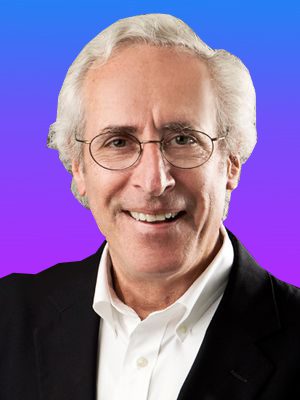
Bruce wolpe on ticker news

Multi-channel 24/7 cable news, multi-platform social media, Facetime/Zoom and the dark web:  they feed a homogenised bath of politics, rhetoric, cultural hot buttons and reference points. 

Everyone is playing with race, crime immigration, abortion, guns and voting rights in the same sandbox.

There were two elections for governor last week:

Virginia in the south and New Jersey in the north – but the trends were virtually identical. 

Biden carried those states a year ago by 10 and 16 points, respectively. 

Virginia saw a swing to the Republican winner of 12 points; in New Jersey it was 14 – but the Democrat barely held on. In both states, last year’s anti-Trump suburban and independent voters shifted back to the Republicans.

What happened to Biden and the Democrats?

He had an excellent start in January.  Relief that Trump was gone, a big initial economic recovery program, and unleashing the vaccine campaign. 

But as a former Ohio Republican congressman said, “You’ve had the debacle in Afghanistan, inflation, product shortages, and as a proxy for all of that, the fact that gas prices have skyrocketed.” And Delta staggered a return to normal.

Last week Biden was at 42% approval (he had been as high as 55%) and over 50% disapproval.  A near-record 70% of the country felt that America was on the wrong track.

No president can win for himself or his party from that position.

The whole Biden agenda was adrift too.  Weeks without progress.  Nothing was getting done.  EJ Dionne of Brookings wrote:  

“The warning signs were there for months. Democrats buried a series of popular initiatives under a debate over how big the program should be. They bickered and dawdled while the president’s approval ratings burned, obsessing about adversaries within while ignoring the partisan enemy outside the gates,

“Is it any wonder that so many among the party’s supporters failed to show up on Tuesday?”

As your Political Note outlined last week, the message of the Democratic setbacks was crystal clear: 

“Democrats!  You damn fools!  If you cannot govern you cannot win elections! How many times do we have to learn this lesson? You didn’t pass Obamacare early and lost the House in 2010.  So let’s pass these bills! And nothing on voting rights! If you have any hope of holding the House, what the hell are you waiting for?”

And guess what:  Biden got it.  At his day-after press conference, Biden understood: “People want us to get things done… we should produce for the American people… people need a little breathing room… we have to produce results for them.”  

And he underscored this yesterday in the White House:  

“The American people have made clear one overwhelming thing, I think — and I really mean it — all the talk about the elections and what do they mean and everything: They want us to deliver.  They want us to deliver,

Democrats, they want us to deliver.  Last night, we proved we can. 

On one big item, we delivered … But I think the one message that came across was: Get something done.  It’s time to get something done.  Stop — you all stop talking.  Get something done.” 

And that is why the infrastructure bill had to pass.  If the exquisite differences in ideological positioning among the Democrats had prevailed, and that bill had gone down, the Biden presidency would have been over. The Democrats in the House finally got that too.

But winning that battle does not mean the war is won.  Hardly. 

The $2 trillion social programs and climate bill is up next.  There will be zero Republican votes for it.  Republicans want to keep the benefits of that huge package – universal pre-k, expanded health care, senior care, clean energy and climate programs, child and earned income tax credits, affordable housing – from reaching voters. 

If Democrats fail to unite and pass it, they are eminently beatable next November, and the Republicans can take back control of Congress, and then work to get the White House back in 2024.

Biden’s most consequential battles are still ahead.

And all politics is national. 

Bruce Wolpe is a Ticker News US political contributor. He’s a Senior Fellow at the US Studies Centre and has worked with Democrats in Congress during President Barack Obama's first term, and on the staff of Prime Minister Julia Gillard. He has also served as the former PM's chief of staff.


Ticker Views

Why the Minneapolis shooting of Alex Pretti sparked national outrage

Published

on

Why the shooting of Alex Pretti in Minneapolis is so significant – expert Q&A

Mark Shanahan, University of Surrey

Federal immigration agents in the city of Minneapolis are accused of having wrestled a 37-year-old intensive care nurse called Alex Pretti to the ground and then shooting him dead. The killing took place just over a mile from where another American citizen, Renee Good, was allegedly fatally shot by federal agents weeks earlier.

The latest incident prompted angry protests from people in Minneapolis who want the immigration enforcement operation in their city to end. We spoke to Mark Shanahan, an associate professor of political engagement at the University of Surrey, to address several key issues.

Why has sending in federal immigration agents caused such trouble in Minnesota?

Since returning to the White House in January 2025, the national guard has been deployed to several US cities to quell what have generally been Donald Trump-inflated crises, with illegal migration among the most prominent. However, in December, the Supreme Court ruled that Trump did not have authority for such deployments.

So, since then we have seen federal agents with US Customs and Border Protection and Immigration and Customs Enforcement taking the battle largely to minorities in cities with Democratic party leadership as part of the president’s violent attack on illegal immigration, a situation he has described as “the greatest invasion in history”.

Minneapolis is a Democrat-run city in a Democrat-led state. The governor is Tim Walz who ran for vice-president on the Kamala Harris ticket against Trump in the 2024 election. Walz has faced allegations, which he denies, of overlooking alleged widespread fraud in the financing of public safety net programmes, supposedly involving segments of the Somali-American community.

While most of these allegations have been refuted, they gave Trump reason to send in federal agents. This has ramped up tensions between state officials and the administration, causing brutal and unnecessary deaths in the community and pitting ordinary Minnesotans against federal government officials.

How does the situation in Minnesota reflect the second amendment right to bear arms?

It’s a reversal of virtually all of the second amendment debates that have been seen in recent years. The second amendment was introduced to the US constitution in 1791 through the Bill of Rights due to a deep mistrust of centralised military power and a desire to ensure that the newly formed federal government could not disarm the populace.

The founding fathers envisaged a “natural right of resistance and self-preservation”. Trump’s actions in sending in armed federal agents to conduct enforcement operations in various states appear to fulfil the founding fathers’ concerns.

The agents are trampling all over not only citizens’ second amendment right to bear arms (officials seemingly connected Pretti’s killing to him carrying a weapon) but also their first amendment right to freedom of assembly.

How have the fatal shootings affected Trump’s popularity?

Trump’s popularity is on the decline. His failure to deliver on the economic promises outlined in his election campaign, scatter-gun approach to international relations and the widening gulf between rhetoric and achievement have all damaged his standing in the polls.

In a CNN poll published on January 16, almost six in ten respondents described Trump’s first year back in office as a failure with the president focused on the wrong priorities.

And what support he does have is ebbing rapidly as federal immigration agents appear out of control, targeting many more documented citizens than illegal migrants, spreading fear and operating as if they are above the law.

With what looks like high levels of gaslighting coming from Homeland Security officials, voters are turning against the increasing autocracy of this administration, believing in the evidence widespread across the media rather than highly contentious statements from Trump’s lieutenants.

Is it unusual for former presidents to speak out the way Barack Obama and Bill Clinton have?

It certainly is. There is a longstanding tradition in the US of, and implicit agreement among, former presidents to avoid public criticism of the incumbent. Such reticence to speak is generally a sign of respect for the office and an acknowledgement of the unique and difficult challenges of the presidency.

But Trump 2.0 is no normal presidency. The 47th president’s style is both combative and retributive, and there seems to be an increasing feeling of it being out of step with the desires and best interest of the country he leads.

Trump’s march to autocracy creates crises where he regards himself as the hero the country needs to overcome its ills. His predecessors take a different view.

Whether it’s Obama calling out the assault on core American values or Clinton’s condemnation of the “horrible scenes” in Minneapolis as “unacceptable” and avoidable, Democrat past presidents have not held back. Notably, the only living previous Republican president, George W. Bush, has so far kept his own counsel.

What can be done to prevent further violence?

Most simply, Trump could end the deployment of federal immigration agents to Minneapolis and refrain from similar actions in the future. He is clearly looking for an off-ramp and sending his “border czar”, Tom Homan, to Minneapolis to direct operations could be the first step to de-escalation. But Trump abhors being called out as wrong and, at least beyond Minneapolis, is far more likely to double down on the immigration enforcement activities.

Realistically, the most likely de-escalator is Congress showing some teeth and refusing to fund further federal immigration enforcement activity. Democrats could force another government shutdown over the issue, and need just a handful of Republicans to flip in order to refuse to sanction a 2026 budget for the Department of Homeland Security.

At a public level, the greater the scrutiny of immigration enforcement agencies, the closer the fact-checking of official statements and the more cohesive the opposition to Trump’s deportation policy, the greater the chance of effectively opposing it.

It is midterm year – and the greater the public pressure, the more likely Republican legislators are to cleave away from the Trump line. While he currently controls the levers of power, that control remains fragile. Even Trump may soon realise that overt, violent, coercive autocracy is not a vote winner.The Conversation

Mark Shanahan, Associate Professor of Political Engagement, University of Surrey

This article is republished from The Conversation under a Creative Commons license. Read the original article.

Continue Reading

Ticker Views

Minnesota shootings spark political firestorm over ICE and DHS funding

Outrage over ICE operations grows after nurse Alex Pretti’s death, prompting calls for reforms and independent investigations.

Published

on

Outrage over ICE operations grows after nurse Alex Pretti’s death, prompting calls for reforms and independent investigations.

Outrage over federal immigration enforcement has surged following the death of Minneapolis ICU nurse Alex Pretti, who was killed during a federal operation that has become a flashpoint in the national debate over use of force and civil liberties. The incident — one of several involving federal agents this month — has drawn protests, political condemnations, and calls for independent investigations from both Republicans and Democrats.

In Congress, Senate Democrats are leveraging the controversy to push for reforms to ICE and DHS funding, threatening to withhold money unless sweeping changes are made. With a possible partial government shutdown on the horizon, lawmakers face escalating pressure from activists, unions, business leaders, and constituents concerned about federal accountability and immigration policy.

We’re joined by Oz Sultan from Sultan Interactive Group to break down the stakes and what these events could mean for the future of federal enforcement and immigration reform politics.

Subscribe to never miss an episode of Ticker – https://www.youtube.com/@weareticker

#MinnesotaShootings #ICEReform #DHSFunding #GovernmentShutdown #AlexPretti #ImmigrationCrisis #USPolitics #TickerNews


Download the Ticker app

Continue Reading

Ticker Views

Inside Trump’s Board of Peace and the power critics say is unprecedented

Published

on

Donald Trump’s Board of Peace signed at Davos – key points I took away from my visit to the ski resort

Francesco Grillo, Bocconi University

Donald Trump’s newly launched “Board of Peace” presents itself as a bold attempt to break with what its founders describe as decades of failed international diplomacy. Its charter opens with a declaration that few would openly dispute: “Durable peace requires pragmatic judgment, common-sense solutions, and the courage to depart from approaches and institutions that have too often failed.”

It is true that the world urgently needs to overcome decades of inertia to reform its international organisations. It is true that new institutions are needed to solve global problems rather than merely managing never-ending crises.

This is perhaps why Donald Trump decided to hold the signing ceremony for his new board on the margins of the World Economic Forum in Davos. Here, more than any other place, is where results-oriented global business leaders supposedly gather. At the signing of the charter, a jubilant Trump was among 20 heads of state and prime ministers (of the 60 who had been invited).

The “most prestigious board ever formed” so far includes the presidents of Azerbaijan, Kazakhstan, Uzbekistan and the prime ministers of Mongolia, Armenia and Pakistan. Rightly, representatives of the governments more directly involved in the “Gaza peace plan” are also present, including Israel, Qatar, UAE, Saudi Arabia, Jordan and Egypt.

From south-east Asia we have Indonesia and Vietnam and from South America, President Javier Milei from Argentina. Hungary, Bulgaria and Kosovo are the only European countries to join so far.

The board’s charter goes on to set out a “partnership” that would be even less accountable than the old United Nations security council and even less democratic than any publicly listed company whose CEO is attending Davos.

It has potential as an instrument for building peace in Gaza, but risks failure if its scope becomes too diluted. And Davos itself risks losing credibility as a place where people “make sense of global challenges and move the world forward together”, if the search for a new world order becomes the celebration of one single man.

I have been to Davos several times. It’s certainly not one of the most prestigious ski resorts of the Swiss Alps. And this year, more than ever, I have felt increasingly sceptical about its capacity as a forum for generating the ideas that the world desperately needs to make sense of those global challenges.

Out of about 3,000 delegates, less than one out of ten seems to be under 30, to my eye. The gender balance is not good either. There are lots of Americans and most pay expensive attendance fees. It’s a world in which power lines are not clearly drawn unless you are in the know.

The Board of Peace is far more transparent when it comes to asserting where the power lies. Trump is expressly nominated by the charter as the chairman for life. He is the only one who can invite states to become members – and revoke their membership. He alone nominates his successor. He holds a veto over any decision.

At the security council, this is a power held by the five nations that won the second world war. Trump may continue to serve even if he is no longer president of the US. Nobody may, of course, seek to dismiss the chairman, although the charter graciously acknowledges that a removal may happen in case of “incapacity” of the supreme leader, if the other members of the board agree unanimously.

This is more power than most modern dictators can claim. Putin has to win elections, and Xi Jinping is nominated by a party. It is more power than even Roman emperors, who were formally designated by the senate (and in reality chosen by the army). Trump has proposed a document that hands him powers of which Augustus himself could not even dream.

What is striking is that most EU member states are “considering” the invitation to join. Some are even said to be trying to work out how they would navigate conflicts such a move would present with their own national constitutions or with the EU treaties (it should be obvious to any student of law that there is no such possibility for a self-declared liberal democracy).

It would be catastrophic if they did. They would be agreeing that an international organisation based on the unaccountable leadership of one single individual could be a starting point for constructing a new world order.

Trump’s advisers are right when they write in the charter that “too often the approaches to most of the global problems foster perpetual dependency, and institutionalise crisis rather than leading people beyond it”. We need to make sure that international organisations are rewarded according to their ability to solve problems and not just manage them endlessly. Yet this requires more accountability and participation – not less. We need proposals that are creative but serious.

I am sure that many have doubts about the World Economic Forum becoming the stage for the never-ending show of the producer of The Apprentice.The Conversation

Francesco Grillo, Academic Fellow, Department of Social and Political Sciences, Bocconi University

This article is republished from The Conversation under a Creative Commons license. Read the original article.

Continue Reading

Trending Now