
News
National security act: bipartisan senators propose bill against war

Three US senators proposing new bipartisan legislation that would give congress the power to approve or deny war missions
Three bipartisan US senators are proposing to introduce sweeping legislation that would give Congress the power to approve or deny war missions. Independent senator Bernie Sanders, Democrat Chris Murphy as well as Republican Mike Lee are working on the bill.
The senators are proposing this legislation to re-assert congressional authority over war-making power. The ‘National Security Act’ will include sending troops into combat, selling lethal weapons to other countries and declaring national emergencies.
Sending troops into combat, selling lethal weapons and national emergencies
The current policy only gives congress the ability to disapprove sales once the process has already started. It requires a veto-proof majority to halt the sale.
The bill would end permanent emergencies, requiring congress to renew them periodically. Congress would also only be able to enact a state of emergency for a maximum of 5 years.
It also bars using the International Emergency Economic Powers Act to impose tariffs. However, officials can still use the act still to ban imports entirely.
Strengthening the 1973 War Powers Resolution
It would be the largest overhaul of Congress’s authority over military matters since the War Powers Resolution. Congress introduced the 1973 bill to check the powers of former president Richard Nixon in reaction to the tumult of the Vietnam War.
In this case, the bipartisan legislation comes as the US withdraws from its longest war in Afghanistan. Sanders says the costs of war are “too great”.
Which senators are proposing the National Security Act?
Independent senator Bernie Sanders, Democrat Chris Murphy as well as Republican Mike Lee are working on the war bill.
Mike Lee
Mike Lee is a conservative Republican who has previously expressed frustration with the use of military force from both parties. In 2020, he criticised the Trump administration for carrying out a targeted airstrike in Iraq without congressional approval. He says that presidents often ignore Congress, even when members do speak up.
“Presidents of both parties have usurped Congress’s prerogative to determine if, when, and how we go to war”
Republican Mike Lee
“Now, America’s global standing, treasure, and brave service members are being lost in conflicts the people’s legislators never debated. In areas where the Constitution grants broad powers to Congress, Congress is ignored.”
Bernie Sanders
Progressive independent senator Bernie Sanders says the legislation comes as an “important step toward reasserting constitutional power”.
“The time is long overdue for Congress to reassert its constitutional role in matters of war and peace”
Bernie Sanders
“I hope it will lead to a larger discussion, both in the Congress and among the public, about the uses of military force in our foreign policy.”
Chris Murphy
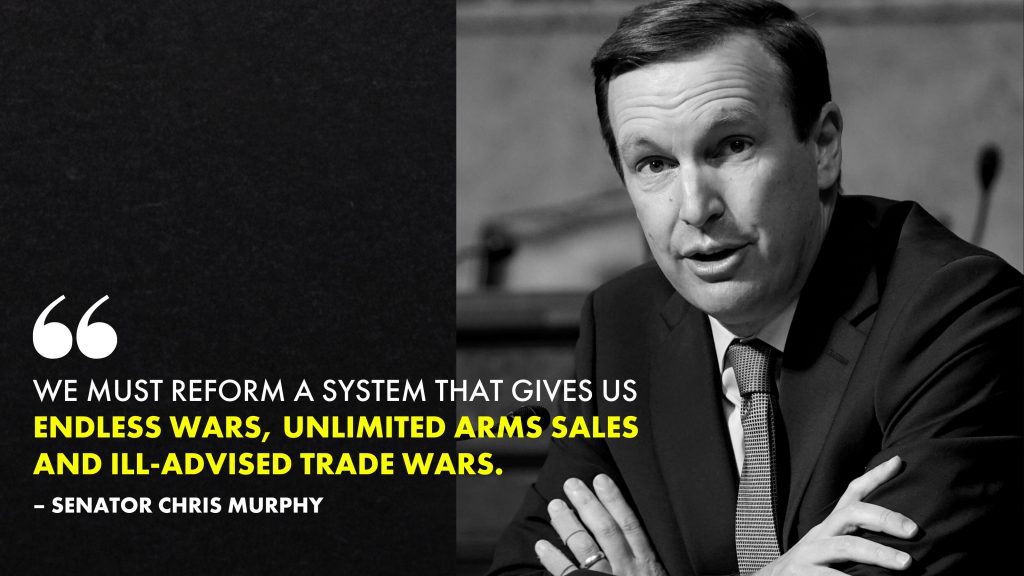
Chris Murphy is a Democrat. He warns that, “before it’s too late, Congress needs to reclaim its rightful role as co-equal branch on matters of war and national security.”
-
 News2 days ago
Apple launches products on October 13
-
News2 days ago
AI Review Committee provides expert advice on governance
-
News2 days ago
Trump: US won’t attack Iran before midterms
-
News4 days ago
OpenAI apologises to Australia for AI incident
-
Shows3 days ago
Redefining success: beyond money and status
-
Shows4 days ago
High-quality early childhood education: roles and responsibilities
-
News4 days ago
Drone strike sinks ship; crew missing
-
News4 days ago
Widespread student protests in France escalate tensions