Connect with us
https://tickernews.co/wp-content/uploads/2023/10/AmEx-Thought-Leaders.jpg

News

Joe Biden to travel to Asia for critical quad meeting

Published

on

U.S President Joe Biden’s first tour of Asia is expected to be dominated by discussions on China, North Korea and Taiwan

U.S leader Joe Biden will travel to Asia this week for the first time in his presidency.

Countering China sits atop President Biden’s list of priorities, as the U.S moves to allay fears their focus in the area has slipped during the current conflict in Ukraine.

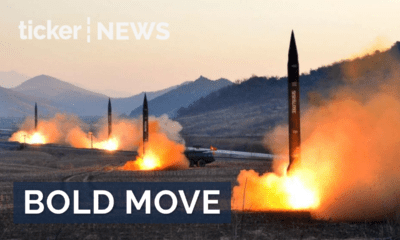
Biden’s arrival comes amid a background of simmering tensions in the area. Beijing’s influence over Taiwan will be at the forefront of discussions, as will North Korea’s military capabilities, after reports of a North Korean missile test surfaced this week.

Japan and South Korea will both host the U.S president, who will also meet with leaders of India and Australia at a quad nations summit.

Quad nations meeting

The Quadrilateral Security Dialogue is a strategic alliance between the U.S, Australia, India and Japan. Various iterations of the dialogue have existed since 2007.

While not a military alliance like NATO, the U.S regards the grouping as key to cementing pro-democratic values throughout Asia.

Reports suggest Biden will highlight issues including COVID vaccines, humanitarian aid, infrastructure development as well as climate, space and cyberscurity.

China’s influence throughout Asia will also be at the forefront of discussions after a tense year of relations between Beijing and the West.

In January this year, Beijing officials threatened to clash with the U.S over Taiwanese independence, and more recently condemned U.S military for sailing through the Taiwanese straight. Which they claim disturbs peace in the area.

Australia-China relations have also come under friction in recent weeks. Last month, Beijing signed a controversial security pact with the Solomon Islands, raising fears China could set up a de-facto military base off Australia’s east coast.

However Australia’s stance with China could be impacted by the impending federal election, which could see a change of government on Saturday.

North Korea

President Biden is also expected to address concerns over North Korea, after the nation conducted another missile test during the week.

Dr. Tillman Ruff told Ticker NEWS North Korea “has embarked on an enormous acceleration of its missile testing.”

“There have been 15 tests so far this year.” He says

Dr. Ruff says it is likely these test were timed to coincide with the election of a new conservative president in South Korea, and while global attention’s were focused on the war in Ukraine.

However, Human Rights Watch has called on Biden and newly elected Korean President Yoon Seok-youl to address North Korea’s human rights record as well as its nuclear capabilities.

North Korea is currently experiencing its first major COVID-19 outbreak, and there are fears the nation, which has not administered vaccines, could be facing a catastrophic death toll.

In a statement on the Human Rights Watch website, Lina Yoon urged the U.S and Korea to persuade Kim Jong-un’s regime to accept foreign aid.

“North Koreans are facing a uniquely acute catastrophe, and the world should make every effort to address it” she says.

Bryan Hoadley Contributed to this post.

News

Iran live updates: Trump claims Khamenei dead as Iran insists he remains in command

Published

on

video
play-sharp-fill

What’s happening in the Middle East?

Continue Reading

News

Israel strikes Tehran anew as conflict escalates and global markets react

Israel strikes Tehran after Khamenei’s death; U.S. warns of prolonged conflict as tensions escalate in the Middle East.

Published

on

Israel strikes Tehran after Khamenei’s death; U.S. warns of prolonged conflict as tensions escalate in the Middle East.


Israel has launched a new wave of strikes on Tehran, following the reported killing of Iran’s Supreme Leader, Ali Khamenei. U.S. President Donald Trump has warned the campaign could last up to a month, framing the operation as a move to prevent Iran from acquiring nuclear capabilities.

Iran has retaliated with missile attacks, while its Revolutionary Guards claim responsibility for assaults on oil tankers in the Gulf. The escalating hostilities are already disrupting global shipping lanes and air travel, sending shockwaves through international markets.

With reports of the first U.S. casualties emerging and Washington declaring the Tehran operation a success, tensions across the Middle East are intensifying rapidly. The question now is how far this conflict could spread — and at what cost.

Subscribe to never miss an episode of Ticker – https://www.youtube.com/@weareticker

#Israel #Iran #Tehran #MiddleEastConflict #Geopolitics #OilMarkets #BreakingNews #GlobalSecurity


Download the Ticker app

Continue Reading

News

U.S. and Israel strike Iran as missiles hit Gulf bases and oil surges

U.S. and Israel launch major military operation against Iran; tensions rise as conflict escalates, impacting global markets.

Published

on

U.S. and Israel launch major military operation against Iran; tensions rise as conflict escalates, impacting global markets.

The United States and Israel have launched a sweeping military operation against Iran, striking leadership targets and more than 500 military sites in what President Trump has dubbed Operation Epic Fury.

Explosions have rocked Tehran, with civilians fleeing the capital as U.S. sea and air assets carry out sustained attacks. Washington says the mission is designed to prevent a nuclear armed Iran and has even called on Iranians to rise up against the regime.

Iran has retaliated with a barrage of missiles and drones targeting Israel and U.S. bases across the region, including in Qatar, Kuwait, the United Arab Emirates and Bahrain. While many projectiles were intercepted, a U.S. base in Bahrain sustained damage.

Gulf states long seen as stable hubs for global business are now directly in the firing line, raising fears of a wider regional war.

Oil prices are climbing and tankers are diverting from the Strait of Hormuz as markets react to the escalating conflict. U.S. aircraft carriers, advanced fighter jets and missile destroyers remain in position, signalling more strikes could follow.

With global leaders scrambling diplomatically, the world is watching to see whether this spirals further or shifts back to negotiations.Download the Ticker app

Continue Reading

Trending Now