
News
Shinzo Abe has been assassinated

Japan is in shock as former PM Shinzo Abe assassinated during campaign speech in Nara
Japan’s longest-serving Prime Minister was shot at 11.30 am local time, while the 67-year-old was giving a speech.
Shinzo Abe was seen bleeding, and has been rushed to hospital, reportedly showing vital signs.
A 42-year-old male was detained immediately at the scene with what appears to be a handmade gun.
Japanese doctors now confirm he was pronounced dead at 5:03pm.
Doctors tried to perform a blood transfusion, but they have spoken about the difficulties in performing the transfusion.
Shinzo Abe’s legacy
A conservative nationalist by most descriptions, the 67-year-old remains the country’s longest serving prime minister, having led the ruling Liberal Democratic Party to victory twice.
His first stint as PM was brief and marred in scandal. But he made a political comeback in 2012, and stayed in power until 2020 when he resigned for health reasons.
Abe stepped down then after weeks of speculation, revealing that he had suffered a relapse of ulcerative colitis.
He was known for his hawkish foreign policy and a signature economic strategy that popularly came to be known as “Abenomics”.
How the assassination unfolded
- Abe was campaigning in the southern city of Nara for a parliamentary election – around 480km from Tokyo
- He was giving a stump speech for political candidate Kei Sato – a current member of the Upper House running for re-election in Nara
- Two shots rang out and Abe is believed to have been shot in the neck
- He immediately collapsed and was rushed to the nearest hospital
- Security officials at the scene tackled the gunman, who is now in custody
- An unidentified weapon was filmed on the ground after the attack. There have been suggestions the attacker was using a home-made gun but police have not confirmed this
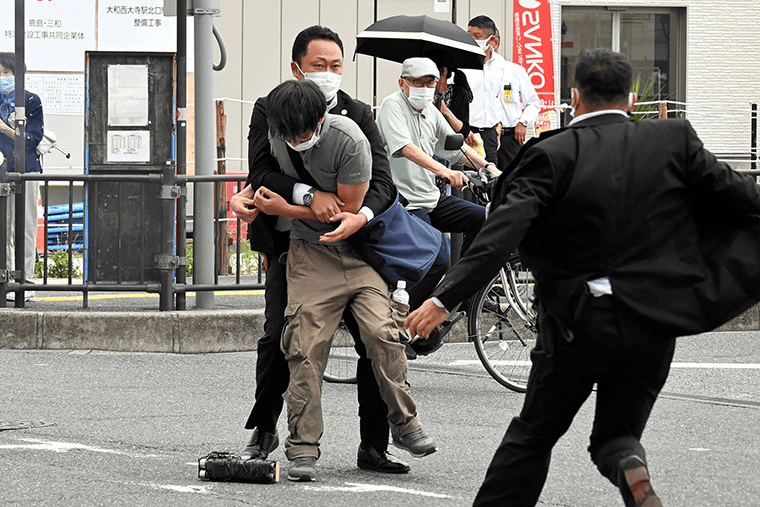
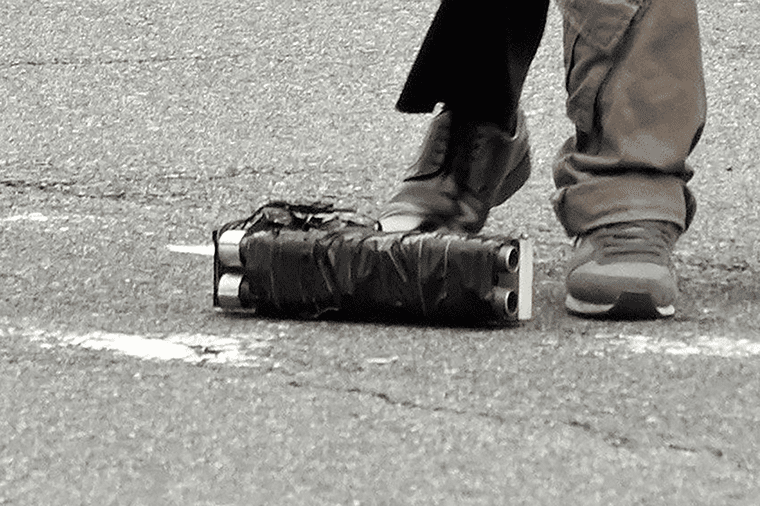
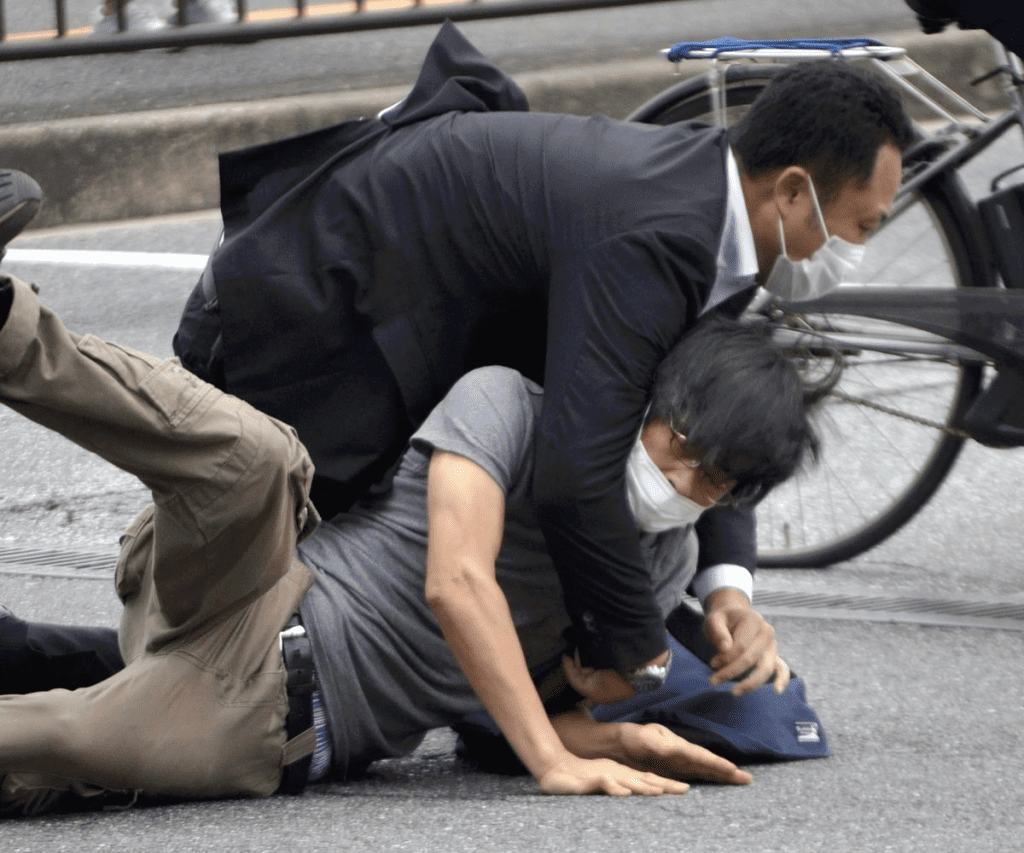
He was giving a campaign speech in the western Japanese city of Nara when the shots fired.
Shinzo Abe is Japan’s longest serving prime minister. He served as prime minister and President of the Liberal Democratic Party from 2006 to 2007, and again from 2012 to 2020.
However, he voluntarily stepped down in 2020 due to health reasons.
Abe is a conservative, who was often described as a ‘right-wing nationalist’ by political commentators.
World leaders react to shooting
World leaders are reacting to the shocking assassination attempt. Here’s a round up of some of the reactions.
US Secretary of State Antony Blinken has expressed shock at the shooting of former Japanese PM Shinzo Abe.
Speaking at the G20 gathering of foreign ministers in Indonesia, Blinken said he was “”deeply saddened and deeply concerned” by the shooting.
“Our thoughts, our prayers are with him, with his family, with the people of Japan,” Blinken said.
“This is a very, very sad moment. And we’re awaiting news from Japan.”
Australian PM Anthony Albanese said his country’s “thoughts are with [Abe’s] family and the people of Japan at this time”.
Lee Hsien Loong, Singapore’e PM, shared a post on Facebook, describing the shooting as a “senseless act of violence”. He also described Abe as “a good friend of Singapore”.
New Zealand’s leader Jacinda Ardern recalled Abe being one of the first world leaders she met “when I became Prime Minister”. And she said: “Events like this shake us all to the core.”
Meanwhile, Ursula von der Leyen, president of the EU Commission, urged Abe to “stay strong”.
Sergei Lavrov, Russia’s foreign minister, gave a brief reaction in which he said he “didn’t know” much about the incident. He also expressed “my condolences to my Japanese colleague for what happened [sic]”.
Chinese officials have expressed shock at the shooting.
The country’s officials extended condolences to Abe’s family and “hopes he will be out of danger and recover soon”, a foreign ministry spokesman told a daily briefing in Beijing.
Blood transfusion
The younger brother of Shinzo Abe spoken to reporters in Tokyo, saying the former prime minister is currently receiving a blood transfusion in hospital.
Doctors are attempting to save his life.
Nobuo Kishi, who serves as defence minister in the Japanese government, adds that whatever the shooter’s motivations are, the attack is an inexcusable act.
-
 News4 days ago
Meta invests $10 billion in West Texas AI center
-
Money2 days ago
U.S. stocks tumble as Middle East tensions continue
-
News2 days ago
IAEA warns strikes near Iran’s plant risk crisis
-
News4 days ago
Dow drops over 450 points amid oil rise
-
News4 days ago
Iran advances tolls on Strait of Hormuz
-
Tech4 days ago
Microsoft suspends hiring in cloud, sales divisions
-
News2 days ago
Russia warns nuclear conflict between Israel and Iran inevitable
-
Money5 days ago
Global stock markets rebounded amid conflict fears