

Connect with us
https://tickernews.co/wp-content/uploads/2023/10/AmEx-Thought-Leaders.jpg

Ticker Views

Is this what the build-up to war feels like? ticker VIEWS

Published

on

On June 15, 2016, Walt Disney CEO Bob Iger stood before a crowd of 3000 celebrities, political leaders and super-fans, to proclaim that Shanghai Disneyland was “authentically Disney, distinctly Chinese”.

It’s the capitalists way of saying “we didn’t get everything we wanted, but they didn’t either.”

Six years since then, Shanghai Disneyland Park has been a roaring success. While many Chinese visitors don’t exactly know every Disney character, they know they should enjoy it.

Disney CEO Bob Iger opens Shanghai Disneyland in 2016

Six years later, a trade war later, a three Presidents later, relations between China and the west are at a critical level.

In the decade of negotiations leading up to that June 2016 opening of Disneyland, Bob Iger never could have foreseen the geopolitical shift that has occurred so quickly.

Even Australia is looking to build up a stockpile of missiles, Japan has just released a white paper describing the Taiwan situation as a crisis.
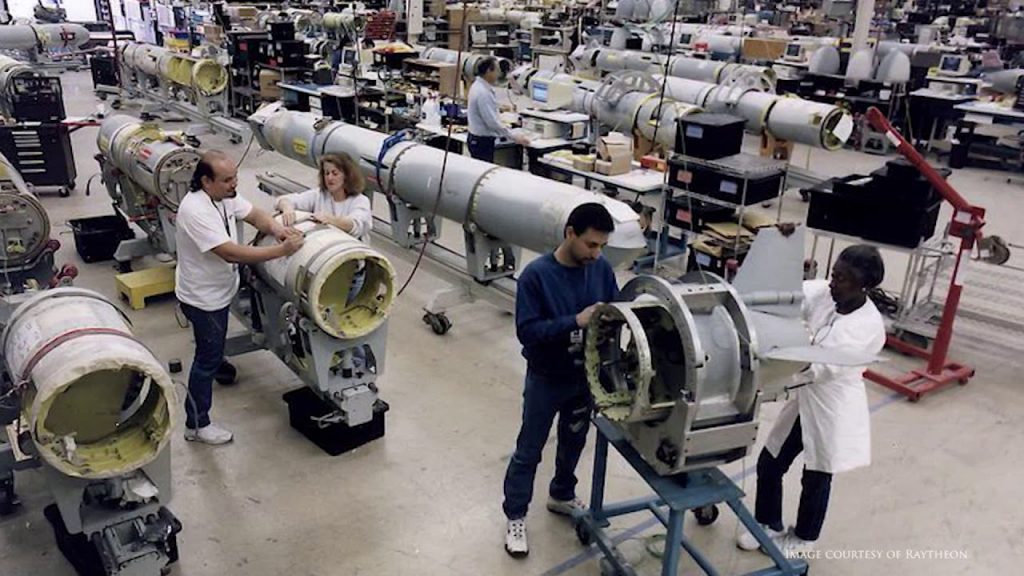
Australia is investigating a strategy to build missiles.

“Stabilising the situation surrounding Taiwan is important for Japan’s security and the stability of the international community,” the white paper said. “Therefore, it is necessary that we pay close attention to the situation with a sense of crisis more than ever before.”

JAPANESE GOVERNMENT WHITE PAPER

This is an extraordinary shift in tone, as the world is confronted by an aggressive Chinese state.

Australia has been China’s whipping boy since last year, when the Prime Minister called for a WHO investigation into the origins of COVID19.
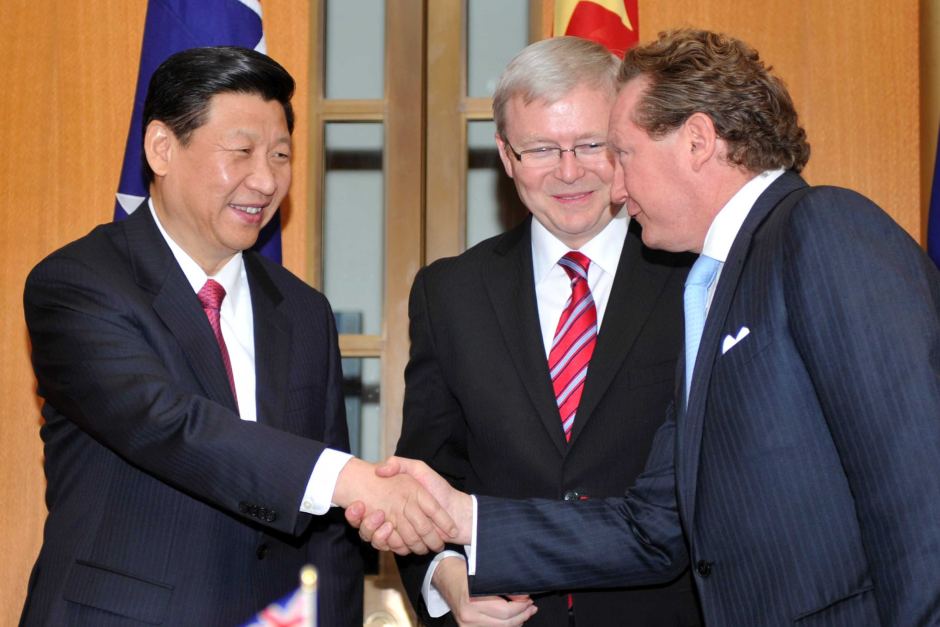
Five Prime Ministers ago, under Kevin Rudd’s administration, Xi Jinping was a guest in Canberra. He even attended an AFL match. Now the Chinese won’t send us any students or even drink our Shiraz.

WASHINGTON IS WATCHING

Japan’s latest assessment of the China threat to the region will be watched closely in Washington and Canberra. But other countries too. While China knows how to buy friends and influence governments, it’s also very good at creating enemies, on pretty much every territorial border.

Our generation has grown up without the threat of conscription, and despite the yearly services in Australia to mark Anzac Day, the dreadful realities of world wars have drifted into the distance.

Our focus is on wealth creation, not city destruction. War seems irresponsible and difficult to comprehend.
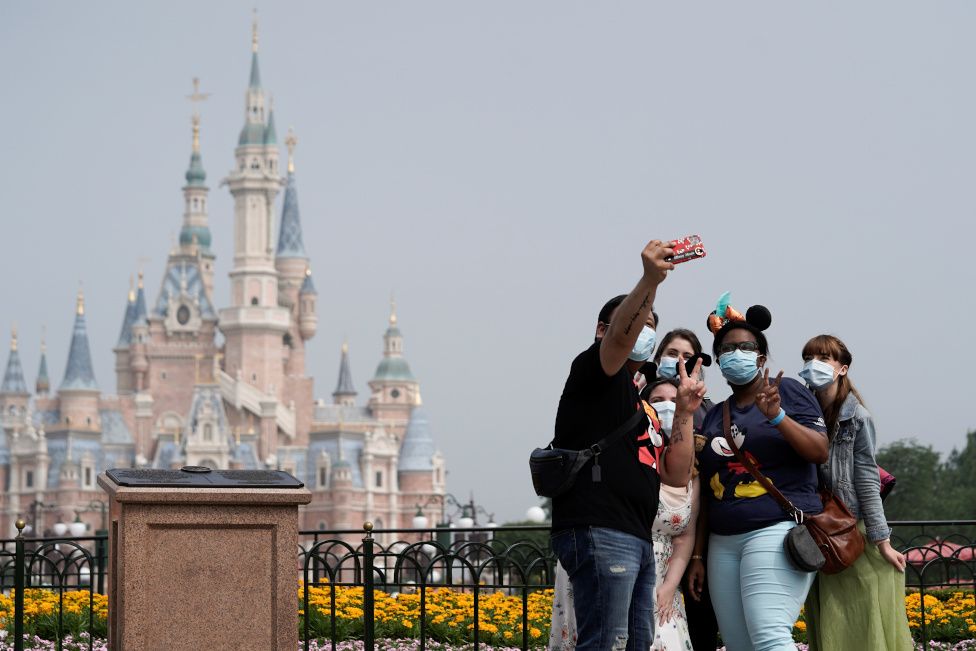
Chinese tourists pose at Shanghai Disneyland Park

Yet the similarities in tone between the west and China, and say, the west and Japan or German in the 1930s feels eerily similar.

When we hear about missile shields, mass missile production and territorial crisis, we are instantly reminded how fragile peace can be.

One can only hope we can ride the current wave. And maybe visit Disneyland Shanghai one day too.

Continue Reading
Click to comment

Leave a Reply

Your email address will not be published. Required fields are marked *

Ticker Views

Australia’s national AI plan has just been released. Who exactly will benefit?

Published

on

Jake Goldenfein, The University of Melbourne; Christine Parker, The University of Melbourne, and Kimberlee Weatherall, University of Sydney

Today, the Albanese Labor government released the long-awaited National AI Plan, “a whole-of-government framework that ensures technology works for people, not the other way around”.

With this plan, the government promises an inclusive artificial intelligence (AI) economy that protects workers, fills service gaps, and supports local AI development.

In a major reversal, it also confirms Australia won’t implement mandatory guardrails for high-risk AI. Instead, it argues our existing legal regime is sufficient, and any minor changes for specific AI harms or risk can be managed with help from a new A$30 million AI Safety Institute within the Department of Industry.

Avoiding big changes to Australia’s legal system makes sense in light of the plan’s primary goal – making Australia an attractive location for international data centre investment.

The initial caution is gone

After the public release of ChatGPT in November 2022 ushered in a generative AI boom, initial responses focused on existential risks posed by AI.

Leading AI figures even called for a pause on all AI research. Governments outlined plans to regulate.

But as investment in AI has grown, governments around the world have now shifted from caution to an AI race: embracing the opportunities while managing risks.

In 2023, the European Union created the world’s leading AI plan promoting the uptake of human-centric and trustworthy artificial intelligence. The United States launched its own, more bullish action plan in July 2025.

The new Australian plan prioritises creating a local AI software industry, spreading the benefit of AI “productivity gains” to workers and public service users, capturing some of the relentless global investment in AI data centres, and promoting Australia’s regional leadership by becoming an infrastructure and computing hub in the Indo-Pacific.

Those goals are outlined in the plan’s three pillars: capturing the opportunities, spreading the benefits, and keeping us safe.

What opportunities are we capturing?

The jury is still out on whether AI will actually boost productivity for all organisations and businesses that adopt it.

Regardless, global investment in AI infrastructure has been immense, with some predictions on global data centre investments reaching A$8 trillion by 2030 (so long as the bubble doesn’t burst before then).

Through the new AI plan, Australia wants to get in on the boom and become a location for US and global tech industry capital investment.

In the AI plan, the selling point for increased Australian data centre investment is the boost this would provide for our renewable energy transition. States are already competing for that investment. New South Wales has streamlined data centre approval processes, and Victoria is creating incentives to “ruthlessly” chase data centre investment in greenfield sites.

Under the new federal environmental law reforms passed last week, new data centre approvals may be fast-tracked if they are co-located with new renewable power, meaning less time to consider biodiversity and other environmental impacts.

But data centres are also controversial. Concerns about the energy and water demands of large data centres in Australia are already growing.

The water use impacts of data centres are significant – and the plan is remarkably silent on this apart from promising “efficient liquid cooling”. So far, experience from Germany and the US shows data centres stretching energy grids beyond their limit.

It’s true data centre companies are likely to invest in renewable energy, but at the same time growth in data centre demands is currently justifying the continuation of fossil fuel use.

There’s some requirement for Australian agencies to consider the environmental sustainability of data centres hosting government services. But a robust plan for environmental assessment and reporting across public and private sectors is lacking.

Who will really benefit from AI?

The plan promises the economic and efficiency benefits of AI will be for everyone – workers, small and medium businesses, and those receiving government services.

Recent scandals suggest Australian businesses are keen to use AI to reduce labour costs without necessarily maintaining service quality. This has created anxiety around the impact of AI on labour markets and work conditions.

Australia’s AI plan tackles this through promoting worker development, training and re-skilling, rather than protecting existing conditions.

The Australian union movement will need to be active to make the “AI-ready workers” narrative a reality, and to protect workers from AI being used to reduce labour costs, increase surveillance, and speed up work.

The plan also mentions improving public service efficiency. Whether or not those efficiency gains are possible is hard to say. However, the plan does recognise we’ll need comprehensive investment to unlock the value of private data holdings and public public data holdings useful for AI.

Will we be safe enough?

With the release of the plan, the government has officially abandoned last year’s proposals for mandatory guardrails for high-risk AI systems. It claims Australia’s existing legal frameworks are already strong, and can be updated “case by case”.

As we’ve pointed out previously, this is out of step with public opinion. More than 75% of Australians want AI regulation.

It’s also out of step with other countries. The European Union already prohibits the most risky AI systems, and has updated product safety and platform regulations. It’s also currently refining a framework for regulating high-risk AI systems. Canadian federal government systems are regulated by a tiered risk management system. South Korea, Japan, Brazil and China all have rules that govern AI-specific risks.

Australia’s claim to have a strong, adequate and stable legal framework would be much more credible if the document included a plan for, or clarity about our significant law reform backlog. This backlog includes privacy rights, consumer protection, automated decision-making in government post-Robodebt, as well as copyright and digital duty of care.

Ultimately the National AI Plan says some good things about sustainability, sharing the benefits, and keeping Australians safe even as the government makes a pitch for data centre investment and becoming an AI hub for the region.

Compared with those of some other nations, the plan is short on specificity. The test will lie in whether the government gives substance to its goals and promises, instead of just chasing the short-term AI investment dollar.The Conversation

Jake Goldenfein, Senior Lecturer, Law and Technology, The University of Melbourne; Christine Parker, Professor of Law, The University of Melbourne, and Kimberlee Weatherall, Professor of Law, University of Sydney

This article is republished from The Conversation under a Creative Commons license. Read the original article.

Continue Reading

Ticker Views

Immigration panic comes in waves. Data shows who worries most, and when

Published

on

Peter Mayer, University of Adelaide and Sukhmani Khorana, UNSW Sydney

There are several predictable cycles in Australian public opinion, and one of them is the moral panic surrounding immigration.

Some readers will remember the immigration panic of the 1990s, which gave rise to Pauline Hanson and her One Nation party.

Then the issue fades from the mainstream, only to return sometime later. Why?

It turns out it’s possible to chart the voters who will become concerned about immigration, and when.

We studied the cycles of concern

There are predictable cycles in public concerns about the level of migrants accepted into Australia.

The most recent wave of migration panic in Australia was made obvious during the anti-immigration protests across capital cities that began in late August this year.

While the numbers who turned up to these protests were small compared to similar rallies in the United Kingdom, they were not insignificant for a settler-colonial nation built on successive waves of migration.

Australia’s history with anti-immigration fears goes back as far as the Lambing Flat riots in New South Wales in 1860, when white miners attacked and drove off about 2,000 Chinese miners.

What characterises almost all these moments is a period of economic recession and rising unemployment.

Generally, when unemployment rises, so does the number of Australians who feel migrant numbers are “too high”. One such cycle occurred in the early 1980s when unemployment, especially youth unemployment, rose sharply.

A second period of near-panic occurred during the recession in the early 1990s, when more than 70% of the population felt migration levels were too high.

There was a secondary burst of concern during the Asian Financial Crisis in the late 1990s; at that time there was rising concern about the number of asylum-seekers arriving by boat.

In that period Pauline Hanson was disendorsed by the Liberal Party and then founded the One Nation Party in 1997.

John Howard responded to the Tampa Affair in 2001 by passing the Border Protection Bill which undercut rising support for One Nation and opened a path to re-election later that year.

Still, the number of undocumented migrants arriving by boat increased sharply up until 2013.

The COVID pandemic appears to have disrupted the close link between rates of unemployment and concern about migration numbers.

In 2018-19, unemployment rates were relatively low but concerns over immigration numbers began to rise. During 2020, with migration barred, concerns over migration plunged.

After the peak of COVID, unemployment levels have remained very low but concerns over migration levels shot up sharply. Here again, the cause is probably economic – this time reflecting concerns over inflation, the cost of living and housing.

Even at this year’s election, the housing crisis was falsely linked to migration.

Trends in age groups

Who is most likely to feel the number of migrants is too high?

Data from recent Australian electoral surveys, taken after each general election, allow us to form a clearer picture.

It’s clear older voters are more likely to feel numbers are too high. Younger generations tend to be less worried about migration numbers than the generations that preceded them.

At the time of the 2022 election, those feeling migration levels were “much too high” fell to single digits, except for Gen X-ers. In this year’s election, a sharp increase in concern is clear, especially for Boomers and Gen X.

How you vote says a lot

When we look at the relationship between political party voters and immigration attitudes, we can see One Nation voters are much more likely to feel concern about the number of migrants.

In 2022, fewer than 10% of supporters of other major parties expressed great concern. In 2025, there was a noticeable divergence between parties of the right and left.

Virtually all One Nation supporters and more than 40% of Liberal and National supporters felt the number of migrants should be “reduced a lot”. There was only a modest increase in concern expressed by Labor voters and virtually no change by Greens supporters.

There is currently sharply rising concern over migrant numbers in Australia, so it is not surprising that support for One Nation has risen.

This is continuing despite a decisive 2025 election win for the Labor Party which originally seemed to suggest the scapegoating of migrants for the nation’s complex problems is unacceptable to the majority of Australians.

Recent data on social cohesion shows “concerning levels of prejudice, particularly towards people of Islamic faith and Australians from Asian and African backgrounds”.

Governments at all levels need to act promptly to contain this latest moral panic.The Conversation

Peter Mayer, Associate Professor, School of History and Politics, University of Adelaide and Sukhmani Khorana, Associate Professor, Faculty of Arts, Design and Architecture, UNSW Sydney

This article is republished from The Conversation under a Creative Commons license. Read the original article.

Continue Reading

Ticker Views

Australia is about to ban under-16s from social media. Here’s what kids can do right now to prepare

Published

on

Daniel Angus, Queensland University of Technology and Tama Leaver, Curtin University

If you’re a young person in Australia, you probably know new social media rules are coming in December. If you and your friends are under 16, you might be locked out of the social media spaces you use every day.

Some people call these rules a social media ban for under 16s. Others say it’s not a “ban” – just a delay.

Right now we know the rules will definitely include TikTok, Snapchat, Instagram, Facebook, Threads, Reddit, X, YouTube, Kick and Twitch. But that list could grow.

We don’t know exactly how the platforms will respond to the new rules, but there are things you can do right now to prepare, protect your digital memories, and stay connected.

Here’s a guide for the changes that are coming.

Download your data

TikTok, Instagram, Snapchat and most other platforms offer a “download your data” option. It’s usually buried in the app settings, but it’s powerful.

A data download (sometimes called a “data checkout” or “export”) includes things like:

  • photos and videos you’ve uploaded
  • messages and comments
  • friend lists and interactions
  • the platform’s inferences about you (what it thinks you like, who you interact with most, and the sort of content it suggests for you).

Even if you can’t access your account later, these files let you keep a record of your online life: jokes, friendships, cringey early videos, glow-ups, fandom moments, all of it.

You can save it privately as a time capsule. Researchers are also building tools to help you view and make sense of it.

Downloading your archive is a smart move while your accounts are still live. Just make sure you store it somewhere secure. These files can contain incredibly detailed snapshots of your daily life, so you might want to keep them private.

Don’t assume platforms will save anything for you

Some platforms may introduce official ways to export your content when bans begin. Others may move faster and simply block under-age accounts with little warning.

As one example, Meta – the parent company of Facebook, Instagram and Threads – has begun to flag accounts they think belong to under-16s. The company has also provided early indications that it will permit data downloads after the new rules comes into effect.

For others the situation is less clear.

Acting now, while you can still log in normally, is the safest way to keep your stuff.

4 ways to stay connected

Losing access to the platform you use every day to talk with friends can feel like losing part of your social world. That’s real, and it’s okay to feel annoyed, worried, or angry about it.

Here are four ways to prepare.

1. Swap phone numbers or handles on non-banned platforms now.

Don’t wait for the “you are not allowed to use this service” message.

2. Set up group chats somewhere stable.

Use iMessage, WhatsApp, Signal, Discord, or whatever works for your group and doesn’t rely on age-restricted sign-ups.

3. Keep community ties alive.

Many clubs, fandom spaces, gaming groups and local communities are on multiple sites or platforms (Discord servers, forums, group chats). Get plugged into those spaces.

4. Don’t presume you’ll be able to get around the ban.

Teens who get around the ban are not breaking the law. There is no penalty for teens, or parents who help them, if they do get around the ban and have access to social media under 16.

It’s up to platforms to make these new laws work. Not teens. Not parents.

Do prepare, though. Don’t assume you will be able to get around the ban.

Just using a VPN to pretend your computer is in another country, or a wearing rubber mask to look older in an age-estimating selfie, probably won’t be enough.

A note for adults: take big feelings seriously

Most people recognise the social connections, networks and community enabled by social media are valuable – especially to young people.

For some teens, social media may be their primary community and support group. It’s where their people are.

It will be difficult for some when that community disappears. For some it may be even worse.

The ideal role of trusted adults is to listen, validate and support teens during this time. No matter how older people feel, for young people this may be like losing a large part of their world. For many that will be really hard to cope with.

Services like Headspace and Kids Helpline (1800 55 1800) are there to support young people, too.

How to keep your agency in a frustrating situation

A lot of people will find it frustrating that we’re excluding teens, rather than forcing platforms to be built safer and better for everyone. If you feel that way, too, you’re not alone.

But you aren’t powerless.

Saving your data, preparing alternative communication channels, and speaking out if you want to are all ways to:

  • own your digital history
  • stay connected on your own terms
  • make sure youth voices inform how Australia thinks about online life going forward.

You’re allowed to feel annoyed. You’re also allowed to take steps that protect your future self.

If you lose access, you’re not gone – just changing channels

Social media bans for teens will create disruption. But they won’t be the end of your friendships, creativity, identity exploration, or culture.

It just means the map is shifting. You get to make deliberate choices about where you go next.

And whatever happens, the online world isn’t going to stop changing. You’re part of the generation that actually understands that, and that’s a strength, not a weakness.The Conversation

Daniel Angus, Professor of Digital Communication, Director of QUT Digital Media Research Centre, Queensland University of Technology and Tama Leaver, Professor of Internet Studies, Curtin University

This article is republished from The Conversation under a Creative Commons license. Read the original article.

Continue Reading

Trending Now