
News
Is now the time to start talking about a republic?


King Charles III has become the head of state across 14 Commonwealth realms following his mother’s death
In the depths of the Caribbean lies an archipelago, which was born in 1981 after it received autonomy from Britain.
Since then, the nation known for its beaches and rainforests has become the home to nearly 100,000 people.
But the Prime Minister of Antigua and Barbuda has announced his country will soon take its independence one step further, as it casts a vote on whether to become a republic within the next three years.
Gaston Browne made the announcement following the death of Queen Elizabeth II last week.
“This is not an act of hostility, or any difference between Antigua and Barbuda and the monarchy,” he said.
Instead, Mr Browne added it is “a final step to complete the circle of independence to become a truly sovereign nation”.
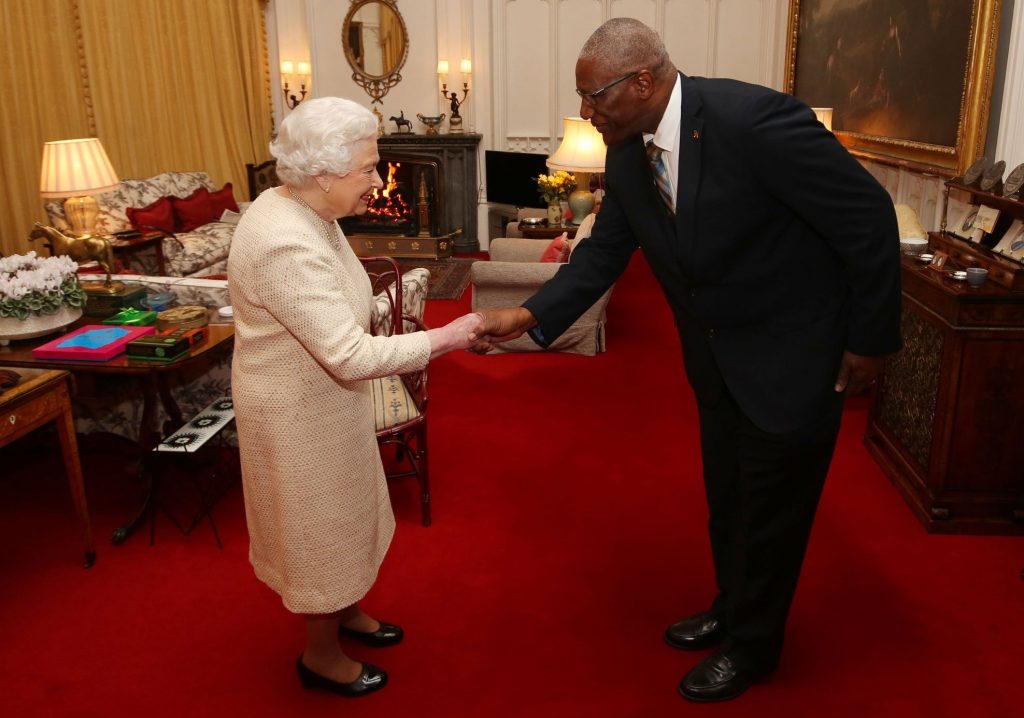
During her reign, Queen Elizabeth II visited the three islands, which make up Antigua and Barbuda on three separate occasions in 1966, 1977 and 1985.
The Queen’s state visits were guided by a group of nations known as the Commonwealth.
The political association, which groups 56 member states, are mainly former territories of the British Empire. It spans from Cyprus in Europe, to Tuvalu in the depths of the Pacific.
How many countries did the Queen rule?
During her reign, Queen Elizabeth II visited at least 117 countries.
In 14 of these, the late monarch remained as their head of state. This includes Australia, New Zealand, Canada, and Solomon Islands.
But her death is stirring the motion towards independence, or a republic for some of these states.
In Australia, Prime Minister Anthony Albanese said his country will not vote on a republic in this current term of government, which expires in 2025.
“Now is the time for commemorating and recognising the life and service of Queen Elizabeth and also for welcoming our new head of state in King Charles III.”
ANTHONY ALBANESE, PRIME MINISTER OF AUSTRALIA
The Prime Minister believes constitutional change is “very difficult to occur in this country”, and has instead focussed his attention towards an Indigenous voice to Parliament.
Australia voted on whether to part ways with the monarchy in 1999, when nearly 61 per cent chose to not alter the constitution.
Jacinda Ardern is the Prime Minister of New Zealand, who said her country will become a republic at some stage in her lifetime.
But she has stopped short of putting forward a timeline for this to take place.
This is also the case in Canada, where Prime Minister Justin Trudeau described the late monarch as one of his “favourite people in the world”.
“She was our Queen for almost half of Canada’s existence. And she had an obvious deep and abiding love and affection for Canadians.”
JUSTIN TRUDEAU, PRIME MINISTER OF CANADA
Queen Elizabeth II spent 70 years on the throne, where she met a dozen Canadian, 15 British, and 16 Australian prime ministers.
Where is the republican movement strong?
Like Antigua and Barbuda, Queen Elizabeth II’s reign was prominent across the Caribbean; including The Bahamas, Saint Vincent and the Grenadines, Grenada, Belize, Saint Kitts and Nevis, and Saint Lucia.
Another country in which Queen Elizabeth II remained head of state—also known as a Commonwealth realm—is Jamaica, which has paved its way for a shift towards a republic.
In fact, questions around the republican movement were raised earlier this year.
In March, the then-Duke and Duchess of Cambridge visited Jamaica. However, Prime Minister Andrew Holness told the Royal couple the country was “moving on” with its vision to become “independent”.
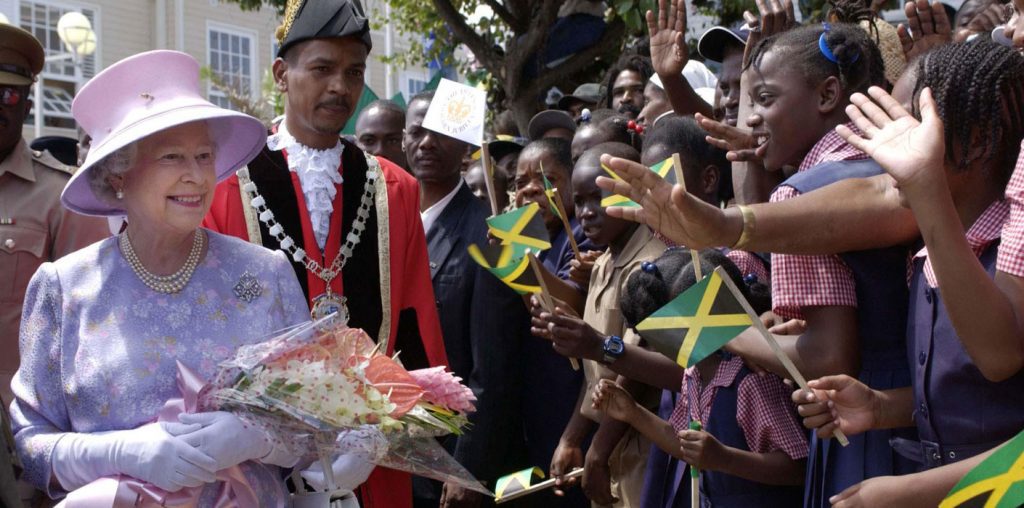
Similar to other Commonwealth realms, Queen Elizabeth II was represented by Governor-General, who is appointed on the advice of Jamaica’s Prime Minister.
The Governor-General represents the monarch and gives formal approval to any laws passed before those they come into effect.
Many Caribbean states tend to associate the British Empire’s colonial legacies with exploitation and slavery.
On his visit to Jamaica, Prince William said acts of slavery “should never have happened” and “forever stains our history”.
“While the pain runs deep, Jamaica continues to forge its future with determination, courage and fortitude.”
William, Prince of Wales
In the Pacific, Tuvalu, Solomon Islands, and Papua New Guinea are all part of the Commonwealth realms. But the shift towards a republic is less prominent.
In recent days, these three states have proclaimed King Charles III as their new sovereign.
When was the last time a country ditched the monarchy?
Barbados is the most recent country to separate from the British Empire by removing Queen Elizabeth II as their head of state.
However, it still remains part of the Commonwealth like other former British colonies including India, Singapore, and Kenya.
In a visit last year, then-Prince Charles acknowledged the country’s history of slavery, which he described as an “appalling atrocity”.
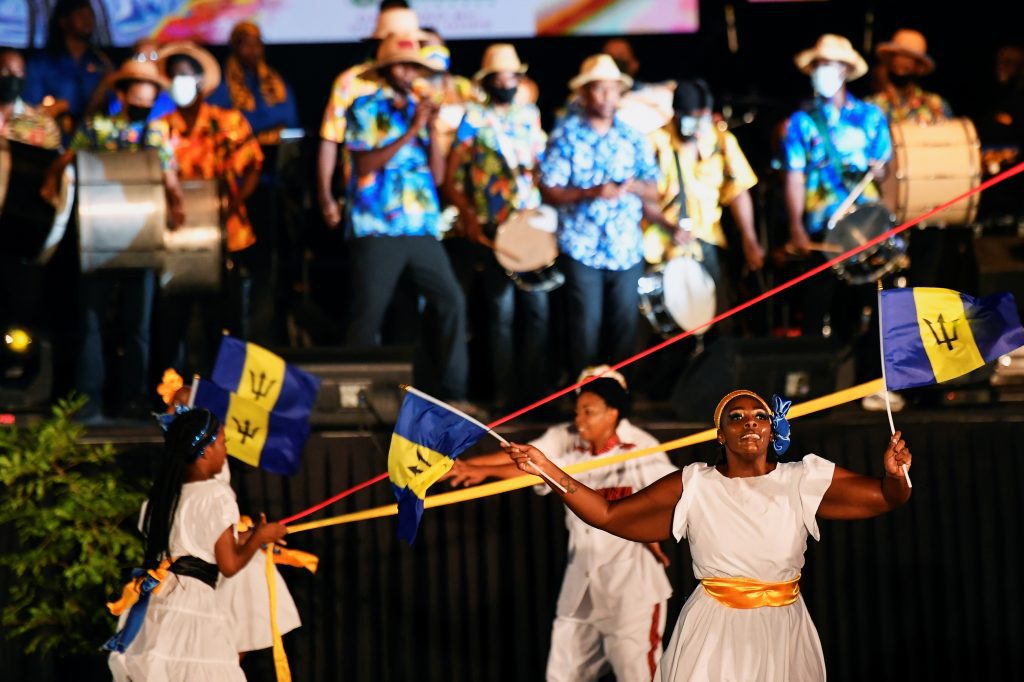
The Caribbean island has a stained history of slavery in which captured Africans were used in plantation fields.
It was first declared part of the United Kingdom in 1625 and became part of the transatlantic slave trade.
Under the current arrangement, Barbados’ Parliament chooses a president. The then-Governor-General of Barbados Sandra Mason, became the country’s inaugural president last year.
“The time has come to fully leave our colonial past behind. This is the ultimate statement of confidence in who we are and what we are capable of achieving.”
sandra mason, president of barbados
Barbados became the first country to remove the British monarch as its head of state in nearly three decades.
It follows Mauritius choosing to part ways with its colonial past in 1992.
Sierra Leone, Malawi, Guyana, Uganda and Nigeria are also part of a suite of African countries to leave the monarchy from the 1960s onwards.

News
Israel strikes Tehran anew as conflict escalates and global markets react
Israel strikes Tehran after Khamenei’s death; U.S. warns of prolonged conflict as tensions escalate in the Middle East.

Israel strikes Tehran after Khamenei’s death; U.S. warns of prolonged conflict as tensions escalate in the Middle East.
Israel has launched a new wave of strikes on Tehran, following the reported killing of Iran’s Supreme Leader, Ali Khamenei. U.S. President Donald Trump has warned the campaign could last up to a month, framing the operation as a move to prevent Iran from acquiring nuclear capabilities.
Iran has retaliated with missile attacks, while its Revolutionary Guards claim responsibility for assaults on oil tankers in the Gulf. The escalating hostilities are already disrupting global shipping lanes and air travel, sending shockwaves through international markets.
With reports of the first U.S. casualties emerging and Washington declaring the Tehran operation a success, tensions across the Middle East are intensifying rapidly. The question now is how far this conflict could spread — and at what cost.
Subscribe to never miss an episode of Ticker – https://www.youtube.com/@weareticker
#Israel #Iran #Tehran #MiddleEastConflict #Geopolitics #OilMarkets #BreakingNews #GlobalSecurity

News
U.S. and Israel strike Iran as missiles hit Gulf bases and oil surges
U.S. and Israel launch major military operation against Iran; tensions rise as conflict escalates, impacting global markets.

U.S. and Israel launch major military operation against Iran; tensions rise as conflict escalates, impacting global markets.
The United States and Israel have launched a sweeping military operation against Iran, striking leadership targets and more than 500 military sites in what President Trump has dubbed Operation Epic Fury.
Explosions have rocked Tehran, with civilians fleeing the capital as U.S. sea and air assets carry out sustained attacks. Washington says the mission is designed to prevent a nuclear armed Iran and has even called on Iranians to rise up against the regime.
Iran has retaliated with a barrage of missiles and drones targeting Israel and U.S. bases across the region, including in Qatar, Kuwait, the United Arab Emirates and Bahrain. While many projectiles were intercepted, a U.S. base in Bahrain sustained damage.
Gulf states long seen as stable hubs for global business are now directly in the firing line, raising fears of a wider regional war.
Oil prices are climbing and tankers are diverting from the Strait of Hormuz as markets react to the escalating conflict. U.S. aircraft carriers, advanced fighter jets and missile destroyers remain in position, signalling more strikes could follow.
With global leaders scrambling diplomatically, the world is watching to see whether this spirals further or shifts back to negotiations.
-
 Money5 days ago
Australia’s inflation report and Nvidia earnings impact explained
-
Tech4 days ago
Meta launches lawsuits over alleged scam advertising operations
-
News2 days ago
Crude oil prices spike amid U.S.-Israel military action
-
News2 days ago
Iran warns ships to avoid Strait of Hormuz
-
News2 days ago
U.S. and Israel attack Iran, escalating regional conflict
-
News15 hours ago
Iran live updates: Trump claims Khamenei dead as Iran insists he remains in command
-
Tech5 days ago
Nvidia earnings soar as AI drives 75% revenue growth
-
News5 days ago
Qantas announces 8,500 jobs and frequent flyer changes