News
Iran launches retaliatory attack on Israel with hundreds of drones

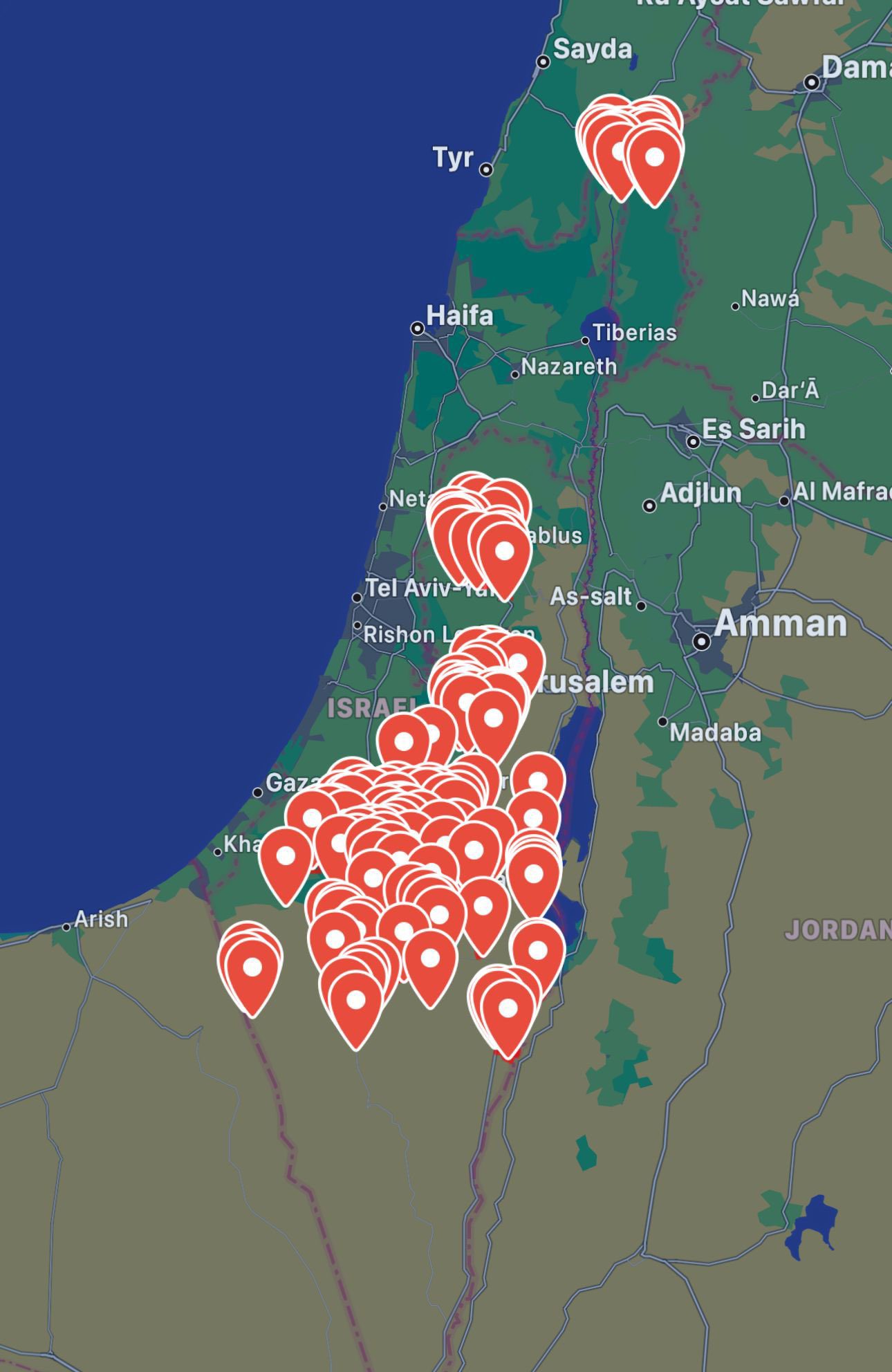
Iran launched a swarm of explosive drones and fired missiles at Israel late on Saturday in its first ever direct attack on Israeli territory, risking a major escalation as the United States pledged “ironclad” backing for Israel.
Sirens wailed and Reuters journalists in Israel said they heard distant heavy thuds and bangs from what local media called aerial interceptions of explosive drones. Authorities said a 7-year-old girl was critically injured.
The Iranian salvo amounted to more than 200 drones and missiles so far, Hagari said, and had caused light damage to one Israeli military facility.
Dozens of surface-to-surface missile launches from Iran were identified approaching Israeli territory. The IDF Aerial Defense Array successfully intercepted the majority of the launches using the Arrow Aerial Defense System, together with Israel’s strategic allies, before the… pic.twitter.com/06GdLuJM6k
— Israel Defense Forces (@IDF) April 14, 2024
Read More – Iran launches drone attack against Israel
Significant response
Iran has vowed retaliation for what it called an Israeli strike on its Damascus consulate on April crimes”. Israel has neither confirmed nor denied responsibility for the consulate attack.
“Our commitment to Israel’s security against threats from Iran and its proxies is ironclad,” he said on X after the meeting.
Israelis’ reality in the last hours: pic.twitter.com/VXeHM8WqJi
— Israel Defense Forces (@IDF) April 14, 2024
British maritime security company Ambrey said in a statement that drones were also reportedly launched against Israel by Yemen’s Iran-aligned Houthi group.
Those clashes now threaten to morph into a direct open conflict pitting Iran and its regional allies against Israel and its main supporter the United States, with regional power Egypt urging “utmost restraint”.
While Israel and Iran have been bitter foes for decades, their long feud has mostly unfolded via proxies or by targeting each other’s forces operating in third countries.
U.S. and British warplanes were involved in shooting down some Israel-bound drones over the Iraq-Syria border area, Channel 12 reported. Two U.S. officials said the U.S. military had shot down dozens of drone aircraft headed to Israel.
Major escalation
Israeli Prime Minister Benjamin Netanyahu, whose official jet took off shortly after the attack began, convened the war cabinet at a military headquarters in Tel Aviv, his office said.
Israel and Lebanon said they were closing their airspace on Saturday night. Jordan, which lies between Iran and Israel, had readied air defences to intercept any drone or missile that violated its territory, two regional security sources said.
Residents in several Jordanian cities said they heard heavy aerial activity.
Syria, an ally of Iran, said it was putting its ground-to-air defence systems around the capital and major bases on high alert, army sources there said.
The European Union, Britain, France, Mexico, Czechia, Denmark, Norway and the Netherlands all condemned Iran’s attack.
Israel has been bracing for an Iranian response to the Damascus consulate strike since last week, when Iran’s Supreme Leader Ayatollah Ali Khamenei said Israel “must be punished and shall be” for an operation he called equivalent to one on Iranian soil.
Biden said on Friday that his only message to Iran was “Don’t”, but added that “we are devoted to the defense of Israel.”
Iran’s main ally in the region, the Lebanese Shi’ite group Hezbollah that has been exchanging fire with Israel since the Gaza war began on Oct. 7, said early on Sunday it had fired rockets at an Israeli base.
<div style=”position:relative;padding-bottom:56.25%;”><iframe id=”vidgyor_iframe” style=”width:100%;height:100%;position:absolute;left:0px;top:0px;min-width:200px;”

-
 News3 days ago
Ukraine conducts largest drone attack on Moscow
-
Shows3 days ago
Confidence in Slough’s regeneration and community growth
-
News3 days ago
Trump proposes new AI Force amid AI debate
-
News2 days ago
Iran’s U.N. visit aims for Middle East diplomacy
-
News2 days ago
Two-thirds of Australians support immigration cuts
-
Ticker Views18 hours ago
‘Australians aren’t stupid’: Inflation anger grows
-
Ticker Views3 days ago
Why Singapore Airlines could be losing its edge
-
Shows2 days ago
Understanding contractor classification and legal obligations